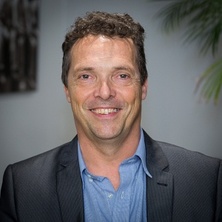
Centre Director of Centre for Public, International and Comparative Law
Centre for Public, International and Comparative Law
Faculty of Business, Economics and Law
Affiliate of Centre for Public, International and Comparative Law
Centre for Public, International and Comparative Law
Faculty of Business, Economics and Law
Professor
School of Law
Faculty of Business, Economics and Law
Availability:
Available for supervision
Media expert
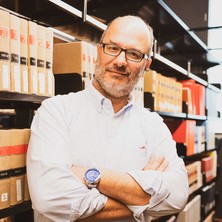
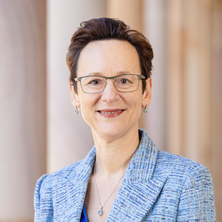
Nicholas Aroney is Professor of Constitutional Law at The University of Queensland, Director (Public Law) of the Centre for Public, International and Comparative Law and a Senior Fellow of the Centre for Law and Religion at Emory University. In 2010 he received a four-year Future Fellowship from the Australian Research Council to study comparative federalism and in 2021 he secured an Australian Research Council Discovery Grant to investigate the nature and function of constituent power in federal systems. He has held visiting positions at Oxford, Cambridge, Paris II, Edinburgh, Durham, Padua, Sydney, Emory and Tilburg universities.
Professor Aroney has published over 160 journal articles, book chapters and books in the fields of constitutional law, comparative constitutional law and legal theory. He has led several international research projects in comparative federalism, bicameralism, legal pluralism, and law & religion, and he speaks frequently at international conferences on these topics. His most notable publications in these fields include: The Constitution of a Federal Commonwealth: The Making and Meaning of the Australian Constitution (Cambridge University Press, 2009), Shari'a in the West (Oxford University Press, 2010) (edited with Rex Ahdar), The Future of Australian Federalism (Cambridge University Press, 2012) (edited with Gabrielle Appleby and Thomas John), The Constitution of the Commonwealth of Australia: History, Principle and Interpretation (Cambridge University Press, 2015) (with Peter Gerangelos, James Stellios and Sarah Murray), Courts in Federal Countries (Toronto University Press, 2017) (edited with John Kincaid), The Routledge Handbook of Subnational Constitutions and Constitutionalism (Routledge 2021) (edited with Patricia Popelier and Giacomo Delledone) and Christianity and Constitutionalism (Oxford University Press, 2022) (edited with Ian Leigh).
Professor Aroney is a former editor of The University of Queensland Law Journal (2003-2005) and International Trade and Business Law Annual (1996-1998), and a past secretary of the Australian Society of Legal Philosophy. He is a past member of the Governing Council and the current Co-Convenor of the Queensland Chapter of the Australian Association of Constitutional Law. He is also a member of the editorial advisory board of the American Journal of Jurisprudence, Public Law Review, Australian Journal of Law and Religion and International Trade and Business Law Review. He has made numerous influential submissions to government and parliamentary inquiries and in 2013 undertook a review of the Crime and Misconduct Act for the Queensland Government with the Hon Ian Callinan AC QC, a former Justice of the High Court of Australia. In 2017 he was appointed by the Australian Prime Minister to an Expert Panel to advise on whether Australian law adequately protects the human right to freedom of religion.
Professor Aroney joined the Law School in 1995 after working with a major national law firm and acting as a legal consultant in the field of building and construction law.
School of Political Science and International Studies
Faculty of Humanities, Arts and Social Sciences
Availability:
Available for supervision
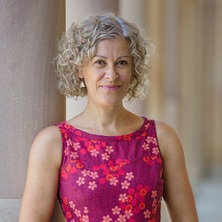
Alex Bellamy is Director of the Asia Pacific Centre for the Responsibility to Protect and Professor of Peace and Conflict Studies at The University of Queensland, Australia. His recent books include "Syria Betrayed: War, Atrocities and the Failure of International Diplomacy" (Columbia 2022) and "World Peace (And How We Can Achieve It)" (Oxford 2020)
School of Political Science and International Studies
Faculty of Humanities, Arts and Social Sciences
Availability:
Available for supervision
Media expert
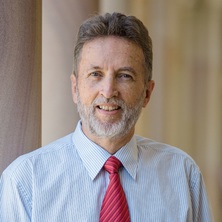
Roland is Professor of International Relations and Coordinator of the Visual Politics Research Program. His research explores how images and emotions shape political phenomena, including humanitarianism, security, peacebuilding, protest movements and the conflict in Korea. Books include Visual Global Politics (Routledge, 2018); Aesthetics and World Politics (Palgrave, 2009/2012); Divided Korea: Toward a Culture of Reconciliation (University of Minnesota Press, 2005/2008) and Popular Dissent, Human Agency and Global Politics (CUP, 2000).
Roland’s main current research project is an interdisciplinary ARC Linkage collaboration (2022-2026) on The Politics and Ethics of Visualising Humanitarian Crises. The project involves eight researchers and the World Press Photo Foundation, the International Committee of the Red Cross, the Australian Red Cross and Médecins Sans Frontières.
Roland grew up in Zürich, Switzerland, where he was educated and worked as a lawyer. He studied international relations in Paris, Seoul, Toronto, Vancouver and Canberra. Roland also worked for two years in a Swiss diplomatic mission in the Korean DMZ and held visiting affiliations at Harvard, Cambridge, Humboldt, Tampere, Yonsei and Pusan National University as well as the Swiss Federal Institute of Technology and the Institute of Social Studies in The Hague. He is a Fellow of the Academy of the Social Sciences in Australia.
Further informatin can be found on Roland''s personal website:
For an in-person or zoom appointment book here: https://calendly.com/bleiker
Selection of Recent Publications
“Decolonising Affect" Cooperation and Conflict (2024)
“Un-Disciplining the International” Alternatives: Local, Global, Political (2023)
"Visualizing International Relations” Journal of Visual Political Communication, 10,(2023
"Visual Violence" Interview with Brad Evans, Los Angeles Review of Books, 3 Jan 2022.
School of Political Science and International Studies
Faculty of Humanities, Arts and Social Sciences
Availability:
Available for supervision
Media expert
Morgan worked in conflict resolution prior to his academic career and continues to practice as a nationally accredited mediator and facilitator. He is a political scientist focusing on cultural difference in peace and conflict, and also researches and publishes in international relations, law and dispute resolution, Indigenous politics, governance and public policy, and international development.
Much of Morgan’s research develops and applies ideas of relationism that emphasise the dynamic and interconnected nature of political life among people, cultures and nations. He has developed these ideas in peace and conflict studies to consider foundational questions about how humans organise being together while addressing practical challenges of how to manage and resolve conflict non-violently.
A key part of Morgan's work is collaboration with Indigenous colleagues and peoples to understand Indigenous political systems and governance, challenge the discipline of political science to better engage with Indigenous peoples, and contribute ways of knowing and working across difference. He works closely with Prof-Aunty Mary Graham in developing Indigenous diplomacy and Aboriginal political philosophy and has completed projects on improving governance for organisations in the Aboriginal community-controlled sector.
Morgan’s current research is focused on building capacity to respond to geopolitical disorder by drawing on relationist and Indigenous methods, improving Indigenous-state relations in Australia, and advancing conflict management by developing online tools for conflict coaching and advice.
SELECTED PUBLICATIONS
(with Mary Graham) Politics: Philosophical Ordering by Country, Thames and Hudson (2026)
(with Druckman, Daniel, Serge Loode, and Hannibal A Thai) "The conflict coaching challenge: design and evaluation of an online conflict coach", International Journal of Conflict Management. doi: 10.1108/ijcma-07-2024-0159 (2025).
"Furthering relational approaches to peace", Journal of Peace Research. doi: 10.1177/00223433241267811 (2024).
(with Mary Graham) "Indigenous international relations: old peoples and new pragmatism", Australian Journal of International Affairs, 77 (6), 1-10. doi: 10.1080/10357718.2023.2265847 (2023)
(with Mary Graham and Martin Weber) "Relational Indigenous systems: Aboriginal Australian political ordering and reconfiguring IR", Review of International Studies, 48 (5), doi: 10.1017/s0260210521000425 (2022)
"The spatial-relational challenge: emplacing the spatial turn in peace and conflict studies" Cooperation and Conflict, 55 (4), 001083672095447-552. doi: 10.1177/0010836720954479 (2020)
"Relational and Essential: Theorising Difference for Peacebuilding", Journal of Intervention and Statebuilding. doi: 10.1080/17502977.2018.1482078 (2018)
"Beyond the thrall of the state: governance as a relational-affective effect in Solomon Islands", Cooperation and Conflict. 53, 2 doi:10.1177/0010836718769096 (2018)
Humanitarian symbolic exchange: extending Responsibility to Protect through individual and local engagement. Third World Quarterly, . doi:10.1080/01436597.2017.1396534 (2017)
(with Jodie Curth-Bibb) "Recalibrating intercultural governance in Australian Indigenous organisations: the case of Aboriginal community controlled health", Australian Journal of Political Science, doi:10.1080/10361146.2017.1281379 (2017)
"Beyond accommodation: The cultural politics of recognition and relationality in dispute resolution." Australian Journal of Family Law 29 (3, Religion, culture and dispute resolution): 188-202 (2015)
“Old Cultures and New Possibilities: Marege’-Makassar Diplomacy in Southeast Asia”, The Pacific Review 24, no.5 : 601-623 (2011)
"Autoethnographic International Relations: exploring the self as a source of knowledge" (with Roland Bleiker) Review of International Studies 36, no. 3:779-798 (2010)
“Wantokism and State Building in the Solomon Islands: A Response to Fukuyama”. Pacific Economic Bulletin 24, no. 3: 148-16 (2009)
“The Developer’s Self: A Non-Deterministic Foucauldian Frame”. Third World Quarterly 30, no. 8 (2009): 1411-1426.
“Biopolitics Meets Terrapolitics: Political Ontologies and Governance in Settler-Colonial Australia”.Australian Journal of Political Science 42, no. 3 (2007): 403-417.
“Governance and Susceptibility in Conflict Resolution: Possibilities beyond Control”. Social and Legal Studies 16, no. 1: 27-47. (2007)
“Post-Development, Foucault, and the Colonisation Metaphor”. Third World Quarterly 23, no. 3 : 421-436.(2002)
"Relational Peacebuilding: Promise beyond Crisis", Peacebuilding in Crisis? Rethinking Paradigms and Practices of Transnational Cooperation, eds Tobias Debiel, Thomas Held, Ulrich Schneckener. Routledge, 56-69, (2016).
“Beyond Captives and Captors: Settler-Indigenous Governance for the 21st Century” (with Lyndon Murphy). In Unsettling the Settler State: Creativity and Resistance in Indigenous-Settler State Governance, eds. S. Maddison and M. Brigg. Sydney: Federation Press, (2011).
“Conflict Murri Way: Managing Through Place and Relatedness” (with Mary Graham and Polly Walker). InMediating Across Difference: Oceanic and Asian Approaches to Conflict Resolution, eds. M. Brigg and R. Bleiker. Honolulu: University of Hawai’i Press, (2011).
“Disciplining the Developmental Subject: Neoliberal Power and Governance through Microcredit”. In Prospects and Perils of Microcredit: Neoliberalism and Cultural Politics of Empowerment, ed. J. Fernando. London: Routledge, (2006).
Faculty of Health, Medicine and Behavioural Sciences
Availability:
Available for supervision
Media expert
Dr Emma Crawford is an occupational therapist and researcher whose work centres on promoting wellbeing for infants, children, families and communities. Emma's primary focus is on cross-cultural projects that link with community organisations to create social change and reduce the impacts of disadvantage by supporting health enhancing environments and activities in early life. At the centre of Emma's work is the United Nations Sustainable Development Goal 3 - ensuring healthy lives and promoting wellbeing across all ages. Currently, Emma is leading several projects:
1) The BABI Project (research): refugee and asylum seeker families' expereinces during the perinatal period (systematic review, qualitative focus group and interview research)
2) The Uni-Friends program (student delivered service and student placement) - a social-emotional helth promotion program that draws on cultural responsiveness (The Making Connecitons Framework) and community development principles in an Aboriginal and Torres Strait Islander Community Controlled School
3) LUCIE-NDC (research) - mothers' experiences of accessing Neuroprotective-Developmental Care in the first 12 months of their infants' lives
Emma has a strong interest in understanding human experiences, community-driven initiatives, and strengths-based, innovative, evidence based, complex approaches to wellbeing that consider individuals and systems She also carries out research regarding allied health student placements in culturally diverse settings including low-middle income countries and Indigenous contexts. She works as a Lecturer at the University of Queensland, Australia after having worked in a range of occupational therapy roles including with children with autism, with asylum seekers, with Indigenous Australians with chronic disease, and completing her PhD in Political Science and International Studies in 2015.
School of Political Science and International Studies
Faculty of Humanities, Arts and Social Sciences
Availability:
Not available for supervision
Associate Professor in International Relations. Her research and teaching interests include Southeast Asian politics and international relations, Cambodian politics and post-conflict reconstruction, and non-traditional security in East Asia (including trafficking in persons and migrant smuggling, pandemic disease and child protection issues). Dr. Curley co-facilitated the UQ Working Group on Human Trafficking and Migrant Smuggling in the T.C Bernie School of Law (http://www.law.uq.edu.au/humantrafficking) from 2012-2016. She has published in internationally peer reviewed journals including: Review of International Studies, The Journal of Law and Society, Australian Journal of Human Rights, and Australian Journal of International Affairs, amongst others. Her most recent book is Migration and Security in Asia (Routledge 2008) with S.L. Wong. Before joining the School in January 2006, Dr. Curley was a researcher in the China-ASEAN project at the Centre of Asian Studies at the University of Hong Kong, where she also coordinated a consultancy project on Southeast Asian affairs for the Hong Kong Government's Central Policy Unit. She holds a Ph.D in International Relations from Nottingham Trent University in the UK, and BA(Hons) in Government from UQ.
In 2015, Dr Curley joined the Executive Advisory Board of Bravehearts, an Australian not-for profit organisation that aims to educate, empower and protect Australian children from sexual assault, and in 2016 was made a Paul Harris Fellow, in recognition of her services to The Rotary Foundation. In 2020 she gained Fellowship status with the Higher Education Academy (UK).
School of Political Science and International Studies
Faculty of Humanities, Arts and Social Sciences
Availability:
Available for supervision
Research Expertise
International relations theory
History of political thought
History of international thought
History of the states-system
Humanitarianism and intervention
Richard Devetak is Professor of the History of International Thought and was Head of the School of Political Science and International Studies from 2013 to 2018. He has published on the history of international thought, contemporary theoretical debates in international relations, humanitarian intervention, the ‘war on terror’, and globalisation’s implications for justice and the state, as well as on foreign policy, refugees, and national identity in the Australian context. His major contribution has been in the area of international relations theory, more specifically in the exposition and analysis of Frankfurt School Critical Theory and post-structuralism, and in international intellectual history.
His most recent publication is a volume edited with Tim Dunne, Rise of the International: International Relations meets History (Oxford University Press, 2024). This volume brings together scholars of International Relations and History to capture the emergence and development of the thought, the relations, and the systems that we call international. He recently published a monograph titled Critical International Theory: An Intellectual History (Oxford University Press, 2018). His writings in these areas have been published in leading International Relations journals including International Affairs, Millennium and Review of International Studies. His current research interests include: the history of international thought and the history of the states-system in early modern Europe and beyond. He has held Visiting Fellowships at the Department of International Politics at the University of Wales, Aberystwyth (2003), the Department of Politics, Institutions and History at University of Bologna (2008), and at the Department of Political and Social Sciences at the European University Institute, Florence (2012).
From 2020-2023 he was part of the Review of International Studies editorial team, led by Dr Martin Coward (Manchester). He is also working on a large multi-million dollar collaborative project, led by Prof. Halvard Leira (NUPI) and funded by the Research Council of Norway, on A Conceptual History of International Relations.
He has also made a major contribution to two popular international relations textbooks. He is the lead editor of An Introduction to International Relations: fourth edition (Cambridge University Press, forthcoming 2022) with co-editor Daniel McCarthy; and co-editor with Jacqui True of Theories of International Relations: sixth edition (Palgrave Macmillan, 2022).
School of Political Science and International Studies
Faculty of Humanities, Arts and Social Sciences
Availability:
Available for supervision
Media expert
Tim Dunne is Provost and Senior Vice-President at the University of Surrey, a role that he took up in early 2022. As Provost he has responsibility for the institution’s academic performance across 13 Schools, 3 Faculties and 3 Pan-University Institutes. Prior to his move to Surrey, Tim had a number of leadership roles at The University of Queensland, including Deputy Provost as well as the Founding Executive Dean of HASS. Tim is recognised for his research on human rights protection and foreign policy-making in a changing world order. He has written and co-edited sixteen books, including Terror in our Time (2012), The Globalization of International Society (2017), and most recently the The Rise of the International (2024) co-edited with Professor Richard Devetak. He is an elected Fellow of the Academic of Social Sciences in Australia and the Academic of Social Sciences in the UK. He proudly holds an Emeritus Professorship in the School of POLSIS at The University of Queensland.
Affiliate of ARC Research Hub for Sustainable Crop Protection
ARC Research Hub for Sustainable Crop Protection
Queensland Alliance for Agriculture and Food Innovation
Availability:
Available for supervision
Media expert
Pedro Fidelman is an Associate Professor and Principal Research Fellow at the Centre for Policy Futures, The University of Queensland, where he leads the Environment and Climate Change research theme.
His research examines how governance systems address emerging sustainability challenges. He studies the institutions, policies, regulations and decision-making processes that shape responses to changing environmental, societal and technological conditions.
His work spans diverse sustainability contexts, including water and catchment governance, climate adaptation, biodiversity conservation, marine and coastal governance, sustainable agriculture, the blue economy and emerging sustainability technologies. A major focus of his current research is the governance, policy and regulatory implications of emerging sustainability technologies, including reef restoration and adaptation, offshore renewable energy and RNA-based biotechnologies.
Alongside his empirical research, Pedro develops innovative approaches for analysing governance systems, including governance analytics, comparative governance and AI-assisted qualitative analysis.
His research has informed national and international policy initiatives and has been cited in policy documents produced by governments and international organisations across multiple countries. He has served as Coordinating Lead Author (Oceans and Coasts) for the United Nations Global Environment Outlook 7.
Deputy Executive Dean and Associate Dean (Academic)
Faculty of Humanities, Arts and Social Sciences
Availability:
Not available for supervision
Media expert
Katharine Gelber is Deputy Executive Dean and Associate Dean (Academic) in the Faculty of Humanities, Arts and Social Sciences at UQ. She is a former Head of the School of Political Science and International Studies (2019-2023), and a Professor of Politics and Public Policy. Her research is in the field of freedom of speech, and the regulation of public discourse. She has been awarded several ARC, and other, competitive research grants. In Oct-Dec 2024 she was a Leverhulme Visiting Professor at Cambridge University. In November-December 2017, she was a Visiting Scholar at the Global Freedom of Expression Project, Columbia University, New York. In Dec 2017, she jointly hosted, with Prof Susan Brison, a workshop at the Princeton University Center for Human Values on, 'Free Speech and its Discontents'. In 2014, with Prof Luke McNamara, she was awarded the Mayer journal article prize for the best article in the Australian Journal of Political Science in 2013. In 2011 she was invited by the United Nations to be the Australian Expert Witness at a regional meeting examining States' compliance with the free speech and racial hatred provisions of international law. She is the author of three monographs (Free Speech After 9/11, OUP 2016; Speech Matters, UQP, 2011, Speaking Back, John Benjamins, 2002), and three edited books (incl. Free Speech in the Digital Age, OUP 2019), as well as numerous journal articles.
Kath is a Fellow of the Academy of Social Sciences Australia, and a Fellow of the Queensland Academic of Arts and Sciences.
Selected publications:
Books
Brison, S and Gelber, K (eds) 2019 Free Speech in the Digital Age, Oxford University Press, New York.
Gelber, K 2016 Free Speech After 9/11, Oxford University Press, Oxford.
Gelber, K 2011. Speech Matters: Getting Free Speech Right, University of Queensland Press, St Lucia.
Panzironi, F & Gelber, K (eds) 2012. The Capability Approach: Development Practice and Public Policy in the Asia-Pacific Region, Routledge, London.
Refereed journal articles
Gelber, Katharine 2024 ‘Free speech, religious freedom and vilification in Australia’, Australian Journal of Political Science 59(1): 78-92, https://doi.org/10.1080/10361146.2023.2283008.
Gelber, Katharine and Murphy, M 2023 ‘The Weaponisation of Free Speech under the Morrison Government’, Australian Journal of Political Science, doi: https://doi.org/10.1080/10361146.2023.2242304.
Brennan, K; D Duriesmith, E Fenton and K Gelber 2022 “Gendered Mundanities: Gender Bias in Student Evaluations of Teaching in Political Science”, Australian Journal of Political Science (published online 27 Feb 2022), https://doi.org/10.1080/10361146.2022.2043241.
Bowman, K and Gelber, K 2021 ‘Responding to Hate Speech: Counter Speech and the University’, Virginia Journal of Social Policy and the Law, 28(3): 248-275.
Gelber, K 2021 ‘Differentiating Hate Speech: A Systemic Discrimination Approach’, Critical Review of International Social and Political Philosophy, 24(4): 393-414, DOI: 10.1080/13698230.2019.1576006 (published online 2019).
Gelber, K and O’Sullivan, S 2020 “Cat Got Your Tongue? Free Speech, Democracy and Australia’s ‘Ag-Gag’ Laws”, Australian Journal of Political Science, 56(1): 19-34, https://doi.org/10.1080/10361146.2020.1799938.
Gelber, K 2019 ‘Norms, Institutions and Freedom of Speech in the US, the UK and Australia’, Journal of Public Policy, online 25 June, http://dx.doi.org/10.1017/S0143814X19000187.
Gelber, K 2019 ‘Terrorist-extremist speech and hate speech: understanding the similarities and differences’ Ethical Theory and Moral Practice, 22(3), 607-622, doi: 10.1007/s10677-019-10013-x.
Gelber, K 2018 ‘Incitement to hatred and countering terrorism – policy confusion in the UK and Australia’, Parliamentary Affairs 71(1): 28-49, https://doi.org/10.1093/pa/gsx008.
Gelber, K 2017 ‘Diagonal Accountability: Freedom of Speech in Australia’, Australian Journal of Human Rights 23(2): 203-219.http://dx.doi.org/10.1080/1323238X.2017.1363371 (Published in Special Issue: ‘Democracy and Human Rights’)
Gelber, K 2017 ‘Hate Speech – Definitions and Empirical Evidence’, Constitutional Commentary 32: 101-111.
Gelber, K & McNamara, L 2016 'Anti-vilification laws and public racism in Australia: mapping the gaps between the harms occasioned and the remedies provided', University of New South Wales Law Journal 39(2): 488-511.
Gelber, K & McNamara, L 2016 ‘Evidencing the harms of hate speech’, Social Identities, 22 (1-3): 324-341. DOI: 10.1080/13504630.2015.1128810.
Book chapters (selected)
De Silva, Anjalee; Katharine Gelber & Adrienne Stone 2024 (in-press). ‘Academic Freedom in Australia’, in Scott-Baumann, A., Holmwood, J., & Pandor, H. (eds) How to Develop Free Speech on Campus: Talking to Others. Cheltenham, UK: Edward Elgar Publishing.
Gelber, K 2022 ‘Free Speech in Australia’ in Paula Gerber & Melissa Castan eds., Critical Perspectives on Human Rights Law in Australia Thomson Reuters, Pyrmont: 517-534.
Gelber, K 2021 ‘Speaking Back’, in Adrienne Stone and Frederick Schauer eds., The Oxford Handbook of Freedom of Speech, Oxford University Press, Oxford: 249-265.
Gelber, K 2020. ‘Post-memory and Artefacts: The Gelber/Altschul Collection’, in N Marczak and K Shields eds. Genocide Perspectives VI: The Process and the Personal Costs of Genocide. Sydney: UTS ePress: 53-68. https://doi.org/10.5130/aaf.
Gelber, K 2020 ‘Capabilities and the Law’, in E Chiapperro-Martinetti, S Osmani & M Qizilbash eds The Cambridge Handbook of the Capability Approach Cambridge University Press, Cambridge: 643-659.
Gelber, K 2020 ‘Free Speech Debates in Australia: Contemporary Controversies’, in Helen J. Knowles and Brandon T. Metroka eds., Free Speech Theory: Understanding the Controversies, Peter Lang: 187-208.
Gelber, K and Brison, S 2019 ‘Digital Dualism and the “Speech as Thought” Paradox’, in Brison, S and Gelber, K (eds) Free Speech in the Digital Age, Oxford University Press, New York.
Gelber, K & Stone, A 2017 ‘Constitutions, Gender and Freedom of Expression: the Legal Regulation of Pornography', in Helen Irving ed. Constitutions and Gender, Edward Elgar, Cheltenham: 463-481, DOI: 10.4337/9781784716967.
Gelber, K 2016 ‘Critical Race Theory and the constitutionality of hate speech regulation’, in R Dixon & G Appleby (eds) The Critical Judgments Project: Re-reading Monis v The Queen, Federation Press, Sydney: 88-102.
Director of Engagement and Advancement in the School of Political Science and International Studies
School of Political Science and International Studies
Faculty of Humanities, Arts and Social Sciences
Director of Research of School of Political Science and International Studies
School of Political Science and International Studies
Faculty of Humanities, Arts and Social Sciences
Director of HDR Students of School of Political Science and International Studies
School of Political Science and International Studies
Faculty of Humanities, Arts and Social Sciences
Associate Professor
School of Political Science and International Studies
Faculty of Humanities, Arts and Social Sciences
Availability:
Available for supervision
Media expert
Nicole’s research focuses on the gendered politics of conflict and peacebuilding, violence, security and participation. She has a strong interest in feminist institutional theory, as well as conceptual debates on regulatory pluralism and contested notions of (gendered) order as they are evident in local and global politics. Since the early 2000s, she has conducted research in the Pacific Islands region focusing on gender politics, gendered security and post conflict transition in Fiji, New Caledonia, Bougainville and Solomon Islands. She has worked in collaboration with women’s organisations, women decision-makers and women policy-makers in these settings to progress aspects of this work. She has led large, externally funded, comparative research projects examining how women's rights to security are institutionalised in Pacific Island countries (2013-2016) and where and how women participate in post-conflict transformation (as part of a broader collaborative ARC Linkage Project (2016-2020). Aside from the scholarly publications listed below, she has made influential contributions to national and regional intergovernmental policy forums on gender, security and development programs and is a regular contributor to national and regional on-line opinion editorial sites.
School of Political Science and International Studies
Faculty of Humanities, Arts and Social Sciences
Availability:
Available for supervision
Media expert
Reader in International Relations, Director, Rotary Centre for International Studies in Peace and Conflict Resolution
Background:
Dr Hanson was a Stipendiary Lecturer in Politics at Magdalen College, Oxford University before she joined the University of Queensland in 1995. She has been a Visiting Scholar at the Liu Centre for the Study of Global Issues, Department of International Relations at the University of British Columbia, a Visiting Fellow at the Department of International Politics, University of Wales, Aberystwyth and a Visiting Scholar at Sciences Po in Paris.
Research Interests:
International security - especially from a critical security studies perspective, and focussing on the role of law, institutions and norms in shaping security policies; European security - the role of institutions such as NATO and the Organisation for Security and Cooperation in Europe (OSCE); Arms control and disarmament - particularly the debate on the elimination of nuclear weapons and the efforts to delegitimise the use or possession of weapons of mass destruction: human rights - both within Australia and at the global level, and with a strong focus on the creation of legal institutions (such as the International Criminal Court) designed to uphold human rights; humanitarian intervention - the theory and practice of humanitarian interventions and the implications of these for issues such as state sovereignty, human rights and global justice; normative International Relations theory and the role of ethics in world politics - the evolution of a series of norms and other constraints affecting world politics, and which includes an emphasis on concepts such as good international citizenship and human security. The 'English School' of thought in International Relations theory - the theoretical framework most closely associated with Hedley Bull, John Vincent and others focussing on the construction and operation of an 'international society'. Dr Hanson is currently working on a book titled 'Humanitarianism and nuclear weapons: building a global prohibition regime without the great powers' which examines the growth of norms and legal constraints on the possession and use of nuclear weapons.
School of Political Science and International Studies
Faculty of Humanities, Arts and Social Sciences
Availability:
Not available for supervision
Media expert
Professor Brian Head joined the University of Queensland in mid-2007 after holding senior roles in government, universities, and the non-government sector. He is the author or editor of several books and numerous articles on public management, governance, social isues and environmental policy. His major interests are evidence-based policy, complex or 'wicked' problems, program evaluation, early intervention and prevention, collaboration and consultation, public sector integrity, and leadership. He has undertaken several consultancies on program evaluation, policy review, organisational performance, and good governance processes. He has strong interests in applied research across many areas of public policy and governance, and is committed to building closer links between the research and policy sectors. His recent books include Wicked Problems in Public Policy (2022, Palgrave, open access), Reconsidering Policy (2020, Policy Press, co-authored), and Learning Policy, Doing Policy (2021, ANU Press, co-edited).
Affiliate of Research Centre in Creative Arts and Human Flourishing
Research Centre in Creative Arts and Human Flourishing
Faculty of Humanities, Arts and Social Sciences
Associate Professor
School of Social Science
Faculty of Humanities, Arts and Social Sciences
Availability:
Available for supervision
Media expert
I am a political anthropologist specialising in migration, refugee protection, and religious politics in Southeast Asia, with particular expertise in Malaysia's treatment of displaced populations and Muslim identity formation. My research combines ethnographic fieldwork with policy analysis to understand how states, communities, and individuals navigate questions of belonging, protection, and cultural identity.
Academic Background I hold a PhD in anthropology and sociology from La Trobe University, with previous degrees in Social Anthropology and Politics/International Relations from the University of Kent. I was an Australian Research Council DECRA research fellow (2014-2017) and the Lee Kong Chian NUS-Stanford Fellow on Contemporary Southeast Asia (2023-2024), spending time at the National University of Singapore and Stanford University's Walter H. Shorenstein Asia-Pacific Research Center.
Research Focus My work spans political anthropology, development studies and migration studies, with particular focus on:
Maritime refugees
Refugee and immigration policy in Southeast Asia
Religion-state relations and Muslim identity politics
Urban refugee experiences and protection frameworks
Faith and spirituality in the modern world
Participant observation methodology in sensitive research contexts
Publications and Engagement I currently co-lead the Maritime Refugee Lab and am author of Lives in Limbo: Refugee Place-Making and Survival in Malaysia (Stanford University Press) and Modern Muslim Identities: Negotiating Religion and Ethnicity in Malaysia (NIAS/NUS Press), a textbook introduction to the social sciences, and co-editor of volumes on human security and urban refugees published by Allen & Unwin/Routledge and a recent volume on anthropology as vocation. As a regular media commentator and course director for UQ's MOOC "World101x: Anthropology of Current World Issues," I translate academic research for broader audiences through traditional and digital platforms.
Affiliate of Centre for Digital Cultures & Societies
Centre for Digital Cultures & Societies
Faculty of Humanities, Arts and Social Sciences
Associate Professor
School of Political Science and International Studies
Faculty of Humanities, Arts and Social Sciences
Availability:
Available for supervision
Media expert
Sebastian Kaempf is an Associate Professor in Peace and Conflict Studies at the School of Political Science and International Studies. He is also the Director of the Rotary Peace Centre at UQ.
His expertise lies at the intersection between International Relations and Peace and Conflict Studies, with specialization in the areas of international security, ethics and the laws of war, and information technology relating to global politics and violent conflict. Specifically, his research focuses on two areas:
The first concerns the relationship between ethics and the laws of war in the context of the transformation of violent conflict. Here, he is interested in the ways in which historic and contemporary wars - waged under conditions of asymmetry - have impacted on the relationship between the norms of casualty-aversion and civilian protection.
The second area focuses on the role a transforming global media landscape is playing in violent conflicts. Here, his research focuses on how historic and current conflicts are being waged in and through media and information technology, with a particular emphasis on the geopolitics of cyberspace, embedded news reporting, mass surveillance and big data mining, non-state armed groups, and the influence of the Pentagon and CIA in the entertainment sector.
Dr Kaempf received his PhD at the Department of International Politics at Aberystwyth University (UK). He holds a BSc and MSc in International Relations from the London School of Economics and Political Science (LSE).
He won the ISA Deborah Gerner Award for Teaching Innovation in 2020. In 2013, he won an Australian national award for teaching excellence (AAUT); in 2012, he won UQ and Faculty awards for teaching excellence. He is also the producer (with UQx and edX.com) and convenor of 'MediaWarX', one of UQ's Massive Open Online Courses (MOOCs): https://www.edx.org/course/global-media-war-technology-uqx-mediawarx-0
He was a visiting fellow/researcher at UGA in Athens, Georgia, Sao Paulo State University, Humboldt University in Berlin, Sciences Po Lyon, the Catholic University in Rio de Janeiro, The University of Sydney,and Brown University in Providence, US.
Together with his colleague A/Prof Al Stark, he hosts the podcast 'Higher Ed Heroes': https://www.buzzsprout.com/813707
And he is the co-producer of the award-winning film documentary 'Theatres of War: How the CIA and Pentagon took Hollywood': https://go.mediaed.org/theaters-of-war
He is a member of the editorial team of the journal 'Review of International Studies'.
Dr Kieren Lilly is a social psychologist and Research Fellow at the Institute for Social Science Research (ISSR), University of Queensland. Kieren’s research examines experiences of inequality and discrimination, with a particular focus on the relationships between social identity, relative deprivation, political ideology, and collective action. For instance, his doctoral research explored the causes, consequences, and trajectories of relative deprivation among the general public, while his more recent work examines the factors shaping support for right-wing reactionary movements, typologies of authoritarianism, and perceptions of reverse discrimination among advantaged groups.
Kieren is also deeply committed to supporting LGBTQIA+ research and equity. He leads and collaborates on projects investigating (a) the relationships between identity, health, and well-being among LGBTQIA+ populations and (b) attitudes towards LGBTQIA+ people and social policy. Kieren’s research aims to challenge dominant, binary views of sexuality and gender, including via studies of sexual fluidity and transnormativity. In 2025, Kieren was awarded the UQ Ally Award in recognition of his commitment to promoting inclusion and community for transgender and gender-diverse staff and students.
At ISSR, Kieren works as part of the URBANiQ: Urban Intelligence for Healthy & Equitable Places @ The University of Queensland team, contributing to high-impact research related to urban liveability and community well-being. He also works on several commissioned projects monitoring and evaluating public programs related to substance use, criminal justice, and primary care. Kieren specialises in advanced quantitative research methods, including longitudinal, multilevel, person-centred, and quasi-experimental approaches, and has expertise in managing large-scale panel and administrative data sets.
Director of Research of School of Political Science and International Studies
School of Political Science and International Studies
Faculty of Humanities, Arts and Social Sciences
Professor
School of Political Science and International Studies
Faculty of Humanities, Arts and Social Sciences
Availability:
Available for supervision
Media expert
Professor of International Relations
Matt McDonald joined the School of Political Science and International Studies in January 2010. After completing his PhD at UQ in 2003, Matt held lectureship posts in international relations at the University of New South Wales and the University of Birmingham (UK), and was Associate Professor in International Security at the University of Warwick (UK). His research focuses on the relationship between security and climate change, the international politics of climate change, and critical theoretical approaches to security. He has published on these themes in a wide range of journsls, and is the author of Ecological Security: Climate Change and the Construction of Security (Cambridge UP, 2021), Security, the Environment and Emancipation (Routledge 2012) and (with Anthony Burke and Katrina Lee-Koo) Ethics and Global Security (Routledge 2014). He was formerly co-editor of Australian Journal of Politics and History. He has recently completed an ARC-funded project on comparative national approaches to the climate change- security relationship, and established a cross-disciplinary University research network on Climate Politics and Policy.
Selected Publications
Books (Authored)
Ecological Security: Climate Change and the Construction of Security (Cambridge UP, 2021)
(with Anthony Burke and Katrina Lee-Koo), Ethics and Global Security: A Cosmopolitan Approach (Routledge, 2014)
Security, the Environment and Emancipation: Contestation over Environmental Change (Routledge, 2012).
Edited Volumes
Defence and Climate Change, Contemporary Security Policy, 2026 (online first).
(with Paul Williams), Security Studies: An Introduction, 4th ed (Routledge, 2023)
(with Paul Williams), Security Studies: An Introduction, 3rd ed (Routledge, 2018)
Critical Security in the Asia-Pacific. Special Issue of Critical Studies on Security, 5:3 (2017).
(with Mark Beeson), The Politics of Climate Change in Australia. Special Issue of Australian Journal of Politics and History, 59:3 (2013).
(with Tim Dunne), The Politics of Liberal Internationalism, Special Issue of International Politics, 50:1 (2013).
(with Anthony Burke), Critical Security in the Asia-Pacific (Manchester UP, 2007).
Refereed Journal Articles
(with Brent Steele), 'On Fire: Western and Indigenous Approaches to Nature in Settler Colonial Societies', Global Environmental Politics (2026), online first.
'Emergency Measures? Terrorism and Climate Change on the Security Agenda', European Journal of International Security, 10:1 (2025), pp.115-32.
'Fit for Purpose? Climate Change, Security and IR', International Relations, 38:3 (2024), pp.313-30.
'Cimate change, security and the institutional prospects for ecological security', Geoforum, 155 (2024), 10496.
'Accepting Responsibility? Institutions and the Security Implications of Climate Change', Security Dialogue, 55:3 (2024), pp.293-310.
(with Susan Park et al), 'Ecological Crises and Ecopolitics Research in Australia', Australian Journal of Politics and History, 71:1 (2024), pp.147-65.
(with Jonathan Symons et al), 'Australia, we need to talk about Solar Geoengineering', Australian Journal of International Affairs, 78:3 (2024), pp.369-74.
'Immovable Objects? Impediments to a UN Security Council Resolution on Climate Change', International Affairs, 99:4 (2023), pp.1635-51.
(with Jessica Kirk), ‘The Politics of Exceptionalism: Securitization and COVID-19’, Global Studies Quarterly, 1:3 (2021).
'After the Fires? Climate Change and Security in Australia', Australian Journal of Political Science, 56:1 (2021), 1-18.
‘Climate Change and Security: Towards an Ecological Security Discourse?’, International Theory, 10:2 (2018), 153-80.
‘Critical Security in the Asia-Pacific: An Introduction’, Critical Studies on Security, 5:3 (2017), 237-52.
‘Remembering Gallipoli: Anzac, the Great War and Australian Memory Politics’, Australian Journal of Politics and History, 63:3 (2017), pp.405-17.
(with Lee Wilson) ‘Trouble in Paradise? Citizen Militia Groups in Bali, Indonesia’, Security Dialogue, 48:3 (2017), pp.241-58.
‘Bourdieu, Environmental NGOs and Australian Climate Politics’, Environmental Politics, 25:6 (2016), pp.1058-78.
(with Anthony Burke and Katrina Lee-Koo) 'Ethics and Global Security', Journal of Global Security Studies,1:1 (2016), pp. 64-79
'Australian Foreign Policy under the Abbott Government: Foreign Policy as Domestic Politics?' Australian Journal of International Affairs 69:6 (2015), pp 651-669.
‘Discourses of Climate Security’, Political Geography, 33 (2013), pp.43-51.
(with Christopher S. Browning),‘The Future of Critical Security Studies: Ethics and the Politics of Security’, European Journal of International Relations 19:2 (2013), pp.235-55.
'The Failed Securitization of Climate Change in Australia’, Australian Journal of Political Science, 47:4 (2012), pp.579-92.
‘Lest we Forget: The Politics of Memory and Australian Military Intervention’, International Political Sociology, 4:3 (2010), pp.287-302.
'Securitization and the Construction of Security', European Journal of International Relations, 14:4 (2008), pp.563-87.
(with Katharine Gelber) ‘Ethics and Exclusion: Representations of Sovereignty in Australia’s Approach to Asylum-Seekers’, Review of International Studies, 32:2 (2006), pp.269-89.
‘Fair Weather Friend? Australia’s Approach to Global Climate Change’, Australian Journal of Politics and History, 51:2 (2005), pp. 216-34.
‘Human Security and the Construction of Security’, Global Society, 16:3 (2002), pp. 277-95.
Media
Matt has been interviewed on television and radio, and has contributed opinion editorials to ABC News, The Sydney Morning Herald, The Australian Literary Review, Australian Outlook, ABC's The Drum, Insight, the Lowy Interpreter and is a regular contributor to The Conversation. For his recent articles in The Conversation, see here: https://www.theconversation.com/profiles/matt-mcdonald-12655/articles
Affiliate of Centre for Digital Cultures & Societies
Centre for Digital Cultures & Societies
Faculty of Humanities, Arts and Social Sciences
Availability:
Available for supervision
Media expert
Dr Renée Mickelburgh is a communication scholar at the University of Queensland (UQ). With over two decades of experience in communication — from journalism and political communication, through to civil society and now academia — Renée lectures and coordinates courses in media strategies and strategic communication. Her research considers how emotions circulate in the communication of wicked problems: specifically, gender violence and environmental justice. She is also concerned with how emerging technologies — particularly artificial intelligence — are reshaping strategic communication, advocacy, and public discourse.
Renée is the author of The ecofeminist storyteller: environmental communication through women's digital garden stories and has co-authored book chapters and journal articles focussed on the communicaiton of sexual consent among young adults. She has worked as a research fellow for UQ’s Sexual and Gender Violence Research Network and is now deputy lead of the School of Communication and Arts AI working Party. The AI Working Party aims to connect teachers, researchers and industry experts across disciplines including strategic communication, creative writing, literary studies, drama, digital media, and museum studies and provide a coordinated response to the opportunities and risks posed by AI. As an affiliate of UQ’s Centre for Communication and Social Change, she contributes to discussions on AI for public good and AI's impact on women.
Renée follows the transformative approaches of leading feminist writers and scholars by engaging with creative methods of inquiry in her teaching and research.
Renée is open to supervision and welcomes inquires from potential post-graduate students in the following areas:
Affiliate of Social Identity and Groups Network (SIGN) Research Centre
Social Identity and Groups Network
Faculty of Health, Medicine and Behavioural Sciences
Senior Lecturer
School of Political Science and International Studies
Faculty of Humanities, Arts and Social Sciences
Availability:
Available for supervision
Media expert
Frank’s research interests include political behaviour, political communication, voter attitudes, behaviour change, leadership and evidence-based policy. His research has been published in leading international journals such as Leadership Quarterly, European Journal of Political Research, Political Psychology, Public Administration, West European Politics, Journal of Common Market Studies, Evidence and Policy, China Quarterly and the Australian Journal of Public Administration. His 2017 book The Wealth Paradox (co-authored with Jolanda Jetten and published by Cambridge University Press) has also attracted international attention, and is now widely regarded as having successfully debunked common myths about populist radical right parties and their voter base.
Affiliate of Research Centre in Creative Arts and Human Flourishing
Research Centre in Creative Arts and Human Flourishing
Faculty of Humanities, Arts and Social Sciences
Teaching Associate
School of Communication and Arts
Faculty of Humanities, Arts and Social Sciences
Availability:
Not available for supervision
Kylie (Anderson) Navuku is a teaching-practice focused academic, teaching primarily in Communication (undergraduate and postgraduate) and Journalism (undergraduate). Her teaching schedule in 2026 includes: Public Interest Communication; Communication Theory; Communication Management and Leadership; and Intercultural Communication.
Kylie's teaching is both practice and research informed. As a communication practitioner, Kylie has worked with non-government, government, and inter-governmental stakeholders contributing to campaigns/ initiatives with the purpose of raising awareness and furthering public education on various themes (including conservation, climate change, and civic education). Recent areas of exploration are the challenges for island-based artists engaged in environmental communication and the ways in which individuals can use visual arts to promote environmental messages outside of organisational/ institutional partnerships. Since 2024 Kylie has been engaged in a collaborative project investigating ways to communicate bioeconomy. Kylie's research interest is at the intersection of communication (including media/journalism) and politics. Most recently her research has focused on climate change and international ocean journalism.
In addition to a PhD from UQ, Kylie has a MA (IntRel)(Res) [Master of Arts (International Relations) by Research] and a BIntSt (Hons) [Bachelor of International Studies (Honours)] from Flinders University.
Other university employment includes the University of the South Pacific (USP) and Flinders University of South Australia. At USP, Kylie was based at Laucala Campus in Fiji but her role also took her to the campuses and centres in Majuro (Marshall Islands), Honiara (Solomon Islands), Nuku'alofa (Tonga), Alafua (Apia, Samoa), and Rarotonga (Cook Islands). At Flinders, Kylie was based at the Bedford Park Campus, while at UQ she is based at St Lucia campus in Queensland.