Faculty of Health, Medicine and Behavioural Sciences
Availability:
Not available for supervision
Media expert
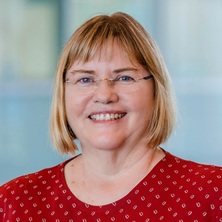
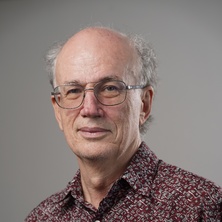
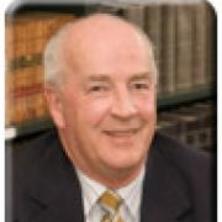
Associate Professor Treasure McGuire graduated with a Bachelor of Pharmacy and a Bachelor of Science (Pharmacology) from the University of Queensland UQ). She also completed a Postgraduate Diploma in Clinical Pharmacy and Graduate Certificate in Higher Education at UQ. In 2005, she completed her PhD in the School of Population Health, UQ, entitled Consumer medicines call centres: a medication liaison model of pharmaceutical care.
She held a conjoint appointment between the School of Pharmacy, UQ and Mater Pharmacy, Mater Health, South East Queensland between 1996 and December 2022. She was appointed as a Senior Lecturer in 2006, Associate Professor, Clinical in 2021 and since 2023 Honorary Associate Professor. Treasure also holds a conjoint appointment between Mater and the Faculty of Health Sciences and Medicine, Bond University as Associate Professor of Pharmacology. In her clinical role at Mater, she is Assistant Director of Pharmacy (Practice and Development). At UQ, she coordinated a graduate clinical pharmacy course within the Master of Clinical Pharmacy program for over a decade. In 2016, this program received a UQ Faculty of Health and Behavioural Sciences Team Award for Programs that Enhance Learning and in 2017 a citation in the University of Queensland Award for Excellence in Teaching and Learning.
Treasure’s research is translational, focusing on patient centred-care and quality use of medicines in the domains of medicines information, evidence-based practice, medication safety, reproductive health, complementary medicines, communicable diseases and interprofessional education. She is a Emeritus Fellow of the Australasian College of Pharmacy, Fellow of the Pharmaceutical Society of Australia and Foundation Fellow, Australian and New Zealand College of Advanced Pharmacy. In recognition of her services to medicines information, she received the Lilly International Fellowship in Hospital Pharmacy and the Bowl of Hygeia of the Pharmaceutical Society of Australia. In 2015, she was the recipient of the Sr Eileen Pollard Medal (Mater Research-UQ) for excellence in incorporating research into clinical care provision.
Faculty of Health, Medicine and Behavioural Sciences
Availability:
Not available for supervision
Media expert
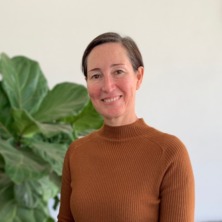
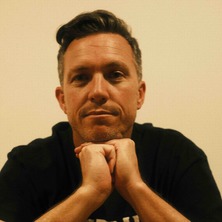
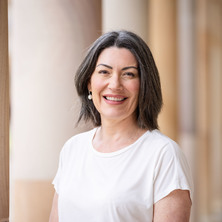
Dr Lisa McHugh is a perinatal and infectious diseases epidemiologist at the UQ School of Public Health (SPH). A Level C Senior Research Fellow and NHMRC Emerging Leader (EL1) Investigator Grant recipient, Lisa leads her own small team of researchers through her 5-year program ‘VaxiMums’, which is evaluating the uptake, effectiveness and equity of maternal vaccinations and respiratory infections.
Lisa is a CI on a national study evaluating RSV hospitalisations in children <5yrs of age, and a CI on a Qld Health project looking at the acceptability of new RSV strategies among parents.
Lisa is currently leading a pilot study investigating pregnancy loss after receiving influenza and COVID-19 vaccinations in early pregnancy-the first of its kind in Australia, and one of only a few internationally. Lisa’s extensive collaborations involve Primary Health Care Networks, First Nations midwives, maternal and child health nurse immunisers, consumers, Queensland Health, and national and international experts in the field.
Lisa has supervised 3 MEpi students to completion-all with the highest GPA of 7. She is currently the primary advisor of 2 PhD students, 2 MEpi students and a MBiostats student.
Projects currently being investigated by her and her students include:
Effectiveness of influenza, pertussis & COVID vaccinations in pregnancy against adverse maternal-infant outcomes
RSV hospitalisations among First Nations children aged <2yrs (Lisa leading thie collaboration with UQCCR)
Adverse birth outcomes among NT mother-infant pairs after maternal vaccinations
Pertussis vaccine effectiveness among preterm infants
Vaccine failures after influenza + pertussis vaccination in pregnancy
Lisa is the Academic Integrity Officer for SPH, and mentors 2 academics in the SPH Mentoring Program. Her research expertise and interests include clinical midwifery, First Nations health, infectious diseases, pregnancy and birth outcomes, and maternal vaccination. She has been a member of the Public Health Association of Australia since 2014, and Immunisation Special Interest Group working group member, contributing to the latest Immunisation Policy Review (2026).
Lisa is also member of the Australasian Epidemiological Association and Editor for the Aust and New Zealand Journal of Public Health.
She reviews for NHMRC grant applications.
When not working Lisa can be found (or not found) trail running, hiking in the middle of nowhere and swimming.
Faculty of Health, Medicine and Behavioural Sciences
Principal Research Fellow
Frazer Institute
Faculty of Health, Medicine and Behavioural Sciences
Availability:
Available for supervision
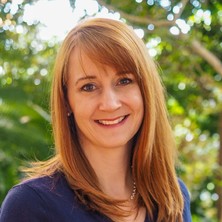
I am a clinician-academic whose interactions with patients have shaped my research questions and fuelled my enthusiasm for the importance of clinical research. I trained as a genetic counsellor and my research now focuses on the integration of genomics into clinical care. My research program has had three primary themes: evaluating the psychosocial impact of genetic conditions and/or genetic testing; evaluating genetics education preferences for patients and healthcare providers; and using next-generation sequencing to increase diagnostic yield for rare disorders.
Current research projects include:
Exploring whether genetic fatalism affects sun-related health behaviours in high-risk individuals following genetic testing.
Exploring the referral journey to genetic services for individuals with rare diseases
Assessing Human Research Ethics Committee (HREC) members’ confidence in reviewing genomic research applications.
Mainstreaming Genetic Testing for Melanoma into Dermatology Practice.
Using Exome sequencing to identify new genes in families with inherited melanoma, negative for mutations in known genes.
Faculty of Health, Medicine and Behavioural Sciences
Availability:
Available for supervision
Media expert
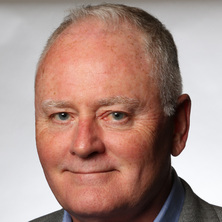
Professor David McIntyre trained in Endocrinology in Australia and Belgium. He works clinically as Director of Obstetric Medicine at Mater Health Services and is an Emeritus Professor in the Faculty of Medicine (Mater Research). David has published over 250 papers (>25000 citations), primarily in the field of medical complications of pregnancy, with a particular focus on diabetes and obesity. Recent research has examined the effects of diabetes, obesity and hypertension during pregnancy on the health of Mothers and Babies, during pregnancy and with long term follow up. David is a Past Chair of the Australasian Diabetes in Pregnancy Society and the International Association of Diabetes in Pregnancy Study Groups (IADPSG). In 2016, David became the first Australian trained clinician to receive the Norbert Freinkel Award for contributions to diabetes in pregnancy from the American Diabetes Association. In 2019 he was awarded the Jørgen Pedersen Lecture for diabetes in pregnancy by DPSG Europe and the Stream Lead Award Lecture for “Diabetes and Women” by the International Diabetes Federation.
Professor McIntyre develops and applies advanced imaging techniques to study flow environments. He conducts research within the Centre for Hypersonics where he implements a range of interferometric, spectroscopic and imaging techniques to probe the harsh environment generated in ground-based hypersonic facilities. He also has interests in the development of laser-based imaging methods in the field of Biophotonics including differential interference contrast microscopy and super-resolution coherent anti-Stokes Raman spectroscopy.
Affiliate of Centre for Environmental Responsibility in Mining
Centre for Environmental Responsibility in Mining
Faculty of Engineering, Architecture and Information Technology
Affiliate of Minerals Industry Safety and Health Centre
Minerals Industry Safety and Health Centre
Faculty of Engineering, Architecture and Information Technology
Professorial Research Fellow
Sustainable Minerals Institute
Faculty of Engineering, Architecture and Information Technology
Availability:
Available for supervision
Neil is civil engineer with expertise in hydrology and water resources. He splits his time between the Centre for Water in the Minerals Industry and the School of Civil Engineering. His current research interests include water resource systems modelling, understanding impacts of mining on water resources, remote sensing applications in hydrology and stochastic hydrology. Neil graduated with a BEng in Civil Engineering from Edinburgh University in 1990 and then worked for seven years in the Scottish pubic sector on wastewater treatment and disposal scheme design and construction. He obtained an MSc in Environmental Engineering in 1998 then a PhD in water quality modeling at Imperial College. Neil worked at Imperial as a Lecturer and Reader in Surface Water Hydrology between 2001 and 2013. This included teaching water quality, hydrometry, hydraulics, and water resources engineering; and a 5-year spell as Director of the Hydrology MSc program. His research there focused on surface water quality, uncertainty in modelling, land use management impacts, and hydrological up-scaling and regionalisation. While most of Neil’s research has been UK and Australia-based, international activity has included projects in Thailand, Uganda, Botswana, Peru, Chile, Colombia, Mongolia and China. He has been a member of the British Hydrological Society national committee, the ICE’s Water Expert Panel, and the NERC Peer Review College. He was won several awards, including the Institution of Civil Engineer’s Baker Medal and RA Carr Award for water resources research. He held an ARC Future Fellowship from 2014-2019.
Simon McKenzie is a Research Fellow at the University of Queensland School of Law. Simon's current research focuses on the legal challenges connected with the defence and security applications of science and technology, with a particular focus on the impact of autonomous systems. His broader research and teaching interests include the law of armed conflict, international criminal law, and domestic criminal law.
Prior to joining the University of Queensland, Simon was a policy officer in the Victorian Department of Justice and Community Safety, working in a team responsible for reforming the criminal justice system to better respond to family violence. He has held teaching roles at the Melbourne Law School and as a researcher at the Supreme Court of Victoria where he completed a major research project on the management of expert evidence in the Kilmore East Bushfire Proceedings, the largest class action in Victoria's history. He has also worked as a researcher at the International Criminal Court assisting the Special Advisor to the Prosecutor on international humanitarian law. He began his career in 2011 at a large commercial law firm in Melbourne.
Simon graduated in 2011 from the University of Tasmania with a combined Arts and Law Degree with First Class Honours in Law and was admitted to practice in Victoria later that year. He received his PhD in international criminal law from the University of Melbourne in 2018.
Prof. Bob McKercher has been a tourism academic since 1990. Prior to that he worked in the Canadian tourism industry in a variety of advocacy and operational roles. He received his PhD from the University of Melbourne in Australia, a Master’s degree from Carleton University in Ottawa, Canada and his undergraduate degree from York University in Toronto, Canada. He has published over 300 scholarly papers and research reports, is the author/co-author of The Business of Nature-based Tourism, Cultural Tourism and Tourism Theories, Concepts and Models. He has also edited a number of other books. Prof McKercher is the Past President of the International Academic for the Study of Tourism; a Fellow of the International Academic for the Study of Tourism; the Council for Australian University Tourism and Hospitality Education and; the International Academy of Culture, Tourism and Hospitality Research.
Faculty of Health, Medicine and Behavioural Sciences
Affiliate of Centre for Research in Social Psychology (CRiSP)
Centre for Research in Social Psychology
Faculty of Health, Medicine and Behavioural Sciences
Availability:
Available for supervision
Media expert
Blake joined the School of Psychology at UQ in 2007 having previously been a lecturer at Queensland University of Technology. Blake won a Faculty Teaching Excellence Award in 2010 and a University of Queensland Teaching Excellence Award in 2016. He led a team that won the AAUT Higher Education Teacher of the Year award in 2019, and received the edX Prize in 2018. He currently teaches into the Master of Business Psychology. His research focuses on jury decision-making including the influence of gender-based stereotypes and the influence of different modes of evidence presentation. He is also interested in group membership and attitude-behaviour relations and how group membership influences thinking about the self. He is a leading instructor of the award-winning course: CRIME101x and the PSYC1030x Introduction to Developmental, Social & Clinical Psychology XSeries Program of four courses on edX.org.
My work focuses on Indigenous sovereignty, digital infrastructure, and the global education reform movement (GERM), with a particular emphasis on how Māori assert self-determination in systems traditionally shaped by settler-colonial and neoliberal logics.
Faculty of Health, Medicine and Behavioural Sciences
Availability:
Available for supervision
Media expert
I am a basic science researcher with training in cell biology, genetics and research translation. My research investigates the female reproductive system by focusing on the contribution of individual cells. I aim to understand the influence of genetic architecture, differentiation and maturation on these individual cells and how this contributes to changes in the microenvironment that can contribute to disease initiation and progression.
After the completion of my PhD in 2008 at the University of Queensland, I undertook post-doctoral studies at the University of Bern, Department of Biomedical Research (DBMR), focusing on endometriosis, ovarian and endometrial cancer. I curated patient samples from clinical research trials to investigate inflammatory and metabolic components of reproductive tissue and disease and began developing patient-derived models of the endometrium. I established a relationship between endometriosis lesions, nerves and pain and how this interaction was mediated by inflammation. I further developed patient-derived in vitro models to understand the interaction between inflammation and hormonal response of endometriotic lesions and how this could be utilized to target current and novel treatments. On returning to Australia in 2016 I joined the Genomics of Reproductive Disorders laboratory to integrate genetic background into patient-derived in vitro models. I established the Endometriosis Research Queensland Study (ERQS) in collaboration with the Royal Brisbane and Women’s Hospital (RBWH) and extended in vitro models into complex multi-cellular assembloids (combinations of organoids and surrounding stromal cells).
Professor Geoffrey McLachlan's research interests are in: data mining, statistical analysis of microarray, gene expression data, finite mixture models and medical statistics.
Professor McLachlan received his PhD from the University of Queensland in 1974 and his DSc from there in 1994. His current research projects in statistics are in the related fields of classification, cluster and discriminant analyses, image analysis, machine learning, neural networks, and pattern recognition, and in the field of statistical inference. The focus in the latter field has been on the theory and applications of finite mixture models and on estimation via the EM algorithm.
A common theme of his research in these fields has been statistical computation, with particular attention being given to the computational aspects of the statistical methodology. This computational theme extends to Professor McLachlan's more recent interests in the field of data mining.
He is also actively involved in research in the field of medical statistics and, more recently, in the statistical analysis of microarray gene expression data.
My research is informed by sociocultural theories that conceive learning as simultaneously intellectual, relational, emotional, and ideological. This understanding has been shaped by my own journey from secondary teacher to teacher educator, and an appreciation for teaching and learning as complex, human endeavours rather than simple exchanges of knowledge.
I investigate how people learn and form a sense of self across diverse educational settings, from secondary classrooms to universities, including in digital environments. Much of my work focuses on how preservice teachers navigate the process of becoming professionals in a climate of policy reform and public scrutiny.
Drawing on theorists including Vygotsky and Bakhtin, my research illuminates the experience of being both a teacher and a student as complex, relational, and deeply human.