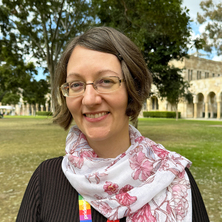
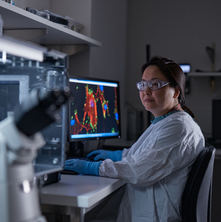
Dr. Laura Grogan is a qualified veterinarian, Senior Lecturer in Wildlife Science and Leader of the Biodiversity Health Research Team (https://www.biodiversity-health.org/) - a collaborative multiple-university research group focused on finding sustainable solutions for the most challenging threatening processes currently affecting biodiversity.
Dr. Grogan has a background in research on wildlife diseases, ecology and conservation. She's particularly interested in investigating the dynamics, relative importance, and impacts of infectious diseases among other threats affecting wildlife across both individual and population scales, to improve conservation management.
While she works across taxa and methodological approaches, her main study system currently involves the devastating amphibian fungal skin disease, chytridiomycosis, where at the individual scale she focuses on the pathogenesis and amphibian immune response to the disease, untangling the roles of resistance and tolerance in defense against infection. At the population and landscape scale she explores mechanisms underlying persistence in the face of endemic infection, focused on the endangered Fleay's barred frog. She also studies population and infection dynamics of chlamydiosis in koala using a mathematical modelling approach, exploring the relative benefits of different management approaches. In addition to working on amphibian and koala diseases, Laura is a keen birdwatcher, wildlife photographer and artist. She supervises projects across wildlife-related fields (predominantly vertebrates).
You can find out more about her research team here: www.biodiversity-health.org.
Dr. Grogan has been awarded around $1.3 million in research funding since 2018. In late 2019 she was awarded an Australian Research Council Discovery Early Career Researcher Award (DECRA; DE200100490), worth $426,742. This project, titled "Understanding infection tolerance to improve management of wildlife disease", commenced in late 2020. Dr. Grogan was identified as one of the four top-ranked science DECRA awardees by the Australian Academy of Science’s 2020 J G Russell Award, and was also recipient of the highest award of the Wildlife Disease Association Australasia Section with their 2019 Barry L Munday Recognition Award.
PhD and Honours projects are now available in the following areas (plus many more areas - please get in touch if you have an idea):
Can frogs be ‘vaccinated’ by antifungal treatment of active infections to develop protective immunity to the devastating chytrid fungus? (Principal Supervisor)
Establishing the conservation status of south-east Queensland’s amphibians - occupancy surveys and species distribution models (Principal Supervisor)
Tadpoles as a reservoir of the lethal frog chytrid fungal disease – measuring sublethal effects on growth, time to metamorphosis and ability to forage (mouthpart loss) (Principal Supervisor)
Impacts of chytrid fungus on the survival of juvenile endangered Fleay’s barred frogs, Mixophyes fleayi, and importance for population recruitment (Principal Supervisor)
Measuring the infection resistance versus tolerance of barred frogs to the devastating chytrid fungal disease to improve management outcomes (Principal Supervisor)
Mapping the impacts of fire-fighting chemicals on endangered frog habitats (Co-Supervisor)
Bowra birds: what do long-term monitoring data reveal about bird communities in the semi-arid region? (Co-Supervisor)
Impacts of fire-fighting chemicals on endangered frogs: Implications for conservation and management (Co-Supervisor)
Faculty of Engineering, Architecture and Information Technology
Research Fellow
Australian Institute for Bioengineering and Nanotechnology
Availability:
Available for supervision
Dr. Wenyi Gu’s early education was conducted in China which include his undergraduate and master’s degrees in veterinary medicine. In 1996, he migrated to Australia and pursued his PhD study in biochemistry & molecular biology at the Australian National University (ANU). After a short period of work at John Curtin Medical School ANU as a junior scientist, he moved to Brisbane in 2001 for his post-doc at the University of Queensland and currently a post-doctoral research fellow at AIBN. He held a Peter Doherty Fellowship (2006-2009) and was further supported by NHMRC to spend 7 months at Harvard University as a visiting fellow in 2008. Since his post-doctoral research he has been working in the area of using RNAi to treat viral diseases and cancers. He also has a strong background in immunology and vaccine development.
Australian Institute for Bioengineering and Nanotechnology
Availability:
Available for supervision
Helen Gunter is a Senior Postdoctoral Fellow at the Australian Institute for Bioengineering and Nanotechnology. Dr. Gunter is partnering with Oxford Nanopore Technologies and the BASE Facility to benchmark a comprehensive test of mRNA vaccine quality. Helen has authored 25 publications, with 10 as first author, one as senior author, and 14 as middle author. She has published in influential journals such as Nature, Nature Communications and Translational Psychiatry. Helen’s work has attracted >$2M in funding from Oxford Nanopore (2023), the Genome Innovation Hub (2021), Deutesche Forschungsgemeinschaft (2011), a Zukunftskolleg Fellowship (2008) and from the University of Konstanz (2013).
Faculty of Health, Medicine and Behavioural Sciences
Availability:
Available for supervision
Media expert
Professor Emma Hamilton-Williams’ career focuses on understanding how immune tolerance is disrupted leading to the development of the autoimmune disease type 1 diabetes. She received her PhD from the Australian National University in 2001, followed by postdoctoral training in Germany and the Scripps Research Institute in the USA.
In 2012, she started a laboratory at the Frazer Institute, University of Queensland where she investigates the gut microbiota as a potential trigger or therapy target for type 1 diabetes, as well as developing an immunotherapy for type 1 diabetes. The overall aim of her research is to find new ways to prevent or treat the underlying immune dysfunction causing autoimmunity.
She is Chief Scientific Officer for an Australia-wide pregnancy-birth cohort study of children at increased risk of type 1 diabetes, which aims to uncover the environmental drivers of this disease. Her laboratory uses big-data approaches including proteomics, metabolomics and metagenomics to understand the function of the gut microbiota linked to disease.
She recently conducted a clinical trial of a microbiome-targeting biotherapy aimed at restoring a healthy microbiome and immune tolerance, with an ultimate aim of preventing type 1 diabetes.
Faculty of Health, Medicine and Behavioural Sciences
Affiliate of Centre for Extracellular Vesicle Nanomedicine
Centre for Extracellular Vesicle Nanomedicine
Faculty of Health, Medicine and Behavioural Sciences
Affiliate of Centre for Orofacial Regeneration, Reconstruction and Rehabilitation (COR3)
Centre for Orofacial Regeneration, Reconstruction and Rehabilitation
Faculty of Health, Medicine and Behavioural Sciences
Availability:
Available for supervision
Media expert
Dr Pingping Han currently leads the Epigenetic Nanodiagnostics and Therapeutics Group within the Centre for Orofacial Regeneration, Reconstruction and Rehabilitation (COR3) at the UQ School of Dentistry. She received her PhD in Biomedical Engineering from the Queensland University of Technology (QUT) in 2014.
Dr Han’s current research focuses on three main areas: (a) salivary diagnostics for periodontal disease and (b) “cell-free” regenerative therapies for periodontal tissue engineering.
Queensland Alliance for Agriculture and Food Innovation
Availability:
Available for supervision
Media expert
Dr April Hastwell is a plant molecular biologist with the School of Agriculture and Food Science at The University of Queensland, Australia. The focus of her research group is on roles of short signalling peptides in root development including in molecular networks controlling the beneficial legume-rhizobia symbiosis and nodule development.
Alesha Hatton is a postdoctoral research fellow specializing in statistical genetics and genetic epidemiology at the Institute for Molecular Bioscience, University of Queensland. Currently, her research focuses on understanding the genetic and environmental aetiology underlying complex traits through use of Mendelian randomization and statistical genetics methodologies. Her PhD was in systems genomics, applying quantitative genetics methods to investigate the role of DNA methylation in complex trait variation. Alesha has a bachelor’s degree in medical mathematics from the University of Wollongong and previously was employed as a statistician at the South Australian health and Medical Research Institute.
Centre Director of ARC Training Centre for Predictive Breeding
ARC Training Centre in Predictive Breeding
Queensland Alliance for Agriculture and Food Innovation
Affiliate of ARC COE for Plant Success in Nature and Agriculture
ARC COE for Plant Success in Nature and Agriculture
Faculty of Science
ARC Future Fellow
Queensland Alliance for Agriculture and Food Innovation
Availability:
Available for supervision
Media expert
Professor Lee Hickey is a plant breeder and crop geneticist within the Queensland Alliance for Agriculture and Food Innovation at The University of Queensland, Australia. He is an ARC Future Fellow and Director of the ARC Training Centre in Predictive Breeding. His own research group specialises in plant breeding innovation to support development of more productive crops, including cereals, legumes, sugarcane, as well as horticultural and fibre crops. He has a strong interest in the integration of breeding technologies, such as genomic prediction, AI, speed breeding and genome editing. His advice for speed breeding crops is sought internationally and the technology is now adopted by plant breeding programs worldwide, which is fast-tracking development of improved crop varieties for farmers. His research outcomes have featured in >100 refereed publications, including articles in high profile journals Nature Plants, Nature Protocols and Nature Biotechnology. Lee is a prolific science communicator and his research outcomes have appeared in mainstream media such as BBC World News, National Geographic, and the New York Times. He is passionate about training the next generation of plant breeders and currently mentors 18 PhD students, while 20 of his previous graduates now work for leading plant breeding companies and high-profile research institutes around the globe.
Check out the ARC Training Centre in Predictive Breeding website here
Follow Professor Lee Hickey on X: @DrHikov
Research interests
Speed breeding techniques to reduce the length of breeding cycles
Understanding the genetics of physiological traits that support yield in different environments
Integrating breeding technologies to accelerate genetic gain in breeding programs
Affiliate of Clem Jones Centre for Ageing and Dementia Research
Clem Jones Centre for Ageing Dementia Research
Faculty of Health, Medicine and Behavioural Sciences
Professorial Research Fellow and Group Leader
Queensland Brain Institute
Faculty of Health, Medicine and Behavioural Sciences
Availability:
Available for supervision
Media expert
Queensland Brain Institute
Dr Massimo A. Hilliard received his PhD in Biological Chemistry and Molecular Biology in 2001 from the University of Naples, Italy. His experimental work, performed at the Institute of Genetics and Biophysics of the CNR (Italian National Council of Research), was aimed at understanding the neuronal and genetic basis of aversive taste behavior (bitter taste) in C. elegans.
During his first postdoc at the University of California, San Diego, using the Ca2+ indicator Cameleon he published the first direct visualisation of chemosensory activity in C. elegans neurons. In his second postdoctoral work at the University of California, San Francisco and at The Rockefeller University, he switched from neuronal function to neuronal development, focusing in particular on how neurons establish and orient their polarity with respect to extracellular cues.
From September 2007, he is at the Queensland Brain Institute where he established an independent laboratory.
Valentin was awarded a PhD from the French National Institute of Higher Education in Agricultural Sciences and the University of Montpellier (France) in 2018. His thesis focused on methodological developments for genetic differentiation analysis in the Next Generation Sequencing era in a neutral and adaptive context. Since 2019, he works as a post-doctoral researcher at the University of Queensland in the Program in Complex Trait Genomics group under the supervision of Professor Peter Visscher. His current research focuses on studying the within and between-population genetic variation in human complex traits.
Faculty of Health, Medicine and Behavioural Sciences
Availability:
Available for supervision
The research interests of the Hume Laboratory centre on the biology of macrophages and osteoclasts. These are cells of haematopoietic origin that are closely related to each other but have distinctly different activities.
David Hume was a group leader at the Institute for Molecular Bioscience (1988-2007) and subsequently Director of the Roslin Institute at the University of Edinburgh in Scotland from 2007-2017. He is currently a Professorial Research Fellow at the Mater Research Institute-UQ, located at the Translational Research Institute
Dr Daniel Liang-Dar Hwang is a genetic epidemiologist and statistical geneticist by training. His research interests include sensory nutrition, causal modelling, and personalized nutrition. Dr Hwang applies statistical models to big data to understand genetic and environmental factors contributing to individual differences in taste and olfactory perception and their relationship with dietary behaviour and chronic conditions (See his research in The Conversation and InSight+). He develops methods for increasing statistical power for gene discovery, estimating intergenerational causal relationships, and personalized intervention. He also works with clinicians to investigate impaired chemosensory perception in cancer patients and COVID-19.
Daniel has a B.Sc from the National Taiwan University, majoring in Biochemical Science and Technology, and an M.Biotech from the University of Pennsylvania. Following graduation, he worked as a research technician in Danielle Reed's lab at the Monell Chemical Senses Center, where he first developed a keen interest in genetics and chemosensory perception. Later, he was awarded scholarships to complete an M.Sc in Nutrition at the University of Washington, under the supervision of Glen Duncan, and a PhD in Genetic Epidemiology at the QIMR Berghofer Medical Research Institute, under the supervision of Nicholas Martin and Margaret Wright. He then joined David Evans's group as a postdoc at the University of Queensland Diamantina Institute (now the Frazer Institute). Dr Hwang is an ARC DECRA Fellow at the Institute for Molecular Bioscience. He is also an Affiliated Scientist at the Monell Chemical Senses Center.
Dr Hwang has published more than 60 peer-reviewed publications. His work has been cited in international health policy guidelines and a WHO report on the intervention for childhood obesity, as well as in a global patent for personalized wine selection. He is on the editorial boards of BMC Medicine and Twin Research and Human Genetics. Dr Hwang is a Leadership Team member of the Global Consortium for Chemosensory Research, a global initiative to understand the relationship between smell loss and COVID-19 and foster the advancement of chemosensory science. He currently leads an international collaborative project investigating the impact of COVID-19 vaccinations on long-COVID symptoms. Dr Hwang is a member of the National Committee for Nutrition of the Australian Academy of Science. He contributes to the implementation of the decadal plan for the science of nutrition in Australia.
Clara Jiang is a postdoctoral research fellow at the Institute for Molecular Bioscience, the University of Queensland. Clara’s research focuses on using genomic and transcriptomic analysis to investigate the genetic basis of cardiovascular and psychiatric disorders, with a particular focus on female health, as well as using statistical genomic approaches to explore possible opportunities for drug repurposing. Clara graduated from the University of Queensland with Bachelor of Advanced Science (First Class Honours) in 2017, and was awarded the University Medal. Clara was awarded her PhD at the University of Queensland in 2021, where she utilised bioinformatic approaches and molecular experiments to decipher the genetic aetiology of breast cancer, specifically the regulatory role of transposons or ‘jumping genes’ in modulating the transcriptional landscape in the cancer state. Clara is also a UQ Wellness ambassador and an advocate for promoting equity, diversity and inclusion in academia.
Affiliate of ARC COE for Plant Success in Nature and Agriculture
ARC COE for Plant Success in Nature and Agriculture
Faculty of Science
Professorial Research Fellow
Queensland Alliance for Agriculture and Food Innovation
Availability:
Available for supervision
Prof. David Jordan is a sorghum breeder and geneticist with more than 20 years experience working in both the public and private sector.
For the last decade he has led the public sorghum pre-breeding program in Australia which is a partnership between the University of Queensland (UQ), The Queensland Department of Agriculture and Fisheries (DAF) and the Grains research and Develop Corporation (GRDC). This is a long running and successful research effort with a reputation for integrating across disciplines and linking research efforts from the strategic to the applied. Breeding lines from this program are widely used commercially in Australia and internationally with 100% of the commercial sorghum grown in Australia having genetics from the program. At the same time the research group continues to produce research papers at the forefront of sorghum research.
In recent years he had led projects focused on improving the lives of resource poor farmers in Africa that rely on sorghum.
Affiliate of ARC COE for Plant Success in Nature and Agriculture
ARC COE for Plant Success in Nature and Agriculture
Faculty of Science
Senior Research Fellow
School of Agriculture and Food Sustainability
Faculty of Science
Availability:
Available for supervision
Media expert
I am centre-wide sernior research fellow in the ARC Centre of Excellence for Plant Success in Nature and Agriculture, based here at UQ. Currently I lead a small but growing team of computational biologists focusing on new techniques for predicting complex quantitative traits through causal molecular networks using AI and ML approaches.
Areas of interest:
Machine Learning, AI and high performance computing to learn and exploit functional connectivity in biological data
Gene Expressions networks
Multiplex networks, information propagation and perturbation
Genomic Prediction
Our goal is to aid crop and forestry breeders in selecting parental lines more accurately, which gives us a pathway to improving certain plant species. I also spend time developing new data analysis techniques that are being applied to human disease and conditions such as Autism and substance addiction.
David completed his PhD at Australian National University in 2017, focusing on the genome-wide basis of foliar terpene variation in Eucalyptus. He then undertook a postdoc at Oak Ridge National Laboratory, a US Dept of Energy lab with a focus on big data. After a stint as a staff scientist at Oak Ridge, David arrived at the Centre of Excellence in 2023 in the role of a Senior Research Fellow. He currently supervises 3 PhD students and one full time postdoctoral researcher at UQ.
Dr Kemper is a postdoctoral fellow in statistical genetics. She joined UQ in 2016 after obtaining a PhD and postdoctoral experience at the University of Melbourne (2006-2016). Her expertise and research interests span a range of topics in quantitative genetics, including genomic prediction, modelling the epidemiological consequences of genetic change in disease and population genetics. Current research areas include:
Faculty of Health, Medicine and Behavioural Sciences
Availability:
Available for supervision
Media expert
I am a developmental neuroscientist and bioinformatician interested in the molecular evolution of the mammalian brain. I completed a PhD on the molecular development of vasculature in the primate retina at the Australian National University, followed by a postdoctoral position at the Institut de la Vision in France that was supported by a NHMRC CJ Martin fellowship, where I investigated the role of guidance factors in the formation of commissural neurons within the mammalian hindbrain. My current research focuses on the development and evolution of the mammalian forebrain, in particular understanding the regulatory mechanisms and molecular evolutionary processes that control specification of cortical neuron subtypes.
Senior Research Fellow of Institute for Molecular Bioscience
Institute for Molecular Bioscience
Affiliate of Dermatology Research Centre
Dermatology Research Centre
Faculty of Health, Medicine and Behavioural Sciences
Senior Research Fellow
Frazer Institute
Faculty of Health, Medicine and Behavioural Sciences
Availability:
Available for supervision
Media expert
Dr Snehlata Kumari is a group leader and the head of the Skin Inflammation and Immunity Laboratory at the Frazer Institute, University of Queensland, in Brisbane, Australia. Her international career and academic training spanned Germany, India, and Australia. She is a board member of the Australasian Society for Dermatology Research (ASDR) and a councillor on the International Psoriasis Council.
She has discovered novel signalling mechanisms that regulate the balance between homeostasis and inflammation in the skin. These findings highlight new mechanisms by which inflammatory diseases are initiated and propagated via NF-κB, TNF, IL-20 family cytokines, and necroptotic and apoptotic signalling pathways. Her research work has been published in top-tier journals, including Nature (3x), Nature Communications, Cell Metabolism, and Immunity.
Her scientific contributions have received international recognitions and honours, including the German National Academy of Sciences, the German Research Foundation (DFG), the European Society for Dermatological Research, the Japanese Society for Investigative Dermatology, and the Young Women Investigators Award from the International Cytokine and Interferon Society.
Overall aims and research focus
- Immunomodulatory mechanisms regulating inflammation and immunity.
- Cellular and cell-soluble factor interactions in inflammatory diseases, including Psoriasis, Hidradenitis Suppurative, and Atopic Dermatitis.