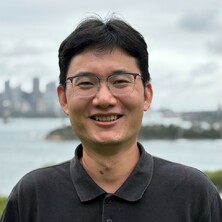
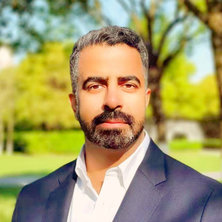
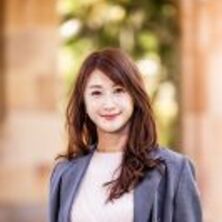
Yi-Hsun Chen completed his PhD in Physics at the Monash University in 2024. Prior to this PhD, he obtained his Master degree in Optoelectronics at the National Chiao Tung University, Taiwan, in 2014.
His research interests relate to electronic transport and optical properties of the following field of study:
Superconducting qubits
Exciton science
Bose-Einstein condensate
2D materials (graphene, transition metal dichalcogenides, etc.)
Plasmonics
In 2024, He joins UQ as a Postdoctoral Research Fellow under an ARC Linkage Project "Surface and Interface Engineering for Superconducting Quantum Circuits," pursuing high-quality superconducting quantum circuits using surface engineering strategies.
Please find his publication list via google scholar profile https://scholar.google.com.tw/citations?user=EvKa9qIAAAAJ&hl=en
Faculty of Engineering, Architecture and Information Technology
Availability:
Available for supervision
Dr. Guoliang Chen is a Postdoctoral Research Fellow at the ARC Centre of Excellence for Green Electrochemical Transformation of Carbon Dioxide (GETCO2) and the School of Chemical Engineering at The University of Queensland. He is also an Adjunct Research Fellow in the Centre for Future Materials at the University of Southern Queensland. He completed his Ph.D. in 2025 at the University of Southern Queensland. His research focuses on developing flow-through gas diffusion electrodes for the electrochemical reduction of CO2. His current main research interests include engineering advanced gas-diffusion electrodes, high-rate gas-phase product reduction, and electrochemical catalysis. To date, he has published over 21 peer-reviewed papers in top-tier journals, including Advanced Materials, Matter, Applied Catalysis B, etc.
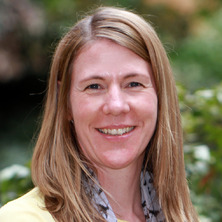
Associate Professor Karen Cheney is the Director of the Centre for Marine Science at The University of Queensland, where she connects and strengthens marine research across the University and build collaborations with government, industry, community and conservation partners.
Her current research interests have a strong focus on marine conservation and restoration, including the conservation of the threatened White’s seahorse (Hippocampus whitei) in southeast Queensland and understanding the biodiversity and ecosystem services supported by shellfish reef restoration.
Karen is also a sensory ecologist whose research explores how marine animals perceive and interact with their environment. Using multidisciplinary approaches spanning sensory, behavioural and chemical ecology, her research investigates predator–prey interactions, animal signalling, and the evolution and function of animal colour patterns, with a particular focus on marine fishes and molluscs.
Animal Signalling: She focuses on the evolution of animal signals in the marine environment, particularly those used for camouflage and warning signals (aposematism). Her research employs spectrophotometry, theoretical vision models, phylogenetic comparative analysis, and a novel method using a calibrated underwater camera system to analyse complex animal colour patterns. This innovative approach enables simultaneous in-situ collection of spatial and spectral properties of animals and their backgrounds. She specifically investigates the diversity of colour signals displayed by nudibranch molluscs, examining how these patterns are perceived by potential predators and their relationship to the unpalatability and toxicity of the molluscs’ stored chemical defences.
Colour Vision: She studies the visual performance of coral reef fish using behavioural assays inspired by tests used to screen for human color vision deficiencies. By relating behavioural data to theoretical visual modelling, she assesses the accuracy of these models. More broadly, she explores the sensory, neural, and cognitive foundations of colour perception and investigates the genetic basis for the diversification of visual systems.
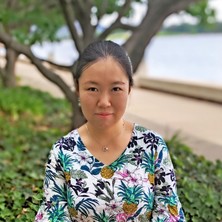
Dr Wenting Cheng is a legal and regulatory scholar specialising in intellectual property law, sustainability governance, and their intersection. She has applied interdisciplinary skills, comparative perspectives, and regulatory theories to research in diverse areas, including intellectual property law, innovation policy, energy regulation (particularly hydrogen and off-shore wind power), just climate transition, and sustainable finance at local, national, and international levels.
Wenting obtained her PhD in Regulation and Governance in 2018 from the School of Regulation and Global Governance (RegNet), College of Asia Pacific, the Australian National University. From 2020 to 2023, she worked as a Grand Challenge Fellow at ANU Grand Challenge Zero Carbon Energy for the Asia Pacific. In this role, she had the opportunity to work in a multidisciplinary team, including scientists, engineers, and economists, to explore how to address technical, economic, and regulatory challenges for energy transition nationally, regionally, and globally.
Wenting is interested in understanding IP as a regulatory instrument for knowledge commodification in global regulatory capitalism. Her research has focused on the impact of IP regulation on broader issues such as access to medicines and climate change and how the global diffusion of IP law has impacted the receiving countries. Her PhD monograph was published in the well-regarded Palgrave Socio-Legal Studies series in 2023. Wenting's article on IP and international clean technology diffusion (awarded the 2023 Asian Society of International Law Young Scholar Prize, First Prize) crystallises the norm collision between IP and climate objectives, advising developing countries to take a national-based approach instead of engaging in treaty negotiation to consolidate TRIPS flexibility at the national level.
In sustainability regulation, Wenting's research focuses on understanding the frameworks, practices, and mechanisms that define the 'green' boundaries in various intersecting issues. She has worked on diverse topics, including environmental goods liberalisation, sustainable finance, ESG disclosure, renewable hydrogen regulation, hydrogen certifications, embedded carbon accounting, and offshore wind regulation. A common theme across her work is how to measure, assess, and enhance regulatory stringency to set effective green boundaries and stimulate genuine behavioural change beyond mere managerial compliance.
Our lab aims to test fundamental hypotheses in genetics and evolutionary biology. Principally, we are interested the relationship between genotypic and phenotypic change during adaptive evolution. This line of inquiry requires an understanding of both the type of selection acting on traits as they evolve and ultimately the functional polymorphisms available for selection to act upon. We presently use both native and exotic species of Drosophila in our work but also undertake collaborative study in other organisms that represent examples of recurring ecological and evolutionary phenomena. We are equipped to use a broad range of techniques in our investigations including experimental evolution, field-based selection studies, quantitative genetics, molecular population genetics, genomics and advanced quantitative methods in statistics and computational biology. The broad range of techniques available to our group provides students with a unique opportunity to broaden their skill sets as they address fundamental questions.
Affiliate of ARC COE for Plant Success in Nature and Agriculture
ARC COE for Plant Success in Nature and Agriculture
Faculty of Science
Professorial Research Fellow
Queensland Alliance for Agriculture and Food Innovation
Availability:
Available for supervision
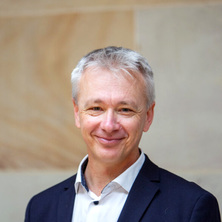
Karine Chenu is a Professor at the Queensland Alliance for Agriculture and Food Innovation (QAAFI), The University of Queensland, and Director of the ARC Research Hub for Engineering Plants to Replace Fossil Carbon. She is an internationally recognised expert in ecophysiology and crop modelling, with a strong focus on improving plant adaptation to climate change and enhancing their potential to produce sustainable bioproducts.
Her research integrates physiology, genetics, and modelling to advance crop design and breeding strategies. This includes uncovering the physiological and genetic basis of key adaptive traits, developing gene-to-phenotype modelling approaches, and exploring innovative combinations of genotypes, environments, and management practices to enhance productivity under changing climates.
Professor Chenu works closely with a wide network of plant breeders, geneticists, biochemists, modellers, and agronomists across national and international collaborations in both public and private sectors. She also represents UQ on the APSIM Initiative Reference Panel, contributing to the ongoing development of the globally adopted APSIM crop modelling platform.
Faculty of Engineering, Architecture and Information Technology
Professor
School of Social Science
Faculty of Humanities, Arts and Social Sciences
Availability:
Not available for supervision
Dr Adrian Cherney is a Professor in the School of Social Science at the University of Queensland. He was an Australian Research Council (ARC) Future Fellow. He has completed evaluations of programs aimed at countering violent extremism and is undertaking research on violent extremism risk assessment. His ARC Future Fellowship explored case-managed interventions targeting convicted terrorists and those at risk of radicalisation.
Faculty of Engineering, Architecture and Information Technology
Availability:
Not available for supervision
She joined UQ in September 2015 as a Lecturer of Water Engineering. Her research focuses on hydrogeology topics applied to different sectors of Environmental Engineering, with her primary interest being the hydrogeological and geostatistical modelling of heterogeneous aquifers for the purpose of improved groundwater management. By means of the use of deterministic and stochastic methods, Cherubini is able to characterize the spatial distribution of coastal aquifer’s properties and to model environmental and anthropogenic variables by using advanced geo-statistical techniques. In this way, one can reproduce detailed geological reconstructions that support numerical models. Groundwater flow and transport modelling allow simulations suitable for groundwater management by master plans, remediation interventions at polluted sites and a correct exploitation of groundwater in coastal areas. The characterization and the description of phenomena that involve fractured aquifers, especially if considered in relationship with water resource exploitation, is an important issue because fractured aquifers serve as the primary source of drinking water for many areas of the world. Current developments of C. Cherubini researches are the study and characterization of physical processes governing infiltration in the fractured vadose zone and heat transport in fractured aquifers to understand and compare fluid movement and thermal behaviour in such media. The study is aimed at investigating the exploitation of low enthalpy geothermal energy that can be obtained with the aid of ground-source heat pump system from the soil, rock and groundwater. Prior to joining the University of Queensland, she was associate professor in hydrogeology at Institute Polytechnique LaSalle Beauvais (France) (2012-2015), held postdoctoral research positions at CNR and at the Polytechnic University of Bari, and was visiting researcher at Lawrence Berkeley National Laboratory (USA) and United States Geological Survey Menlo Park (USA). In 2011 she was invited Lecturer in MSc Module “Mineral Resource Assessment” at University of Exeter- Camborne School of Mines (UK).
Lynda is Deputy Provost of the University, with responsibility for assisting in the operations of the Provost portfolio and initiatives sponsored by the Offices of the Vice-Chancellor and Provost. This includes providing direction for strategic projects and working across functions, units, colleges, and campuses to execute goals for the Provost. As a member of the Senior Leadership and Academic Board, Lynda provides administrative leadership with a particular focus on industrial and employee relations issues as they relate to academic staff.
Lynda holds a Bachelor of Economic and Social Science (Hons) in sociology from the University of Wales (University College of Swansea), and a BA Honours degree and PhD in sociology from Central Queensland University.
Prior to taking up the position of Deputy Provost, she served as Head of the School of Social Science from 2020 to 2026. She has also held research-focussed and Teaching and Research positions, including an Australian Research Council Future Fellowship from 2011 to 2015.
As a sociologist, Lynda has undertaken research in the broad area of community, neighbourhoods and housing, examining how how structural and policy processes impact upon neighbourly and community relations, and attachments to home and place. She has led a large program of research on ‘un-neighbourliness’ using large-scale, survey, interview and administrative data to examine the nature, causes and outcomes of problems between neighbours and their effects on neighbouring more broadly. She has also served as international Partner Investigator on the ESRCs’ Connected Communities consortium (Crow et al) and the Wales Institute of Social and Economic Research, Data and Methods (WISERDII).
Professor and Head of School, Architecture, Design & Planning
Faculty of Engineering, Architecture and Information Technology
Availability:
Available for supervision
Ali Cheshmehzangi is Professor in the School of Architecture, Design and Planning (ADP) at the University of Queensland, where he leads the School and researches across the fields of architecture, design, and planning/urbanism. He is the World’s top 2% field leader for two consecutive years, recognised by Stanford University. He is among top 30 global scholars in the urban sustainability research area. Ali is internationally known for his scholarly contribution and extended work on climate resilience and sustainable urbanism research, mainly as the Editor-in-Chief of Springer’s Urban Sustainability (US) book series (see https://www.springer.com/series/16930). He has five academic degrees including a PhD Degree in Architecture and Urban Design, Master of Architecture (M.Arch.) in Urban Design, Postgraduate Certificate in Higher Education (PGCHE), Graduate Degree in Professional Studies in Architecture, and Bachelor’s Degree in Architecture. Ali has a wealth of experience, expertise, and a strong commitment to innovation and excellence in the fields of architecture, design, and planning, three core disciplines of his School at UQ. With a career spanning over two decades, he has made significant contributions to the academic and professional communities, with a focus on sustainable and environmentally conscious design. Prior to joining UQ, Ali held several strategic leadership and senior managerial roles, such as Vice-President for International Engagement and Global Partnership, Founding Director and Head of the Center for Innovation in Education and Research, Head of the Department of Architecture and Built Environment, Founding Director of the Urban Innovation Lab, Director of a university-wide Teaching and Learning platform, Director of International Research Network for Rural and Urban Development, Head of Research Group for Sustainable Built Environment, co-director of university-wide research priority areas, Director of Center for Sustainable Energy Technologies, and Interim Director of Digital Design Lab.
Dr Monica Chien has multidisciplinary training in marketing, psychology and tourism, and has an extensive background in hospitality. She has won multiple awards for her teaching and research, and has been invited as a visiting scholar to universities in Japan.
Dr Chien’s scholarly interest and expertise lie in the field of Consumer Behaviour, and she is an active researcher in the associated fields of traveller behaviour, sports fan behaviour, resident study, branding and marketing communications with demonstrated research impact on industry, government and policy both within Australia and internationally. She has particular expertise and interest in experimental studies, and has published in leading international marketing and tourism journals.
Dr Chien has conducted research and consultancy with industry and government, leading several international and national projects. She is currently investigating how sport scandals affect sponsoring brands and stakeholders in sport. Her recent projects also examine the nexus between international education and tourism, as well as residents’ response to tourism and mega-event development.
Affiliate of Queensland Centre for Population Research
Queensland Centre for Population Research
Faculty of Science
Honorary Senior Fellow
School of the Environment
Faculty of Science
Availability:
Available for supervision
Dr. Childs has taught into several courses in GPEM/SEES and has been involved with research projects in the Queensland Centre for Population Research and on slum upgrading in Southeast Asia. She was previously Senior Lecturer in Geography at QUT where she directed the Geography program and taught in Human, Australian and Asia-Pacific Geography and Environmental Hazards. During 2010 she was Visiting Fellow at the Institute for Sustainable Resources at QUT. Dr. Childs previously held teaching and research positions in the former Dept. of Geography at UQ, the East-West Center in Hawaii. She holds a Masters degree in Japanese language and has lived and worked in Japan for several years. She volunteers with the Australian Red Cross in Queensland and over the past few years has been deployed with Red Cross to assist in evacuation centres in several parts of Queensland during cylcone and flood emergencies.