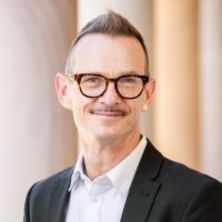
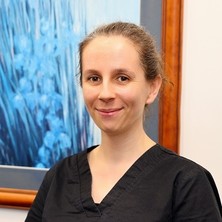
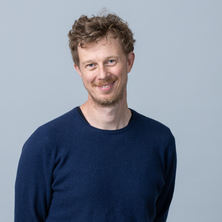
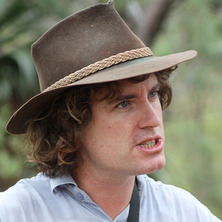
Greg Hainge is a leading expert in cultural studies whose work reaches into the realms of French literature, film and philosophy, the films of David Lynch, sound and noise studies, the music of Radiohead and much much more. The analysis of challenging and difficult texts is the connecting thread that links the very diverse range of topics he has published on. Greg believes that engagement with difficult texts or objects of study are important because they require us to engage deep critical thinking, forcing us to formulate a response to something that we do not understand. Why does this matter? Because if we only engage with what we already know, we are not learning. Because we need to learn how to engage with things and people who are not like us if our societies are going to be healthy and thrive.
As Professor of French and Head of the School of Languages and Cultures at the University of Queensland, Greg is also passionate about the importance of languages and knowledge of other cultures in education and is driving a large-scale program of work that seeks to flip the script on the importance of languages, which he sees as a critical skill for the future, never more so than right now given the rise of generative AI.
The author of three monographs and over 50 academic chapters and articles, Greg has also written articles for The Australian, and catalogue essays for major international exhibitions, including ‘David Lynch: Between Two Worlds’ at the Gallery of Modern Art, Queensland and 'Audiosphere' held at the Reina Sofia National Museum in Madrid.
Greg is a Fellow of the Australian Academy of the Humanities and a Senior Fellow of the Higher Education Academy. He is editor in chief of Culture, Theory and Critique and serves on the editorial boards of Contemporary French Civilization, Études Céliniennes, Corps: Revue Interdisciplinaire and French Screen Studies.
Faculty of Health, Medicine and Behavioural Sciences
Availability:
Available for supervision
Media expert
The Cancer Metabolism Group is keenly interested in how the physiological state of a person affects cancers.
Over a person’s lifetime, somatic cells will accumulate spontaneously occurring gene mutations, the majority of which do not cause disease. The global incidence of cancer has more than doubled over the past 30 years – primarily due to increasing living standards, modern lifestyles, and an aging population.
The common denominator for these is alterations to the physiological homeostasis of the individual at risk rather than a change in mutational burden. This strongly implies that the interaction of physiological conditions with cells harboring oncogenic mutations governs cancer risk.
The Cancer Metabolism lab utilizes systems biology technologies to both clinical biobank and mouse models to dissect the molecular drivers of the intersect between physiology and tumorigenesis.
I am a teaching focussed academic, and I specialise in the teaching of ecology. I come to this field from a background in botany and the ecology of animal-plant interactions. Getting students enthused about the "hidden stories" of plants is thus a big part of what I do! In terms of the dynamics of teaching, I am particularly interested in how to maximise the value of field trips in the teaching of ecology; how to best encourage students to develop their skills in literature research and writing; and how to make the traditional lecture format more engaging to students through the striking use of narrative, juxtaposition and imagery. An important component of my work for the school is the development and teaching of international programmes in Australian Terrestrial Ecology, one such example being the course I teach for the University of California.
For my PhD research I studied the ecology of cycads, an ancient group of plants with a fossil record that pre-dates the dinosaurs. I worked on the animal-plant relationships of living cycads, such as their host-specific pollination relationships with certain beetles, their seed dispersal relationships with vertebrate animals and their defences against herbivory. Because of their great antiquity, cycads may provide insights into how animal-plant relationships functioned and evolved before the first appearance of the flowering plants.
Research Fellow: Microbial Genomics and Bioinformatics
Frazer Institute
Faculty of Health, Medicine and Behavioural Sciences
Availability:
Available for supervision
I am a bioinformatician developing computational methods and open-source software that make pathogen genome sequencing faster, cheaper, and more clinically useful. My research applies long-read (Oxford Nanopore) and short-read whole-genome sequencing to detect antimicrobial resistance, reconstruct microbial genomes, and trace how infections spread.
A core part of my work is building widely used, open-source bioinformatics tools and reproducible analysis pipelines that researchers and laboratories around the world rely on. I also contributed to the World Health Organization catalogue of tuberculosis drug-resistance mutations, a global reference for genome-based diagnosis.
Working closely with clinical and public-health laboratories, I help translate these methods out of research and into real diagnostic and outbreak-response settings — including sequencing pathogens directly from patient samples, without the delays of laboratory culture.
My areas of expertise include:
- Pathogen genomics and genomic epidemiology
- Antimicrobial resistance and drug-resistance prediction
- Long-read sequencing, genome assembly, and metagenomics
- Culture-free, direct-from-sample diagnostics
- Open-source scientific software development (Rust and Python)
You can explore my open-source tools on my GitHub profile (https://github.com/mbhall88).
Affiliate of Centre for the Business and Economics of Health
Centre for the Business and Economics of Health
Faculty of Business, Economics and Law
Professor
School of Public Health
Faculty of Health, Medicine and Behavioural Sciences
Availability:
Not available for supervision
Prof Lisa Hall is Professor in Epidemiology at the University of Queensland in Brisbane, Australia.
Teaching: Lisa has experience lecturing at both undergraduate and postgraduate levels, in a range of public health and research methods courses. She is a Senior Fellow of the Higher Education Academy. At UQ she was the Director of Teaching and Learning within the School of Public Health from 2021-2024.
Research: Lisa is an active health services researcher with expertise in epidemiology, implementation science and economic evaluation. Lisa’s work examines not only the effectiveness, but also the cost-effectiveness, feasibility and sustainability of health services. Her current research focuses on the interface between evidence, policy and implementation to improve the surveillance and prevention of healthcare associated infections.
Prof Hall’s research is pragmatic and “Real world”. It is multidisciplinary and collaborative, with an emphasis on translation. She has established active multidisciplinary collaborations with a wide range of leading researchers, policymakers and clinicians. Since 2013, A/Prof Hall has been named as a Chief Investigator on grants and consultancies worth over $19 million. Key grants include:
Researching Effective Approaches to Cleaning in Hospitals (REACH): A national stepped wedge trial of examining the cost-effectiveness of an environmental cleaning bundle. This NHMRC Partnership Grant project with the Wesley Medical Research Institute used an implementation science framework to improve uptake of best practice cleaning approaches by environmental services staff.
National Centre for Infections in Cancer – This NHMRC Centre of Research Excellence, has now received Synergy grant funding. Based at the Peter MacCallum Cancer Centre in Melbourne, it aims at improving infection surveillance and prevention in cancer patients. This is novel work examining what clinical guidelines, therapeutics and surveillance approaches should be implemented to improve monitoring and survival in this vulnerable patient population.
“There's no place like home”: national scale up of the paediatric low risk febrile neutropenia program - National collaborative project based out of Murdoch Children’s Research Institute – MRFF funded
General Practitioner Antimicrobial Stewardship Programme Study (GAPS Trial). A cluster randomised trial examining the economic and clinical effectiveness of a multi-modal intervention to reduce antibiotic prescribing in primary care. Collaboration between UQ, QUT and Bond with Commonwealth Department of Health funding.
Development of the Monitoring and Evaluation Framework for the National Antimicrobial Resistance Strategy - Commonwealth Department of Health funding
Policy Experience: Lisa has significant policy experience at statewide and national levels. Prior to returning to academia in 2013, Lisa was a senior manager at the state health department of Queensland - responsible for the design, implementation and evaluation of infection prevention programs and policy. She was a technical expert on the Australian Commission of Safety and Quality in Healthcare (ACSQHC) Healthcare Associated Infection Advisory Committee, a role she has held continuously from 2009 to 2024.
Affiliate of National Centre for Youth Substance Use Research
National Centre for Youth Substance Use Research
Faculty of Health, Medicine and Behavioural Sciences
Emeritus Professor
Faculty of Health, Medicine and Behavioural Sciences
Availability:
Not available for supervision
Media expert
Wayne Hall is Emeritus Professor at the National Centre for Youth Substance Use Research (NCYSUR) at the University of Queensland (January 2021-). He was a Visiting Professor at the National Addiction Centre, Kings College London (2009-2019), the London School of Hygiene and Tropical Medicine (2010-2021); and the National Drug and Alcohol Research Centre, UNSW (since 2001).
Wayne was formerly Professorial Fellow (2017-2020) in and Director of the National Centre for Youth Substance Abuse Research (2014-2016), an NHMRC Australia Fellow in addiction neuroethics at the University of Queensland Centre for Clinical Research and the Queensland Brain Institute, UQ (2009-2015); Professor of Public Health Policy in the School of Population Health (2005-2010); Director of the Office of Public Policy and Ethics at the Institute for Molecular Bioscience (2001-2005) at the University of Queensland; and Director of the National Drug and Alcohol Research Centre, UNSW (1994-2001).
In 2016 Wayne was made a Fellow of the Academy of Health and Medical Sciences. Wayne has advised the World Health Organization on: the health effects of cannabis use; the effectiveness of drug substitution treatment; the scientific quality of the Swiss heroin trials; the contribution of illicit drug use to the global burden of disease; and the ethical implications of genetic and neuroscience research on addiction.
Affiliate of Dow Centre for Sustainable Engineering Innovation
Dow Centre for Sustainable Engineering Innovation
Faculty of Engineering, Architecture and Information Technology
Affiliate of ARC Training Centre for Bioplastics and Biocomposites
ARC Training Centre for Bioplastics and Biocomposites
Faculty of Engineering, Architecture and Information Technology
Affiliate of Centre for Marine Science
Centre for Marine Science
Faculty of Science
Professor
School of Chemical Engineering
Faculty of Engineering, Architecture and Information Technology
Availability:
Available for supervision
Media expert
BIO:
Noun (n): I am a Professor in polymer processing in Chemical Engineering, a chief investigator in Advanced Materials Processing and Manufacturing (AMPAM) centre, a chief investigator/director of external links of the ARC industrial transformation training centre (ITTC) in bioplastics and biocomposites, a chief investigator in food and beverage accellerator (FaBA).and a chief investigator in the solving plastic waste cooperative research centre (spwCRC).
Verb (v): I work at the translational research interface between universities and industry. Specifically my research involves rheology, processing and product design of bio-based materials, polymers and nanocomposite materials. I lead translational research projects in biopolymers and biofluid platforms for agrifood, biomedical and high-value manufacturing sectors which attract government and industry funding; and produce patents, licences. industrial know-how as well as fundamental papers.
History (h): I have worked in industry (SRI international, Sola Optical, Moldflow), have worked in five cooperative research centres (CRCs -Food Packaging, Sugar Innovation, Polymers, Fighting Food Waste, Solving Plastic Waste), have acquired and managed continuous government and industry research projects since 1994, was heavily involved in the spinoff of Plantic Technologies from the CRC food packaging in 2002 (and ongoing research support with them until 2016), and was involved in the research that led to the TenasiTech (TPU nanocomposite) spinoff from UQ in 2007.I am a fellow of the institute of chemical engineers (IChemE) and a fellow of the Royal Australian Chemical Institute (RACI). I am on the editorial board of the Plastics, Rubbers and Composites, Starch, the Journal of Renewable Materials, Green Materials and Functional Composite Materials-Springer-Nature. I have experience on the boards of the UQ Dow Centre, the UQ RTA Centre, and the UQ-HBIS Sustainable Steel Innovation Centre. I won IChemE Shedden Uhde Award and Prize for excellence in Chemical Engineering (2004), the CRC Sugar innovation award (2008), the CRCPolymers Chairman’s award for research and commercialisation (2011), and have received the CRC Association Technology Transfer Award, twice, in 2002 and 2015.
Research:
Current projects are focused on developing new sustainable and bio-based polymers and biochemicals from formulation through to degradation/disposal, understanding processing of nanostructured polymers, developing smarter biopolymers and materials for biomedical, drug delivery, food and high value applications, understanding rheology and processing of a range of polymer, foods and liquids and is involved in new initiatives in circular plastics.
Teaching and Learning:
My teaching has spanned Introduction to Engineering Design, Engineering Thermodynamics, Polymer Engineering, Process Economics, Research Thesis and Engineering Management. I am developing new courses in Sustainability and the Circular Economy. My overall teaching goal is to be a relevant, well organised, enthusiastic and empathetic enabler of learning using multiple teaching and learning modes, and be highly connected to current industrial practices and cutting edge research.
International links
I have been a visiting or invited professor at ENSICAEN-University, Caen, Normandy, University of Nottingham, Queen’s University Belfast, the University of Strasbourg and Institut national des sciences appliquées (INSA) de Lyon in France. I have strong international collaborations with the US Department of Agriculture, Albany, USA; Colorado School of Mines, USA; AnoxKaldnes, Sweden; University of Bradford, University of Warwick, University of Nottingham, University of Sheffield, UK, SCION, NZ; Michigan State University, USA, and many Australian universities.
School of Electrical Engineering and Computer Science
Faculty of Engineering, Architecture and Information Technology
Availability:
Available for supervision
Dr. Thilina Halloluwa is a Teaching-Focused Lecturer in Human-Centred Computing at the University of Queensland. A SEDA-accredited educator with academic and industry experience, his expertise is in Human-Centred Software Engineering, a field where he combines his passion for technology, learning, and well-being.
His work focuses on how software systems shape human behaviour, decision-making, agency, and wellbeing, particularly as AI becomes more deeply embedded in everyday tools and professional practice. As an educator, he is committed to designing engaging, authentic learning experiences that help students connect software engineering theory with real-world practice. His broader academic interests include responsible technology design, AI-assisted programming, human-centred computing, and the development of software systems that are not only technically effective, but genuinely fit for human purpose.
Thilina holds a PhD in Human-Computer Interaction from the Queensland University of Technology and a Bachelor’s degree in Computer Science from the Sri Lanka Institute of Information Technology. Prior to joining UQ, he lectured at the University of Sydney and served as a Senior Lecturer at the University of Colombo, where he led large-scale teaching and digital transformation initiatives.
Dr Anthony Halog: Expert in Circular Economy, Life Cycle Thinking, and Sustainable Systems
Dr. Anthony B. Halog is a professor at the University of Queensland specialising in circular economy, sustainability engineering, industrial ecology, and life cycle assessment (LCA/LCSA). His current work focuses on designing low-carbon, net-zero, and resource-efficient systems to address climate change, waste reduction, and sustainable development.
Dr. Halog works across energy, materials, food, waste, and policy systems, applying systems thinking, life cycle sustainability assessment, digital twins, and artificial intelligence for sustainability. His research helps governments, industries, and communities make evidence-based decisions that reduce emissions, improve resource efficiency, and avoid unintended environmental impacts.
A core focus of his work is transforming linear value chains into circular value chains, supporting green hydrogen, bioenergy, circular bioeconomy, agricultural waste valorisation, waste-to-energy, and sustainable materials. These solutions contribute to decarbonisation, climate resilience, sustainable supply chains, and the green economy.
Key areas of expertise
Circular economy and industrial ecology
Life cycle assessment and sustainability metrics
Green hydrogen, bioenergy, and clean energy transitions
Sustainable waste management and circular bioeconomy
Systems modelling, AI-enabled tools, and sustainability policy
Dr. Halog collaborates with policymakers, industry partners, SMEs, and Indigenous communities in Australia and internationally to deliver practical climate solutions and support the transition to decarbonised circular economies.
School of Political Science and International Studies
Faculty of Humanities, Arts and Social Sciences
Availability:
Available for supervision
Media expert
I am a political economist with diverse research interests, with a particular interest in the evolving nature of statehood and political agency. My work focuses on Asia and the Pacific. I have written on rising powers (specifically China), global health politics, security governance, statebuilding, non-traditional security, global and regional governance, and Australian development and foreign policy. I have been awarded an Australian Research Council Future Fellowship (2021-26) to examine emerging competition over international development financing projects in Asia and the Pacific. I am a Research Fellow of the Second Cold War Observatory.
My most recent books are The Locked-Up Country: Learning the Lessons from Australia's COVID-19 Response (UQP, 2023), co-authored with Dr Tom Chodor, and Fractured China: How State Transformation is Shaping China's Rise (Cambridge University Press, 2021), co-authored with Prof Lee Jones. My other books include International Intervention and Local Politics (Cambridge University, 2017), Governing Borderless Threats: Non-Traditional Security and the Politics of State Transformation (Cambridge University Press, 2015), and Regulating Statehood (Palgrave Macmillan, 2010). I am also co-editor of the all-new fourth edition of The Political Economy of Southeast Asia: Poliltics and Uneven Development Under Hyperglobalisation (Palgrave Macmillan, 2020). I received my PhD from the Asia Research Centre, Murdoch University in 2009. I tweet @ShaharHameiri.
Affiliate Associate Professor of School of Languages and Cultures
School of Languages and Cultures
Faculty of Humanities, Arts and Social Sciences
Associate Professor
School of Education
Faculty of Humanities, Arts and Social Sciences
Availability:
Not available for supervision
I received education in English literature, applied linguistics and TESOL (Teaching English to Speakers of Other Languages). I consider TESOL my home. My research straddles global language testing, language in education policy, and diversity of Englishes. I have pursued my research within the Asia Pacific region, with a particular focus on developing societies. In examining the role of English, other languages and English language testing for individual mobility and societal development, I have foregrounded inequity, inequality and exclusion. I use qualitative, quantitative and textual data. My work is underpinned by critical perspectives, my multidisciplinary backgrounds and my life experiences as a confused transnational.
Dr Garry Hamilton is a Doctor of Laws, a Fellow of the Institute of Chartered Accountants, a Fellow of the Certified Practising Accountants, a Fellow of the Governance Institute of Australia and a Fellow of the Australian Restructuring Insolvency & Turnaround Association. Until recently, Garry, who is also a chartered accountant, was the only practising solicitor in Australia registered as a liquidator by the Australian Securities and Investments Commission.
Dr Hamilton practises in commercial litigation, corporate reconstruction, debt restructuring and insolvency and has been involved in most of the larger corporate reconstructions and insolvencies in Australia in the past 30 years. He was a Partner with Minter Ellison Lawyers for 25 years and now consults to Taylor David Lawyers, a boutique corporate restructuring and insolvency firm in Brisbane.
Dr Hamilton has advised the Hong Kong, Fijian and Singapore Governments in their review (and in respect of Fiji, its drafting) of their corporate reconstruction legislation, and sat on an advisory board to the Commonwealth Government when the amendments were being made to the insolvency and reconstruction sections of the Corporations Act. In 2018, he also drafted amendments for the Commonwealth Government in its 10-year revision of the Corporations (Aboriginal and Torres Strait Islander) Act. In 2021, Dr Hamilton prepared and submitted to Treasury draft legislation to remedy the ongoing problems with the external administration of corporate trading trusts.
He holds degrees in Commerce, Economics and Law from the University of Queensland, a Master of Laws from that university, and a Doctorate (Juridical Science) from the Queensland University of Technology.
Dr Hamilton was a member of the Law Council of Australia’s Corporate Insolvency and Reconstruction Committee from 1993 to 2016, and has been a member of the editorial board of the Insolvency Law Bulletin since 2013.
Publications and conference papers
Books and Book Chapters:
The Australian Chapter of Collier International Business Insolvency Guide (Author, revised 2021);
The Australian Chapter of Restructuring and Insolvency Guide (Thomson Reuters, Practical Law, Co-author with Scott Taylor, revised 2021);
The Companies section of LexisNexis Court Forms and Precedents in Queensland (Author, currently being revised, 2022);
Invalidations of Securities Upon Insolvency, The Federation Press, 2000 (Author)
Journal articles (most recently published) and conference papers:
Back to basics – section 588FA, Corporations Act: is a diminution of a company’s assets a pre-condition to the existence of a preference? The mischief of the “doctrine of ultimate effect” exposed (2021) 29 Insolv LJ 14
Conflicting intermediate appellate court decisions: voidable preferences, third- party payments and the relevance of double-entry book-keeping (2020) 20 Insolvency Law Bulletin 207, (referred to with approval by Rees J in Western Port Holdings Pty Ltd (receivers and managers appointed) (in liq) [2021] NSWSC 232 at [8]) (12 March 2021)
Vesting of Trust Property in a Bankruptcy Trustee and “reasonable grounds” for Lodging a Caveat: Some helpful Guidance from the High Court (2020) 28 Insolv LJ at 41
Winding up and Employee Entitlements: Does Corporations Act s 561 give a Liquidator priority over Employee Entitlements for Liquidation Costs and Expenses? (2019) 27 Insolv LJ 81
Amerind – the Aftermath: Questions and Practical Difficulties Remaining (2019) 27 (3) Insolv LJ 185 at 187
Preferences and running accounts: “Peak indebtedness”: The Elephant in the room (2018) 26 Insolv LJ 2 at 8
Battening down the Hatches under the Insolvency Law Reform Act: How to Resist a Request for Documents from Mr Snoopy Creditor: Part 1, Proctor, Feb 2018, Vol 38 No1 at 28
The case of the mysteriously disappearing secured debt under a deed of company arrangement: hard cases making bad law again? Insolvency Law Bulletin, 2017, Vol 8, No 6 at 116 (republished in Australian Banking and Finance Law Bulletin, Vol 33, No 6, July 2017)
Winding up insolvent corporate trustees – what happened to the liquidator? Insolvency Law Bulletin, 2016. Vol 17, No 6
Equitable subrogation of banks and other secured creditors for the recovery of statutory employee entitlements: A "new class of case" or simply a different perspective? (2016) 34 C&SLJ 121
My PhD, conferred in 2003 by the University of Queensland (UQ), was undertaken under the guidance of Prof. Richard Lewis (IMB), A/Prof. Barry Chiswell (UQ, Chemistry), and Prof. Michael Moore (UQ, ENTOX), on the topic of Ciguatoxins, which are extremely potent site 5 sodium channel activators present in ciguatoxic fish. Their isolation and identification represented a challenging and rewarding PhD. The most innovative aspect of my research was the development of an approach involving radiolabelled receptor binding assays and LC-MS analyses that resulted in the discovery of a new family of ciguatoxins in the Indian ocean.
In 2002, I worked for Dr Kevin James at Cork Institute of Technology (CIT) as a full-time researcher, with responsibility for the maintenance, and training of personnel to use triple quadrupole and quadrupole time-of-flight mass spectrometers. I was also responsible for delivery of an instrumentational analytical chemistry course to undergraduate chemistry students. Whilst at this post I was involved in projects that investigated the fragmentation pathways of a myriad of phycotoxins, mycotoxins, and cyanobacterial toxins using mass spectrometry. These studies resulted in a number of publications in leading discipline journals including the Journal of Mass Spectrometry and Rapid Communications in Mass Spectrometry. The results of these structural studies were then applied to develop sensitive and specific quantitative assays for the routine detection of these compounds resulting in publications in Analytical Chemistry. Many of the assays developed translated to have significant impact on the Irish economy, through their adoption in establishing when it was safe to harvest and sell mussels. Dr James provided an encouraging environment to post-doctoral employees, and whilst there I wrote and submitted a number of successful research grant applications, and a received an Irish Post-Doctoral Fellowship.
In 2006 I moved back to Australia to work for Prof. Jeffrey Gorman at Queensland Institute for Medical Research (QIMR). I was principally recruited to establish a suite of electrospray mass spectrometers within Prof. Gorman’s new laboratory and facilitate proteomic analysis on these systems. At QIMR, Prof Gorman acquired the first LTQ-Orbitrap mass spectrometer in the country, along with the first ion trap equipped fitted with electron-transfer dissociation capabilities.
In 2008, I was recruited by Prof. Deon Venter to the Mater Hospital (in Brisbane), specifically to work for him as a part of the CRC for Biomarker Translation. The CRC project entailed establishing matrix-assisted laser desorption ionisation (MALDI) imaging and proteomics to investigate various breast cancer classes, and ovarian cancer. In collaboration, with Prof. Glenn King, Dr Eivind Undheim and A/Prof. Bryan Fry (U. Queensland), I have been involved with developing protocols to allow MALDI imaging of spider and centipede venom glands. A great deal of effort was involved in producing a suitable fixation approach that preserved the tissue without cross linking the peptides and proteins. Many parts of this work have been published, and presented at numerous conferences. The current optimised protocols allow us to routinely produce MALDI imaging data from serial sections cut from processed spider and centipede samples.
In 2017, I was recruited by Prof. Roger Wepf (UQ, CMM), and Prof. Ian Brereton (UQ, CAI), to come to work at the University of Queensland. As a part of this recruitment the Imaging Mass Spectrometry facility was transferred from the Mater Hospital to CMM/CAI at the University of Queensland (St Lucia campus). The move from the Mater involved relocation of the capabilities from an individual research group into an environment where the facility could be accessed by a much wider user base in accordance with CMM and CAI operating principles. The Imaging Mass Spectrometry facility at UQ can be accessed on a 24 hr/7 day basis for all users who have been trained to use the equipment.