Faculty of Health, Medicine and Behavioural Sciences
Availability:
Not available for supervision
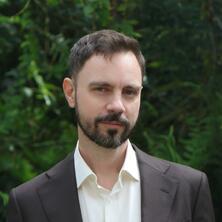
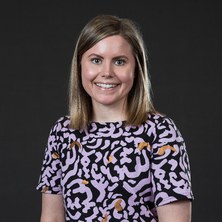
Dr Zachary Hawula is a postdoctoral research fellow in the Lymphoma Research Lab at the Frazer Institute located within the Translational Research Institute in Brisbane. Having completed his Doctor of Philosophy at the Queensland University of Technology in 2021 investigating genetic and chemical modulators of iron metabolism, haemochromatosis and anaemia. After Completing his PhD, Zach research interests changed to developing novel cell lines using CRISPR/Cas9 prime editing which mimic the rare inherited condition Wilson's Disease. A copper overolad disorder causes copper levels to build up in several organs, especially the liver, brain and eyes. Since begining his role in the Lymphoma Research Lab in 2022, Zachary is now focused on using cutting edge technologies such as single cell RNAseq (scRNAseq) to understand rare B cell lymphomas primarily focusing on Primary Central Nervous System Lymphoma (PCNSL) and Secondary CNS Lymphoma.
Queensland Alliance for Agriculture and Food Innovation
Availability:
Available for supervision
I work at the interface of sensory science and analytical chemistry to understand how food production, processing and environmental conditions influence food quality, provenance, authenticity and consumer perception. My research supports agrifood industries, including meat, seafood and broader food production sectors, by linking measurable chemical changes with sensory attributes such as flavour, aroma, texture and appearance.
I am interested in partnering with producers, processors, industry bodies and technology providers to evaluate how different growing, treatment, feeding, farming, harvesting or processing methods affect product quality and consumer perceptibility. This includes industry trials focused on climate-smart crops, sustainable production systems, improved animal and seafood production methods, provenance claims and product differentiation. My goal is to help translate scientific measurement into practical insights that support innovation, product integrity and consumer confidence.
Affiliate of Centre for the Business and Economics of Health
Centre for the Business and Economics of Health
Faculty of Business, Economics and Law
Senior Research Fellow
School of Business
Faculty of Business, Economics and Law
Affiliate of Centre for Online Health
Centre for Online Health
Faculty of Health, Medicine and Behavioural Sciences
Availability:
Available for supervision
Media expert
Dr Helen Haydon is a Senior Research Fellow and Registered Psychologist at the University of Queensland. She has national standing, and an emerging international reputation, as a digital health researcher with a focus on aged and palliative care, psycho-oncology and carer wellbeing. She leads 3 applied nationwide digital health research programs: 1/ Palliative Care ECHO, a Federally funded National Palliative Care Project that connects services and upskills health professionals across Australia in palliative care; 2/ Elder ECHO, a telementoring program to support the National Aboriginal Community Controlled Health Organisation’s (NACCHO) Elder Care Support workforce in the delivery of Culturally safe aged care and; 3/ Caring for the Carer, an online intervention for carers of people with brain tumour. http://caringforthecarer.org.au/
Other research includes: evaluation of telepalliative care services (e.g. patient/ carer outcomes and perceptions and staff perceptions); voluntary assisted dying; technology supported grief and bereavement support and; digital mental health.
She is a Registered Psychologist with clinical experience working with a range of issues and diverse populations and has over ten years’ experience teaching and facilitating workshops on psychology and health communication.
Faculty of Health, Medicine and Behavioural Sciences
Availability:
Not available for supervision
Media expert
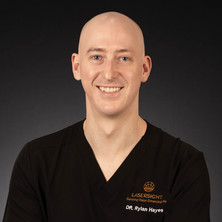
Dr Rylan Hayes is a highly trained ophthalmologist (eye doctor) with a special interest in cutting edge eye surgery techniques designed to improve vision. He specialises in cataract surgery – straightforward or complex – as well as pterygium surgery, conditions and surgery of the cornea, and glaucoma management and surgery. He completed medical school at The University of Queensland and rigorous ophthalmology training right here in Queensland, and also achieved an international graduate diploma in refractive, cornea, and lens surgery to stay at the forefront of eye surgery. He has numerous academic publications and presentations and also holds a prestigious appointment as a specialist ophthalmologist at the Mater Public Hospital in Brisbane.
Faculty of Engineering, Architecture and Information Technology
Emeritus Professor
School of Electrical Engineering and Computer Science
Faculty of Engineering, Architecture and Information Technology
Availability:
Available for supervision
Media expert
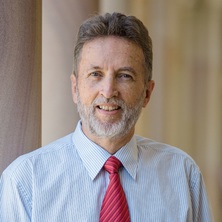
Software Engineering. Ian's research interests are in formal methods for software development.
Errors in a compiler for a programming language can generate errors in the myriad of programs they compile. Our research is looking at verifying optimisation phases of a compiler.
Concurrent programs are difficult to reason about due to the interleaving of execution of concurrent threads leading to an explosion of possible execution sequences. Our research is developing techniques for rely/guarantee reasoning about concurrent programs.
Both the above research strands make use of the Isabelle/HOL theorem prover.
Faculty of Engineering, Architecture and Information Technology
Availability:
Not available for supervision
Biography:
Prof Hayes is Emeritus Professor of Metallurgical Engineering within the School of Chemical Engineering. He is curently a senior researcher in the Pyrometallurgy Innovation Centre (PYROSEARCH). He received his PhD in Metallurgy from the University of Strathclyde in Glasgow, Scotland, in 1974. He has a BSc (1970) and MSc (1972) in Metallurgy from the University of Newcastle on Tyne, England.
Research:
Prof Hayes was founding Director of the Pyrometallurgy Innovation Centre (PYROSEARCH). Prof Hayes' research is focused on the high temperature processing of minerals and materials, with particular application to the pyrometallurgical production and refining of metals. His interests include chemical equilibria, reaction kinetics and mechanisms.
His current research projects encompass:
High temperature phase equilibrium measurements and determination of liquidus isotherms in complex industrial slag systems relevant to the smelting of copper, ferro-chromium, ferro-manganese, iron, ferro-nickel, lead and zinc production and metal recycling.
The development of thermodynamic databases, and their use in conjunction with FactSage, to predict phase equilibria and thermodynamic properties in oxide systems.
Reaction kinetics and mechanisms in metal and materials processing, smelting and refining; in particular, gas/solid reactions.
Prof Hayes has over 450 research publications.
Teaching and Learning:
Prof Hayes’ teaching interests include pyrometallurgy, chemical thermodynamics, and physical and chemical processing of minerals.
He is author of the undergraduate textbook “Process Selection in Minerals and Materials Production” by P.C. Hayes, Hayes Publishing Co, Sherwood, Brisbane, the 4th ed. is currently available and downloadable from the web as a e-book. Prof Hayes introduced the dual major BE Chemical and Metallurgical to the UQ curriculum and has been activity involved in program and curriculum development in the field of metallurgical engineering over a several decades.
Projects:
Reaction mechanisms and kinetics of high temperature gas/solid/liquid reaction kinetics relevant to metals production.
Fundamental experimental studies of phase equilibria in metal smelting, refining and metals recycling processes.
Queensland Alliance for Agriculture and Food Innovation
Availability:
Available for supervision
Professor Hayes has extensive research experience in genetic improvement of livestock, crop, pasture and aquaculture species, with a focus on integration of genomic information into breeding programs, including leading many large scale projects which have successfully implemented genomic technologies in livestock and cropping industries. Author of more than 300 journal papers, including in Nature Genetics, Nature Reviews Genetics, and Science, contributing to statistical methodology for genomic, microbiome and metagenomic profile predictions, quantitative genetics including knowledge of genetic mechanisms underlying complex traits, and development of bioinformatics pipelines for sequence analysis. Thomson Reuters highly cited researcher in 2015, 2016, 2017 and 2018.
Professor Haynes works in the areas of soil and environmental science. His present research interests are on rehabilitation and revegetation of mine tailings, the use of constructed wetlands to treat drainage from tailings storage areas and the role of silicon in crop production. He has extensive experience having worked as both an applied research scientist and as a university professor and has worked in New Zealand, South Africa and Australia. He has published over 190 original research papers in international journals, over 25 review papers in international volumes as well as many conference and extension papers and contract reports. He has been an invited keynote speaker at many international conferences and has served on the editorial board of 4 international research journals. He has acted as principal supervisor and co-supervisor of PhD, MSc and honours students in both South Africa and Australia.
Professor Haynes has carried out research in commercial horticultural, pastoral, arable and forestry production as well as in small-holder semi subsistence agriculture. He has also worked on bioremediation of soils contaminated with organic pollutants, rehabilitation of mined sites, application of organic and inorganic wastes to soils and the effects of heavy metal contaminants on soil processes. His research has been mainly in the areas of applied soil chemistry and soil microbiology/biology with links to soil physical properties and to pollution of air and water. He has specialised in working on applied problems and maintains strong links with industry. Major areas of research have included the role of grazing animals in the fertility of pastoral soils, N cycling and gaseous and leaching losses from arable and pastoral systems, soil quality and soil degradation under agricultural land use, effects of soil contaminants on soil processes, rehabilitation and remediation of contaminated, degraded and mined sites and use of wastes as soil amendments.
Queensland Alliance for Agriculture and Food Innovation
Availability:
Available for supervision
Media expert
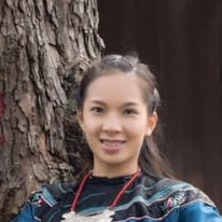
Alice is a plant biotechnologist and physiologist leading a strong outcome-driven team at the Queensland Alliance for Agriculture and Food Innovation. Her team focuses on plant tissue culture as a platform technology delivering solutions for agriculture and ecosystems. This includes developing commercial-scale methods for year-round propagation of clean, true-to-type plants for horticultural industries, with impacts for growers, supply chains and breeding programs. This technology is also being adapated to accelerate horticultural crop improvement using gene editing and non-GM in vitro breeding tools for trees, fruits and vegetables. Her team boasts leading experts in cryopreservation for long-term conservation of plant genetic diversity - essenital to secure the breeding materials critical for Australia's tropical crops and endangered biodiversity. Example projects with impact include: 1) Commercial-scale tissue culture pipelines for propagation of species including avocado, turmeric and macadamia, 2) Cryopreservation success for securing the germplasm of avocado and macadamia, and 3) The first in vitro conservation tools developed for Australian native plants critically impacted by pandemic myrtle rust - one of the biggest biosecurity threats to Australia's ecosystems. Alice is also exploring exciting innovations in plant tissue culture including cellular horticulture. She is passionate to support industry access to highest quality disease free planting materials and preserve the plant species that are core to our ecosystems and food production systems. Her vision is to support the adaptibility and security of our food- and eco- systems in response to global change.
Faculty of Engineering, Architecture and Information Technology
Availability:
Available for supervision
Baojie is a (Full) Professor of Urban Climate and Sustainable Built Environment with the School of Architecture and Urban Planning at Chongqing University, China.
Email: baojie.he@uq.edu.au; baojie.he@cqu.edu.cn
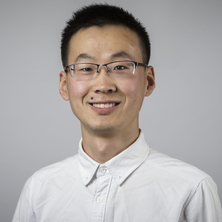
He is currently leading the Centre for Climate-Resilient and Low-Carbon Cities with the focus on Heat-Resilient and Low-Carbon Urban Planning and Design. Baojie has published more than 200 peer-reviewed papers in high-ranking journals and delivered more than 100 invited talks in reputable conferences/seminars. Baojie has a SCOPUS H-index of 57 (Scopus). Baojie has been involved in several large research projects on urban climate and built environment in China and Australia. Baojie has been invited to act as Editor-in-Chief and Associate Editors of several international reputuable journals. Baojie received the received the Most Cited Chinese Researchers Title in 2024 and 2025, Highly Cited Researcher Title (Clarivate) in 2022, 2023, 2024, and 2025, the Sustainability Young Investigator Award in 2022, the Green Talents Award (Germany) in 2021, and National Scholarship for Outstanding Study Abroad Students (China) in 2019. Baojie was ranked as one of the Top 2% Scientists by the Mendeley from 2020 onwards.
School of Political Science and International Studies
Faculty of Humanities, Arts and Social Sciences
Availability:
Not available for supervision
Media expert
Professor Brian Head joined the University of Queensland in mid-2007 after holding senior roles in government, universities, and the non-government sector. He is the author or editor of several books and numerous articles on public management, governance, social isues and environmental policy. His major interests are evidence-based policy, complex or 'wicked' problems, program evaluation, early intervention and prevention, collaboration and consultation, public sector integrity, and leadership. He has undertaken several consultancies on program evaluation, policy review, organisational performance, and good governance processes. He has strong interests in applied research across many areas of public policy and governance, and is committed to building closer links between the research and policy sectors. His recent books include Wicked Problems in Public Policy (2022, Palgrave, open access), Reconsidering Policy (2020, Policy Press, co-authored), and Learning Policy, Doing Policy (2021, ANU Press, co-edited).
Faculty of Health, Medicine and Behavioural Sciences
Honorary Principal Fellow
School of Psychology
Faculty of Health, Medicine and Behavioural Sciences
Availability:
Available for supervision
Media expert
Dr Karyn L Healy is a registered psychologist with expertise in addressing bullying and conflict. She has extensive practical experience working with schools, parents and children to prevent and address bullying, and resolve conflict. Karyn has a Masters of Organisational Psychology, specialising in change management, process consultancy, training and facilitation, and conflict management. Her PhD investigated intervening with families of children bullied by peers at school, which is a promising new approach to complement school anti-bullying programs. Karyn is co-author of Resilience Triple P program, a family program to address school bullying. She has published papers in Tier 1 peer-reviewed journals, as well as several book chapters about school bullying. She is author of several widely read pieces in The Conversation about school bullying. She was a featured presenter at the National Centre Against Bullying Conference in Melbourne in 2016. In 2018, she was engaged by Australia’s Safe and Supportive School Communities committee to develop a professional development resource for staff on how to manage parental reports of bullying; this has now been made available to all Australian schools. Karyn is an Associate Editor of the Journal of Child and Family Studies and served as a member of the Queensland Anti-Cyberbullying Committee.
Michael Healy is an NHMRC Emerging Leadership Fellow at the University of Queensland's Institute for Molecular Bioscience. He is a structural biologist with expertise in protein structure determination, membrane trafficking, and computational protein design.
Michael's early research focused on the Commander complex, a key regulator of membrane trafficking in cells. He resolved the first structure of this complex using a combination of X-ray crystallography, cryo-electron microscopy, and machine learning approaches, including AlphaFold2. This work was published in Cell (2023) and established him as a respected member of Australia's computational structural biology community. Where he is known for training researchers from diverse backgrounds in the application of AlphaFold2 and its derivatives.
Currently, supported by NHMRC funding, Michael is developing novel biologics that target membrane trafficking complexes. His work investigates, Molecular tool development, Biosensor design and development of therapeutic candidates. His research combines cutting-edge computational protein design with experimental validation to advance new strategies for probing and manipulating membrane trafficking pathways.