Centre Director of Centre for Motor Neuron Disease Research
Centre for Motor Neuron Disease Research
Faculty of Health, Medicine and Behavioural Sciences
Associate Professor
School of Biomedical Sciences
Faculty of Health, Medicine and Behavioural Sciences
Availability:
Available for supervision
Media expert
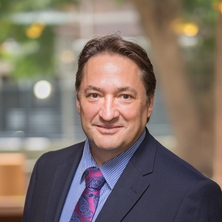
Associate Professor Steyn is a leading expert in neurodegenerative disease research, specializing in the metabolic and physiological aspects of Motor Neurone Disease (MND). He currently directs a comprehensive translational research program at the University of Queensland, focusing on the interplay between metabolism and disease progression in MND, and leads key projects investigating the impact of metabolic dysfunction, appetite dysregulation, and hypermetabolism on patient outcomes. His work prioritizes the integration of pre-clinical models, clinical studies, and innovative digital health technologies to advance understanding of the heterogeneity in MND, patient care and therapeutic development.
Associate Professor Steyn’s career began with detailed investigations into the hypothalamic regulation of energy homeostasis, growth, and reproduction. He developed industry-standard methodologies for evaluating hormone release patterns in rodent models, particularly concerning growth hormone regulation. In 2015, he transitioned to focus on neurodegenerative diseases, establishing a research platform at UQ that has significantly advanced the analysis of metabolic phenotypes in MND.
His current research projects include the MEND-MND study, which explores how altered energy metabolism influences disease progression, and the EATT4MND study, which examines the consequences of appetite loss and impaired body weight regulation on disease outcomes. Through collaboration with industry partners, he is also developing novel therapeutic strategies and refining wearable digital health technologies for precise, real-time monitoring of disease progression, including the validation of actigraphy-based measures as clinical trial biomarkers.
Faculty of Health, Medicine and Behavioural Sciences
Affiliate of Centre of Research Excellence on Achieving the Tobacco Endgame
Centre of Research Excellence on Achieving the Tobacco Endgame
Faculty of Health, Medicine and Behavioural Sciences
Affiliate of National Centre for Youth Substance Use Research
National Centre for Youth Substance Use Research
Faculty of Health, Medicine and Behavioural Sciences
Availability:
Available for supervision
Media expert
Dr Stjepanović is a senior research fellow at the National Centre for Youth Substance Use Research (NCYSUR). His work focusses on how drug use patterns are changing, particularly as a consequence of public policy. This includes, for example, understanding who vapes cannabis, if psychedelics are being used to self-treat physical and psychiatric symptoms, and what the effect psychedelic microdosing has. Additionally, he is interested in using experimental methods to understand substance use, leveraging his background in experimental psychology and cognitive neuroscience.
Studied organic chemistry at the University of Sydney, moved to UQ in 1993, then worked for Bayer in Germany, before moving back to Australia in 1996. Worked in Melbourne at the Victorian College of Pharmacy (now MIPS). I then returned to UQ in 2000 to the Fairlie lab where we design and synthesise new chemical entities to tackle human disease. Since 2012 I have been on extended medical leave and am currently an Adjunct Research Fellow, researching proteins from flaviviruses such as Dengue, West Nile, and Zika viruses, and the coronaviruses SARS, MERS, and SARS-CoV-2.
Program Lead, Premium Food and Beverages within the Food and Beverage Accelerator Program (FaBA) of
School of Chemical Engineering
Faculty of Engineering, Architecture and Information Technology
Professor
School of Chemical Engineering
Faculty of Engineering, Architecture and Information Technology
Availability:
Available for supervision
Media expert
Professor Jason Stokes is a Professor in the School of Chemical Engineering at The University of Queensland and Program Lead for Premium Food and Beverages within Australia’s Food and Beverage Accelerator (FaBA), providing leadership across a nationally coordinated, industry‑focused research program. His work sits at the interface of chemical engineering, soft matter science and food systems, combining fundamental research with strong industry engagement.
Jason is internationally recognised for his expertise in rheology, tribology and interfacial phenomena, with particular emphasis on how structure, flow and deformation govern the behaviour of complex fluids and soft materials. He is known for pioneering experimental approaches in soft‑contact tribology and aqueous lubrication, providing new physical insight into oral processing, mouthfeel, texture and material performance across multiple length scales.
With more than 25 years’ experience working in and with industry, Jason has led long‑term research partnerships spanning food and beverage manufacturing, materials processing and sustainability‑driven innovation. Prior to joining UQ in 2008, he worked as a Research Scientist at Unilever R&D in the United Kingdom. His current research supports the rational design of next‑generation food and beverage products, including plant‑based and value‑added formulations, by integrating processing, structure and performance.
Jason was named among Australia’s Top 250 Researchers by Research Magazine (The Australian, 2026), ranking first nationally in Dispersion Chemistry within Chemical and Materials Sciences. He has an h‑index of 60 (Google Scholar), reflecting sustained international impact across rheology, tribology and food engineering.
Teaching and research training
Jason’s teaching and supervision are strongly research‑led and industry‑engaged, with a focus on developing deep physical intuition, independent thinking and problem‑solving capability in chemical engineering graduates. He has extensive experience in HDR supervision and research training, mentoring PhD, Masters, Honours students and postdoctoral researchers across interdisciplinary projects in food engineering, soft matter and materials processing.
His teaching is grounded in fluid mechanics and transport phenomena, with long‑standing involvement in undergraduate fluid‑flow and particle‑based courses, as well as undergraduate research‑thesis coordination and supervision. He is widely recognised by students for clear, structured explanations of complex concepts, an enthusiastic and approachable teaching style, and for integrating real‑world engineering context into learning. He places strong emphasis on scientific rigour, career development and an inclusive, supportive research culture, and has contributed to researcher development and wellbeing through leadership roles within the School and Faculty.
Jason currently coordinates and teaches Transport Phenomena (CHEE4009) and Engineering Placement (ENGG7292).
Dr M. Rhia L. Stone is an emerging leader in probe design and orthogonal modification of biologically relevant molecules. She obtained her PhD in 2020 from The University of Queensland (UQ), working on synthesis of fluorescent and radiolabelled antibiotics. This was followed by postdoctoral positions at Rutgers, the State University of New Jersey (USA), the ARC Training Centre for Innovation in Biomedical Imaging Technology at UQ and is now based at the Centre for Superbug Solutions at the University of Queensland. Rhia has extensive experience with small molecule, peptide, and protein scaffolds, including rational design, synthesis, and characterisation of novel molecules. In their current position, Rhia utilises synthesis, microbiology and animal imaging, working with a range of interdisciplinary collaborators.
Faculty of Health, Medicine and Behavioural Sciences
Availability:
Available for supervision
Media expert
Dr Nicole Stormon is a Senior Lecturer at the University of Queensland and AHPRA registered Oral health therapist. The current and inaugural Program Convenor for the School of Dentistry’s Doctor of Dental Medicine. She is also the Principal Research Fellow for Queensland Health Metro North Community and Oral Health. An alumnus of the University of Queensland for her undergraduate and postgraduate training, Nicole has become an internationally recognised leader and advocate in Oral Health Therapy.
Nicole Stormon has publications in high quality journals, numerous conference presentation and research collaborations. Health service research is a central theme of her research, with ongoing collaborations with Queensland Health to develop evidence-based and cost-effective models of dental care. She has extensive experience in the analysis of complex quantitative health service data and large longitudinal cohort studies. Additionally, Nicole is experienced in relevant health services research methods including qualitative, scoping methods and consumer engagement. Translating evidence into practice can be challenging, however her research aims to implement innovations and generate new knowledge to better patients oral health outcomes. Being a clinician herself and her effective collaborations to the health service are key to bridging the knowledge-implementation gap.
Nicole Stormon represents the oral health workforce and applies expertise, leadership and governance skills. As an advocate for oral health, she has consulted on a number of national oral health policy issues. Called as an expert witness into the Aged Care Royal Commission into oral health. She has contributed to countless written submissions and representations on national and local advocacy and policy matters. As a leader and advocate for her profession, saw through the recognition and implementation of oral health professionals in obtaining provider numbers and claiming within the Child Dental Benefits Schedule. She has contributed to ongoing public policy issues and has published evaluations of the federal funding policy the Child Dental Benefits.
Affiliate of Centre for Cell Biology of Chronic Disease
Centre for Cell Biology of Chronic Disease
Institute for Molecular Bioscience
Affiliate of ARC COE in Quantum Biotechnology (QUBIC)
ARC COE in Quantum Biotechnology
Faculty of Science
NHMRC Leadership Fellow
Institute for Molecular Bioscience
Availability:
Available for supervision
Media expert
Professor Jennifer Stow is a molecular cell biologist, an NHMRC Leadership Fellow and head of the Protein Trafficking and Inflammation research laboratory in The University of Queensland’s Institute of Molecular Bioscience (IMB). Her previous leadership appointments include as Division Head and Deputy Director (Research) at IMB (12 years) and she currently serves on national and international advisory boards, editorial boards and steering committees, and as an elected Associate Member of the European Molecular Biology Organisation (EMBO).
Jenny Stow received her undergraduate and PhD qualifications at Melbourne’s Monash University before undertaking postdoctoral training in the Department of Cell Biology at Yale University School of Medicine, USA. With training as a microscopist in kidney research, she gained further experience at Yale as a postdoc in the lab of eminent cell biologist and microscopist, Dr Marilyn Farquhar, where protein trafficking was both a theme and a passion. Jenny then took up her first faculty appointment as an Assistant Professor in the Renal Unit at Massachusetts General Hospital (MGH) and Harvard Medical School in Boston USA, where her research uncovered new roles for a class of enzymes, GTPases, in regulating trafficking within cells. At MGH her research also formed part of a highly successful NIH Renal Cell Biology Program. In late 1994, Jenny moved her research lab back to Australia, to The University of Queensland, in late 1994 as a Wellcome Trust International Medical Research Fellow. As part of IMB since, the Stow lab has continued a focus on protein trafficking, including pioneering live-cell imaging, to spearhead their work on trafficking in inflammation, cancer and chronic disease. Major discoveries include identifying new proteins and pathways for recycling adhesion proteins in epithelial cells, inflammatory cytokine secretion in macrophages and immune signalling through Toll-like receptors in inflammation and infection. Small GTPases of the Rab family, signalling adaptors and kinases feature among the molecules studied in the Stow lab for their functional roles and their potential as drug targets in inflammation and cancer. A keen focus is to understand the role of the fluid uptake pathway, macropinocytosis, in controlling inflammation, cancer and mucosal absorption.
Professor Stow has been awarded multiple career fellowships including from American Heart Association, Wellcome Trust and NHMRC. She has published >200 papers, cited over 15,500 times and she is the recipient of awards and honours, most recently including the 2019 President's Medal from the Australia and New Zealand Society for Cell and Developmental Biology. She is also academic head of IMB Microscopy, a world-class fluorescence microscopy and image analysis facility. Her research is funded by a variety of agencies and industry partnerships, in addition to NHMRC and ARC, including through the ARC Centre of Excellence in Quantum Biotechnology, QUBIC. The Stow lab work with national and international collaborators and welcome students and postdoctoral trainees to participate in their research. We value having a diverse, inclusive and supportive culture for research and celebrate the many diverse and wonderful successes of Stow lab alumni.
Faculty of Health, Medicine and Behavioural Sciences
Availability:
Available for supervision
Media expert
MS has 35 years clinical research experience in pathogenesis and management of hypertension (HT), including endocrine varieties such as primary aldosteronism (PA). Working within the Greenslopes Hospital Hypertension Unit (GHHU), he helped demonstrate that PA is 10 times more common than previously thought and to account for approximately 10% of HT, making it the commonest specifically treatable, potentially curable variety, and in the description of a new familial form (FH-II) which recently led to the elucidation of its genetic basis (a gain of function mutation in CLCN2, published in Nature Genetics). The combined GHHU/Princess Alexandra Hospital HT Unit (PAHHU, which MS set up in 2000) has possibly the largest series (>2500) worldwide of patients with PA who have been thoroughly documented and meticulously studied, helping MS to become internationally recognized as an authority on pathogenesis/genetics, diagnostic workup and management of PA. In 2006, MS served as member of an international Task Force sponsored by the US Endocrine Society to develop the first guideline for diagnosis and management of PA (published in J Clin Endocrinol Metab and cited >1200 times with an update published in 2016 and cited >1900 times). He is currently Co-Chair of the working group for the third guideline. MS conceived, developed and validated the seated saline suppression test which has since become the favoured method for definitively confirming the diagnosis of PA in most Australian and in a rapidly growing number of overseas institutions. He has also made major contributions to the understanding of how various physiological and pharmacological factors affect the aldosterone/renin ratio as a screening test for PA and in optimizing approaches to adrenal venous sampling, the most reliable method of differentiating unilateral (surgically curable) from bilateral varieties.
Publications: MS has published 1 book, 20 textbook chapters and >250 papers in peer-reviewed scientific journals. His journal publications have been cited >14,000 times ("h" index 59).
Grant Support: Since 2019, MS has received ~$16 million in research grant support. He is currently a CI on two MRFF grants and an NHMRC CCRE.
Invited Presentations and Collaboration: MS has been invited to speak at major meetings 137 times (99 international) and has collaborated with researchers in >20 international Units and all Australian states. In 2018, was one of six investigators awarded a highly prestigious Leducq Foundation Transatlantic Networks of Excellence Program grant ($USD 6 million) to study the role of potassium in hypertension.
Committee Highlights: MS is past President of the Asian-Pacific Society of Hypertension and of the High Blood Pressure Research Council of Australia. During his time as HBPRCA President, initiatives that were introduced under his presidency included launching of a successful bid for 24h ABPM to be assigned an item number to enable a Medicare rebate of ABPM services. He was a Member of the NHF BP & Vascular Disease Advisory Committee 1998-2013.
Community Engagement: As President since 1995 of the Queensland Hypertension Association, a non-profit organization dedicated to promoting self-care in the management of hypertension, MS has overseen all of its activities, including bimonthly educational sessions and preparation of educational material for the general community and health professionals. On numerous occasions, MS has provided information to the community on issues related to hypertension by media interview.
Peer Review: Previously serving on Editorial Boards for of J Clin Endocrinol Metab, J Hypertens, Clin Exper Pharmacol Physiol, and Nephology, MS is currently Editor-in-Chief of J Hum Hypertens and a member of the Editorial Board for Hypertension. He has assessed 100’s of manuscripts for major international journals and served as grant application assessor on many occasions for major international and national funding bodies (including the NHMRC).
Other Awards and Honours: (1) John W.H. Tyrer Prize for Research in Internal Medicine, (2) Robert Vandongen Memorial Lecturer (University of WA), 2002, (3) Honorary Professor to the Xinjiang Institute of Hypertension, 2005, (4) Visiting Professor to the Tung Wah Eastern Hospital, Hong Kong, 2008, (5) Gaston Bauer Lecturer, Cardiac Society of Australia and New Zealand, 2012, (5) Nimmo Visitor, Royal Adelaide Hospital, 2015, (6) Paul Korner Award, Hypertension Australia, 2024.