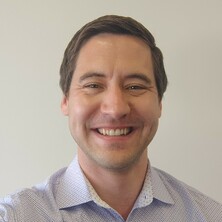
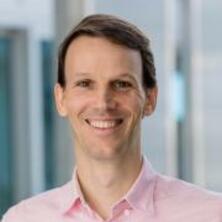
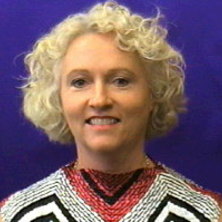
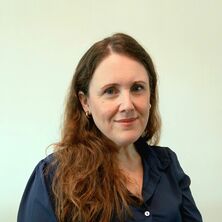
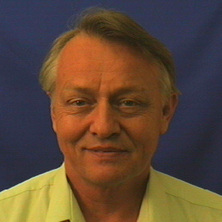
Rodney Strachan received his PhD from Monash University in 2000. His research focuses on Bayesian analysis, econometric theory, time series analysis, inference in time varying parameter and time varying dimension models, identification in reduced rank models and invariance. His current work is looking at specification and computation of large dimensional macroeconometric time series models. Rodney came to UQ from the Australian National University where he was a professor and the deputy head of the Research School of Economics.
Faculty of Engineering, Architecture and Information Technology
Availability:
Available for supervision
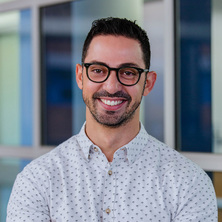
Dr Karla Straker is an educator, researcher, and above all a designer. Being an alumnus of The Queensland University of Technology, having completed a Bachelor of Design (with honours) in Industrial Design in 2011, and PhD in 2016. She has expert knowledge in the area of design innovation, most notably through the recent publication of the books Design Innovation and Integration (2021), Design Innovation for Health and Medicine (2020) and Affected: Emotionally engaging customers in the digital age (2018). She has a strong track record of high-quality research outputs, with over 30 journal articles published in a variety of design, business, and technology journals.
Her research is in the field of Design Innovation, which is the application and adoption of design innovation methods into industry-led research projects. Her specific focus and contribution to the field is the continuing application and investigation of design methods in driving innovative digital solutions. Her publications appear in a range of disciplines including design, business, management, and medicine journals, disseminating the value of design to a variety of readers. Most notably in the Journal of Cleaner Production, Energy Policy, California Management Review, ASAIO Journal, and Journal of Cardiovascular Nursing.
She is currently a Senior Research Fellow at The University of Queensland. Her previous position involved being a lecturer and program director of the Design Major at the University of Sydney. During her time as Program Director, she led the growth of the program from 59 students in 2018 to 139 students in 2020. The units on offer also increased to 12, including subject areas which were directed by student interests, including ‘Design for Social Impact’. These units were offered to students from 17 different degrees to combine their expertise and work collectively on a range of projects. She has developed and implemented new curriculum across 4 units of study which has been directly related to her research, seeing the scholarly development of all teaching resources. The complexity of these units is designing teaching resources and project which enable the diverse group of students to all learn and benefit.
She has a Graduate Certificate in Educational Studies (Higher Education) and has taught in undergraduate and postgraduate programs at the University of Sydney and Queensland University of Technology. Being nominated for the VC Award for ECR Outstanding Teaching (USYD, 2020) and won the Most Inspiring and Influential Teaching Practice award (QUT, 2011).
Karla was an Early Career Research Ambassador for the Sydney Nano Institute (2019-2021) working with the Deputy Director of Member Engagement. In this role she engaged with researchers at all academic levels, across disciplines and faculties to develop programmes and initiatives for ECRs across the university. She successfully developed and facilitated an ECR workshop with participants, which resulted in two projects being funded by the Nano Institute.
She became the Deputy Co-director of the Design Innovation Research Group in August 2020 and worked in a multi-disciplinary team in the Sydney Nano Institute to develop a low-cost method to capture enough water from the atmosphere to alleviate the effect of drought.
Securing over $1M in competitive grant and industry funding, Karla has been a Chief Investigator on three industry-supported projects. She currently supervises 2 Ph.D. students and has completed 1 Ph.D. and 6 honours students across the fields of design for health and medicine, science and business innovation. Her students have won awards including an Australian Good Design Award (2021), Sydney Nano Institute Publication Award (2019), the Nosé International Fellowship Award (2019), and the Top 5 Abstract at the ASAIO Conference (San Francisco USA, 2019).
Design of digital channel engagements
Dr Straker’s PhD thesis investigated the design of digital channel engagements, to understand how strong relationships with people can be built and sustained through a deeper understanding of customer emotions. Through her candidature she was trained by Professor Michael Rosemann, an internationally renowned Information Systems researcher, and Professor Wrigley, a leader in the field of Design Innovation. Her thesis was nominated for the Best Thesis Award (QUT) and was in the Top 40 of the International ISPIM Innovation Management Dissertation Award. This work also led to a book co-authored with Professor Wigley, titled Affected: Emotionally engaging customers in the digital age published in 2018 by Wiley Publishers. The purpose of this book was to consolidate and translate research findings into practical knowledge for companies to build deep and long-lasting relationships with customers in the digital age through design. It is distributed worldwide and sold more than 5,000 copies in the first 5 months through the Australian bookseller Dymocks. It also received industry reviews from Google, Sales Force, PwC, Accenture and the Boston Consulting Group. The front cover image is also an original artwork by internationally known artist CJ Hendry.
Since her PhD research, her work has continued exploring the design of digital channel engagements, in the medical, defence and retail industry.
Faculty of Engineering, Architecture and Information Technology
Availability:
Available for supervision
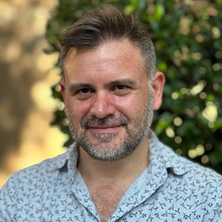
Jesse's research involves the application of optical diagnostics - emphasizing laser diagnostics - for characterizing extreme environments and reactions, emphasizing physical chemistry, ionization, and radiation phenomena affecting reentry flows. Prior to joining UQ, Jesse was a research scientist at Stanford University from 2022-2026, managing shock-tube laboratory funding, safety, and research activities. He previously graduated from Stanford with his PhD in 2022 as well as a MS in 2018, with his research focusing on the chemical kinetics of high-temperature gases with an emphasis on vibrational and chemical nonequilibrium through experimental studies at both Stanford and the NASA Ames electric arc shock tube (EAST).
Faculty of Health, Medicine and Behavioural Sciences
Availability:
Available for supervision
Media expert
Jenny was appointed Professor of Occupational Therapy in 1997. At the end of 2015, Jenny took early retirement from UQ. In January 2016, she was awarded the title of Emeritus Professor of The University of Queensland. Jenny is now using her time to facilitate and enable a new generation of clinical occupational therapists to appraise and utilise research evidence in their practice, and to conduct clinical research and generate new evidence to inform practice. In addition, she continues to guide a growing group of research higher degree students, while focusing more time upon her own research in the area of chronic pain.
Her research has primarily focused upon the impact which chronic pain has upon a person's life; the attendant measurement of that pain, and the efficacy of different treatment approaches. Jenny was recognised as a Distinguished Member of the Australian Pain Society in 2014, for her contribution to pain management education and research in Australia.
Faculty of Health, Medicine and Behavioural Sciences
Availability:
Available for supervision
Media expert
Jaimee is an applied cultural and developmental psychologist and Principal Research Fellow at the UQ Poche Centre for Indigenous Health. Her work examines human development within complex social systems with a focus on the experiences of marginalised, under-represented, and disadvantaged communities. Throughout her career she has worked to support the health and well-being of diverse minority groups (e.g. cultural, religious, gender, and sexual orientation) and those who experience inflated risk factors (e.g., exposure to violence, low socio-economic status, displacement). She is especially interested in how governance, community, and individual-level factors intersect with contemporary social issues including emerging technologies, intercultural relations, and social cohesion. Jaimee focuses on issues of social justice, peace, and equity with an emphasis on the empowerment of Indigenous, migrant and refugee background youth and families.
Jaimee has multisector research and leadership experience across the United Nations, government, and academia in Australia and Aotearoa. Most recently, she was Head of Research (Acting) at the United Nations University Institute in Macau, where she led a team examining the gender digital divide, the ethics of AI, and online violence among civil society in Asia-Pacific. Prior to that she held a senior research role at Griffith University where she led the research strategy for a large project in Logan aimed at alleviating the impacts of place-based disadvantage among diverse cultural groups. Jaimee has extensive experience in both quantitative and qualitative methods, knowledge mobilisation, and stakeholder engagement, and policy advisory.
Martin Stuart-Fox is Emeritus Professor of History at the University of Queensland. After completing a BSc in evolutionary biology, he worked in PNG, Hong Kong and Laos before joining United Press International as a foreign correspondent covering the Second Indochina War. On returning to Australia he tutored and lectured in Asian history at UQ while undertaking an MA (on the rationale for an evolutionary theory of history) and PhD (developing an evolutionary theory of history). As Head of History at UQ, Professor Stuart-Fox taught courses on History, Time and Meaning, and Theory of History at the Honours level. He is currently pursuing research on evolutionary theory of history.
Faculty of Health, Medicine and Behavioural Sciences
Availability:
Available for supervision
Professor David Sturgess is the Deputy Director of Anaesthesia (Professional Development) at the Princess Alexandra Hospital, Brisbane, Australia. He is also a Councillor (Non-executive Director) of the Australia and New Zealand College of Anaesthetists (ANZCA), as well as Medical lead & Co-chair of the Queensland Health Statewide Anaesthesia and Perioperative Network (SWAPNet).
Professor Sturgess' doctoral thesis focused upon the non-invasive evaluation of heart function during life threatening infection. This culminated in award of a Doctorate of Philosophy (PhD), in the Discipline of Anaesthesiology and Critical Care, from The University of Queensland. Professor Sturgess maintains a keen interest in haemodynamic monitoring and echocardiography.
The scope of his current research interests has broadened and is best collated under the theme of Perioperative Medicine. Professor Sturgess' research brings together elements of the inflammatory response, critical care equipment and inter-professional collaboration.
Postgraduate research student supervision and published collaborations include exploration of the interactions between opioids, regional anaesthesia and cancer recurrance; perioperative nutrition and hyperglycaemia; analysis and interpretation of large observational perioperative datasets; risk stratification of acute coronary syndromes using echocardiography; neuraxial anatomy and haemodynamics relevent to peripartum anaesthesia; implementation science and perioperative temperature monitoring and management.
Affiliate of Centre for Social Responsibility in Mining
Centre for Social Responsibility in Mining
Faculty of Engineering, Architecture and Information Technology
Principal Research Fellow
Sustainable Minerals Institute
Faculty of Engineering, Architecture and Information Technology
Availability:
Available for supervision
Kathryn Sturman is a political scientist and international relations expert specialising in resource governance. Her research focuses on the geopolitical dynamics shaping the extractive industries, particularly in resource-rich regions of the Global South. Kathryn has led research identifying governance risks associated with the volatile market for critical minerals. She provided embedded evaluation over five years for BHP Foundation’s Natural Resource Governance Program and has developed guidance for the International Council on Mining and Metals. Kathryn has advised seven PhD students and teaches into short courses for CSRM on topics relating to mining standards and regulation, sustainable development leadership and community relations. She is UQ’s board member for the Australia Africa Universities Network.
Associate Member of Centre for Community Health and Wellbeing
Centre for Community Health and Wellbeing
Faculty of Health, Medicine and Behavioural Sciences
Affiliate of Centre for Sport and Society
Centre for Sport and Society
Faculty of Health, Medicine and Behavioural Sciences
Senior Lecturer
School of Human Movement and Nutrition Sciences
Faculty of Health, Medicine and Behavioural Sciences
Availability:
Available for supervision
Media expert
Dr Michalis Stylianou is a senior lecturer with the School of Human Movement and Nutrition Sciences at The University of Queensland. His research interests focus around creating active and healthy schools using comprehensive and coordinated approaches that involve school staff, parents, and the community. Michalis is also a member of the Active Healthy Kids Australia research working group, a collaboration among Australian children’s physical activity and health researchers who advocate for actions to increase the physical activity levels among Australian children using the Physical Activity Report Card for Children and Young People as the core monitoring metric.
Faculty of Health, Medicine and Behavioural Sciences
Affiliate Senior Research Fellow of Queensland Brain Institute
Queensland Brain Institute
Faculty of Health, Medicine and Behavioural Sciences
Availability:
Available for supervision
Media expert
I am a biologist interested in the general question of how changes in developmental processes can lead to evolutionary variation and origin of complex traits (such as neural circuits). I study development and evolution of the brain of mammals. My doctoral thesis studied brain regions involved in olfactory and pheromonal communication in mammals. I discovered several events of parallel co-variation of sensory pathways in distantly related species sharing similar ecological niches, as cases of ontogenetic and phylogenetic plasticity. Currently, I study development and evolution of neocortical circuits by following two main lines of research: one aims to determine how early neuronal activity emerges during development and help shape brain connections, and the other one aims to understand what developmental processes led to evolutionary innovations in the mammalian brain. My research combines molecular development (electroporation, CRISPR), transcriptomics, sensory manipulations, neuroanatomy mapping (MRI, stereotaxic tracer injections, confocal and image analysis), optogenetics, and in vivo calcium imaging (multiphoton and widefield) in rodent pups and marsupial joeys.
Angelica is a senior spatial scientist with a strong background in remote sensing and environmental analysis. Her work bridges science and practice, applying spatial technologies to improve land and resource management. She has contributed to research across a wide range of applications — from crop and vegetation monitoring to assessing land use change driven by different sectors.
Her research interests include the evaluation and adoption of remote sensing technologies for crop and vegetation monitoring, tracking native vegetation clearing and regrowth, analysing environmental and production factors that influence crop performance, and developing spatial datasets for yield forecasting, crop phenotyping, and long-term landscape monitoring.
School of Political Science and International Studies
Faculty of Humanities, Arts and Social Sciences
Availability:
Available for supervision
Media expert
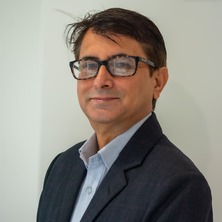
DB’s research interest includes conflict transformation and peacebuilding, the intersection of religion and politics, and populism and nationalism in the Asia Pacific region. Currently, his research is focused on exploring the dilemmas and complexities associated with peacebuilding in authoritarian, populist and nationalist states across South and Southeast Asia. He has conducted research fieldwork across South and Southeast Asia, especially Nepal, Sri Lanka, India, and Myanmar.
He is the author of Combatants to Civilians: Rehabilitation and Reintegration of Maoist Fighters in Nepal's Peace Process (Palgrave, 2018) and co-editor of The Routledge Handbook of Populism in the Asia Pacific (Routledge, 2024) and Reconciliation in Conflict-Affected Communities: Practices and Insights from the Asia Pacific. He has also published his research in scholarly journals such as World Development, Contemporary South Asia, Religion & Politics, Asian Studies Review, Journal of Human Rights, Conflict, Security & Development and Contemporary Politics. He is a Research Member in the ‘Addressing Violent Extremism and Radicalisation into Terrorism’ (AVERT) Research Network at the Deakin University in Melbourne.
Before coming to the academia, he worked with several international organisations for more than ten years in Nepal, Sri Lanka and Viet Nam. Since 2010, he has been actively collaborating with government and non-government organizations and has provided research and consultancy service to several agencies including United Nations Development Programme (UNDP), UN Women, ActionAid Myanmar, UNICEF, International Alert UK, Care International and Mercy Corps. In 2022, he supported the Connected Communities team in NSW Department of Premier and Cabinet to develop and implement the evaluation framework and plan for NSW’s Countering Violent Extremism Programme.