Queensland Alliance for Agriculture and Food Innovation
Availability:
Available for supervision
Media expert
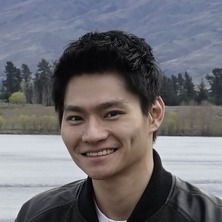
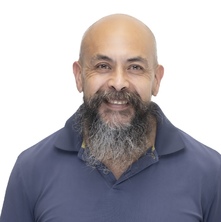
Albert is a plant science researcher specialising in plant biotechnology and tissue culture. His research background spans a variety of agricultural and conservation applications, including experience in cereals gene-editing and physiology, as well as the development of plant tissue culture platforms for recalcitrant grass species and woody perennials. His research addresses critical challenges in plant science, focusing on developing and applying innovative techniques to enhance crop improvement and conservation, particularly in the context of climate change and food security. Currently, he is working with industry partners in developing low-emissions forage grass for cattle feed. He is also leveraging his expertise in plant tissue culture to focus on native plant preservation, applying advanced laboratory techniques to support critical conservation efforts.
Affiliate of ARC COE for Engineered Quantum Systems (EQUS)
ARC COE for Engineered Quantum Systems
Faculty of Science
Availability:
Not available for supervision
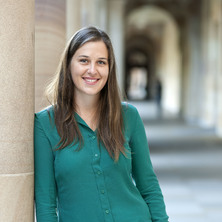
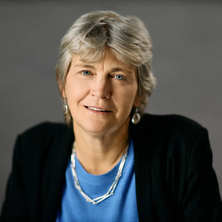
Carolyn is a theoretical physicist studying quantum information and quantum foundations. She grew up in central Queensland and holds bachelor’s degrees in physics (UQ) and applied linguistics (Griffith University). She completed her PhD in physics at the University of Queensland.
Her research is focused on physics at the interface between quantum mechanics, general relativity and thermodynamics, quantum machine learning, and the applications of both to quantum information theory and quantum computing. She is also broadly interested in artificial intelligence, and cross-disciplinary research combining physics and linguistics.
Carolyn was a Deborah Jin Research Fellow with the ARC Centre of Excellence for Engineered Quantum Systems (EQUS) from 2022 to 2025.
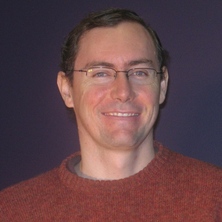
Ben has been working with food production animals his entire career in both a clinical and research capacity. Initially, a mixed animal practitioner in northern NSW and the UK, he went on to complete a PhD in beef cattle genetics at UNE (Armidale). He then moved to Canada to work in research and development with Hendrix Genetics in poultry genetics. While in Canada he was an adjunct with the Centre for Genetic Improvement of Livestock (CGIL) at the University of Guelph and continues in that position supervising HDR candidates. He has been a registered veterinarian the UK, Canada and Australia and has experience across Europe and the Americas.
Research interests have included production animal disease diagnosis and control, economic modelling, breeding program design, phenotype optimisation and the application of genomics.
Affiliate of ARC Research Hub for Advanced Manufacture of Targeted Radiopharmaceuticals (AMTAR)
ARC Research Hub for Advanced Manufacture of Targeted Radiopharmaceuticals
Australian Institute for Bioengineering and Nanotechnology
Postdoctoral Research Fellow/Research Fellow - ARC Research Hub for Advanced Manufacture of Targeted
Australian Institute for Bioengineering and Nanotechnology
Availability:
Available for supervision
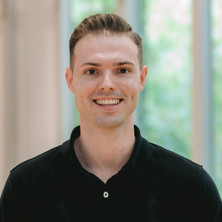
Dr James Wood's research focuses primarily on the design and synthesis of organic ligands to complex inorganic radioisotopes for radiopharmaceutical applications. His work spans across the design and synthesis of these ligands, through to radiolabelling of these compounds and assessment within animal models. He is particularly interested in applications of these ligands that grant greater flexability or utility to diagnostic and therapeutic platforms.
James works within the ARC Research Hub for Advanced Manufacture of Targeted Radiopharmaceuticals at the Centre for Advanced Imaging, engaging with industry partners to excelerate the production of novel radiopharmaceuticals.
Faculty of Health, Medicine and Behavioural Sciences
Availability:
Available for supervision
James Woodforde is a lecturer in the School of Human Movement and Nutrition Sciences at The University of Queensland. His research centres on physical activity in children and young people, with a specific focus on the school setting. James’s PhD research examined physical activity in the before-school segment, drawing on a variety of data sources and engaging with school stakeholders to develop a comprehensive understanding of physical activity patterns and influences during this time of day.
Affiliate of Centre for Environmental Responsibility in Mining
Centre for Environmental Responsibility in Mining
Faculty of Engineering, Architecture and Information Technology
Lecturer
School of the Environment
Faculty of Science
Affiliate of The Remote Sensing Research Centre
Earth Observation Research Centre
Faculty of Science
Availability:
Available for supervision
Will is a University of Queensland teaching and research academic and recent ARC DECRA holder (DE190101182). His research aims to bridge scales for remotely sensing dynamic vegetation productivity and health. Will was the Principal Investigator of the CSIRO/TERN-OzFlux Tumbarumba tall forest research site from 2016-2025. Now in its 25th year it is one of Australia’s longest continuously running flux tower sites and rated equal second globally for verification of environmental satellite products [1]. Previously Will held the position of Research Scientist at CSIRO, after commencing as a Postdoctoral Research Fellow in 2015.
Will has experience with a range of passive and active remote sensing technologies including combining LiDAR, optical- and thermal-imagery for estimating vegetation structure and function. His current research focuses on scaling observations of sun-induced chlorophyll fluorescence (SIF) from leaf to canopy scales at flux tower sites. He is based in the Earth Observation Research Centre at UQ.
Please also feel free to get in touch with Will to discuss potential collaborations.
[1] Camacho, F., Román, M.O., Nickeson, J., Göttsche, F.-M., Ducanson, L., Sanchez-Azofeifa, G.A., Woodgate, W., Karan, M., Descalzo, L.d.l.M., & Monzo, C.D. (2018). Proposition of CEOS LPV Super Sites for Validation of Biophysical Satellite Products. Paper presented at the ESA LPVE - Land Product Validation and Evolution 2018, ESA/ESRIN, Frascati, Italy. DOI: 10.13140/RG.2.2.10375.50087
Affiliate of Centre for Cardiovascular Health and Research
Centre for Cardiovascular Health and Research
Faculty of Health, Medicine and Behavioural Sciences
Affiliate of Centre for Motor Neuron Disease Research
Centre for Motor Neuron Disease Research
Faculty of Health, Medicine and Behavioural Sciences
Affiliate Professor of Queensland Brain Institute
Queensland Brain Institute
Faculty of Health, Medicine and Behavioural Sciences
Affiliate of Centre for Innovation in Pain and Health Research (CIPHeR)
Centre for Innovation in Pain and Health Research
Faculty of Health, Medicine and Behavioural Sciences
NHMRC Professorial Fellow
School of Biomedical Sciences
Faculty of Health, Medicine and Behavioural Sciences
Availability:
Available for supervision
Media expert
Dr Woodruff is a Professor of Pharmacology who leads a research team aiming to find new therapeutic treatments for neurodegenerative disorders. Current therapies for these diseases are vastly inadequate, and so new research is needed to identify novel targets to slow or halt their progression. Prof Woodruff’s specific research revolves around the innate immune system in the brain, and the role of neuroinflammation in propagating disease. A key focus of his current work is testing new drugs developed at the University of Queensland in models of motor neuron disease (amyotrophic lateral sclerosis), Huntington’s disease, and Parkinson's disease, as well as maintaining an active interest in acute inflammatory disorders including sepsis and ischemia-reperfusion injuries. Using a series of potent and orally active complement C5a and NLRP3 inflammasome inhibitors developed at UQ, Prof Woodruff's team has demonstrated the therapeutic potential of targeting innate immune-mediated neuroinflammation to reduce neuronal cell death in animal models of these neurodegenerative diseases. His team has recently shown that in addition to their roles in neurodegeneration, innate immune factors also play essential roles in stem and neuronal cell development during embryogenesis, revealing the widespread physiological and pathological roles of this evolutionarily ancient immune system.
Faculty of Health, Medicine and Behavioural Sciences
Availability:
Available for supervision
Associate Professor Carl Woods is a theoretical skill acquisition scientist, studying human-environment interactions at the intersection of sport science, ecological psychology and social anthropology. In addition to his appointment at the University of Queensland, he is the Learning Design Lead at the Queensland Academy of Sport, and Learning Design National Discipline Lead for Australian Athletics.
Carl has a unique blend of theoretical and applied experiences, having held research leadership positions within the Institute for Health and Sport at Victoria University, while coordinating coaching science, skill acquisition, and innovation within the Australian Football League.
Given these diverse experiences, his research spans three major themes: 1) theoretical advancements to the field of sport science; 2) exploring ways of fostering human-environment interactions through the promotion of ecologically literate behaviour; 3) addressing practical challenges in sport related to performance preparation, practice task design, and coach education.
Affiliate of Centre for the Business and Economics of Health
Centre for the Business and Economics of Health
Faculty of Business, Economics and Law
Senior Research Fellow
Medical School
Faculty of Health, Medicine and Behavioural Sciences
Availability:
Available for supervision
Dr Lee Woods is an internationally recognised leader in digital health workforce capability and education, and practising Registered Nurse in primary care. She is Senior Research Fellow and Lead of the Workforce & Education Team at the Queensland Digital Health Centre (QDHeC), University of Queensland. Her academic qualifications include a Bachelor of Nursing (2005), Graduate Certificates in Clinical Nursing (2009) and Research (2019), First Class Honours (2015), and a PhD (2019). She also completed a four-year Fellowship by Training with the Australasian Institute of Digital Health (2021) and advanced co-design and design thinking training through the University of Sydney and the European Institute of Innovation and Technology (2016–2017).
Dr Woods has an H-index of 17, more than 790 citations, and has secured over AUD$2.9M in research funding. She leads an interdisciplinary team of 4 researchers and 6 doctoral students, with supervision completions including 1 PhD, 2 Masters, and 1 Honours. She served as Guest Editor for the Australian Journal of Rural Health special issue on digital interventions (2024).
Her leadership includes major projects such as the Queensland Health digital maturity assessment, which informed the refresh of Queensland’s state-wide digital health strategy Digital Health 2031 and measured 165 health services representing 56,000 consumers. She also helped lead the Embedding Digital Health Education into Health Degrees initiative, a global first in establishing a nationally agreed core curriculum for pre-registration health degrees. Dr Woods co-authored two national workforce strategies and co-developed Australia’s first health workforce fellowship program in digital health.
She is a Fellow of the Australasian Institute of Digital Health, was the Chair of the National Digital Health Early to Mid Career Conference (2024) and holds advisory roles in digital health education and research across Australia. Her contributions have been recognised through awards for industry engagement, service, and diversity, and she was selected to meet with Ministers of Parliament in Canberra (2023). Internationally, Dr Woods represents Australia on the International Medical Informatics Association Nursing Informatics Society and leads an AU–UK partnership to develop an AI literacy career framework for healthcare workers. She will deliver a keynote at the Perioperative Nurses International Conference (2026).
Affiliate of Centre for Environmental Responsibility in Mining
Centre for Environmental Responsibility in Mining
Faculty of Engineering, Architecture and Information Technology
Affiliate of Centre for Social Responsibility in Mining
Centre for Social Responsibility in Mining
Faculty of Engineering, Architecture and Information Technology
Senior Research Fellow
Sustainable Minerals Institute
Faculty of Engineering, Architecture and Information Technology
Availability:
Available for supervision
Sandy is a Senior Research Fellow at the Centre for Social Responsibility in Mining. She is a social researcher and communication management specialist. Her research interests are centred on subnational governance of industrial development – mining, oil and gas extraction, power generation (including renewables) and ancillary infrastructure such as pipelines and transmission lines. She is interested in the interface between governance actors (Indigenous and non-Indigenous communities, proponents and governments) at local, regional and state/provincial levels and how they seek to enhance the benefits from industrial development and avoid or mitigate its adverse impacts.
Much of her research has been focused on the social risks associated with mine project development, mine closure and the transition of mining regions to post-mining alternatives.
Sandy has extensive experience working across the mineral resources sector – on site, in a corporate environment, in government, consulting, not-for-profit and research. She brings practical industry knowledge to her applied research projects and enjoys working in interdisciplinary teams.
Sandy joined CSRM in 2019 after completing her PhD at the centre. Her doctoral research examined how coal mining project teams in Australia construct and assess social risk.
Liver disease has long been associated with the abuse and clinical use of drugs. My research interests focus on ethanol, perhaps the most commonly abused drug, and the widely used non-steroidal anti-inflammatory drugs (NSAIDS). Both NSAIDS and ethanol are widely tolerated but induce liver disease in a small number of individuals.
Research projects listed below investigate immunological and genetic phenomena associated with drug-induced liver disease.
Does ethanol alter hepatic gene expression to cause liver damage?
Is protein modification by ethanol metabolites involved in the aetiology of alcoholic tissue injury?
Are proteins modified by reactive molecules formed during ethanol metabolism viable biomarkers of ethanol intake?
Faculty of Health, Medicine and Behavioural Sciences
Affiliate of Centre for Living Experience Research
Centre for Living Experience Research
Faculty of Health, Medicine and Behavioural Sciences
Affiliate of Queensland Aphasia Research Centre (QARC)
Queensland Aphasia Research Centre
Faculty of Health, Medicine and Behavioural Sciences
Lecturer in Human-Centred Computing
School of Electrical Engineering and Computer Science
Faculty of Engineering, Architecture and Information Technology
Availability:
Available for supervision
I am an interaction designer.
I have an interest in design research and methods and their application to the design of technology. I believe that co-design/participatory design and human-centered design are critical approaches to ensuring that technology will truly serve the people who will be using or impacted by that technology.
A significant proportion of my work involves working with people living with dementia and post-stroke aphasia. Much of this work focuses on accessibility, usability and acceptability with the aim of creating technological solutions that are not only functional but also recognise and respond to people's intrinsic needs and experiences. A key aspect of my recent work is exploring acceptability and its ties to the Social Self-Determination model of people's needs. Through this I am looking at User Experience through a different lens, seeking to develop an understanding of how this model of people's needs can support a meaningful and impactful experience.
My interests extend across design theory and practice, human-computer interaction and user experience, and the application of the theory of these domains into practical and novel contexts. When designing technology that is to be used in everyday or applied contexts, I believe it is important to think beyond the technology itself. Therefore, in my research so far, I have worked in multidisciplinary teams crossing speech pathology, occupational therapy, computer science, and psychology. I am also committed to ensuring that technology and the process of designing technology is ethical.
Faculty of Health, Medicine and Behavioural Sciences
Availability:
Available for supervision
Helen has over 30 years’ experience as a clinician (orthoptist) and an innovative educator. She was the Academic Lead Assessment in the Academy for Medical Education from mid 2017 to March 2024. Helen’s expertise has been built on a career spanning clinical practice in rural and urban settings fuelling a passion for learning from her early mentor, the late Prof Fred Hollows. Her career in higher education has spanned several roles including lecturing and reforming the orthoptics curriculum, leading elearning projects across five health facilities at the University of Sydney before moving to lead academic development at Charles Darwin University. She has worked in three medical schools (University of Sydney, Flinders University and the University of Queensland) inspiring educators to enhance clinical skills teaching, developing clinical supervisors in Northern Australia and most recently leading assessment design for the new Doctor of Medicine program at University of Queensland. She has received multiple teaching and learning awards at University of Sydney (2003, 2004), Flinders University (2016) and the Australian Awards for University Teaching: Citation for Outstanding Contributions to Student Learning (2017).
Affiliate of Centre for Motor Neuron Disease Research
Centre for Motor Neuron Disease Research
Faculty of Health, Medicine and Behavioural Sciences
Affiliate of The Centre for Population and Disease Genomics
Centre for Population and Disease Genomics
Institute for Molecular Bioscience
Professorial Research Fellow
Institute for Molecular Bioscience
Availability:
Not available for supervision
Naomi Wray is the Michael Davys Professor in the Department of Psychiatry, University of Oxford. She holds an appointment at the Institute for Molecular Bioscience (IMB) within the University of Queensland. She joined UQ Queensland Brain Institute in 2011 moving to the IMB in 2015. She was Head of the Centre for Population & Disease Genomics within IMB 2018-2023. Her Oxford appointment started in 2023.
Her research focuses on development and application of quantitative genetics and genomics methodologies across complex diseases, disorders and traits, but particularly psychiatric-related traits.
She is a National Health and Medical Research Council (NHMRC) Leadership Fellow, a Fellow of the Australian Academy of Science and a Fellow of the Australian Academy of Health and Medical Science. In 2020 she was awarded the NHMRC Elizabeth Blackburn Award for Leadership in Basic Science and the 2021 International Society of Psychiatric Genetics Ming Tsuang Lifetime Achievement Award. She is a Clarivate Highly Cited researcher.
She was Director of the Program in Complex Trait Genomics (PCTG) funded as an NHMRC Program Grant 2017-2022. She plays a key role in the International Psychiatric Genomics Consortium and established the sporadic ALS Australia systems genomics consortium (SALSA) funded by the MND Research Australia IceBucket Challenge and FightMND. She is a co-investigator on the Australian Genetics of Depression Study (AGDS) and is currently launching the AGDS-Cello project focussed on establishing a cell line resource from participants with a detailed history of anti-depressant use and response measures. She is part of an NHMRC Synergy (2023-2027) "Rhythms and blues: Personalising care for body clock dysfunction in mood disorders".
She is secretary of the International Society of Psychiatric Genetics, and is on the editorial advisory boards of JAMA Psychiatry, Neuron, Royal Society Open and Research Directions: Depression.