Queensland Alliance for Agriculture and Food Innovation
Availability:
Available for supervision
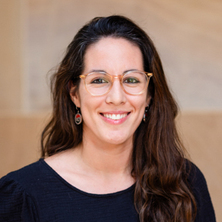
Pauline has extensive knowledge and research experience in Molecular biology, Plant tissue culture, transformation and gene modification using CRIPSR/Cas9. Pauline has worked on both cereals and legumes. Her interests are in understanding and underpinning molecular mechanisms used by extremophiles to survive harsh conditions.
Pauline is currently working on understanding rice domestication by using gene editing techniques to modify agronomically important traits in both wild and cultivated rice species. Her ultimate goal is to see high end laboratory research transition to benefit the consumer/breeders/ farmers.
Faculty of Engineering, Architecture and Information Technology
Associate Dean (Academic)
Faculty of Business, Economics and Law
Availability:
Not available for supervision
Media expert
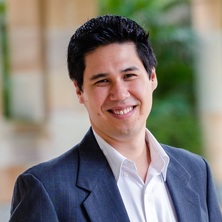
TYLER OKIMOTO is a Professor and Associate Dean (Academic) for the Faculty of Business, Economics, and Law at the University of Queensland. He received his Ph.D. in Organisational Psychology from New York University in 2005, and worked as a postdoctoral researcher in the School of Psychology at Flinders University in Australia, and in the School of Management at Yale University.
Tyler's research aims to better facilitate collaboration and consensus between diverse points of view, and to understand the role of leadership in overcoming those challenges. He often examines consensus/collaboration as a conduit for social justice in organisations and society, both how a lack of consensus contributes to injustice and inequality, and how people can effectively collaborate to move past conflict and repair harmonious relationships.
He is also an award-winning educator, teaching both traditional and online/blended courses on leadership, human resources, conflict/negotiation, and decision-making in the Undergraduate, MBA, and Executive levels. He was also the Program Director and Academic Lead Designer of UQ’s MicroMasters Program in Business Leadership, a series of five postgraduate-level MOOCs (Massive Open Online Courses); in its first year, this program reached over 60,000 learners from 193 different countries, and was a 2019 finalist for the global edX Prize for Exceptional Contributions to Online Education.
Affiliate of Queensland Alliance for Environmental Health Science
Queensland Alliance for Environmental Health Sciences
Faculty of Health, Medicine and Behavioural Sciences
ARC DECRA Research Fellow
School of Pharmacy and Pharmaceutical Sciences
Faculty of Health, Medicine and Behavioural Sciences
Availability:
Available for supervision
Media expert
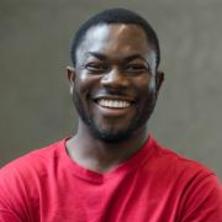
Dr. Elvis Okoffo is a Research Fellow at the Queensland Alliance for Environmental Health Sciences (QAEHS), The University of Queensland, Australia. His research is centred on developing innovative analytical methods to characterize and monitor environmental and human exposures associated with plastics. He has pioneered novel sampling approaches and analytical techniques for the rapid screening and monitoring of various types of plastics, including microplastics, nanoplastics, and biodegradable plastics in environmental samples (e.g., drinking water, wastewater, biosolids, seafood, marine water and sediments, compost, food, road dust, among others). By leveraging cutting-edge technologies (such as pressurised liquid extraction, ultrafiltration and pyrolysis gas chromatography coupled to mass spectrometry) and scientific methodologies, his research aims to provide valuable insights into the distribution, abundance, and impacts of plastic pollution, ultimately contributing to the development of effective strategies for mitigating the adverse effects of plastic pollution on ecosystems and human health.
Faculty of Health, Medicine and Behavioural Sciences
Availability:
Available for supervision
Dr Josephine Okurame is a Lecturer in Research at The University of Queensland. She brings a multidisciplinary background that spans health research, education, equity focused pathways, artificial intelligence, and community engaged scholarship. Her work sits at the intersection of widening participation, underserved populations, and the translation of research into practical outcomes for learners, professionals, and communities.
Josephine’s research centres on improving access, representation, and success for students from underserved and rural backgrounds, particularly within health and medical training pathways. Her scholarship draws on mixed methods approaches and emphasises the integration of lived experience, systems thinking, and evidence informed policy and practice. She has a growing interest in the ethical use of artificial intelligence in academia, with a focus on responsible integration into teaching, research design, research communication, and academic capacity building. Her interests explore how AI can support equity, transparency, and accessibility while maintaining academic integrity and human centred decision making.
With a strong foundation in teaching and research capacity building, Josephine supports students, clinicians, and early career researchers to engage in meaningful research activity. She has experience in mentoring, curriculum informed research integration, and developing research confidence amongs inidividuals who are new to research environments. Her work strengthens the link between education, workforce development, and service delivery.
Josephine also has a strong interest in research communication and knowledge translation. She focuses on making complex evidence understandable and actionable for diverse audiences, including educators, community stakeholders, and policy contributors. Her broader academic vision centres on equitable systems, sustainable career pathways, and strengthening the pipeline between education, community need, and workforce outcomes.
Through her role at UQ, she contributes to research, teaching, and collaboration that support the long term goal of a more inclusive and responsive health workforce.
Faculty of Health, Medicine and Behavioural Sciences
Higher Degree by Research Scholar
Prince Charles Hospital Northside Clinical Unit
Faculty of Health, Medicine and Behavioural Sciences
Availability:
Not available for supervision
Dr Gerry Olive is a Queensland trained Respiratory Physician and early career researcher, undertaking a PhD in the field of lung cancer diagnosis. He has a keen clinical and research interest in the diagnostic approach to nodules and diagnostic bronchoscopy, including endobronchial ultrasound.
Faculty of Health, Medicine and Behavioural Sciences
Availability:
Available for supervision
Media expert
Rebecca Olive joined the School of Human Movement and Nutrition Sciences in 2017. Her work about lifestyle and nature sports contributes to critical cultural, social and historical teaching and research relating to sport, physical cultures, bodies, and health. Rebecca publishes in journals and books across Cultural Studies, Gender Studies, Sport Sociology, and Sport History, and has co-edited a book with Holly Thorpe, Women in Action Sport Cultures: Identity, Politics and Experience (2016).
In 2019, she was awarded a DECRA for her project baout human-ocean health, 'Understanding ecological sensibilities in recreational lifestyle sports'. This project explores practices and cultures of ocean swimming and surfing to understand intersections human and environmental health. The project uses ethnographic methods (fieldwork and interviews) to make sense of ocean-swimmers’ and surfers' relationships to sharks, plastics, and localism at a range of urban and regional beaches. You can read more about this work on her Moving Oceans website.
Rebecca also continues focus on issues of equity and diversity and action/lifestyle sports and cultures, in particular women's experiences. Taking a feminist cultural studies approach to theories of power, ethics and pedagogy, she is interested in how we influence cultural change in everyday lived physical cultures towards more inclusive access and participation. Current projects include:
Bluespaces and health
Nature sports
Women in sport, physical activity and leisure practices
Self-representation on social media – elite athletes, recreational sports and fitness cultures
Faculty of Health, Medicine and Behavioural Sciences
Availability:
Available for supervision
Will is a pharmacist and an academic at the School of Pharmacy and Pharmaceutical Sciences at UQ. Will undertakes research at the intersection of pharmacy practice and bioethics. His research interests include normative ethics, professional responsibility and the philosophy of responsibility. Will also teaches across undergraduate programs for pharmacy, nursing, midwifery and social work. Will’s teaching interests include medicines management and ethical decision-making in the health professions.
Dr Jon Olsen is an Associate Professor & Deputy Director (Research) at the Institute for Social Science, The University of Queensland. He serves as Director of URBANiQ: Urban Intelligence for Healthy & Equitable Places @ The University of Queensland, the AURIN UQ-Node, and leads research focused on place and health inequalities. His work explores how the built and natural environments, along with urban planning policies, influence health outcomes and disparities. Jon is also committed to advancing understanding of the intersections between human health and planetary health.
He is Co-I of the NIHR Global Health Research Unit in Social and Environmental Determinants of Health Inequalities (SEDHI) and the NIHR Public Health Research (PHR) Programme-funded Orienting Policy Towards Inequality Minimising Actions (OPTIMA) project, a systems science approach to 20-minute neighbourhood policy and evaluation.
Jon is Senior Editor of the new journal Urban Transitions, Editorial Board Member of Wellbeing, Space and Society. He is an Honorary Senior Research Fellow at the University of Glasgow, UK and Honorary Professor at Chulalongkorn University, Thailand.
Affiliate of Research Centre in Creative Arts and Human Flourishing
Research Centre in Creative Arts and Human Flourishing
Faculty of Humanities, Arts and Social Sciences
Professor
School of Social Science
Faculty of Humanities, Arts and Social Sciences
Availability:
Not available for supervision
Media expert
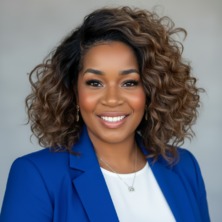
Rebecca Olson is Professor of Sociology at the University of Queensland, cutting-edge translational qualitative researcher, mentor and award-winning educator with expertise in the sociologies of health and emotions. Her work advances the human aspects of care. It empowers students, teachers and researchers to foreground social and emotional aspects in addressing emerging health challenges through collaborative, interdisciplinary research with in-built impact. As Co-Founder and past Director of SocioHealthLab, she leads an interdisciplinary collective of researchers, health professional educators and practitioners interested in doing health and healthcare differently: more socially aware, more relational, more inclusive and more just. As Director of Teaching and Learning in the School of Social Science, she prioritises collaborative, reflexive, creative and emotions-centred practices in higher education. As Joint Editor-in-Chief of Health: An Interdisciplinary Journal for the Social Study of Health, Illness and Medicine, Olson fosters dialogue across theory-curious clinician researchers and critical health social scientists. With 100+ scholarly publications – as well as news media and creative video productions – Rebecca is a prolific contributor to public debate. With research interests spanning medicinal cannabis and health professions education to climate anxiety, Olson is internationally renowned for bringing sociological insight to complex challenges related to emotions, wellbeing, healthcare and caregiving.
Emma is a Koori Aboriginal woman from the Wiradjuri Nation in New South Wales through her mother and grandparents, and Middle‑Eastern Jewish Australian on her father’s side. Born in Muloobinba (Newcastle, New South Wales), she grew up in Winnam (Wynnum) on Quandamooka Country (Moreton Bay).
Emma has a professional background in leadership, executive management, organisational change and Indigenous engagement. Her research, grounded in Indigenous methodologies, focuses on Aboriginal and Torres Strait Islander employment, examining State Government strategies, programs, policies and legislation related to the targeted recruitment of Aboriginal and Torres Strait Islander peoples.
Faculty of Health, Medicine and Behavioural Sciences
Availability:
Available for supervision
Hannah is an experienced Accredited Practising Dietitian (APD) who holds positions as a Senior Dietitian at The Surgical, Treatment and Rehabilitation Service, Knowledge Translation Workforce Development Officer for Metro North Hospital and Health Service, and Honorary Research Fellow within the University of Queensland, Centre for Health Services Research.
Hannah completed her PhD at the University of Queensland in 2024. Her PhD focused on person-centred care and interprofessional practice in nutrition and food services in rehabilitation, and has been internationally recognised. Hannah published four first-author peer-reviewed articles from her PhD research and has been invited to present her work at national conferences. Hannah has also secured competitive research funding to advance her clinical research program and translate her findings into practice across Queensland hospitals and health services, establishing herself as a promising early-career clinician-researcher. This has been reflected in recent awards, including the Practice-based Evidence in Nutrition Prize from Dietitians Australia (2024).
Hannah’s clinical research program aims to improve nutrition care in rehabilitation populations by harnessing technology, data-driven decision-making, and consumer engagement. Recent projects within this program include co-designing and implementing innovative nutrition education videos: https://metronorth.health.qld.gov.au/news/nutrition-information-for-patients, co-developing quality indicators for rehabilitation nutrition and food services with consumers and multidisciplinary staff, and using body composition measures to inform precision nutrition care.
As a Knowledge Translation Workforce Development Officer and clinically embedded researcher, Hannah is committed to bridging the gap between contemporary research and clinical practice. Hannah leads the Metro North arm of the Allied Health Translating Research into Practice (AH-TRIP) initiative: https://www.health.qld.gov.au/clinical-practice/database-tools/translating-research-into-practice-trip/translating-research-into-practice, aimed at increasing knowledge translation capacity in health professionals. Her involvement in various projects reflects this commitment to both knowledge translation and innovation, including contributing to developing and implementing a new high-value Malnutrition Model of Care and supporting the implementation of interprofessional mealtime enhancement strategies into routine practice.
Faculty of Health, Medicine and Behavioural Sciences
Higher Degree by Research Scholar
Frazer Institute
Faculty of Health, Medicine and Behavioural Sciences
Availability:
Available for supervision
Dr Natacha Omer is a paediatic oncologist at the Queensland Children's Hospital in Brisbane. She is specialised in solid tumours, with a spacial interest in paediatric and adolescent sarcomas, cancer immunotherapy and molecular oncology. She is undertaking a PhD in immunology studying natural killer (NK) cell immunotherapy in paediatric sarcomas at the Frazer Institute, University of Queensland, in Dr Fernando Guimaraes lab.
Associate Professor and Senior Principal Research Fellow
Queensland Alliance for Agriculture and Food Innovation
Availability:
Available for supervision
Ommeh (Sheila Cecily) was born on the slopes of Mount Elgon which is an extinct volcano that straddles both Kenya and Uganda and it was once the tallest mountain in Africa before the glaciers melted away. She spent her early years growing up on the foothills of this majestic mountain with her grandmother who is a small-holder rural farmer. From a young age, she witnessed first-hand the effects of disease and climate change on vulnerable livestock like poultry, cattle, goats and sheep among others leading to the loss of livelihoods for the farmers in her community.
During her formative years; 1984- 2002, Ommeh had an interest and pursued Agriculture and STEM upto the tertiary level. Her mentor was her late mother who was also an accomplised scientist and quite a visionary leader. For her postgraduate and early-career years; 2003 - 2011 Ommeh was affilliated at the International Livestock Research Institute (ILRI) where she did research on poultry genetics with a focus on genetic resitance to viral diseases. Her main fields of training and research are in Molecular Genetics and Bioinformatics.
In 2012, Ommeh joined the Institute for Biotechnology Research (IBR) at Jomo Kenyatta University of Agriculture and Technology (JKUAT) as a Research Fellow. She formed the Animal Biotechnology Research Group and the flagship project was on Indigenous poutry. Ommeh led other research projects that aimed to understand the origins, domestication and biodiversity of indigenous livestock and domesticates. The focus of these projects was to characterize candidate genes for both production and adaptive traits like disease and heat stress. Along with key collaborators, she did extensive research on emerging livestock species like minor poultry species, camels and donkeys. This also involved research on the diversity and domestication of bushmeat like guineafowls and quails. She also lead extensive research on pathogen surveillance and genomics using a Onehealth approach on bats, rodents, dogs, cats, ticks, humans among others. In 2019, Ommeh was promoted to Senior Research Fellow position and took up various leadership roles. She was a Principal Supervisor, Mentor and successfully graduated over twenty students affilliated to her own projects and funds; 6 were PhDs and over 15 Msc students.
In 2023, Ommeh Joined QAAFI as an Associate Professor in Animal Biotechnology. She plans to intergrate key outputs from previous research into her current research program at CAS. Ommeh's primary research focus is on improvement of Animal Health and Production at the "Onehealth" interface. Her research group at the Center for Animal Science aims to develop Molecular Diagnostics and Vaccines that will detect and control notifiable animal diseases. She will also lead research on diversity and harnessing bushtucker AKA bushmeat as emerging livestock species and a source of quality protein.
Affiliate of Minerals Industry Safety and Health Centre
Minerals Industry Safety and Health Centre
Faculty of Engineering, Architecture and Information Technology
Affiliate of Centre for Social Responsibility in Mining
Centre for Social Responsibility in Mining
Faculty of Engineering, Architecture and Information Technology
Affiliate of Julius Kruttschnitt Mineral Research Centre
Julius Kruttschnitt Mineral Research Centre
Faculty of Engineering, Architecture and Information Technology
Centre Director of Future Autonomous Systems and Technologies
Future Autonomous Systems and Technologies
Faculty of Engineering, Architecture and Information Technology
Professor
School of Mechanical and Mining Engineering
Faculty of Engineering, Architecture and Information Technology
Availability:
Available for supervision
Professor Italo Onederra serves as the Director of the Centre for Future Autonomous Systems and Technologies (FAST) at the School of Mechanical and Mining Engineering. He leads a research group focused on improving mineral extraction methods with reduced environmental impact through advanced preconditioning and fragmentation techniques. Recognised internationally as a specialist in explosives and blasting engineering technology, Italo holds a Bachelor of Engineering (Civil) with honours from the University of Melbourne, and a Master of Engineering Science and PhD from the University of Queensland. With over 25 years of R&D experience and consulting work in Australia, South America, Africa, and Europe, Italo has demonstrated leadership and impact in both research and industry. He has published numerous articles in peer-reviewed journals and conferences, contributed to technical reports and books, and co-invented novel nitrogen oxide-free explosives based on hydrogen peroxide. Italo is also known for developing fragmentation modelling techniques, which have been incorporated into commercial software used globally by industry and academia, as well as pioneering the use of physics engines in blast movement modelling to improve ore control and maximise recovery.
Dr Faith Ong's research focus lies in the role of events, tourism and hospitality as tools of social change. Thus, she researches into the social impacts of events and tourism on communities. Her work explores how different forms of festivals, community gatherings and targeted events impact the social inclusivity of places. Volunteering is also one of Faith’s areas of expertise, determining the impacts of volunteering in tourism and events on the individual.
Faith is interested in enabling full and inclusive participation of communities across a broad spectrum of events and travel. In particular, her work has focused on communities that are sexually and culturally diverse, as well as people with disabilities. She continues to explore the signals of inclusion and exclusion at occasions that are meant to bring communities together.