Faculty of Health, Medicine and Behavioural Sciences
Availability:
Available for supervision
I’m a clinician–researcher in infectious diseases, focusing on improving the prevention, detection, and control of high-burden and neglected infections through operational research and implementation science. My work spans hospital infection prevention (quality improvement collaborative) and community-based surveillance for diseases, including leprosy, lymphatic filariasis, and arboviruses.
At The University of Queensland (ODeSI, UQ Centre for Clinical Research), I support decision-making for infectious disease programs, translating routinely collected data and field evidence into actionable strategies. In Brazil, I lead and contribute to multi-site initiatives with PROADI-SUS hospitals and the Ministry of Health, including developing national guidelines and designing pragmatic trials.
Key expertise
Infectious disease epidemiology, surveillance, and outbreak analytics
Implementation research and quality improvement collaboratives
Pragmatic trials (e.g., cluster stepped-wedge designs) and diagnostic evaluation
Health technology assessment and micro-costing evidence.
Faculty of Health, Medicine and Behavioural Sciences
Affiliate of Centre for Enterprise AI
Centre for Enterprise AI
Faculty of Engineering, Architecture and Information Technology
Associate Dean (Research)
Faculty of Business, Economics and Law
Availability:
Available for supervision
Media expert
Martie-Louise Verreynne is a Professor in Innovation and Associate Dean (Research) in the Faculty of Business, Economics and Law, at the University of Queensland. Her research in innovation, particularly open innovation, focuses on how small firms leverage capabilities and networks to gain a competitive edge. Martie-Louise is a regular contributor to leading small business, entrepreneurship, strategy, and interdisciplinary journals and serves as Senior Associate Editor for the Journal of Small Business Management. Her work is funded by the ARC and other government and industry collaborators. She actively works with policy-makers and industry bodies to influence outcomes for the small firms that are the engine of the Australian and global economy. For this work, she has received both national teaching and university research engagement awards.
Affiliate of W.H. Bryan Mining and Geology Research Centre
WH Bryan Mining Geology Research Centre
Faculty of Engineering, Architecture and Information Technology
Affiliate of Julius Kruttschnitt Mineral Research Centre
Julius Kruttschnitt Mineral Research Centre
Faculty of Engineering, Architecture and Information Technology
Senior Research Fellow
Sustainable Minerals Institute
Faculty of Engineering, Architecture and Information Technology
Higher Degree by Research Scholar
Sustainable Minerals Institute
Faculty of Engineering, Architecture and Information Technology
Availability:
Available for supervision
Lizette specialises in applying technical knowledge and research outcomes in industrial applications to improve process performance.
Lizette holds a Bachelor of Engineering Honours degree in Control Engineering from the University of Pretoria, South Africa and is a minerals processing engineer with more than 15 years industrial experience that joined the JKMRC in 2019. She has extensive experience in processing of precious group metals (PGM’s), copper and iron ore.
She has been involved in a number of commissiong projects, including ultra-fine grinding circuits with optimisation of the downstream flotation circuits and the commissioning and operation of gravity separation plants for the treatment of low grade iron ore. She has also implemented metallurgical ore characterisation test programs in PGM and iron ore processing.
Faculty of Health, Medicine and Behavioural Sciences
Availability:
Available for supervision
Associate professor David Vesey is a leading research scientist in The University of Queensland Centre for Kidney Disease Research at the Translational Research Institute and a senior scientist within the Department of Kidney and Transplant Services at the Princess Alexandra Hospital. He is a graduate of Kings College and Imperial Collage, London University. Postdoctoral studies were at London University and The University of Queensland.
His main research interests are in the area of kidney tubulointerstitial fibrosis, inflammation and cancer – particularly the role that cytokines and growth factors play in these processes. Current projects include the role of protease activated receptor-2 in kidney inflammation and fibrosis, and the mechanism of heavy metal toxicity in the kidney. He manages the Princess Alexandra Hospital Endotoxin Testing Service which routinely tests samples from dialysis units throughout Queensland.
Affiliate of Centre for Innovation in Pain and Health Research (CIPHeR)
Centre for Innovation in Pain and Health Research
Faculty of Health, Medicine and Behavioural Sciences
Affiliate of The Centre for Chemistry and Drug Discovery
Centre for Chemistry and Drug Discovery
Institute for Molecular Bioscience
Affiliate of Centre for Marine Science
Centre for Marine Science
Faculty of Science
Availability:
Available for supervision
Media expert
I am an NHMRC Leadership Fellow with joint apointments at the Institute for Molecular Bioscience (IMB) and School of Pharmacy, UQ. My research interests lie in the fields of peripheral pain mechanisms, target identification and analgesic drug discovery. I investigate the contribution of ion channels to sensory neuronal physiology using highly subtype-selective toxins isolated from venomous animals with the aim to develop novel analgesics with improved efficacy and tolerability.
Affiliate of Centre for Innovation in Pain and Health Research (CIPHeR)
Centre for Innovation in Pain and Health Research
Faculty of Health, Medicine and Behavioural Sciences
Emeritus Professor
School of Health and Rehabilitation Sciences
Faculty of Health, Medicine and Behavioural Sciences
Availability:
Available for supervision
Media expert
I am a Professor Emeritus in Sports Physiotherapy in the School of Health and Rehabilitation Sciences where I am the Director of the Master of Physiotherapy (Musculoskeletal and Sports Physiotherapy Majors) and co-Director of the Sports Injury Rehabilitation and Prevention for Health Research unit. My research is mainly focussed on non-surgical management of persistent musculoskeletal problems like tendon related pain/disability (tendinopathy) and knee cap pain (patellofemoral pain). I also delve into the underlying mechanisms of these conditions and other common sporting injuries (e.g., ankle sprains) – a leading cause of ankle osteoarthritis.
Since gaining my PhD in 2000, I have been awarded over $30million in competitive research funding as a chief investigator to study these conditions – 5 NHMRC project grants, 2 NHMRC CRE, 2 NHMRC program grants, 2 NHMRC MRFF grants and an ARC Linkage grant. I have also conducted over half a million dollars of commercially sponsored research.
I have authored 2 books, 26 book chapters and over 382 peer reviewed publications (h-index 68). My top tendinopathy papers are cited over 10 times more than average for the field – most are published in the top sports/general medicine and physiotherapy journals . I have 2 highly cited papers – in the top 1% of the academic field of Clinical Medicine 2022. I have presented my work world wide in over 300 workshops, seminars and keynote presentations.
I enjoy my role in mentoring early/mid career academics and supervising researh higher degree students – having supervised 40 PhD and 2 MPhil candidates to completion. In this capacity I lead the physiotherapy research higher degree seminar series where our students engage in presenting their work and hearing from top international researchers on a range of relevant topics. One reason why my work was recently recognised by the school award for research mentoring.
Faculty of Health, Medicine and Behavioural Sciences
Availability:
Not available for supervision
Dr Dianna Vidas is a multidisciplinary researcher with experience collaborating across psychology, audiology, music, human-computer interaction, and ageing. Using both quantitative and qualitative methods, Dr Vidas explores innovative approaches to supporting wellbeing across the lifespan through music, emotion regulation, social connection, and technology.
Faculty of Health, Medicine and Behavioural Sciences
Availability:
Available for supervision
A/Prof Andrea Viecelli is an academic nephrologist at Princess Alexandra Hospital in Brisbane, Australia and was awarded her PhD on strategies to improve vascular access outcomes in patients on haemodialysis in 2019 through the University of Queensland. As a clinical trialist of the Australasian Kidney Trials Network (AKTN) she plays a key role in designing and conducting international clinical trials in people with chronic kidney disease. As a Coordinating Committee member, Transplant Cardiovascular- and Haemodialysis Vascular Access Project Coordinator of the global SONG initiative, she is conducting clinical and qualitative research to establish standardised core outcome measures based on the shared priorities of >10000 patients, clinicians, researchers and policy makers from >100 countries to improve the relevance and reliability of kidney research to inform patient-centred care. As member of the International Society of Nephrology Young Nephrologists Committee (ISN YNC), chair of the ISN YNC capacity building Subcommittee, ISN Advancing Clinical Trials Committee, member of the ISN Advancing Clinical Trials committee and as ISN Global Kidney Health Atlas Project (GKHA) Fellow, she engages health professionals and consumers to promote equitable professional engagement, career development, trial conduct and participation and access to kidney care in Australia and internationally. She has received numerous local, national and international awards for her research, including the ANZSN Young Investigator Award (2017), Kidney Health Australia Clinical Research Award (2016), the ERA EDTA Young Investigator award (2017 and 2018) and the 2018 and 2022 Sylvan Green Award from the Society for Clinical Trials. As the recipient of a National Health and Medical Research Council (NHMRC) Emerging Leadership Investigator Grant and a Queensland Advancing Clinical Research Fellowship she currently pursues a program of clinical and qualitative research to improve patient-important outcomes in haemodialysis.
Faculty of Health, Medicine and Behavioural Sciences
Availability:
Available for supervision
Dwan is the Group Leader Environmental Epidemiology, Centre for Safe Air Postdoctoral Research Fellow and the Director of the WHO Collaborating Centre for Children's Health and Environment. Dwan has a particular interest in children's environmental health. Her current research explores the following:
Bushfire smoke
Air pollution, especially indoor air quality
Environmentally persistent free radicals
Green space
Climate change and health
The EMBER (Environmental Measures of Bushfire smoke Exposure and Respiratory health) study is a comprehensive investigation into how bushfire smoke affects the respiratory health of children, adults, and firefighters. It integrates environmental sampling, in‑home air quality monitoring, biomarker assessment, and repeated lung‑function testing to build a full picture of smoke exposure from source to health impact. EMBER also uses advanced tools—such as drone technology—to characterise pollutant profiles during fire events, generating evidence to inform public health policy and better protect communities during increasingly frequent smoke events. Learn more at: research.uq.edu.au/ember
Smoke kits: This project responds to the growing health risks posed by increasingly frequent bushfires by developing practical, community‑focused tools to reduce smoke exposure. Recognising that current guidance—such as staying indoors—may not adequately protect families, the initiative creates affordable clean‑air kits that include materials for a DIY filter fan, a user‑friendly handbook, and accessible resources for families. Through hands‑on workshops and broader community outreach, the program supports households in using these kits effectively, aiming to strengthen public health resilience during smoke events.
The EPFR project investigates how environmentally persistent free radicals—combustion‑derived pollutants we have previously identified in Australian homes—contribute to adverse health effects, particularly in children. By examining their presence indoors and their formation during events like bushfires, the project aims to understand how these long‑lived pollutants drive key health impacts associated with air pollution. This work focuses on characterising exposure in Australian households and uncovering how EPFRs influence human health, ultimately supporting efforts to reduce harmful environmental exposures.
Building the Autonomy of Indigenous Communities to Make their Data Work for Decision-Making: This project empowers Indigenous communities in Canada to use their own health and environmental data for better decision-making by hosting a series of Knowledge Symposiums on key topics like children’s environmental health, water contamination, microplastics, and Indigenous health economics. These symposiums bring together community members, researchers, and experts to share knowledge, build local capacity, and co-develop practical tools and strategies. By centering Indigenous voices and fostering data autonomy, the project not only addresses urgent health concerns but also demonstrates leadership in community-driven research, strengthening your profile as a researcher committed to impactful, collaborative, and culturally grounded work.
WHO Collaborating Centre for Children's Health and Environment
Our Collaborating Centre focuses on supporting the World Health Organization in strengthening countries’ capacity to protect children from the health impacts of climate and environmental change. Activities include assisting WHO to assess air quality and climate‑related health risks to children in the Western Pacific Region, developing and revising competency‑based training materials in children’s environmental health, and updates to existing WHO training packages. The workplan also contributes to coordination across the network of WHO Collaborating Centres by providing input to the Collaborative Framework of Action on children’s environmental health and by producing research reviews and thematic analyses on climate‑ and chemical‑related risks to support WHO policies and guidance. Learn more here: https://child-health-research.centre.uq.edu.au/research/who-collaborating-centre-for-children-s-health-and-environment
Affiliate of Centre for Environmental Responsibility in Mining
Centre for Environmental Responsibility in Mining
Faculty of Engineering, Architecture and Information Technology
Affiliate of Centre for Social Responsibility in Mining
Centre for Social Responsibility in Mining
Faculty of Engineering, Architecture and Information Technology
Senior Lecturer
School of Civil Engineering
Faculty of Engineering, Architecture and Information Technology
Availability:
Available for supervision
Media expert
Denys Villa Gomez holds a joint appointment at the University of Queensland as Senior Lecturer at the School of Civil Engineering and as a Research Fellow at the Australian Institute for Bioengineering and Nanotechnology. She obtained her PhD at the world-leading institute’s IHE-Delft/Wageningen University, The Netherlands in 2013. She applies advanced methodologies such as omics approaches and micro spectral tools to develop biotechnology processes that reduce carbon emissions and recover resources from mine waste and wastewater. She is the leader of the key area “Synbio Mining” within the recently created UQ Biosustainability Hub and chief investigator at the ARC Training Centre in Critical Resources for the Future. She has published over 40 peer-reviewed journal and conference papers cited more than 500 times, and has served as editor and reviewer for leading journals and advisory roles in industry and scientific committees (e.g. International Mine Water Association).
Teaching and Learning:
Course coordinator and lecturer for Introduction to Environmental Engineering (CIVL2135)
Course coordinator and lecturer for Environmental Phenomena (ENVE3160)
Lecturer in Integrated Design for Environmental Management (CIVL4516)
Lecturer in Sustainable Built Environment (CIVL4180)
Faculty of Engineering, Architecture and Information Technology
Availability:
Available for supervision
Dr. Villacorta is an Honorary Fellow in the School of Mechanical & Mining Engineering and in the Centre for Advanced Materials Processing and Manufacturing (AMPAM) at the University of Queensland (Australia). He is also an Assistant Professor in the Department of Chemical Engineering at the University of Mississippi (USA).
He received his Ph.D. degree in Chemical Engineering from Clemson University (United States of America) and his B.S. in Chemical Engineering from José Simeón Cañas Central American University (El Salvador).
His research interests are in the fields of polymer formulation and processing, multifunctional composites, sustainable materials, and composites for extreme environments.
Faculty of Engineering, Architecture and Information Technology
Affiliate of Research Centre in Creative Arts and Human Flourishing
Research Centre in Creative Arts and Human Flourishing
Faculty of Humanities, Arts and Social Sciences
Associate Professor
School of Electrical Engineering and Computer Science
Faculty of Engineering, Architecture and Information Technology
Availability:
Available for supervision
Media expert
Human-centred design of interactive systems
Stephen Viller is a researcher and educator in human-centred design methods, particularly applied to designing social, domestic and mobile computing technologies, and understanding how people's interactions in everyday settings inform the design of such technologies. He has over 30 years of experience in Computer Supported Cooperative Work (CSCW), Interaction Design, and Human-Computer Interaction (HCI) research, where he has focused on bridging disciplines and diverse methodological perspectives. He has concentrated on qualitative methods, particularly observational fieldwork, contextual interviews, diary studies and field trips, but also increasingly on more ‘designerly’ approaches such as cultural probes, low-fidelity prototypes, speculative design.
Stephen is an Associate Professor in the School of Electrical Engineering & Computer Science (EECS), where he leads the Human-Centred Computing discipline. He is also UQ's Theme Leader for the Digital Worlds and Disruptive Technologies theme in the UQ-Exeter Institute, and national chair of CHISIG, the Computer-Human Interaction Special Interest Group of the Human Factors and Ergonomics Society of Australia (HFESA). From 2016-2019 he was the EECS (ITEE at the time) Director of Coursework Studies (Chair of T&L committee) and from 2011-2016 he was Program Director of the Bachelor of Multimedia Design and Master of Interaction Design. His publications span various interdisciplinary journals and conferences in HCI/CSCW and technology design. He has a BSc (Hons) Computation (UMIST), MSc Cognitive Science (Manchester) and PhD Computing (Lancaster).
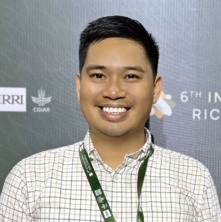
Dr Ricky Vinarao has over ten years of research experience in rice genomics, identification of genomic regions associated with key traits (biotic stress resistance, abiotic stress tolerance, and aerobic adaptation traits), and phenotyping of elite and wide-cross derived introgression lines. He recently joined the University of Queensland's (UQ) Shool of Agriculture and Food Sustainability as a Postdoctoral Research Fellow to improve cold tolerance and aerobic adaptation of rice grown in aerobic production systems. He holds a PhD in Agriculture from the University of Queensland and a Bachelor of Science in Biology degree from University of the Philippines Los Baños. Before joining UQ, Ricky worked at the International Rice Research Institute and was involved in projects related with utilisation of wild rice species to improve cultivated varieties, molecular characterisation of introgression lines, and co-authored several journal articles and a patent.
Affiliate of Australian Centre for Water and Environmental Biotechnology (formerly AWMC)
Australian Centre for Water and Environmental Biotechnology
Faculty of Engineering, Architecture and Information Technology
Senior Research Fellow
Australian Centre for Water and Environmental Biotechnology
Faculty of Engineering, Architecture and Information Technology
Availability:
Available for supervision
Dr Bernardino Virdis is a Senior Researcher in Environmental Biotechnology at the Australian Centre for Water and Environmental Biotechnology (ACWEB), where he leads research in the areas of environmental biotechnology, bioprocess engineering, and environmental electrochemistry. He completed his PhD in Chemical Engineering in 2010 under the guidance of Prof. Jürg Keller, developing innovative technologies for energy recovery from wastewater.
Dr Virdis' research program focuses on developing sustainable, scalable solutions for waste treatment and resource recovery, with direct applications across municipal and industrial sectors. His work bridges fundamental science and practical implementation, delivering real-world impact in sustainable waste management.
Dr Virdis publishes in major outlets in environmental science and technology, including the prestigious ISME Journal, Energy and Environmental Science, ChemSusChem, Water Research, Environmental Science & Technology, and more.
I am a senior lecturer in mathematics education at the University of Queensland. My research centres around design and theorising of resources for teaching mathematics well. This includes development of classroom mathematical activities, in which students encounter significant mathematical ideas and joy of the experience; support of mathematics teachers’ work so that they can organise their classrooms for their students' meaningful engagement with mathematics; and inquiries into history of mathematics and education aimed at understanding of possibilities for change. I have served as an editor of the Australian Mathematics Education Journal and currently am the Vice President for Publications within Mathematics Eudctaion Research Group of Australasia (MERGA), and an IPC member for the International Symposium on Elementary Mathematics Teaching.
I completed a Magister degree in mathematics at Comenius University in Slovakia and a PhD in mathematics education at Vanderbilt University in the USA. Before taking my role at UQ, I have taught middle-years mathematics and lectured in mathematics and mathematics education at Comenius, Vanderbilt, and University of California, Santa Cruz. As part of my research, I regularly spend time in schools and classrooms.
Visscher joined the University of Queensland in 2011, where he is Professor of Quantitative Genetics. He is a Laureate Fellow of the Australian Research Council. Visscher was elected a Fellow of the Australian Academy of Science in 2010, a Fellow of the Royal Society (London) in 2018 and a Foreign Member of the Royal Netherlands Academy of Arts and Sciences in 2018.
Visscher’s research is about genetic variation for complex traits (including quantitative traits and disease) in populations, with the broad aim to understand and quantify the causes and consequences of human trait variation.
Prof Peter Visscher, Prof Naomi Wray and Prof Jian Yang together comprise the Executive Team of the Program in Complex Trait Genomics (PCTG). PCTG comprises a critical mass of more than 30 post-doctoral researchers plus research assistants and students, all supported by external grant funding. Their skills lie in the ability to develop and apply statistical methods within the framework of quantitative, population and statistical genetics and to use theory to understand and predict results from data analyses. They play leading roles in the international research consortia. The focus of current research activities is in the detection and fine-mapping of loci underlying complex traits (including common disease), based upon theoretical studies and applications of methods to large datasets, in population genetics studies using theoretical approaches and high-density genetic marker data, and in systems genomics studies.