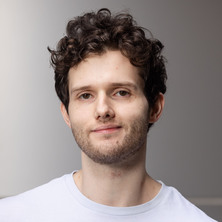
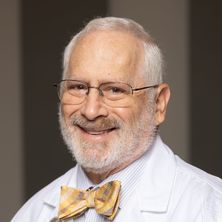
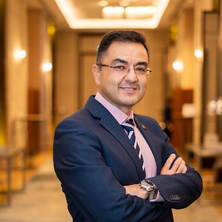
Before joining the School of Economics in 2001, Peter Earl had spent a decade as Professor of Economics at Lincoln University in New Zealand. He decided to move to UQ after spending a semester in the School of Economics as a Visiting Professor in 1999 and having been impressed by the Library, the quality of the students and the School's strength in evolutionary economics.
He specialises in business economics, consumer research and economic method, with an interest in the impact of psychological factors and problems of information and knowledge on decision-making. He is also interested in Post Keynesian approaches to macroeconomics and monetary theory.
His approach blends elements from Austrian Economics, Behavioral Economics, Evolutionary Economics, Institutional Economics and Post Keynesian Economics. He has served as co-editor of the Journal of Economic Psychology and is a founding member of the editorial boards of Review of Political Economy and Marketing Theory. He is the author or editor of eighteen books and numerous articles and book chapters.
Faculty of Health, Medicine and Behavioural Sciences
Availability:
Not available for supervision
Associate Professor Melissa Eastgate is the Executive Director of Cancer Care Services at the RBWH, and the stream lead Metro North HHS Cancer Care Services. Melissa is the immediate past Chair of the Medical Oncology Group of Australia. Melissa completed her medical degree at the University of Queensland and gained her FRACP in Medical Onoclogy in 2004. Since then she has worked at the RBWH as a medical oncologist, with her main clinical interests being melanoma and gastrointestinal cancers, in which areas she is an active researcher. Melissa established the Melanoma MDT at the RBWH. Melissa supervises physician trainees throughout their training and is the previous Chair of the RACP Advanced Training Committee for Medical Oncology. Melissa has a strong interest in enabling access to care for patients, having provided outreach services to Bundaberg for nine years, and leading the establishment of the Telechemotherapy service in Longreach and Barcaldine.
Birgitta Ebert’s research focuses on developing biotechnology concepts to address critical challenges such as pollution, climate change and overexploitation of natural resources.
She specializes in improving microbial catalysts for eco-friendly chemical and material production by leveraging metabolic engineering, synthetic biology, systems analysis, and modelling. Her goal is to create microbial cell factories that convert renewable resources and waste into valuable products, reducing reliance on petrochemicals. She collaborates closely with chemists and chemical engineers to enhance the integration of chemical and biological processes for improved efficiency and sustainability.
Birgitta has a background in Chemical Engineering and a PhD in Systems Biotechnology from TU Dortmund University (Germany). She led a research group in Systems Metabolic Engineering at the Institute of Applied Microbiology at RWTH Aachen University (Germany) from 2012 to 2019. In 2016, she expanded her expertise in Synthetic Biology by joining the Keasling lab at the University of California in Berkeley and the Joint BioEnergy Institute in Emeryville (USA).
Since April 2019, she has been at the Australian Institute for Bioengineering and Nanotechnology at the University of Queensland, applying her expertise to engineer microbial cell factories for fermentation-based manufacturing.
We are using the genetic model organism, C. elegans, do investigate the genetic basis of both normal and disordered behaviour. Our current interests are identifying the genes responsible for anxiety and depression as well as the genes for eating disoders and addiction. Using C. elegans as a model organism will also allow us to study gene function as it relates to behaviour.
Molecular mechanisms of phosphine resistance (other research)
Genetic mapping of oxidative stress resistance genes. The fumigant phosphine disrupts oxidative metabolism, resulting in the production of reactive oxygen intermediates. This causes the premature ageing and death of targeted pests. Insect pests of stored grain in Australia now exhibit resistance to phosphine at levels more than 200 times the normal lethal dose.
We have genetically mappedf and identified the genes responsible for phosphine resistance in tall major insect pests of stored grain. We are using a systems biology approach in the model organism C. elegans to understand the molecular basis of phosphine action. Our genetic studies have recently shown that resistance to phosphine is associated with an extension of lifespan
Affiliate of Centre for the Business and Economics of Health
Centre for the Business and Economics of Health
Faculty of Business, Economics and Law
Affiliate of Queensland Digital Health Centre
Queensland Digital Health Centre
Faculty of Health, Medicine and Behavioural Sciences
Senior Research Fellow
School of Business
Faculty of Business, Economics and Law
Availability:
Available for supervision
Rebekah completed her PhD in 2017 and investigated the complex interplay between the users, effective use, and impacts of organizational-wide information systems. In 2017, Rebekah also served as a post-doctoral research fellow at the University of Queensland and extended her theoretical and methodological expertise to the healthcare context. She continued to deepen her expertise in the health domain as a senior lecturer at the Queensland University of Technology between 2018-2022 and integrated this knowledge into authentic teaching cases in enterprise systems management subjects. In 2023, Rebekah became a senior research fellow at the within the UQ Business School as part of the Health Research Accelerator Initiative. She is also an active member of the UQ Business School's Future of Health Research Hub (https://business.uq.edu.au/research/research-hubs/future-health)
Rebekah’s research centres on the digital transformation of healthcare, including the impacts of the transformation, how effectively health information systems and their data are used, and areas critical to the success of the transformation such as governance and culture. To provide insights into this phenomenon, Rebekah adopts a mixed methods approach involving qualitative case studies, interviews, and focus groups, and quantitative survey-based techniques. Rebekah has published her work in a variety of forums, including MIS Quarterly Executive, Journal of Medical Internet Research, Medical Journal of Australia, Communications of the AIS, Australian Health Review, and the International Conference of Information Systems. She serves on the editorial of the Communications of the AIS and has been a guest editor at several journals and conferences.
Affiliate of ARC COE for Plant Success in Nature and Agriculture
ARC COE for Plant Success in Nature and Agriculture
Faculty of Science
Adjunct Associate Lecturer
Queensland Alliance for Agriculture and Food Innovation
Availability:
Available for supervision
Dr Daniel Edge-Garza is a horticulture and crop geneticist at the Queensland Alliance for Agriculture and Food Innovation at the University of Queensland, Australia. His research interests are to develop and translate tools using genome-wide DNA information for breeders and growers to make meaningful decisions. Daniel’s PhD awarded by the University of Queensland in 2024 focused on identifying global G x E patterns to assist with improved germplasm-environment matching for commercial deployment. Before joining QAAFI, he obtained his Bachelor's Degree in Biological Sciences in 2005 and Master's Degree in Biotechnology in 2009 both at California State University, Fresno. From 2008, he worked as a faculty associate in research for tree fruit breeding at Washington State University becoming recognized worldwide for his efforts to streamline the deployment of DNA tests for pome and stone fruit breeding programs. He has also collaborated with the Genome Database for Rosaceae since 2018 to curate genomics data and train breeders on how to upload and access their data on the Breeding Information Management System.
Faculty of Health, Medicine and Behavioural Sciences
Availability:
Not available for supervision
Shannon Edmed is a Research Fellow at the Child Health Research Centre and ARC Centre of Excellence for Children and Families Over the Life Course (Life Course Centre). She has an interest in environmental effects on sleep (including household and neighbourhood characteristics), and mental health and wellbeing.
Centre Director of Centre for Environmental Responsibility in Mining
Centre for Environmental Responsibility in Mining
Faculty of Engineering, Architecture and Information Technology
Professorial Research Fellow
Sustainable Minerals Institute
Faculty of Engineering, Architecture and Information Technology
Affiliate of Centre for Environmental Responsibility in Mining
Centre for Environmental Responsibility in Mining
Faculty of Engineering, Architecture and Information Technology
Affiliate of Centre for Geoanalytical Mass Spectrometry
Centre for Geoanalytical Mass Spectrometry
Faculty of Science
Affiliate of Minerals Industry Safety and Health Centre
Minerals Industry Safety and Health Centre
Faculty of Engineering, Architecture and Information Technology
Affiliate of W.H. Bryan Mining and Geology Research Centre
WH Bryan Mining Geology Research Centre
Faculty of Engineering, Architecture and Information Technology
Availability:
Available for supervision
Media expert
Dr Mansour Edraki is a geo-environmental scientist specialising in the field of inorganic geochemistry. He joined UQ following completion of his PhD at the University of New England. Prior to that, and before immigrating to Australia, he was a lecturer in earth sciences. Since joining UQ, Dr Edraki has focused on developing innovative techniques for understanding and predicting geochemical processes that underpin sustainable management of mine waste and mine water, particularly acid and metalliferous drainage. Mansour’s research has direct applications for the resources and energy industries and the impact of his work is evident in a continuous flow of industry-funded projects in the last decade. Dr Edraki has initiated research collaborations in many international locations including Indonesia (South Kalimantan and Freeport), Iran (Mehdiabad Zinc) Papua New Guinea (Ok Tedi), Philippines (USEP and Mindanao Development Authority), Korea (MIRECO and KIGAM), Peru (INGEMET), and Chile (Fundación Chile, Universidad de Concepción). Dr Edraki represents SMI-UQ at the International Network for Acid Prevention (INAP), which is a global alliance for managing the issue of acid and metalliferous drainage. He leads SMI's Environmental Geochemistry Group.
Marissa Edwards is an award-winning educator, mental health advocate, and researcher at the University of Queensland Business School. Marissa is known internationally for her advocacy work and regularly facilitates workshops about academic mental health at universities across Australia, Europe, and the United States.
She is the current Co-Editor of the Research Handbook of Academic Mental Health, to be published by Edward Elgar Press in 2024. She is also the co-founder and co-curator of Voices of Academia, a blog dedicated to academic mental health and well-being. Along with a team of researchers from the School of Psychology and the School of Education, Marissa received a 2022 UQ Excellence Award for research into PhD student well-being, engagement and research culture.
Building on her PhD research, in which she studied the decision-making processes underlying silence and whistle-blowing, her most recent research focuses on toxic work cultures associated with burnout and abusive behaviours (e.g., bullying and sexual harassment) in academia.
As an educator, Marissa has extensive experience lecturing in organisational behaviour, business ethics, and mental health promotion in the workplace. She is passionate about improving the first-year student experience and supporting students during their transition to university.
Martin R. Edwards is a Professor in Management in the UQ Business School, and is a Deputy Head of the Business School, head of the Management, International Business, Strategy and Entrepreneurship portfolio.
Prior to joining UQ in 2019 he was a Reader in HRM and Organisational Psychology at King's College London
Martin has a background in organisational psychology, HRM and industrial relations. He holds degrees in Social Psychology (BSc) from the University of Kent at Canterbury, Industrial Relations and Personnel Management (MSc) from the London School of Economics and a PhD in Organisational Psychology from King’s College London. Before starting his academic career Martin worked for a number of years as an HR consultant in London.
Martin’s academic interests include HR Analytics, people analytics, researching organisational identification, employee-organisational linkages, social and multiple identities in organisations, the role of employee and employer branding in organisations, employee responses to mergers and acquisitions as well as employer responses to judgments of their employer’s CSR credentials. He has published in numerous international journals including the Human Resource Management Journal, Human Relations, the Human Resource Management Journal, International Journal of Management reviews, Economic and Social Democracy, European Journal of Work and Organisational Psychology, Personnel Review. Martin is an Associate Editor and Editor of Special Issues, Provocations and Reviews for the Human Resource Management Journal.
Faculty of Health, Medicine and Behavioural Sciences
Associate Professor
School of Education
Faculty of Humanities, Arts and Social Sciences
Availability:
Not available for supervision
Media expert
Dr Edwards is an Associate Professor in the School of Education where she is currently the Director of Research Innovation and Higher Degree Research. Her research spans education, psychology and medical education and her collaborators are national and international experts in these disciplines. Dr Edwards has an international reputation for contributing to understanding the link between anxiety, attention, and memory. Her work supports the notion that an inability to efficiently process information and maintain concentration, plays a critical role in the development and maintenance of emotional disorders.
Dr Edwards' latest work focusses on the translation of theory-driven, basic science into treatments for clinical problems, specifically for children and adolescents. For example, her research laboratory is currently conducting a series of studies investigating whether training the cognitive processes most vulnerable to anxiety and depression can in turn reduce emotional symptoms in children and adolescents. This work also seeks to understand the influence of cognitive training on academic achievement.
Dr Edwards completed a PhD and an honours degree in psychology (Bond University), and an undergraduate degree in education (Griffith University). For over two decades, she has worked as a primary classroom teacher, special education teacher, guidance counsellor, and psychologist. She has taught and supervised clinical, professional and research skills in education, psychology and medicine and worked in higher education in the United Kingdom and Australia. Dr Edwards joined The University of Queensland in 2020 to teach into the Master of Educational Studies (Guidance, Counselling and Careers).
School of Electrical Engineering and Computer Science
Faculty of Engineering, Architecture and Information Technology
Availability:
Not available for supervision
Media expert
Daniel Eghbal is Manager Future Network Strategy with Energy Queensland and an adjunct senior research fellow at the School of Information Technology & Electrical Engineering (ITEEE). He received B.S. in electrical engineering from Ferdowsi University of Mashhad, Iran in 1998, M.S. degree in power system engineering in 2001 from Tarbiat Modares University, Tehran, Iran and PhD degree in 2009 from Hiroshima University, Hiroshima, Japan in the field of Artificial Complex System Engineering. He was with Queensland Geothermal Energy Centre of Excellence (QGECE), The University of Queensland from 2009-2012. Daniel joined Energex in 2012 and has been working on number of innovative projects with a focus on integration of emerging technologies on electricity distribution networks. Daniel actively collaborates with the Power & Energy Systems Research Division at the University of Queensland and IEEE Queensland Section.
His research interest lies in the integration of distributed energy resources (DER) into distribution networks and developing innovative solutions for intelligent grids. Daniel is an IEEE Senior Member and Chair of IEEE Asia-Pacific Professional Activities Committee, Fellow member of Engineers Australia and a chartred engineer (CPEng, RPEQ,NER).