Affiliate of Centre for Digital Cultures & Societies
Centre for Digital Cultures & Societies
Faculty of Humanities, Arts and Social Sciences
UQ Amplify Senior Research Fellow
Institute for Social Science Research
Faculty of Humanities, Arts and Social Sciences
Availability:
Not available for supervision
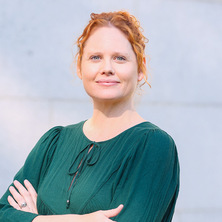
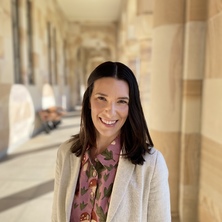
Kiah Smith is a Sociologist with expertise in environment, sustainable development and food justice. With a strong record of international publications on food justice, food security, climate resilience, financialisation, ethical trade, green economy, sustainable livelihoods, gender empowerment and food system governance, Kiah’s work contributes new understandings of the social dimensions of food system transformation at the intersection of multiple crises. Using mostly qualitative, participatory methodologies (such as action research and future scenario planning), her research emphasises the role that civil society plays in transformative policy making that is systems-focused and inclusive of social-ecological perspectives. For example, her ARC DECRA study - Fair Food, Civil Society and the Sustainable Development Goals - examined how civic stakeholders are able to resist, reshape or redefine what a just and sustainable food system might look like, based on co-design and collaboration with civil society, local government, advocacy groups and grassroots food actors (food hubs, community gardens, and food charities) in Australia. This interdisciplinary research agenda can best be summarised as one where ‘food futures’ are closely connected with ‘deep’ sustainability, rights, justice and empowerment, within the growing field of ‘sustainability transitions’.
Other past and present studies include: Multifunctional horticulture - land, labour and environments; Ethical consumption and COVID; Responsible innovation in digital agriculture; Employment policy and indigenous food sovereignty in remote Australia; Financialisation of food and farmland in Australia; Resilience and governance of Australian food systems during crisis; and Mapping civil society, human rights and the SDGs. Kiah has conducted research in Australia and internationally, she has worked with local NGOs (in Africa and Australia), with the United Nations Research Institute in Geneva, and in multidisciplinary research teams spanning the social and natural sciences both here and abroad. Kiah is also a Future Earth Fellow, treasurer of the Australasian Agrifood Research Network, and executive member of the RC40 on Food and Agriculture in the International Sociological Association. Her work at the nexus of academia and policy/advocacy contributes to the growing movement for the right to food in Australia and globally.
Affiliate of Centre for the Business and Economics of Health
Centre for the Business and Economics of Health
Faculty of Business, Economics and Law
Affiliate of Queensland Digital Health Centre
Queensland Digital Health Centre
Faculty of Health, Medicine and Behavioural Sciences
Centre Director of Centre for Online Health
Centre for Online Health
Faculty of Health, Medicine and Behavioural Sciences
Professor
Medical School
Faculty of Health, Medicine and Behavioural Sciences
Availability:
Available for supervision
Media expert
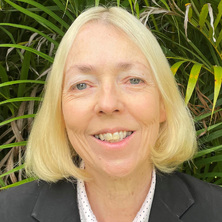
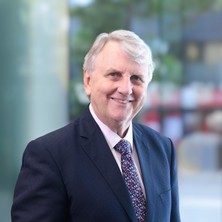
Professor Anthony Smith is the Director of The University of Queensland’s Centre for Online Health (COH), and Adjunct Professor at the Hans Christian Anderson Children's Hospital and University of Southern Denmark, in Odense, Denmark.
Professor Smith is also the Editor in Chief for the Journal of Telemedicine and Telecare (Sage Publishers, London; 5y Impact Factor 4.9).
Professor Smith has more than 25 years of research experience, resulting in the planning, implementation and evaluation of a broad range of telehealth (virtual care) services around Australia. Specific research interests include the feasibility, effectiveness and sustainability of telehealth services in the public health system; genuine consumer engagement; and novel strategies to support our health workforce and telehealth adoption. His research has led to the development of pioneering virtual care services in Australia, including prominent statewide hospital-based telehealth programs in Queensland, wireless (robot) videoconference systems for remote consultations; and a community-based (and telehealth supported) health screening programme for Indigenous children in Queensland. Current projects focus on the integration of telehealth and virtual care services in residential aged care settings; evaluation of community-led First Nations health services; the delivery of video-based rehabilitation services to children in rural and remote primary schools; telementoring services for health professionals in primary care; and discipline specific clinical telehealth services.
Professor Smith chairs the International Conference on Successes and Failures in Telehealth conference. He is also a Fellow of the Queensland Academy of Arts and Sciences. Previous roles have included the President of the Australasian Telehealth Society (ATHS) [2013-2015]; and elected member of the ATHS committee [2008-2024]. In the field of telehealth and virtual care, Prof Smith has over 240 publications, including 230 peer-reviewed journal papers, three edited books and 13 book chapters on related topics. Whilst the field remains highly specialised in comparison to other disciplines, his work is cited over 2000 times each year.
Professor Smith also provides an extensive range of consultancy services for government agencies and industry partners in the field of telehealth, digital health and virtual healthcare.
RECENT AWARDS
1. Honorary Doctorate. Doctor of Medical Science (D.M.SC. (honoris cau)). Faculty of Health Sciences, University of Southern Denmark, 2025
2. Public Engagement and Community-led Research (including Citizen Science) Award, The University of Queensland Research Culture Awards, 2024
3. Top Researcher in the field of "Medical Informatics"- for work involving telehealth, digital health and virtual care. The Australian Research Awards, 2023
4. Commendation, Academic Leader of the Year, UQ Faculty of Medicine Excellence Awards, The University of Queensland, 2023
5. Excellence in Indigenous Engagement Award - for "enhancing access to specialist health services through the use of telehealth for First Nations people. Engagement Australia Excellence Awards, 2021
6. Spirit of Reconciliation Award - for building research and community partnerships in Queensland. UQ Faculty of Medicine Excellence Awards, The University of Queensaland, 2021
Affiliate of Centre for Innovation in Pain and Health Research (CIPHeR)
Centre for Innovation in Pain and Health Research
Faculty of Health, Medicine and Behavioural Sciences
Associate Professor
School of Health and Rehabilitation Sciences
Faculty of Health, Medicine and Behavioural Sciences
Availability:
Available for supervision
Media expert
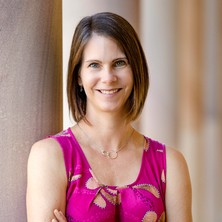
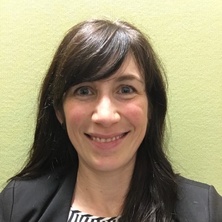
Michelle Smith is a Associate Professor in Physiotherapy and a Titled Sports and Exercise Physiotherapist. She is Program Director for the Masters of Sports Physiotherapy and Masters of Musculoskeletal Physiotherapy programs at UQ, Co-director of the International Ankle Consortium, Co-director of the Sports Injury Rehabilitation and Prevention for Health (SIRPH) research unit and Associate Editor of Physical Therapy and Sport.
The overarching theme of Michelle's research is lower limb joint health. Her research focuses on the prevention and management of lower limb joint injuries and pathologies across the lifespan to enable unrestricted participation in sport, physical activity and work. There are three key areas of her research:
To improve understanding of ankle injuries and osteoarthritis across the lifespan: Ankle sprains are the most common injury seen in emergency departments and are a primary cause of ankle osteoarthritis, which in light of its post-traumatic nature, often affects young adults. To optimise outcomes and participation for people with ankle pathologies, my research characterises impairments and participation restrictions in the continuum from ankle injury to osteoarthritis and establishes the efficacy of interventions to manage these conditions.
To understand the effectiveness and implementation of injury prevention strategies: While neuromuscular exercise program and taping/bracing have been shown to decrease injury risk, translation of research into practice is limited. My research investigates the implementation of injury prevention initiatives in adolescent athletes and involves stakeholders to better understand barriers and facilitators.
To evaluate the implementation of lower limb osteoarthritis interventions: Exercise and education for hip and knee osteoarthritis have been shown to improve quality of life and functional outcomes. My research investigates the implementation of such programs in public hospitals and private physiotherapy practices on patient outcomes and service delivery.
Michelle has presented her research and delivered keynote and invited presentations at national and international multi-disciplinary conferences. She teaches across the undergraduate and postgraduate physiotherapy curriculum in the areas of musculoskeletal health and sports injuries. She has been recognised for her high teaching quality and impact at both School and Faculty levels through receipt of Teaching Excellence Awards. She is the Chair of the School of Health and Rehabilitation Sciences External Engagement Committee and Deputy Chair of the Sports and Exercise Physiotherapy Group of the Austrailan Physiotherapy Association. She is a member of the Outcome Measures in Rheumatology (OMERACT) Foot and Ankle Working Group, International Foot and Ankle Osteoarthritis Consortium, and Australian Foot and Ankle Research Network.
Affiliate of Centre for Innovation in Pain and Health Research (CIPHeR)
Centre for Innovation in Pain and Health Research
Faculty of Health, Medicine and Behavioural Sciences
Emeritus Professor
School of Biomedical Sciences
Faculty of Health, Medicine and Behavioural Sciences
Availability:
Available for supervision
Media expert
Update Profile
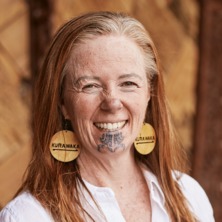
Emeritus Professor Maree Smith AC FTSE FAHMS is a full-time researcher and Director, CIPDD, School of Biomedical Sciences, Faculty of Health, Medicine and Behavioural Sciences (HMBS), The University of Queensland.
In the 12 years prior to her current appointment, Professor Smith led a high-performing team in building the CIPDD and its commercial interface TetraQ, recognized as a unique, GLP-accredited drug development Centre in Australia. Professor Smith has considerable expertise in biomedical discovery/translation with specialist expertise in the novel pain therapeutics discovery/translation field encompassing a portfolio of 16 rodent pain models that mimic individual human pain conditions. This portfolio of models conducted in a purpose-built facility operated in accordance with the requirements of our Quality Management System, making the CIPDD unique in Australia and rare internationally.
In the 15 years prior to establishing the CIPDD, Professor Maree Smith was a full-time academic in the School of Pharmacy. In brief, she joined the School of Pharmacy as a Lecturer in 1989 and was successively promoted through the academic ranks to Professor in 2004. Prior to that she undertook a PhD and early postdoctoral training in clinical pharmacology with specialist expertise in bioanalytical method development, bioanalysis of human plasma samples, drug metabolism and clinical pharmacokinetics. Her second postdoc was in the field of pain management and pain pharmacology.
In the years, 1990-2005, Maree Smith taught in the Drug Discovery stream of the 2nd, 3rd & 4th years of the undergraduate Pharmacy program and she was instrumental in developing innovative courses for the final year of the undergraduate Pharmacy curriculum. She was also instrumental in the development of a course for the M Biotech program at UQ entitled “Quality Systems in Biotechnology” which continues to this day and is a compulsory course in the Program. Maree has successfully advised/co-advised to completion 33 PhD students, 2 Research Masters students and ~50 Honours students. She also served for 14 years as an external evaluator for the TGA.
Maree's Current Research Interests are as follows:
1. Subtle differences in the pathobiology of individual chronic pain conditions
2. Improving preclinical to clinical translation in novel analgesics development
3. Preclinical drug development of novel pain therapeutics
4. Preclinical drug development
Awards
2026 Life Membership, Pharmaceutical Society of Australia
2021 UQ Fellowship
2019 Companion of the Order of Australia (AC) in the Queen's Birthday Honours List
2018 Honorary Bragg Membership (The Royal Institution of Australia)
2016 Bowl of Hygeia Award (Pharmaceutical Society of Australia)
2016 Clunies Ross Knowledge Commercialisation Award (ATSE)
2015 Honoured to be included in inaugural list of Australia's top Innovators; viz Knowledge Nation 100
2015 Inaugural Inductee into the Life Sciences Queensland (LSQ) Hall of Fame
2015 Johnson and Johnson Innovaton AusBiotech Industry Excellen Award - Outstanding Leader category.
2015 Elected Fellow, Australian Academy of Health and Medical Sciences (AAHMS)
2015 Australian Pain Society Distinguished Member Award - For services to the promotion, treatment and science of pain management and lifelong contribution to the Australian Pain Society
2013 UQ Top 5 Inventor - Award by Thomson Reuters and UQ at inaugural Awards
2013 UQ Top 5 Innovator - Award by UniQuest Pty Ltd and UQ at inaugural Awards
2012 Queensland Life Sciences Industry Excellence Award jointly with Dr Jim Aylward
2011 Elected Fellow, Australian Academy of Technological Sciences (ATSE)
2009 Honorary Fellowship, Faculty of Pain Medicine, ANZCA (Australian and New Zealand College of Anaesthetists).
2008 WiT (Women in Technology): Biotech Outstanding Achievement Award
2002 Meritorious Mention for Sustained Excellence in Research Higher Degree Supervision
2001 Meritorious Mention for Sustained Excellence in Research Higher Degree Supervision
Faculty of Health, Medicine and Behavioural Sciences
Centre Director of ARC COE for the Digital Child (UQ Node)
ARC COE for the Digital Child
Faculty of Health, Medicine and Behavioural Sciences
Affiliate of ARC COE for Children and Families Over the Lifecourse
ARC COE for Children and Families Over the Lifecourse
Faculty of Humanities, Arts and Social Sciences
Availability:
Available for supervision
Media expert
My group works to understand and improve sleep for children and families. Sleep is a key ‘pillar of health’ alongside nutrition and activity. It is critical for healthy development, growth, learning, social and emotional functioning, and community participation.
I am the UQ Node Director for the ARC Centre of Excellence for Children and Families over the Life Course (the Life Course Centre). The Life Course Centre is committed to understanding and overcoming the problems of disadvantage, and to helping improve the lives of disadvantaged children and families. The Centre brings together researchers across multiple disciplines in four leading Universities, and significant government and non-government agencies to address these questions.
I am also the UQ Node director for the ARC centre of Excellence for the Digital Child. The Digital Child aims to support children growing up in the rapidly changing digital world, and provide strong evidence and guidance for children, families, educators, government and other concerned with children’s wellbeing.
We collaborate with many other groups around broader issues of sleep and technology, sleep and the environment (including disasters), mental health and wellbeing, pain, disability, and new technologies and approaches. Our work has been supported by the ARC, NHMRC, the MRFF, the NIH, and the DSTG. We use a wide range of methods and measures, including direct physiological and behavioural measurement (inc. ECG, EEG, EMG, actigraphy, computerized tests, simulations, environmental monitoring etc.), quantitative methods (inc. experimental and secondary data approaches), and qualitative methods including co-design and co-conduct approaches.
My team has additional expertise in evaluation of health and other services for government and other agencies, the design of complex interventions, and community consultation and engagement.
Faculty of Health, Medicine and Behavioural Sciences
Availability:
Not available for supervision
Media expert
Dr Smith is a very early career academic and Registrar in Intensive Care Medicine & Anaesthesia at Toowoomba Hospital. Despite being at an early stage in his medical and research career, Sam has already gained valuable experience and enthusiasm in medical education and research, crossing clinical and methodological domains.
Dr Smith gained his primary medical qualification at James Cook University, graduating in 2019 with Honours and awards in research/ Evidence Based Medicine, rural medicine, and surgery. His Honours research, supervised by Professor Jonathan Golledge, focussed on the economic impacts of readmission after surgery for peripheral artery disease (PAD). For this research, he was awarded the Professor Philip Walker Scholarship in Vascular Research, allowing him to present his findings internationally. He has co-authored papers in vascular and cardiothoracic surgery, tropical infectious diseases, and care of critically unwell and trauma patients.
Aside from clinical duties, Sam is also active in teaching, guest lecturing at James Cook University and the University of Queensland, as well as teaching medical students in the clinical setting. In his clinical practice, Sam has interests in critical care medicine, vascular access, POCUS and incorporating best evidence into daily practice. Sam is always very keen to share his enthusiasm for all things evidence-based with students or really anyone who will listen.
Qualifications
MBBS (Hons.)
MPH&TM
Graduate Certificate in Clinical Education (current)
RESEARCH INTERESTS Fire Ecology, Restoration Ecology, Ecological Genomics, Wildlife Science, Conservation Biology, Invasive Plants
My research group studies fire ecology and conservation biology. Currently, we are working on:
Using fire to benefit plant biodiversity and manage invasive plants
Predicting effects of changing fire regimes on plant-animal interactions
Native grassland restoration
Biodiversity in agricultural landscapes
We have a special interest in plants and animals living in fire-prone areas because of the fascinating fact that these ecosystems are never static but continually re-shaped by cycles of fire and regeneration. While being grounded in fundamental biology and ecological theory, our research is always aimed at improving knowledge for biodiversity conservation. Our work has applications in fire management, biological invasion and threatened species conservation.
TECHNICAL APPROACHES: POPULATION GENETICS | SPATIAL LANDSCAPE GENETICS | DEMOGRAPHIC SIMULATION MODELLING | STATISTICAL MODELLING OF POPULATIONS & COMMUNITIES | BIOINFORMATICS | SPATIAL ANALYSIS IN R | We also know how to drop a hand-made 1 x 1 m polypipe quadrat on the ground and do good old-fashioned field work.
TEACHING: I teach ecology, wildlife science and environmental science at UQ. My teaching and coordination activities have included Elements of Ecology (AGRC1032), Wildlife Technology (ANIM3018) and People Fire & Environment (ENVM3215 / ENMV7530).
EDITORIAL I am Associate Editor for Wildlife Letters (2023–)
I was Associate Editor for Journal of Applied Ecology for four years (2018–2022).
CURRICULUM VITAE
2019 – current Lecturer, University of Queensland
2018 – 2022 Associate Editor, Journal of Applied Ecology
2018 – 2019 Marie Skłodowska-Curie Research Fellow, Trinity College Dublin
2016 – 2017 Post-doctoral Research Fellow, Trinity College Dublin
2015 – 2016 Post-doctoral Research Assistant, University of Melbourne
Queensland Alliance for Agriculture and Food Innovation
Senior Lecturer in Crop Physiology
School of Agriculture and Food Sustainability
Faculty of Science
Availability:
Available for supervision
Media expert
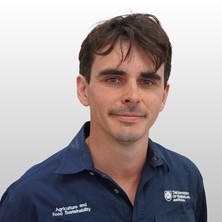
Dr Millicent Smith is a Senior Lecturer in Crop Physiology at The University of Queensland. Her research is focused on understanding the physiological mechanisms that underpin yield stability and quality in grain legumes. Millicent works closely with breeders, both in Australia and overseas, to develop improved knowledge on abiotic stress adaptation and tools to accelerate genetic gain. Dr Smith leads a national research project funded by the Grains Research and Development Corporation focused on deploying novel phenotyping and genomics approaches to fast-track the development of new chickpea varieties that display lower yield loss in response to high temperature. Millicent is passionate about training the next generation of plant scientists. She leads a growing research team of postdoctoral scientists, postgraduate and undergraduate research students and has been awarded for her innovative teaching approaches applied to large undergraduate and postgraduate courses.
I am a Postdoctoral Research Fellow at the University of Queensland, specialising in crop physiology, remote sensing, and high-throughput phenotyping. My work focuses on using drone-based imaging systems, 3D modelling, and machine learning to estimate complex plant traits in the field. I currently lead the UQ node of the Australian Plant Phenomics Network (APPN), where I support a range of research projects focused on improving how we measure crop performance. My recent work has involved developing UAV-based pipelines to estimate biomass and radiation-use efficiency in wheat, and applying image-based methods to improve trait prediction in a range of crops.
My areas of expertise include:
UAV and sensor-based crop monitoring
Multispectral and RGB imagery analysis
Data pipelines for variety trials
Field-based trait modelling and phenotyping automation
Faculty of Health, Medicine and Behavioural Sciences
Availability:
Available for supervision
Media expert
Dr Melinda Smith (nee Franettovich) is a Lecturer in the School of Health and Rehabilitation Sciences. She also works as a Physiotherapist at Clem Jones Centre Physio & Rehab and delivers online and face to face professional development workshops for health professionals. Her research, teaching and clinical focus is lower limb musculoskeletal function and health, with a special interest in the foot and ankle. Melinda's aim is to enrich people's lives by facilitating physical activity and sport participation through improving the prevention, assessment and treatment of lower limb musculoskeletal pain and injury.
Her research publications extend across several areas including lower limb function, sports and running related injuries, taping, foot orthoses, footwear, measurement of foot posture and mobility, gait-retraining and musculoskeletal imaging. She has contributed to three book chapters including neuromuscular control of the foot and ankle, advances in magnetic resonance imaging, and sports medicine (foot). Melinda has presented her research at international and national conferences across several fields including Physiotherapy, Podiatry and Sports Medicine. The impact of her research in the clinical setting is evidenced by invitations from professional organisations, private practices and hospital departments to deliver professional development for their health professionals. Through her research she has collaborated with school, community and elite level sporting clubs and associations, physiotherapy private practices and footwear manufacturers. Melinda's mission is to conduct high quality, innovative research that engages with community and industry partners to deliver impactful outcomes.
Faculty of Health, Medicine and Behavioural Sciences
Availability:
Not available for supervision
Media expert
Emeritus Professor Mark Smithers is a surgical oncologist who specialises in surgery for oesophago-gastric diseases, melanoma, advanced skin cancer and soft tissue sarcoma. He was the Director of the Upper GI and Soft Tissue Unit at the Princess Alexandra Hospital, in Brisbane, Australia from 1998 - 2023. Commencing his academic career with the University of Queensland in 1987, he progressed to be the Mayne Chair in Surgery and head of the Academy of Surgery. He is the second University of Queensland Medical graduate to be appointed to this role. His research has been focussed on the development and assessment of outcomes from minimally invasive upper GI surgery, and trials assessing the role of perioperative multidisciplinary therapy for esophageal and gastric cancer. As well he has led, or been involved with, clinical trials from phase I to III, for all stages of melanoma through his role as the Chair of the Queensland Melanoma Project. More recently he has been involved with the assessment of access to, and outcomes from, surgery for cancer in Queensland, Australia.
He has overseen the administration and development of the surgery curriculum, and the teaching, in the Academy of Surgery, in the UQ Faculty of Medicine. He was on a number of committees relevant to the implementation of the UQ MD design course. He has held various leadership and committee roles with the Royal Australasian College of Surgeons, as well as leadership roles, including the Presidency, in the Australian and New Zealand Oesophago Gastric Surgeons Association. He has also been on the committees of international organisations related to oesophageal and gastric surgery. He has published 250 articles, eight book chapters, and has been on the editorial board of a number of surgical journals.
He has been recognised for his clinical and academic roles by the award of Member of the Order of Australia (AM). The citation reads, "for service to medicine in the fields of gastro-intestinal and melanoma surgery, to medical education and to professional organisations". The Royal Australasian College of Surgeons awarded him the Sir Hugh Devine medal, for services to surgery and the community. This is the College’s highest honour. Internationally, he has been awarded an honorary fellowship of the Royal College of Surgeons of Edinburgh and recently, in the United States, he was elected as an Honarary Fellow of the American Surgical Association.