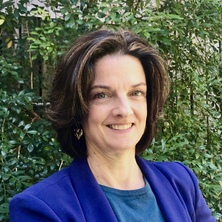
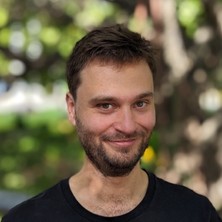
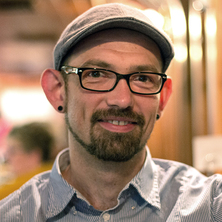
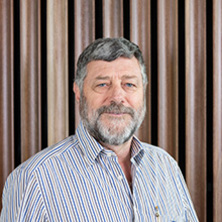
Mariusz Skwarczynski completed his Ph.D. in Chemistry in 1999 at Wroclaw University of Technology (Poland). His postdoctoral training began at Tokushima Bunri University (Japan), and then Kyoto Pharmaceutical University (Japan). In 2008 he joined Professor Istvan Toth’s group at The University of Queensland (Australia) to work on new vaccine development strategies. Currently his group activity is mainly focused on nanotechnology-based peptide vaccine delivery approaches and adjuvants discovery. He is Regional Editor of Australia in Vaccines, and Associate Editor in Frontiers in Pharmacology. He has published over 190 peer-reviewed publications, including 18 book chapters and three books.
Faculty of Health, Medicine and Behavioural Sciences
Affiliate Associate Professor of Humanities and Social Sciences of Faculty of Humanities and Social
Faculty of Humanities, Arts and Social Sciences
Affiliate Associate Professor of School of Education
School of Education
Faculty of Humanities, Arts and Social Sciences
Associate Professor
Institute for Teaching and Learning Innovation
Availability:
Available for supervision
Media expert
Associate Professor Christine Slade PhD GCProfLearning BA (Com Plan & Devt) PFHEA ATCL
Assessment, Academic Integrity and GenAI
In my role as Associate Professor in Higher Education, in the Institute for Teaching and Learning Innovation (ITaLI) I contribute to the UQ strategic priorities, with leadership responsibilities in assessment, academic integrity and generative artificial intelligence. My purpose is to empower institutions, educators, and students to navigate the complexities of generative AI with confidence and ethical competence. I aim to foster a culture of integrity that enables students to thrive as critical thinkers and ethical leaders, committed to serving the common good in a rapidly evolving educational landscape.
Faculty of Engineering, Architecture and Information Technology
Affiliate of Centre for Behavioural and Economic Science
Centre for Unified Behavioural and Economic Sciences
Faculty of Business, Economics and Law
Associate Professor in Accounting
School of Business
Faculty of Business, Economics and Law
Availability:
Available for supervision
Sergeja Slapničar is Associate Professor of Accounting and Co-lead of Digital Finance Research Hub. Her research is at the intersection of auditing, risk management, cyber security, and AI governance. She investigates how organisations financially quantify and audit cyber risk, coordinate the lines of defence in cyber security, and manage cyber and AI risks effectively. Sergeja disseminates her research findings to professional and regulatory audiences through policy engagement, practitioner journals, and by presenting at national and international industry events. She is a member of the Editorial Boards of Journal of Management Control, International Journal of Auditing, and Behavioral Research in Accounting. Sergeja is a passionate educator whose work-integrated approach, connecting students with real startups, has earned multiple awards, including faculty, university, and national citations for outstanding contribution to student learning.
She has extensive Board experience by having served as a non-executive Director in a systemic bank in Eurozone; in a multinational pharmaceutical corporation, on the Board of the Slovenian Agency for Public Oversight of Auditing, as a Chair of the settlement committee in owners' disputes (Slovenia) and as an independent member in audit and remuneration committees of various public interest entities (the Slovenian Bad Bank among others). She has trained over 1,000 executive and non-executive directors in accounting, finance and cyber security risk management at the Slovenian Directors Association, and advised organisations on risk management. Prior to her employment at the UQ Business School, Sergeja was a Professor at the University of Ljubljana, Slovenia. She is a member of ISACA; serves on the Education Committee of the Institute of Internal Auditors Australia and on the Auditing, Assurance, and Ethics Standards Committee at the European Accounting Association.
Dr Slaughter is a teaching focused academic in the Tourism discipline of UQ Business School. Her knowledge of tourism management is supported by substantial study in the area.
After travelling extensively, Lee returned to Australia to pursue tourism studies at The University of Queensland. In 2000 Lee was awarded her doctorate which focused on backpacker tourism. She continued researching in the area of tourism management, particularly as it relates to backpacker tourism. More recently Lee has moved to a teaching focused position and uses her previous experience to enhance her teaching at both undergraduate and masters levels.
Office of the Deputy Vice-Chancellor (Research and Innovation)
Availability:
Not available for supervision
Media expert
Virginia Slaughter is Professor of Psychology at the University of Queensland, Australia, where she founded the Early Cognitive Development Centre. Her research focuses on social and cognitive development in infants and young children, with particular emphasis on social behaviour in infancy, theory-of-mind development and the acquisition of peer interaction skills. She is a Fellow of the Academy of the Social Sciences in Australia and a Fellow of the Association for Psychological Science.
Dr Andrii Slonchak is a head of Systems Virology Laboratory at QIMR Berghofer. Andrii Slonchak obtained his PhD in Molecular Biology in 2010 from the Institute of Molecular Biology and Genetics (Kyiv, Ukraine). In 2013 he joined the University of Queensland, where he completed his postdoctoral training in the RNA Virology Laboratory under the mentorship of Prof. Alexander Khromykh. In 2023 he was awarded ARC Future Fellowship, and in 2025 appointed Team Head of the Systems Virology Laboratory at QIMR Berghofer.
The Systems Virology Laboratory investigates virus-host and virus-vector interactions at molecular, cellular and organism levels using a combination of advanced multi-omics techniques, bioinformatics, molecular virology and RNA structural biology. We utilise advanced model systems such as stem cell derived organoids to study viral pathogenesis and apply single-cell and spatial transcriptomics combined with computational modelling to map cellular responses to arboviruses and uncover viral strategies for immune evasion. We aim to identify regulatory pathways driving viral replication, transmission and pathogenesis that can be targeted for development of effective defence strategies against medically significant arboviruses like Dengue, Zika, West Nile and Japanese encephalitis viruses.
Faculty of Health, Medicine and Behavioural Sciences
Availability:
Not available for supervision
Media expert
Professor Peter Sly is the Director, Children's Health and Environment Program. Professor Sly is a NHMRC Leadership Fellow (L3) and an emeritus paediatric respiratory physician with extensive research experience in respiratory physiology, developmental immunology and children's environmental health. Professor Sly’s research aims to understand the mechanisms underlying chronic childhood lung diseases in order to improve clinical management and to delay or prevent their onset, with consequent reductions in adult lung diseases. A combination of basic science, longitudinal cohort studies and translation of research findings into clinical practice, including clinical trials, are included in three main areas: asthma, cystic fibrosis and children’s environmental health
Professor Sly is an advisor to the World Health Organisation Department of Public Health, Environmental and Social Determinants of Disease and currently serves on International Advisory Boards and committees, including: WHO network of Collaborating Centres in Children’s Environmental Health; Canadian Healthy Infant Longitudinal Development (CHILD) Study, Canada; the Infant Lung Health Study, Paarl, South Africa; and A SHARED Future: Achieving Strength, Health, and Autonomy, through Renewable Energy Development for the Future.
Dr. Simone Smala is a senior lecturer in teacher education, educational psychology and multilingualism in education. Drawing from a background as a middle years and secondary teacher, Simone now focuses her research on Content and Language Integrated Learning (CLIL) in bilingual, immersion and TESOL settings, and the emerging world of Generative AI in K-12 education. Simone's research is based in socio-cultural learning theories, educational policy and blended learning.She publishes in both English and German and has extensive research connections in Europe and the USA.
Affiliate of Dow Centre for Sustainable Engineering Innovation
Dow Centre for Sustainable Engineering Innovation
Faculty of Engineering, Architecture and Information Technology
Affiliate of Australian Research Council Centre of Excellence for Green Electrochemical Transformati
ARC COE for Green Electrochemical Transformation of Carbon Dioxide
Faculty of Engineering, Architecture and Information Technology
Associate Professor
School of Chemical Engineering
Faculty of Engineering, Architecture and Information Technology
Availability:
Available for supervision
Overview:
Simon Smart is an Associate Professor in the School of Chemical Engineering at The University of Queensland. He is a steering committee member, decarbonisation technical research lead and founding UQ representative of the Net Zero Australia study and a Chief Investigator in the ARC Centre of Excellence for Green Electrochemical Transformation of CO2 (GETCO2). Simon completed his BE/BSc and PhD degrees in Chemical Engineering at The University of Queensland in 2003 and 2008 respectively. From 2008 until 2012, Simon was a research fellow in the Films and Inorganic Membrane Laboratory Group of Em.Prof. Joe Diniz da Costa in Chemical Engineering at UQ, where he led inorganic membrane research into hydrogen production, carbon dioxide capture, oxygen production, desalination and membrane reactor technologies. He pioneered metal, metal oxide silica and organosilica membranes, and was amongst the first researchers globally to apply Rapid Thermal Processing (RTP) to inorganic membranes.
Simon has been working with the UQ Dow Centre for Sustainable Engineering Innovation since it’s inception in 2014, where he has focussed on the use of molten metals and molten salts as liquid catalysts for the production of turquoise hydrogen from methane using pyrolysis and CO2 utilisation to produce syngas using dry reforming. He also specialises in broader energy system modelling and decarbonisation pathways, exemplified in projects with the Future Fuels CRC, Net Zero Australia study and GETCO2.
Simon has 147 publications including 9 book chapters and 120 international journal articles at an h-index of 47, with two Highly Cited papers in chemistry and geoscience. He was selected as one of the 2018 Class of Influential Researchers by Industrial & Engineering Chemistry Research. Simon was awarded a Queensland Government Early Career Researcher Fellowship in 2012, and a prestigious UQ Foundation Research Excellence Award for work on 'Low CO2 Iron and Petrochemicals Production' in 2016. Simon was the Secretary for the Membrane Society of Australasia from 2011 - 2013, where he served on the board of directors from 2010 - 2014.
Research Interests:
Simon's research is centred around the sustainable production and use of energy and chemicals - including the development of enabling technologies and processes for the production of clean energy, materials and water. This involves: the design and development of inorganic membranes and hybrid nanocomposite materials for gas and water separation (particularly for carbon capture); the use of molten metals and molten salts as liquid catalysts for low CO2 hydrogen production through methane pyrolysis, CO2 utilisation to produce syngas through dry reforming, and low CO2 iron production via molten iron salts. Simon also specialises in broader energy system modelling and decarbonisation pathways.
Teaching and Learning:
Simon is currently the course coordinator for: Energy Systems, and Sustainable Energy Technologies and Supply Systems. He teaches into Process Systems Analysis.
Affiliate of Centre for Behavioural and Economic Science
Centre for Unified Behavioural and Economic Sciences
Faculty of Business, Economics and Law
Associate Professor
School of Economics
Faculty of Business, Economics and Law
Availability:
Available for supervision
Media expert
Dr David Smerdon is an Associate Professor in the School of Economics, and an Australian Research Council DECRA Fellow. He primarily works in behavioural and development economics. His research involves theory and modelling, experiments, and econometric analysis to investigate topics at the intersection of these fields, such as reducing female genital cutting in Somalia, and stopping child trafficking in Nepal.
David earned his PhD from the Tinbergen Institute and the University of Amsterdam (UvA) as a General Sir John Monash scholar, and afterwards worked as a PODER fellow at Bocconi University in Milan. His research often involves collaboration with non-academic partners, ranging from aid agencies and NGOs like US AID and Save the Children, to tech companies like Chess.com and WHOOP.
Prior to his academic career, David spent three years working for the Australian Department of Treasury as a policy analyst. David is also a chess Grandmaster and has represented Australia at eight chess Olympiads. Combining his passions, David conducts niche research in chess economics on topics such as gender inequality, cheating, and the life cycle of cognitive performance, supported by organisations such as the World Chess Federation (FIDE) and Chessable.
Faculty of Health, Medicine and Behavioural Sciences
Availability:
Available for supervision
Media expert
Dr Andrew Smirnov is a Senior Lecturer in the School of Public Health with an interest in substance use epidemiology, reducing drug-related harm, and working collaboratively to promote the health of socially marginalised population groups. He is the Course Coordinator for second- and third-year health promotion courses in the Bachelor of Health Sciences and has published a public health textbook chapter on drug use in Australia. His current research focuses on the health needs of people who are imprisoned, developing and evaluating models of care for blood borne virus prevention and treatment, and frameworks for strengthening the cultural safety, accessibility, and responsiveness of drug harm reduction programs for Aboriginal and Torres Strait Islander peoples. Andrew follows a rights-based perspective in his work and has a strong interest in community-based health programs and consumer partnerships for achieving health equity.
Faculty of Engineering, Architecture and Information Technology
Affiliate of Queensland Digital Health Centre
Queensland Digital Health Centre
Faculty of Health, Medicine and Behavioural Sciences
Affiliate of Centre for the Business and Economics of Health
Centre for the Business and Economics of Health
Faculty of Business, Economics and Law
Industry Associate Professor
School of Business
Faculty of Business, Economics and Law
Industry Fellow
School of Business
Faculty of Business, Economics and Law
Availability:
Not available for supervision
Media expert
Natalie is a self-confessed pracademic. Her entire career has been in the pursuit of helping organisations get value from their technology investments. She started hacking code before it was fashionable, and climbed the slippery pole of technical and project leadership. She is now an Associate Professor of Practice at UQBS, conducting industry research and executive education on all things digital, data and AI governance and serves as a board member of UnitingCare Queensland and Queensland Treasury Corporation. Previously, Natalie was a partner in Deloitte’s Risk Advisory practice, was seconded as Chief Delivery Officer role for eHealth Queensland, and has been an inaugural member of several digital committees, including the National AI Centre Thinktank on Responsible AI.
Faculty of Engineering, Architecture and Information Technology
Availability:
Available for supervision
Dr. Alex Smith is a Research Fellow in Glycotherapeutics at UQ's School of Chemical Engineering. His interests are in understanding structure: function relationships between complex carbohydrates (such as heparan sulphate) and proteins, and how these interactions can inform the development of glycotherapeutic agents to treat a wide variety of injuries and diseases.
Faculty of Engineering, Architecture and Information Technology
Associate Professor
School of Electrical Engineering and Computer Science
Faculty of Engineering, Architecture and Information Technology
Availability:
Available for supervision
Media expert
Associate Professor Graeme Smith has over 100 publications in the area of formal, i.e., mathematically based, design and analysis of software and software-based systems. His seminal work on formal object-oriented modelling has found application in the telecommunications and railways sectors, and that on real-time embedded systems in the Defence sector. He has worked at the Software Verification Research Centre (Australia), GMD First (Germany), the Technical University of Berlin (Germany), and the Centre de Recherche en Informatique de Nancy (France). Since his current appointment at The University of Queensland, he has led 3 ARC Discovery Grants on formal design and analysis of fault-tolerant systems, distributed autonomous systems, and lock-free concurrent algorithms, respectively. He currently leads a research cell of the Defence Science and Technology Group focussed on formal security analysis of concurrent code.