Deputy Director, Teaching and Learning (MIBSE) of Faculty of Business, Economics and Law
Faculty of Business, Economics and Law
Associate Professor
School of Business
Faculty of Business, Economics and Law
Availability:
Available for supervision
Media expert
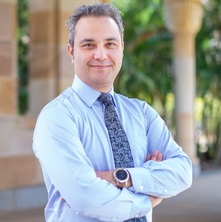
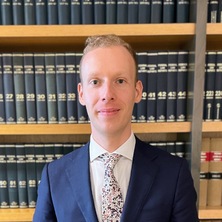
Ali Intezari is an Associate Professor of Management and Technology at UQ Business School, University of Queensland, Brisbane, Australia. Prior to joining the University of Queensland, he held academic positions in New Zealand. His research interests include decision-making, human-technology interaction, wisdom theory, knowledge management, cultural studies, and business in the Middle East. He has published in the fields of organisation/management, knowledge management, and information systems. A/Prof Intezari has taught courses at the postgraduate and undergraduate levels. He has won multiple teaching and research awards.
Faculty of Health, Medicine and Behavioural Sciences
Availability:
Available for supervision
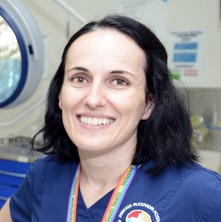
Dr Zara Ioannides is a senior lecturer at The University of Queensland and consultant neurologist at the Royal Brisbane and Women’s Hospital. Dr Ioannides has been a member of the multiple sclerosis (MS) research team since 2014 and group leader since 2020.
Dr Ioannides graduated from Imperial College, University of London in 2006 with first class honours in a Bachelor of Science degree and a distinction in a Bachelor of Medicine and Bachelor of Surgery. After completing physician training in Australia, Dr Ioannides qualified as a clinical neurologist in 2014 and attained a Master of Philosophy in neuroscience in 2018.
Dr Ioannides is a neurologist in the MS clinic at the Royal Brisbane and Women’s hospital and a principal investigator in clinical research involving EBV-specific T cell therapy in MS. Her current research focuses on the roles of autoimmunity and EBV infection in the pathogenesis of MS and on novel treatments of MS.
Dr Ioannides is passionate about supporting people living with neurological diseases through research and clinical avenues.
Affiliate of W.H. Bryan Mining and Geology Research Centre
WH Bryan Mining Geology Research Centre
Faculty of Engineering, Architecture and Information Technology
Honorary Professor
School of the Environment
Faculty of Science
Availability:
Available for supervision
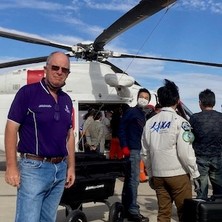
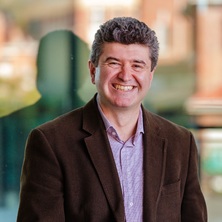
Professor Trevor Ireland has research interests that span geochronology, isotope geochemistry through to cosmochemistry. The common link between these areas is the use of in situ microanalysis of geological and extraterrestrial samples by focused ion beam methodologies. He has current research topics aligned with the asteroid sample return missions to Ryugu and Bennu by the JAXA Hayabusa2 and NASA Osiris REx missions respectively; Samples of Ryugu are currently being prepared for distribution and analysis. Professor Ireland obtained his PhD at The Australian National University and following appointments at Washington University in St Louis, Max-Planck-Institut in Mainz, UCLA and Stanford, before he returned to lead the SHRIMP (Sensitive High Resolution Ion MicroProbe) Group at ANU. Professor Ireland has taken up an appointment to establish a SHRIMP analytical facility at UQ.
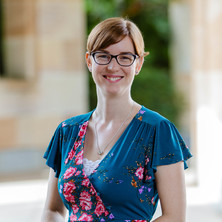
I am a Senior Lecturer in the UQ Business School at the University of Queensland. I research office spaces, hybrid work, collaboration, learning and professional work. I believe that workspaces like open-plan offices, hybrid work environments and healthcare buildings can have a positive impact on the experiences of professional workers, employees, customers and patients. At the same time, physical and virtual surroundings often influence outcomes in ways that are not anticipated. My research helps designers and managers to respond to the unintended consequences of workspace design in ways that improve the lives of space users.
My current research focuses on how managers and employees experience hybrid work. After experiencing enforced homeworking during the pandemic, many office-workers now expect the flexibility to choose how and when they work. However, evidence suggests that serendipitous encounters, collaboration, and informal learning are more effective when employees are co-located. I am interested in how managers respond to the tensions between flexibility and collaboration in a hybrid world. I also hope to learn about emerging technologies and practices that improve serendipity in online environments.
I am a founding member of the Next Generation Workspace Research Network, which brings together partners from industry and academia to provide evidence-based solutions to workspace problems.
I teach a large introductory management course with enrolments of up to 1000 students per semester. I help students relate management evidence to their own experiences through the Harvard Business School Everest Team and Leadership Simulation and engagement with events like the 2020 Bushfire Crisis. My teaching has been recognised with a UQ Citation for Outstanding Contributions to Teaching and Learning and a UQ Business School Award for enhancing the first-year student experience. I was included on the UQ Above and Beyond in 2020 Honour Roll for helping students to transition into university during the pandemic.
Faculty of Health, Medicine and Behavioural Sciences
Availability:
Available for supervision
Media expert
Dr Adam Irwin is a Principal Research Fellow in Paediatric Infectious Diseases at The University of Queensland and Queensland Children’s Hospital in Brisbane, Australia. His research focuses on the early recognition of invasive infections and sepsis, and the optimal use of antimicrobials in children. He is the medical co-chair of the Queensland Paediatric Sepsis Program which was awarded a Global Sepsis Alliance award in 2020, and Queensland Health Excellence awards in 2022 for Healthcare Delivery and Consumer Engagement, and a member of the Australian Group on Antimicrobial Resistance-Kids Steering Committee. He is a recipient of a National Health and Medical Research Council Emerging Leadership Fellowship to investigate the management of multi-drug resistant gram-negative infections in children.
Adam studied at the University of Birmingham Medical School and completed training in Paediatric Infectious Disease and Immunology in London. He was awarded his PhD by the University of Liverpool Institute of Infection and Global Health in 2016. Prior to relocating to Queensland, he was secretary of the British Paediatric Allergy, Immunity and Infection Group.
Dr Phillip Isaac is a mathematician interested in algebraic structures, particularly those related to quantum integrable systems.
Phillip received his PhD in mathematics in May 2001 from UQ. The title of his thesis was "Quasi Hopf superalgebras and their dual structures".
He worked as a JAVA programmer/cryptographer for about 9 months before undertaking a postdoctoral research fellowship at the Graduate School of Mathematical Sciences, University of Tokyo, Japan. His project was entitled "Symmetries in quantum spin chains".
After his return to Australia in September 2003, he began casual employment at UQ, working as a first year tutor and developing course materials.
His current research activities involve developing the constructive representation theory of Lie (super)algebras, quantum groups and related structures, and its utility in application, particularly to quantum integrable systems.
Dr. Ariel Isaacs specializes in the study of respiratory viruses, with a focus on highly pathogenic viruses like Nipah, Hendra, and SARS-CoV-2, as well as influenza and respiratory syncytial virus (RSV). His research aims to advance the design of next-generation vaccines and antibody therapies to combat these emerging viral threats.
Using cryo-electron microscopy, Dr. Isaacs investigates the structures of viral glycoproteins, which play a crucial role in mediating viral entry into host cells. By analyzing these structures, he gains insights into the mechanisms by which viruses enter cells, enabling him to identify critical targets for therapeutic intervention. This understanding informs the design of vaccines and antibodies that can block viral entry, offering new strategies for antiviral treatment and prevention.
His work bridges structural biology with therapeutic development, contributing to the fight against both current and future respiratory viral pandemics. Currently, Dr. Isaacs is working to develop broad-spectrum antiviral solutions that can respond to a range of respiratory viruses, including those with high pathogenic potential. His research holds promise for advancing both vaccine and therapeutic strategies, ultimately improving global health outcomes and preparedness for future viral threats.
Faculty of Health, Medicine and Behavioural Sciences
Availability:
Available for supervision
Nikky Isbel is a consultant nephrologist at the Kidney and Transplant Service, based at the Princess Alexandra Hospital, Brisbane, Queensland.
She is an active researcher in the areas of kidney transplantation, complications of immunosuppression, disorders of complement regulation and glomerulonephritis. She has over 200 publications in peer reviewed journals.
Dr William Isdale is a barrister at Callinan Chambers in Brisbane, and an Adjunct Fellow of the UQ Law School. He has a broad commercial and public law practice.
Prior to being called to the Bar, William worked as an Associate at MinterEllison, and as a Senior Legal Officer at the Australian Law Reform Commission. Previously he has served as an Associate to the Hon. Justice Dowsett AM on the Federal Court of Australia, and before that to Commissioner Graeme Neate AM on the Queensland Industrial Relations Commission and Industrial Court of Queensland.
William holds a Bachelor of Arts and a Bachelor of Laws (Honours) from the University of Queensland, a LLM in International Financial and Commercial Law from King’s College London, and a PhD in Law from the University of Queensland.
He was the recipient of the Holt Prize in 2021 for his PhD thesis, which has since been published as a book by The Federation Press (https://federationpress.com.au/product/compensation-for-native-title/). His book is broadly on the topic of native title compensation, but addresses issues relating to compulsory acquisition law, statutory construction, torts relating to property, remedies, and constitutional law. His supervisors were the Hon. Justice Andrew Greenwood of the Federal Court of Australia and Dr Jonathan Fulcher.
William has been a weekly contributor to the Queensland Law Reporter, publishing in excess of 250 case notes with that publication. He has also been a contributor to the Australian Law Reports, and to the LexisNexis Native Title Service. He has published a number of academic articles on both private and public law issues in refereed journals and in other outlets.
Liability limited by a scheme approved under professional standards legislation.
Faculty of Health, Medicine and Behavioural Sciences
Availability:
Available for supervision
Media expert
Dr Burcu Isler is a clinician-researcher, with expertise in bloodstream infections, and antimicrobial resistance. Her research aims to improve outcomes for patients with serious bacterial infections through evidence-based treatment strategies. She works as an Infectious Diseases Staff Specialist at Gold Coast University Hospital, where she combines clinical practice with active research.
Her research interests include bloodstream infections and bacteraemia management, multidrug-resistant organism infections, bone and joint infections, and clinical practice guideline development.
Dr Isler serves on the Executive Committee of the ESCMID Bloodstream Infections Study Group (ESGBIES), contributing to international guideline development and medical education. She is an Honorary Senior Research Fellow at the University of Queensland Centre for Clinical Research (UQCCR) and an Adjunct Senior Lecturer at Griffith University.
She is committed to translating research into clinical practice and fostering collaboration across disciplines to address the growing challenge of antimicrobial resistance.
Faculty of Health, Medicine and Behavioural Sciences
Availability:
Available for supervision
Media expert
Katherine is an Emergency Physician and Clinical Toxicologist based at the Princess Alexandra Hospital and the Medical Director for the Queensland Poisons Information Centre. She is passionate about promoting and expanding Clinical Toxicology services throughout Queensland.
She is the president of Toxicology And Poisoning Network Australasia (TAPNA), serves on multiple TAPNA subcommittees, and facilitates its 2 year post-graduate Clinical Toxicology course. She also created the Princess Alexandra Hospital Clinical Toxicology Subspecialisation Program which allows post-graduate toxicology training for nurses and pharmacists.
She is an enthusiastic clinician researcher. Her interests include the management of illicit drug poisoning, the pharmacokinetics and pharmacodynamics of drugs in overdose and snake envenomation. She completed a PhD in clinical toxicology on "Opioid overdose and its reversal".
Faculty of Health, Medicine and Behavioural Sciences
Affiliate of Australian Women's and Girls' Health Research Centre
Australian Women and Girls' Health Research Centre
Faculty of Health, Medicine and Behavioural Sciences
Affiliate of Centre for Research on Exercise, Physical Activity and Health
Centre for Research on Exercise, Physical Activity and Health
Faculty of Health, Medicine and Behavioural Sciences
NHMRC Emerging Leadership Fellow
School of Public Health
Faculty of Health, Medicine and Behavioural Sciences
Availability:
Available for supervision
Media expert
Gregore is a behavioural epidemiologist and Principal Investigator of the HABITAT Study, an ongoing cohort focused on urban environments, physical activity, inequalities, and healthy ageing. His research explores how physical activity and sedentary behaviour change over time, from early childhood to older age, particularly during major life transitions, and how these patterns relate to health outcomes and inequalities.
He has a strong interest in improving the measurement of physical activity in population surveys and in applying life-course perspectives to better understand behavioural trajectories and inform strategies to reduce health disparities. Gregore has published more than 160 peer-reviewed papers, secured $4 million in competitive research funding (including>$1 million as Chief Investigator), and actively contributes to national and international initiatives to strengthen physical activity surveillance and public health policy.
Gregore is a Teaching and Research academic at the School of Public Health, where he leads a multidisciplinary research group with PhD and Master’s students working on physical activity epidemiology and life course research projects. He is also an NHMRC Emerging Leadership Fellow (EL1; 2022–2026) and serves as Deputy Editor for the Journal of Physical Activity and Health.
Affiliate of Centre of Research Excellence on Achieving the Tobacco Endgame
Centre of Research Excellence on Achieving the Tobacco Endgame
Faculty of Health, Medicine and Behavioural Sciences
Associate Professor
School of Law
Faculty of Business, Economics and Law
Availability:
Available for supervision
Dr Radha Ivory is an Associate Professor in Law at the University of Queensland, Australia (UQ), where she teaches company law and researches the transnational regulation of corruption and corporate crime.
Her work explores the interlocking domestic and international laws that aim to govern powerful economic and political actors, from politically exposed persons to multinational enterprises. Radha asks what these laws require of whom; how they develop and change across borders; and how we can better appraise and design them to manage their unintended consequences. Her approach is interdisciplinary, using doctrinal legal and socio-legal methodologies, as well as insights from economics, sociology, and international relations. Current projects focus on the human rights impacts of asset recovery laws, the reform of transnational anticorruption and corporate criminal laws, and the securitisation of integrity regulations (corporate ‘lawfare’).
Radha’s research has appeared in leading law journals (International & Comparative Law Quarterly, London Review of International Law, UNSW Law Journal) and important edited collections (e.g., Krieger/Peters/Kreuzer, Due Diligence in the International Legal Order, Oxford University Press; Aaronson/Shaffer, Transnational Legal Ordering of Criminal Justice, Cambridge University Press). Her sole-authored book, Corruption, Asset Recovery, and the Protection of Property in Public International Law: The Human Rights of Bad Guys was published by Cambridge University Press and launched by former Australian federal treasurer, The Hon. Peter Costello AC. Her work with Pieth on corporate criminal liability is also widely cited. A regular speaker at international conferences and meetings, Radha has been a visitor at the London School of Economics and Political Science (LSE), and has delivered presentations at the University of Melbourne, the Wharton School (University of Pennsylvania), and the University of Bergen.
Radha’s scholarship is informed by her past and ongoing roles in the international and private sectors. She commenced her career at Freehills (now Herbert Smith Freehills) in Brisbane, Australia, before joining an NGO self-governance and compliance initiative, Building Safer Organisations in Geneva, Switzerland. Prior to commencing at UQ, Radha was a Senior Expert, Collective Action and Compliance, at the Basel Institute on Governance, Switzerland. In that role, she supported Ukraine and Colombia in anticorruption project design and implementation. During her PhD studies, Radha held research roles in the Basel Institute’s International Centre for Asset Recovery (ICAR) and the University of Basel. Radha currently consults to the World Bank and has previously been engaged by the UN Office of the High Commissioner for Human Rights. She is on the Advisory Board of the Bribery Prevention Network, Australia.
Radha was awarded a PhD (summa cum laude) from the University of Basel, and Bachelors of Arts (International Relations and German) and Laws (Hons I) from UQ.
Noriko Iwashita joined The University of Queensland in 2005. Prior to joining UQ, she was a Research Fellow at the Language Testing Research Center (LTRC) . At the LTRC she was involved in a variety of projects ranging from language assessment to bilingual and foreign language education in ESL, Japanese and other languages (e.g., Chinese and Indonesian). She was involved with colleagues at the LTRC in three large ETS (Educational Testing Service, USA) research projects funded for the development of a new TOEFL (Test of English as a Foreign Language) speaking test. She taught Japanese at various levels in Melbourne for many years and taught Applied Linguistics courses and supervised undergraduate and graduate students' research projects at The University of Melbourne and Universities in the USA.
Dr Noriko Iwashita’s research interests include the interfaces of language assessment and SLA, peer interaction in classroom based research and task-based assessment, and cross-linguistic investigation of four major language traits.
Research Interests: • Role of interaction in second language learning • Peer interaction assessment • Task-based language teaching, learning and assessment • Construct of oral proficiency in second language acquisition research and second language assessment and testing research