
Overview
Background
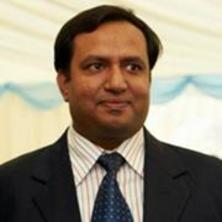
Dr Moni holds a PhD in Artificial Intelligence & Data Science in 2014 from the University of Cambridge, UK followed by postdoctoral training at the University of New South Wales, University of Sydney Vice-chancellor fellowship, and Senior Data Scientist at the University of Oxford. Dr Moni then joined UQ in 2021. He also worked as an assistant professor and lecturer in two universities (PUST and JKKNIU) from 2007 to 2011. He is an Artificial Intelligence, Computer Vision & Machine learning, Digital Health Data Science, Health Informatics and Bioinformatics researcher developing interpretable and clinical applicable machine learning and deep learning models to increase the performance and transparency of AI-based automated decision-making systems.
His research interests include quantifying and extracting actionable knowledge from data to solve real-world problems and giving humans explainable AI models through feature visualisation and attribution methods. He has applied these techniques to various multi-disciplinary applications such as medical imaging including stroke MRI/fMRI imaging, real-time cancer imaging. He led and managed significant research programs in developing machine-learning, deep-learning and translational data science models, and software tools to aid the diagnosis and prediction of disease outcomes, particularly for hard-to-manage complex and chronic diseases. His research interest also includes developing Data Science, machine learning and deep learning algorithms, models and software tools utilising different types of data, especially medical images, neuroimaging (MRI, fMRI, Ultrasound, X-Ray), EEG, ECG, Bioinformatics, and secondary usage of routinely collected data.
- I am currently recruiting graduate students. Check out Available Projects for details. Open to both Domestic and International students.
Availability
- Dr Mohammad Ali Moni is:
- Available for supervision
Fields of research
Qualifications
- Doctor of Philosophy, University of Cambridge
Research interests
-
Artificial Intelligence, Computer Vision, Machine Learning, Deep-Learning
-
Medical Imaging, Medical Image Analysis, Neuro Imaging
-
Digital Health, Data Science, Health Informatics, Clinical Informatics
-
Data Mining, Text Mining, Natural Language Processing
-
Bioinformatics, Systems Biology, Computational Biology
Research impacts
During the last 5 years he has puvblished over 200 journal articles in many top tier journals including The Lancet, Jama Oncology. The impact of his research is evidenced by the high number of citations to his work (>12000 citations, i10-index 157 and an h-index of 50 according to Google Scholar), received $1.89 M as CI-A (8.9 M total) and awards including :
- Best Impact Award in International Conference on Applied Intelligence and Informatics, UK July 30-31, 2021
- University of Wollongong Engineering & information science Distinguished Early Career Fellowship.2019-2020
- Certara-Monash Fellowship Awarded ($2,00,000), Certara Australia Pty. Ltd, 2019
- Seed funding from two companies Karte Ltd (Japan) and iHealthOmics Ltd (Hong Kong) to develop AI-based health-care related software products. Received seed funding ($40,000) from Karte Ltd. 2018-2020
- USyd DVC Research Fellowship ($50,000), University of Sydney2017-2020
- The Ridley Ken Davies Award ($50,000)-- utilising the research data obtained through Dubbo Osteoporosis Epidemiological Study, Ridley Corporation, Australia 2016
- Travel award to attend ANZBMS Conference, Australia, 2016
- Best student paper award in international conference- IDBSS2014, UK2014
- Travel award to attend NIMBioS Modeling, University of Tennessee, USA. 2013
- The Cambridge Commonwealth, European & International Trust award, The Commonwealth Trust, UK 2011
Works
Search Professor Mohammad Ali Moni’s works on UQ eSpace
2026
Journal Article
Deep ensemble of multi-head attention CNNs for histopathological image-based of lung and colon cancer diagnosis
Rahman, A. K. Z Rasel, Swapno, S M Masfequier Rahman, Raha, Avi Deb, Biswas, Sujit, Khan, Shakil, Khushbu, Katura Gania, Reza, Ahmed Wasif, Bairagi, Anupam Kumar, Aloteibi, Saad and Moni, Mohammad Ali (2026). Deep ensemble of multi-head attention CNNs for histopathological image-based of lung and colon cancer diagnosis. DIGITAL HEALTH, 12 20552076261444271. doi: 10.1177/20552076261444271
2026
Journal Article
3D MRI Reconstruction and Brain Tumor Diagnosis Using Deep Learning with Explainable AI
Hasan, Md Rakhibul, Rudra, Shrawman Majumder, Karmoker, Nayon, Yousuf, Mohammad Abu, Akhter, Jesmin, Al-Moisheer, Asmaa Soliman, Alyami, Salem A. and Moni, Mohammad Ali (2026). 3D MRI Reconstruction and Brain Tumor Diagnosis Using Deep Learning with Explainable AI. Expert Systems with Applications, 315 131513, 131513-315. doi: 10.1016/j.eswa.2026.131513
2026
Journal Article
An explainable deep learning model for mulberry leaf classification and disease detection
Nobel, S.M. Nuruzzaman, Tasir, Md All Moon, Sultana, Shirin, Al-Moisheer, Asmaa Soliman and Moni, Mohammad Ali (2026). An explainable deep learning model for mulberry leaf classification and disease detection. Engineering Applications of Artificial Intelligence, 165 113470, 113470. doi: 10.1016/j.engappai.2025.113470
2026
Journal Article
Explainable AI-driven hybrid deep learning framework for accurate skin cancer diagnosis
Al Sakib, Abdullah, Swapno, SM. Masfequier Rahman, Ahamed, Fahim, Mohiuddin, Arafath Bin, Bhuiyan, Md Imranul Hoque, Khan, Shakil, Khushbu, Katura Gania, Haque, Rezaul, Alahmadi, Tahani Jaser and Moni, Mohammad Ali (2026). Explainable AI-driven hybrid deep learning framework for accurate skin cancer diagnosis. DIGITAL HEALTH, 12 20552076261438923, 20552076261438923-12. doi: 10.1177/20552076261438923
2026
Journal Article
Securing the Unseen: A Comprehensive Exploration Review of <scp>AI</scp> ‐Powered Models for Zero‐Day Attack Detection
Al Siam, Abdullah, Faruqui, Nuruzzaman, Azad, Akm and Moni, Mohammad Ali (2026). Securing the Unseen: A Comprehensive Exploration Review of AI ‐Powered Models for Zero‐Day Attack Detection. Expert Systems, 43 (3) e70217. doi: 10.1111/exsy.70217
2026
Journal Article
Leveraging explainable AI for sustainable agriculture: a comprehensive review of recent advances
Rajbongshi, Aditya, Johora, Fatema Tuz, Hossain, Arafat, Sarker, Md. Salauddin, Rahman, Md Habibur, Rahman, Md Wahidur, Alotaibi, Fahad T. and Moni, Mohammad Ali (2026). Leveraging explainable AI for sustainable agriculture: a comprehensive review of recent advances. Artificial Intelligence Review, 59 (3) 105, 1-46. doi: 10.1007/s10462-025-11459-5
2026
Journal Article
A comparative study of machine learning models for identification of antiviral peptides using various encoded features
Hasan, Md. Zahid, Shakil, Md. Shahriar, Karim, Tasmin, Shaon, Md. Shazzad Hossain, Sultan, Md. Fahim, Rupa, Fatema Hashem, Almoyad, Muhammad Ali Abdullah, Rahman, Md. Tanvir, Khan, Risala Tasin, Kaiser, M. Shamim and Moni, Mohammad Ali (2026). A comparative study of machine learning models for identification of antiviral peptides using various encoded features. IEEE Transactions on Computational Biology and Bioinformatics, PP (99), 1-14. doi: 10.1109/tcbbio.2026.3654071
2026
Journal Article
Unraveling risk factors and transcriptomic signatures in liver cancer progression and mortality through machine learning and bioinformatics
Asa, Tania Akter, Hossain, Md Ali, Ali, Md Shahjahan, Mahmud, Md Zulfiker, Azad, A. K. M., Rahman, Mohammad Zahidur and Moni, Mohammad Ali (2026). Unraveling risk factors and transcriptomic signatures in liver cancer progression and mortality through machine learning and bioinformatics. Briefings in Functional Genomics, 25 elaf019, 1-17. doi: 10.1093/bfgp/elaf019
2026
Journal Article
StackAPP: Advancing autophagy protein identification with ensemble learning
Shoyshob, Munem Shahriar, Al-Tabatabaie, Kusay Faisal, Abdulrazak, Lway Faisal, Rahman, Md. Ashikur, Ali, Md. Mamun, Ibrahim, Sobhy M., Ahmed, Kawsar, Bui, Francis M. and Moni, Mohammad Ali (2026). StackAPP: Advancing autophagy protein identification with ensemble learning. Analytical Biochemistry, 708 115981, 115981-708. doi: 10.1016/j.ab.2025.115981
2026
Journal Article
Risk prediction modelling of 30-day all-cause mortality following percutaneous coronary intervention in an Australian population: leveraging machine learning
Chowdhury, Mohammad Rocky Khan, Dinh, Diem T, Brennan, Angela, Reid, Christopher M, Nanayakkara, Shane, Lefkovits, Jeffrey, Chew, Derek P, Karim, Md Nazmul, Moni, Mohammad Ali, Islam, Md Shofiqul, Billah, Baki and Stub, Dion (2026). Risk prediction modelling of 30-day all-cause mortality following percutaneous coronary intervention in an Australian population: leveraging machine learning. Open Heart, 13 (1), e003619. doi: 10.1136/openhrt-2025-003619
2026
Book Chapter
A multi-branch CNN-LSTM based human activity recognition using wearable and smartphone sensors
Khatun, Mst. Alema, Yousuf, Mohammad Abu and Moni, Mohammad Ali (2026). A multi-branch CNN-LSTM based human activity recognition using wearable and smartphone sensors. Intelligent networks and systems: advanced technologies and applications. (pp. 27-39) Boca Raton, FL, U.S.A.: CRC Press. doi: 10.1201/9781032659770-3
2026
Journal Article
Prevention and management of heart failure associated with type 2 diabetics in rural Australia
Ross, Allen G., Mondal, Utpal K., Mahmood, Shakeel, Astawesegn, Feleke H., Anyasodor, Anayochukwu E., Huda, M. Mamun, Thapa, Subash, Aychiluhm, Setognal B., Giri, Santosh, Rahman, Md. Ferdous, Shiddiky, Muhammad J. A., Moni, Mohammad Ali and Ahmed, Kedir Y. (2026). Prevention and management of heart failure associated with type 2 diabetics in rural Australia. Journal of Clinical Medicine, 15 (1) 304, 1-14. doi: 10.3390/jcm15010304
2026
Journal Article
Deep3BPP: identification of blood-brain barrier penetrating peptides using word embedding feature extraction method and CNN-LSTM
Rahman, Md. Ashikur, Ali, Md Mamun, Ahmed, Kawsar, Mahmud, Imran, Bui, Francis M., Chen, Li and Moni, Mohammad Ali (2026). Deep3BPP: identification of blood-brain barrier penetrating peptides using word embedding feature extraction method and CNN-LSTM. IEEE Transactions on Artificial Intelligence, 7 (1), 562-570. doi: 10.1109/tai.2025.3567434
2026
Journal Article
Quantifying the fatal and non-fatal burden of disease associated with child growth failure, 2000–2023: a systematic analysis from the Global Burden of Disease Study 2023
Troeger, Christopher E., Arndt, Michael Benjamin, Aalruz, Hasan, Abdoun, Meriem, Abdullahi, Auwal, Abebe, Mesfin, Abedi, Armita, Abie, Alemwork, Aboagye, Richard Gyan, Abolhassani, Hassan, Abtew, Yonas Derso, Abu-Zaid, Ahmed, Adamu, Lawan Hassan, Adane, Mesafint Molla, Addo, Isaac Yeboah, Adegboye, Oyelola A., Adekanmbi, Victor, Adetunji, Juliana Bunmi, Adnani, Qorinah Estiningtyas Sakilah, Adzigbli, Leticia Akua, Afzal, Muhammad Sohail, Afzal, Saira, Aggarwal, Navidha, Ahmad, Aqeel, Ahmad, Muayyad M., Ahmad, Sajjad, Ahmadi, Elham, Ahmed, Ayman, Ahmed, Haroon ... Reiner, Robert C. (2026). Quantifying the fatal and non-fatal burden of disease associated with child growth failure, 2000–2023: a systematic analysis from the Global Burden of Disease Study 2023. The Lancet Child and Adolescent Health, 10 (1), 22-38. doi: 10.1016/s2352-4642(25)00303-7
2026
Journal Article
A Secure and Interpretable Federated Learning Framework for Diabetes Prediction with Blockchain-Enabled Security
Ahmed, Shamim, Chaki, Sudipto, Kaiser, M Shamim, Ali, A B M Shawkat and Moni, Mohammad Ali (2026). A Secure and Interpretable Federated Learning Framework for Diabetes Prediction with Blockchain-Enabled Security. IEEE Transactions on Artificial Intelligence, 1-15. doi: 10.1109/tai.2026.3660813
2026
Journal Article
A Decision Support System for Ovarian Cancer Classification Using Clinical Features from Ultrasound Imaging
Khokan, Md Ibrahim Patwary, Tonni, Tasnim Jahan, Fatema, Kaniz, Hasan, Md. Zahid, Rony, Md. Awlad Hossen, Rahman, Md. Tanvir, Khan, Risala Tasin, Moni, Mohammad Ali and Mahmud, ASM Ashraf (2026). A Decision Support System for Ovarian Cancer Classification Using Clinical Features from Ultrasound Imaging. IEEE Access, 14, 1-1. doi: 10.1109/access.2026.3690545
2026
Journal Article
Author Correction: Global burden of amphetamine, cannabis, cocaine and opioid use in 204 countries, 1990–2023: a Global Burden of Disease Study (Nature Medicine, (2026), 32, 2, (527-544), 10.1038/s41591-025-04137-0)
Kang, Jiseung, Kim, Hyeon Jin, Kim, Min Seo, Zyoud, Sa’ed H., Zielińska, Magdalena, Zhu, Bin, Zhong, Anthony, Zhang, Jingya, Zhang, Haijun, Zeariya, Mohammed G. M., Zanghì, Aurora, Zakham, Fathiah, Yusuf, Hadiza, Yu, Chuanhua, Yonemoto, Naohiro, Yip, Paul, Yin, Dehui, Yesodharan, Renjulal, Yahaya, Zwanden Sule, Wilandika, Angga, Wickramasinghe, Nuwan Darshana, Wang, Shu, Wang, Yuan-Pang, Walde, Mandaras Tariku, Waheed, Yasir, Vujcic, Isidora S., Vinayak, Manish, Verras, Georgios-Ioannis, Vaziri, Siavash ... Yon, Dong Keon (2026). Author Correction: Global burden of amphetamine, cannabis, cocaine and opioid use in 204 countries, 1990–2023: a Global Burden of Disease Study (Nature Medicine, (2026), 32, 2, (527-544), 10.1038/s41591-025-04137-0). Nature Medicine. doi: 10.1038/s41591-026-04513-4
2026
Book Chapter
Explainable AI-based heart attack prediction model using various machine learning and ensemble learning approaches
Palash, Md Istakiak Adnan, Rahman, Muntarin, Yousuf, Mohammad Abu and Moni, Mohammad Ali (2026). Explainable AI-based heart attack prediction model using various machine learning and ensemble learning approaches. Applied intelligence for healthcare informatics: techniques and applications. (pp. 1-13) edited by Nazmul Siddique, Mohammad Shamsul Arefin, Md Zahid Hasan and M Shamin Kaiser. Boca Raton, FL, USA: CRC Press. doi: 10.1201/9781003583363-1
2026
Journal Article
An integrated complete-genome sequencing and systems biology approach to predict antimicrobial resistance genes in the virulent bacterial strains of Moraxella catarrhalis
Bristy, Sadia Afrin, Hossain, Md Arju, Hasan, Md Imran, Mahmud, S. M. Hasan, Moni, Mohammad Ali and Rahman, Md Habibur (2026). An integrated complete-genome sequencing and systems biology approach to predict antimicrobial resistance genes in the virulent bacterial strains of Moraxella catarrhalis. Briefings in Functional Genomics, 25 elaf027, 1-17. doi: 10.1093/bfgp/elaf027
2026
Journal Article
Global burden of amphetamine, cannabis, cocaine and opioid use in 204 countries, 1990–2023: a global burden of disease study
Kang, Jiseung, Kim, Hyeon Jin, Kim, Min Seo, Zyoud, Sa’ed H., Zielińska, Magdalena, Zhu, Bin, Zhong, Anthony, Zhang, Jingya, Zhang, Haijun, Zeariya, Mohammed G. M., Zanghì, Aurora, Zakham, Fathiah, Yusuf, Hadiza, Yu, Chuanhua, Yonemoto, Naohiro, Yip, Paul, Yin, Dehui, Yesodharan, Renjulal, Yahaya, Zwanden Sule, Wilandika, Angga, Wickramasinghe, Nuwan Darshana, Wang, Shu, Wang, Yuan-Pang, Walde, Mandaras Tariku, Waheed, Yasir, Vujcic, Isidora S., Vinayak, Manish, Verras, Georgios-Ioannis, Vaziri, Siavash ... Yon, Dong Keon (2026). Global burden of amphetamine, cannabis, cocaine and opioid use in 204 countries, 1990–2023: a global burden of disease study. Nature Medicine, 32 (2), 527-544. doi: 10.1038/s41591-025-04137-0
Supervision
Availability
- Dr Mohammad Ali Moni is:
- Available for supervision
Looking for a supervisor? Read our advice on how to choose a supervisor.
Available projects
-
Deep learning models development and application to the Neuro Imaging (MRI and fMRI)
Magnetic resonance (MR) imaging has become an important non-invasive radiological modality for various clinical applications, such as stoke and cancer. Extracting meaningful clinical information without human interaction is a challenging task. Developing such automatic methods are important in order to reduce human errors and the time taken by clinicians.
In this project, the student will develop novel deep learning algorithms to solve segmentation and detection problems from imaging that could possibly be deployed to MRI & fMRI scanners and may eventually used for diagnostic purposes. The project will involve applying computer vision and deep learning techniques to MR image processing and analysis.
-
Deep Leaning Model to identify Neuroimaging biomarkers
-
Deep Learning models to solve inverse problems utiling MRI/fMRI image
-
AI-based based model development for Magnetic Resonance Imaging
-
AI-based Model development for ECG/EEG study
Supervision history
Current supervision
-
Doctor Philosophy
Robust and Explainable AI to Solve Clinical Problems
Principal Advisor
Other advisors: Associate Professor Asaduzzaman Khan
-
Doctor Philosophy
Wearable devices and AI Models for Monitoring, Predicting and Assessment Post-stroke Recovery
Principal Advisor
-
Doctor Philosophy
Developing AI-based Discission Support System utilising multimodal data
Principal Advisor
Other advisors: Associate Professor Asaduzzaman Khan
-
Doctor Philosophy
Coloured noise estimation using electroencephalogram data and deep-learning method for improvement of cognitive function
Principal Advisor
Other advisors: Associate Professor Asaduzzaman Khan
-
Doctor Philosophy
Managing non-communicable diseases (NCDs) to achieve Universal Health Coverage (UHC) in South Asia: A case study from Bangladesh
Associate Advisor
Other advisors: Associate Professor Asaduzzaman Khan
Completed supervision
-
-
2025
Doctor Philosophy
Understanding the pathophysiology of stroke using bioinformatics and statistical genetics
Principal Advisor
Other advisors: Associate Professor Asaduzzaman Khan, Dr Jian Zeng
Media
Enquiries
For media enquiries about Dr Mohammad Ali Moni's areas of expertise, story ideas and help finding experts, contact our Media team: