
Overview
Background
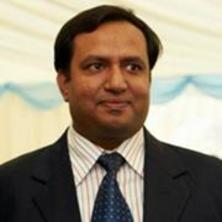
Dr Moni holds a PhD in Artificial Intelligence & Data Science in 2014 from the University of Cambridge, UK followed by postdoctoral training at the University of New South Wales, University of Sydney Vice-chancellor fellowship, and Senior Data Scientist at the University of Oxford. Dr Moni then joined UQ in 2021. He also worked as an assistant professor and lecturer in two universities (PUST and JKKNIU) from 2007 to 2011. He is an Artificial Intelligence, Computer Vision & Machine learning, Digital Health Data Science, Health Informatics and Bioinformatics researcher developing interpretable and clinical applicable machine learning and deep learning models to increase the performance and transparency of AI-based automated decision-making systems.
His research interests include quantifying and extracting actionable knowledge from data to solve real-world problems and giving humans explainable AI models through feature visualisation and attribution methods. He has applied these techniques to various multi-disciplinary applications such as medical imaging including stroke MRI/fMRI imaging, real-time cancer imaging. He led and managed significant research programs in developing machine-learning, deep-learning and translational data science models, and software tools to aid the diagnosis and prediction of disease outcomes, particularly for hard-to-manage complex and chronic diseases. His research interest also includes developing Data Science, machine learning and deep learning algorithms, models and software tools utilising different types of data, especially medical images, neuroimaging (MRI, fMRI, Ultrasound, X-Ray), EEG, ECG, Bioinformatics, and secondary usage of routinely collected data.
- I am currently recruiting graduate students. Check out Available Projects for details. Open to both Domestic and International students.
Availability
- Dr Mohammad Ali Moni is:
- Available for supervision
Fields of research
Qualifications
- Doctor of Philosophy, University of Cambridge
Research interests
-
Artificial Intelligence, Computer Vision, Machine Learning, Deep-Learning
-
Medical Imaging, Medical Image Analysis, Neuro Imaging
-
Digital Health, Data Science, Health Informatics, Clinical Informatics
-
Data Mining, Text Mining, Natural Language Processing
-
Bioinformatics, Systems Biology, Computational Biology
Research impacts
During the last 5 years he has puvblished over 200 journal articles in many top tier journals including The Lancet, Jama Oncology. The impact of his research is evidenced by the high number of citations to his work (>12000 citations, i10-index 157 and an h-index of 50 according to Google Scholar), received $1.89 M as CI-A (8.9 M total) and awards including :
- Best Impact Award in International Conference on Applied Intelligence and Informatics, UK July 30-31, 2021
- University of Wollongong Engineering & information science Distinguished Early Career Fellowship.2019-2020
- Certara-Monash Fellowship Awarded ($2,00,000), Certara Australia Pty. Ltd, 2019
- Seed funding from two companies Karte Ltd (Japan) and iHealthOmics Ltd (Hong Kong) to develop AI-based health-care related software products. Received seed funding ($40,000) from Karte Ltd. 2018-2020
- USyd DVC Research Fellowship ($50,000), University of Sydney2017-2020
- The Ridley Ken Davies Award ($50,000)-- utilising the research data obtained through Dubbo Osteoporosis Epidemiological Study, Ridley Corporation, Australia 2016
- Travel award to attend ANZBMS Conference, Australia, 2016
- Best student paper award in international conference- IDBSS2014, UK2014
- Travel award to attend NIMBioS Modeling, University of Tennessee, USA. 2013
- The Cambridge Commonwealth, European & International Trust award, The Commonwealth Trust, UK 2011
Works
Search Professor Mohammad Ali Moni’s works on UQ eSpace
2021
Journal Article
rMisbeta: A robust missing value imputation approach in transcriptomics and metabolomics data
Shahjaman, Md., Rahman, Md. Rezanur, Islam, Tania, Auwul, Md. Rabiul, Moni, Mohammad Ali and Mollah, Md. Nurul Haque (2021). rMisbeta: A robust missing value imputation approach in transcriptomics and metabolomics data. Computers in Biology and Medicine, 138 104911, 104911. doi: 10.1016/j.compbiomed.2021.104911
2021
Journal Article
Global, regional, and national mortality among young people aged 10-24 years, 1950-2019: a systematic analysis for the Global Burden of Disease Study 2019
Ward, Joseph L., Azzopardi, Peter S., Francis, Kate Louise, Santelli, John S., Skirbekk, Vegard, Sawyer, Susan M., Kassebaum, Nicholas J., Mokdad, Ali H., Hay, Simon I., Abd-Allah, Foad, Abdoli, Amir, Abdollahi, Mohammad, Abedi, Aidin, Abolhassani, Hassan, Abreu, Lucas Guimaraes, Abrigo, Michael R. M., Abu-Gharbieh, Eman, Abushouk, Abdelrahman I., Adebayo, Oladimeji M., Adekanmbi, Victor, Adham, Davoud, Advani, Shailesh M., Afshari, Khashayar, Agrawal, Anurag, Ahmad, Tauseef, Ahmadi, Keivan, Ahmed, Anwar E., Aji, Budi, Akombi-Inyang, Blessing ... Viner, Russell M. (2021). Global, regional, and national mortality among young people aged 10-24 years, 1950-2019: a systematic analysis for the Global Burden of Disease Study 2019. Lancet, 398 (10311), 1593-1618.
2021
Journal Article
Intelligent type 2 diabetes risk prediction from administrative claim data
Uddin, Shahadat, Imam, Tasadduq, Hossain, Md Ekramul, Gide, Ergun, Sianaki, Omid Ameri, Moni, Mohammad Ali, Mohammed, Ashwaq Amer and Vandana, Vandana (2021). Intelligent type 2 diabetes risk prediction from administrative claim data. Informatics for Health and Social Care, 47 (3), 1-15. doi: 10.1080/17538157.2021.1988957
2021
Conference Publication
Improved transfer learning architecture to classify Covid-19 affected chest X-rays using noisy student pre-training
Fahim, Md Asif Iqbal, Naznin, Feroza, Moni, Mohammad Ali and Islam, Md Zahidul (2021). Improved transfer learning architecture to classify Covid-19 affected chest X-rays using noisy student pre-training. 2021 Joint 10th International Conference on Informatics, Electronics & Vision (ICIEV) and 2021 5th International Conference on Imaging, Vision & Pattern Recognition (icIVPR), Kitakyushu, Japan, 16-20 August 2021. Piscataway, NJ, United States: Institute of Electrical and Electronics Engineers. doi: 10.1109/ICIEVICIVPR52578.2021.9564125
2021
Journal Article
Tracking development assistance for health and for COVID-19: a review of development assistance, government, out-of-pocket, and other private spending on health for 204 countries and territories, 1990-2050
Global Burden of Disease 2020 Health Financing Collaborator Network, Wubishet, Befikadu and Moni, Mohammad Ali (2021). Tracking development assistance for health and for COVID-19: a review of development assistance, government, out-of-pocket, and other private spending on health for 204 countries and territories, 1990-2050. Lancet, 398 (10308), 1317-1343. doi: 10.1016/S0140-6736(21)01258-7
2021
Journal Article
Global, regional, and national sex-specific burden and control of the HIV epidemic, 1990-2019, for 204 countries and territories: the Global Burden of Diseases Study 2019
GBD 2019 HIV Collaborators, Sinshaw, Aklilu and Moni, Mohammad Ali (2021). Global, regional, and national sex-specific burden and control of the HIV epidemic, 1990-2019, for 204 countries and territories: the Global Burden of Diseases Study 2019. The Lancet HIV, 8 (10), e633-e651. doi: 10.1016/S2352-3018(21)00152-1
2021
Journal Article
Network-based transcriptomic analysis identifies the genetic effect of COVID-19 to chronic kidney disease patients: a bioinformatics approach
Auwul, Md. Rabiul, Zhang, Chongqi, Rahman, Md Rezanur, Shahjaman, Md., Alyami, Salem A. and Moni, Mohammad Ali (2021). Network-based transcriptomic analysis identifies the genetic effect of COVID-19 to chronic kidney disease patients: a bioinformatics approach. Saudi Journal of Biological Sciences, 28 (10), 5647-5656. doi: 10.1016/j.sjbs.2021.06.015
2021
Journal Article
Global, regional, and national burden of stroke and its risk factors, 1990-2019: A systematic analysis for the Global Burden of Disease Study 2019
Feigin, Valery L., Stark, Benjamin A., Johnson, Catherine Owens, Roth, Gregory A., Bisignano, Catherine, Abady, Gdiom Gebreheat, Abbasifard, Mitra, Abbasi-Kangevari, Mohsen, Abd-Allah, Foad, Abedi, Vida, Abualhasan, Ahmed, Abu-Rmeileh, Niveen M.E., Abushouk, Abdelrahman I., Adebayo, Oladimeji M., Agarwal, Gina, Agasthi, Pradyumna, Ahinkorah, Bright Opoku, Ahmad, Sohail, Ahmadi, Sepideh, Salih, Yusra Ahmed, Aji, Budi, Akbarpour, Samaneh, Akinyemi, Rufus Olusola, Al Hamad, Hanadi, Alahdab, Fares, Alif, Sheikh Mohammad, Alipour, Vahid, Aljunid, Syed Mohamed, Almustanyir, Sami ... Murray, Christopher J.L. (2021). Global, regional, and national burden of stroke and its risk factors, 1990-2019: A systematic analysis for the Global Burden of Disease Study 2019. The Lancet Neurology, 20 (10), 1-26. doi: 10.1016/S1474-4422(21)00252-0
2021
Journal Article
Global, regional, and national sex-specific burden and control of the HIV epidemic, 1990-2019, for 204 countries and territories: the Global Burden of Diseases Study 2019
Jahagirdar, Deepa, Walters, Magdalene K., Novotney, Amanda, Brewer, Edmond D., Frank, Tahvi D., Carter, Austin, Biehl, Molly H., Abbastabar, Hedayat, Abhilash, E. S., Abu-Gharbieh, Eman, Abu-Raddad, Laith Jamal, Adekanmbi, Victor, Adeyinka, Daniel Adedayo, Adnani, Qorinah Estiningtyas Sakilah, Afzal, Saira, Aghababaei, Soodabeh, Ahinkorah, Bright Opoku, Ahmad, Sajjad, Ahmadi, Keivan, Ahmadi, Sepideh, Ahmadpour, Ehsan, Ahmed, Muktar Beshir, Rashid, Tarik Ahmed, Salih, Yusra Ahmed, Aklilu, Addis, Akram, Tayyaba, Akunna, Chisom Joyqueenet, Al Hamad, Hanadi, Alahdab, Fares ... Kyu, Hmwe H. (2021). Global, regional, and national sex-specific burden and control of the HIV epidemic, 1990-2019, for 204 countries and territories: the Global Burden of Diseases Study 2019. Lancet Hiv, 8 (10), E633-E651.
2021
Journal Article
Diagnosis of hearing deficiency using EEG based AEP signals: CWT and improved-VGG16 pipeline
Islam, Md Nahidul, Sulaiman, Norizam, Farid, Fahmid Al, Uddin, Jia, Alyami, Salem A., Rashid, Mamunur, Majeed, Anwar P. P. Abdul and Moni, Mohammad Ali (2021). Diagnosis of hearing deficiency using EEG based AEP signals: CWT and improved-VGG16 pipeline. PeerJ Computer Science, 7 e638, 1-28. doi: 10.7717/peerj-cs.638
2021
Journal Article
Global, regional, and national progress towards Sustainable Development Goal 3.2 for neonatal and child health: all-cause and cause-specific mortality findings from the Global Burden of Disease Study 2019
GBD 2019 Under-5 Mortality Collaborators, Mamun, Abdullah A., Lalloo, Ratilal, Anderlini, Deanna, McGrath, John, Uddin, Riaz, Moni, Mohammad Ali and Hasan, Md. Mehedi (2021). Global, regional, and national progress towards Sustainable Development Goal 3.2 for neonatal and child health: all-cause and cause-specific mortality findings from the Global Burden of Disease Study 2019. The Lancet, 398 (10303), 870-905. doi: 10.1016/S0140-6736(21)01207-1
2021
Journal Article
Bioinformatics and machine learning approach identifies potential drug targets and pathways in COVID-19
Auwul, Md Rabiul, Rahman, Md Rezanur, Gov, Esra, Shahjaman, Md and Moni, Mohammad Ali (2021). Bioinformatics and machine learning approach identifies potential drug targets and pathways in COVID-19. Briefings in Bioinformatics, 22 (5) bbab120. doi: 10.1093/bib/bbab120
2021
Journal Article
Identifying molecular insight of synergistic complexities for SARS-CoV-2 infection with pre-existing type 2 diabetes
Islam, M. Babul, Chowdhury, Utpala Nanda, Nain, Zulkar, Uddin, Shahadat, Ahmed, Mohammad Boshir and Moni, Mohammad Ali (2021). Identifying molecular insight of synergistic complexities for SARS-CoV-2 infection with pre-existing type 2 diabetes. Computers in Biology and Medicine, 136 104668, 104668. doi: 10.1016/j.compbiomed.2021.104668
2021
Journal Article
Covid-19 pandemic outbreak in the subcontinent: A data driven analysis
Singh, Bikash Chandra, Alom, Zulfikar, Hu, Haibo, Rahman, Mohammad Muntasir, Baowaly, Mrinal Kanti, Aung, Zeyar, Azim, Mohammad Abdul and Moni, Mohammad Ali (2021). Covid-19 pandemic outbreak in the subcontinent: A data driven analysis. Journal of Personalized Medicine, 11 (9) 889, 889. doi: 10.3390/jpm11090889
2021
Journal Article
PreDTIs: Prediction of drug-Target interactions based on multiple feature information using gradient boosting framework with data balancing and feature selection techniques
Mahmud, S. M. Hasan, Chen, Wenyu, Liu, Yongsheng, Awal, Md Abdul, Ahmed, Kawsar, Rahman, Md Habibur and Moni, Mohammad Ali (2021). PreDTIs: Prediction of drug-Target interactions based on multiple feature information using gradient boosting framework with data balancing and feature selection techniques. Briefings in Bioinformatics, 22 (5) bbab046. doi: 10.1093/bib/bbab046
2021
Journal Article
Heart disease prediction using supervised machine learning algorithms: Performance analysis and comparison
Ali, Md Mamun, Paul, Bikash Kumar, Ahmed, Kawsar, Bui, Francis M., Quinn, Julian M.W. and Moni, Mohammad Ali (2021). Heart disease prediction using supervised machine learning algorithms: Performance analysis and comparison. Computers in Biology and Medicine, 136 104672, 104672. doi: 10.1016/j.compbiomed.2021.104672
2021
Journal Article
Recognition of human emotions using EEG signals: A review
Rahman, Md. Mustafizur, Sarkar, Ajay Krishno, Hossain, Md. Amzad, Hossain, Md. Selim, Islam, Md. Rabiul, Hossain, Md. Biplob, Quinn, Julian M.W. and Moni, Mohammad Ali (2021). Recognition of human emotions using EEG signals: A review. Computers in Biology and Medicine, 136 104696, 104696. doi: 10.1016/j.compbiomed.2021.104696
2021
Conference Publication
Lung cancer prediction using curriculum learning based deep neural networks
Zhou, Jackson, Khushi, Matloob, Moni, Mohammad Ali, Uddin, Shahadat and Poon, Simon K. (2021). Lung cancer prediction using curriculum learning based deep neural networks. 2021 IEEE International Conference on Digital Health (ICDH), Chicago, IL USA, 5-10 September 2021. Piscataway, NJ USA: Institute of Electrical and Electronics Engineers. doi: 10.1109/ICDH52753.2021.00013
2021
Journal Article
Bioinformatics and machine learning methodologies to identify the effects of central nervous system disorders on glioblastoma progression
Rahman, Md Habibur, Rana, Humayan Kabir, Peng, Silong, Hu, Xiyuan, Chen, Chen, Quinn, Julian M. W and Moni, Mohammad Ali (2021). Bioinformatics and machine learning methodologies to identify the effects of central nervous system disorders on glioblastoma progression. Briefings in Bioinformatics, 22 (5) bbaa365. doi: 10.1093/bib/bbaa365
2021
Journal Article
EEG channel correlation based model for emotion recognition
Islam, Md. Rabiul, Islam, Md. Milon, Rahman, Md. Mustafizur, Mondal, Chayan, Singha, Suvojit Kumar, Ahmad, Mohiuddin, Awal, Abdul, Islam, Md. Saiful and Moni, Mohammad Ali (2021). EEG channel correlation based model for emotion recognition. Computers in Biology and Medicine, 136 104757, 104757. doi: 10.1016/j.compbiomed.2021.104757
Supervision
Availability
- Dr Mohammad Ali Moni is:
- Available for supervision
Looking for a supervisor? Read our advice on how to choose a supervisor.
Available projects
-
Deep learning models development and application to the Neuro Imaging (MRI and fMRI)
Magnetic resonance (MR) imaging has become an important non-invasive radiological modality for various clinical applications, such as stoke and cancer. Extracting meaningful clinical information without human interaction is a challenging task. Developing such automatic methods are important in order to reduce human errors and the time taken by clinicians.
In this project, the student will develop novel deep learning algorithms to solve segmentation and detection problems from imaging that could possibly be deployed to MRI & fMRI scanners and may eventually used for diagnostic purposes. The project will involve applying computer vision and deep learning techniques to MR image processing and analysis.
-
Deep Leaning Model to identify Neuroimaging biomarkers
-
Deep Learning models to solve inverse problems utiling MRI/fMRI image
-
AI-based based model development for Magnetic Resonance Imaging
-
AI-based Model development for ECG/EEG study
Supervision history
Current supervision
-
Doctor Philosophy
Robust and Explainable AI to Solve Clinical Problems
Principal Advisor
Other advisors: Associate Professor Asaduzzaman Khan
-
Doctor Philosophy
Coloured noise estimation using electroencephalogram data and deep-learning method for improvement of cognitive function
Principal Advisor
Other advisors: Associate Professor Asaduzzaman Khan
-
Doctor Philosophy
Wearable devices and AI Models for Monitoring, Predicting and Assessment Post-stroke Recovery
Principal Advisor
-
Doctor Philosophy
Developing AI-based Discission Support System utilising multimodal data
Principal Advisor
Other advisors: Associate Professor Asaduzzaman Khan
-
Doctor Philosophy
Managing non-communicable diseases (NCDs) to achieve Universal Health Coverage (UHC) in South Asia: A case study from Bangladesh
Associate Advisor
Other advisors: Associate Professor Asaduzzaman Khan
Completed supervision
-
-
2025
Doctor Philosophy
Understanding the pathophysiology of stroke using bioinformatics and statistical genetics
Principal Advisor
Other advisors: Associate Professor Asaduzzaman Khan, Dr Jian Zeng
Media
Enquiries
For media enquiries about Dr Mohammad Ali Moni's areas of expertise, story ideas and help finding experts, contact our Media team: