
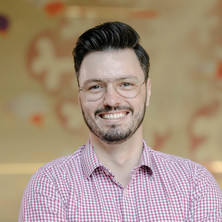
Overview
Background
I am a neuroscientist investigating how cellular signalling and neuron–glia interactions shape brain development, neural circuit function and myelination across the lifespan, and how disruption of these processes contributes to neurodevelopmental and neurodegenerative disorders. My research focuses on neural progenitor cells, oligodendrocyte biology, myelination and neural circuit function, with the broader goal of understanding disease mechanisms and identifying therapeutic targets that can improve the treatment of neurological disorders.
I completed my PhD at the University of Tasmania, investigating ion channel signalling in oligodendrocyte progenitor cells and its role in cell survival, neural circuit function and myelination. I subsequently undertook postdoctoral research at The University of Queensland, including at the Queensland Brain Institute, where I investigated neural progenitor function, neuronal migration and cortical development in models of neurodevelopmental disorders. At Mater Research–UQ, my research has focused on oligodendrocyte dysfunction, myelination and cellular signalling in neurological disease, including multiple sclerosis-like pathology.
Across these research programs, I have developed expertise in developmental and cellular neuroscience, neural progenitor biology, neuron–glia interactions, oligodendrocyte biology, myelination and neural circuit function, using molecular and cellular approaches, advanced microscopy, electrophysiology, animal models and behavioural neuroscience. My broader research direction is to understand how dysfunction across different neural cell populations contributes to disease progression and how this knowledge can be translated into new approaches to prevent, treat or modify neurological disease.
Alongside my research, I contribute to tertiary teaching, student supervision and scientific communication across neuroscience, psychology and biomedical sciences. I am particularly interested in research-informed education and in developing the next generation of scientists by sharing scientific knowledge, technical expertise and practical research skills.
Availability
- Dr Raphael Ricci is:
- Available for supervision
- Media expert
Fields of research
Qualifications
- Bachelor (Honours) of Biological Sciences, Universidade Estadual de Campinas (Unicamp)
- Doctor of Philosophy of Neurosciences, University of Tasmania
- Member, "Science Without Boarders" Alumni, "Science Without Boarders" Alumni
- Member, Australian Neuroscience Society, Australian Neuroscience Society
- Member, International Brain Research Organisation, International Brain Research Organisation
- Member, Society for Neuroscience, Society for Neuroscience
Research interests
-
Cellular mechanisms of brain health and disease
Understanding how cellular and molecular signalling mechanisms regulate brain development, neural circuit function and resilience across the lifespan, and how disruption of these processes contributes to neurological disease. Particular interest centres on how interactions between neural cell populations influence neuronal function, vulnerability and disease progression.
-
Neuron–glia interactions and neural circuit function
Investigating the reciprocal interactions between neurons and glial cells that shape neural circuit development, maintenance and function. Particular emphasis is placed on how neuronal activity, cellular signalling, metabolism and communication between neurons and oligodendrocyte lineage cells influence neural circuit function and neuronal resilience.
-
Oligodendrocyte biology, myelination and neural circuit function
Understanding the cellular and molecular mechanisms that regulate oligodendrocyte progenitor cell proliferation, survival, differentiation and maturation, and how oligodendrocytes support myelination, neural circuit integrity and brain function. My previous work has identified roles for ion channel and glutamate receptor signalling in oligodendrocyte biology, providing a foundation for investigating how cellular signalling influences myelin health and vulnerability to neurological disease.
-
Brain development and neurodevelopmental disorders
Understanding the cellular mechanisms that establish functional neural circuits during brain development, with particular interest in neural progenitor cells, neurogenesis, neuronal migration and neuron–glia interactions. This work examines how disruption of developmental signalling and cellular interactions can alter brain function and contribute to neurodevelopmental disorders, including autism spectrum disorder.
-
Neurodegeneration and neurological disease
Investigating how dysfunction of neural and glial cells contributes to neurodegenerative and neurological disorders, including multiple sclerosis and motor neuron disease. A particular interest is understanding how changes in cellular signalling, myelin biology, lipid metabolism and neuron–glia interactions increase neuronal vulnerability and contribute to disease progression.
-
Therapeutic target discovery and preclinical neuroscience
Translating discoveries in cellular and molecular neuroscience into potential therapeutic targets for neurological disease. This includes identifying disease-associated signalling pathways, establishing their causal contribution using preclinical models, and evaluating whether these pathways can be therapeutically modulated. My broader goal is to bridge fundamental neuroscience and therapeutic discovery by generating preclinical evidence that can inform new approaches to the prevention and treatment of neurological disease.
Research impacts
My research aims to understand how cellular and molecular mechanisms that build, maintain and support the nervous system influence brain function and contribute to neurological disease. I am particularly interested in how neural progenitor cells, oligodendrocytes and their interactions with neurons shape brain development, neural circuit function and myelination, and how disruption of these processes can increase neuronal vulnerability and contribute to disease. This work spans neurodevelopmental and neurodegenerative disorders, including autism spectrum disorder, multiple sclerosis, motor neuron disease and related neurological conditions.
My research has contributed to understanding the cellular mechanisms that regulate the development, maintenance and resilience of the nervous system. During my PhD, I identified an important role for the voltage-gated calcium channel CaV1.2 in the survival of adult oligodendrocyte progenitor cells, providing new insight into how these cells are regulated in the mature brain. Building on this work, my research on the glutamate receptor subunit GluK4 (Grik4) identified a previously unrecognised role for this receptor in oligodendrocyte biology and demonstrated that its loss can protect against demyelination, highlighting Grik4 signalling as a potential target for modulating myelin vulnerability in neurological disease. At the Queensland Brain Institute, I investigated how altered cellular signalling influences neural progenitor proliferation, neurogenesis, neuronal migration and cortical development, providing insights relevant to neurodevelopmental disorders. Together, these research programs have established a broader focus on how cellular signalling and interactions between neural cell populations influence brain development, myelin biology and vulnerability to neurological disease, with potential opportunities for therapeutic intervention.
The longer-term impact of this research is to bridge fundamental neuroscience and therapeutic discovery by identifying cellular mechanisms that make neural circuits vulnerable to disease, determining which pathways can be therapeutically targeted, and generating preclinical evidence to support the development of new treatments. My research is ultimately directed towards translating discoveries in cellular and molecular neuroscience into better approaches to prevent, treat or modify neurological disorders. Alongside research, I am committed to education, mentorship and scientific communication, sharing biomedical knowledge and technical expertise with students, researchers and broader audiences. Through this combination of discovery, translation and education, I aim to contribute to improved understanding and treatment of neurological disease while developing the next generation of biomedical scientists.
Works
Search Professor Raphael Ricci’s works on UQ eSpace
2026
Journal Article
Oxysterol signaling in the central nervous system: cellular mechanisms and implications for neurodegeneration
Ricci, Raphael P., Foo, Cheng Xiang, Ronacher, Katharina and Cullen, Carlie L. (2026). Oxysterol signaling in the central nervous system: cellular mechanisms and implications for neurodegeneration. Frontiers in Molecular Neuroscience, 19 1709065. doi: 10.3389/fnmol.2026.1709065
2025
Conference Publication
SARS-COV-2 infection affects oligodendrocyte lineage cells in the mouse motor cortex
Ricci, R. P., Foo, C. X., Ronacher, K. and Cullen, C. (2025). SARS-COV-2 infection affects oligodendrocyte lineage cells in the mouse motor cortex. XVII European Meeting on Glial Cells in Health and Disease, Marseille, France, 8-11 July 2025. Hoboken, NJ USA: John Wiley & Sons.
2025
Conference Publication
Delaying development myelination results in altered network processing in zebrafish larvae
Lepre, M., Lee, R., Lee, C., Ricci, R., Gasperini, R., Scott, E. K., Young, K. M., Favre-Bulle, I. and Cullen, C. L. (2025). Delaying development myelination results in altered network processing in zebrafish larvae. XVII European Meeting on Glial Cells in Health and Disease, Marseille, France, 8 - 11 July 2025. Hoboken, NJ, United States: John Wiley & Son.
2025
Journal Article
Demyelination produces a shift in the population of cortical neurons that synapse with callosal oligodendrocyte progenitor cells
Summers, Benjamin S., Blizzard, Catherine A., Ricci, Raphael R., Pitman, Kimberley A., Dempsey, Bowen, McMullan, Simon, Sutherland, Brad A., Young, Kaylene M. and Cullen, Carlie L. (2025). Demyelination produces a shift in the population of cortical neurons that synapse with callosal oligodendrocyte progenitor cells. eNeuro, 12 (6) ENEURO.0113-25.2025, 1-22. doi: 10.1523/eneuro.0113-25.2025
2022
Conference Publication
Short-term myelin loss is sufficient to alter neuronal synapses: insight into disease progression in MS
Makowiecki, K., Pepper, R. E., Cullen, C. L., Pitman, K. A., Ricci, R., Blizzard, C., Emery, B. and Young, K. M. (2022). Short-term myelin loss is sufficient to alter neuronal synapses: insight into disease progression in MS. MS Australia Progress in MS Research Scientific Conference, Hobart, TAS, Australia, 4 - 5 April 2022. London, United Kingdom: Sage Publications.
2022
Journal Article
Protocadherin 15 suppresses oligodendrocyte progenitor cell proliferation and promotes motility through distinct signalling pathways
Zhen, Yilan, Cullen, Carlie L., Ricci, Raphael, Summers, Benjamin S., Rehman, Sakina, Ahmed, Zubair M., Foster, Antoinette Y., Emery, Ben, Gasperini, Robert and Young, Kaylene M. (2022). Protocadherin 15 suppresses oligodendrocyte progenitor cell proliferation and promotes motility through distinct signalling pathways. Communications Biology, 5 (1) 511, 511. doi: 10.1038/s42003-022-03470-1
2021
Conference Publication
Myelin influences synaptic plasticity in the adult mouse cortex
Pepper, R. E., Cullen, C. L., Makowiecki, K., Pitman, K. A., Ricci, R., Blizzard, C., Emery, B. and Young, K. M. (2021). Myelin influences synaptic plasticity in the adult mouse cortex. XV European Meeting on Glial Cells in Health and Disease, Marseille, France, 5–9 July 2021. Hoboken, NJ, United States: John Wiley & Sons.
2019
Journal Article
The voltage‐gated calcium channel CaV1.2 promotes adult oligodendrocyte progenitor cell survival in the mouse corpus callosum but not motor cortex
Pitman, Kimberley A., Ricci, Raphael, Gasperini, Robert, Beasley, Shannon, Pavez, Macarena, Charlesworth, Jac, Foa, Lisa and Young, Kaylene M. (2019). The voltage‐gated calcium channel CaV1.2 promotes adult oligodendrocyte progenitor cell survival in the mouse corpus callosum but not motor cortex. Glia, 68 (2), 376-392. doi: 10.1002/glia.23723
2017
Conference Publication
Understanding how voltage-gated calcium signalling regulates oligodendrocyte progenitor cell function in the mature central nervous system
Pitman, Kimberley, Ricci, Raphael, Gasperini, Robert, Charlesworth, Jac, Foa, Lisa and Young, Kaylene M. (2017). Understanding how voltage-gated calcium signalling regulates oligodendrocyte progenitor cell function in the mature central nervous system. Progress in MS Research Conference, Sydney, NSW, Australia, 11-13 October 2017. London, United Kingdom: Sage Publications.
Funding
Current funding
Supervision
Availability
- Dr Raphael Ricci is:
- Available for supervision
Looking for a supervisor? Read our advice on how to choose a supervisor.
Media
Enquiries
Contact Dr Raphael Ricci directly for media enquiries about:
- Autism
- Behaviour
- Brain ageing
- Brain and behaviour
- Brain development
- Brain disorders
- Brain function
- Brain health
- Brain plasticity
- Brain research
- Cognition
- Health research
- Learning
- Medical research
- Memory
- Mental health
- Mental wellbeing
- Multiple sclerosis
- Nervous system
- Neurodegenerative disease
- Neurodevelopment
- Neurological disorders
- Neuroscience
- Science communication
Need help?
For help with finding experts, story ideas and media enquiries, contact our Media team: