
Overview
Background
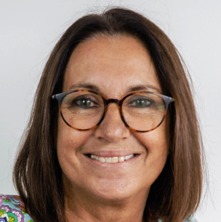
Susan Joy Beetson is a Ngemba computer science and information systems researcher, practitioner, and educator whose work advances Indigenous Knowledges through technology, data, AI, human-centred computing, Indigenous Data Sovereignty, Indigenous Data Governance, social media network analysis, business process transformation, technology provenance, and Indigenous-informed automated decision-making. Susan grew up in the very remote Aboriginal communities of Brewarrina and Gongolgon and brings more than 30 years of corporate computer science, information technology management, and process transformation experience together with a decade of higher education teaching and research across information systems, interactive technologies, human-centred computing, Indigenous studies, and engineering curriculum. She is a Research Academic in the Indigenous Business Hub at The University of Queensland, a Chief Investigator with the Australian Research Council Centre of Excellence for Indigenous Futures, and a Chief Investigator with the iSista Care research program with the Southern Cross University.
Susan’s Culture Hubs research develops community-owned digital infrastructure that enables Aboriginal families and communities to hold, govern, teach, and mobilise cultural and historical Knowledges on their own terms. This work brings together Indigenous Cultural and Intellectual Property, data provenance, digital entrepreneurship, language, cultural learning, repatriation of Knowledges, and community-governed technology design. Rather than positioning Aboriginal Knowledges inside Western-designed systems, the Culture Hubs work begins from Aboriginal authority, Country, kinship, relational accountability, and the rights of Traditional Custodians to determine how Knowledges are stored, accessed, validated, and used across digital environments.
Susan’s PhD research, Ngemba Tracks and Networks, examines culturally different social media network phenomena through a Ngemba lens and extends dominant social network theories that were largely developed through Eurocentric assumptions about identity, connection, interaction, and community. Her doctoral work explores dyadic phenomena, Indigenous self-representation, culturally grounded networking practices, and the social, institutional, and political conditions shaping Aboriginal peoples’ lives online and offline. As a Ngemba researcher grounded in lived experience, Country, and community accountability, Susan critically and reflexively examines virtual, interactive, immersive, and emerging technological spaces, including AI, XR, and other data-driven systems.
A Chief Investigator in the $37.5 million Australian Research Council Centre of Excellence for Indigenous Futures and the $2.46 million NHMRC-GACD SISTACARE Strengthening Health Systems grant, where Susan's leadership spans stakeholder engagement and co-design, digital clinical decision systems, implementation, and quality improvement. She was awarded the Science & Technology Australia's #SuperstarsOfStem program, was named a Women in Technology Australia First Nations Changemaker finalist, and was recognised by Cosmos as one of 52 Indigenous peoples changing the world. Susan is also an inaugural auIGF/Identity Digital Indigenous Fellow in internet policy and governance, a guest academic editor for Information Systems Journal and the Journal of Australian Indigenous Issues, and an invited national and international speaker on Indigenous Knowledges, AI, data governance, digital futures, and Indigenous-led technology design.
Availability
- Ms Susan Beetson is:
- Available for supervision
- Media expert
Fields of research
Qualifications
- Bachelor (Honours), Queensland University of Technology
- Member, Aboriginal and Torres Strait Islander Mathematics Alliance, Aboriginal and Torres Strait Islander Mathematics Alliance
- Member, Australian Computer Society, Australian Computer Society
- Member, Australian Institute of Aboriginal and Torres Strait Islander Studies, Australian Institute of Aboriginal and Torres Strait Islander Studies
- Member, Females in Information Technology and Telecommunications (FITT), Females in Information Technology and Telecommunications (FITT)
- Member, Indigenous Human Rights Network Australia (IHRNA), Indigenous Human Rights Network Australia (IHRNA)
- Member, National Aboriginal and Torres Strait Islander Women's Alliance (NATSIWA), National Aboriginal and Torres Strait Islander Women’s Alliance (NATSIWA)
- Board Member, National Indigenous STEM Professional Network, National Indigenous STEM Professional Network
- Associate Fellow, Women in Information Technology, Queensland, Women in Information Technology, Queensland
Research interests
-
Designing and Developing Culture Hubs
Culture Hubs is an Aboriginal-led research project designing community-governed digital systems grounded in each participating community’s worldviews, Indigenous Knowledges, and cultural authority. The research brings together Knowledge management, AI, security, and enterprise to explore how individuals and communities can care for restricted Knowledges, analyse authorised material, and develop opportunities on terms they determine.
-
Indigenous Data Sovereignty in the Era of Open Health Data
A two-phase, Indigenous-led UQ HERA project that uses a systematic review and qualitative inquiry to examine how IDSov and IDGov are applied to the secondary use of Indigenous health data.
-
Extending our understandings of upskilling and mentoring through social media and computer supported collaborative work environments
This Indigenist research explores dyads in social media network systems when resourcing and maintaining human and business services for Aboriginal community controlled non-profit organisations. To better analyse and understand culturally different social media network dyads, I extended Kane et al.’s (2014) Types of Dyadic Phenomena in social media network analysis with my Aboriginal lens (Beetson’s Types of Dyadic Phenomena). Beetson’s Types of Dyadic Phenomena has an additional tie category: contested space, and tie sub-categories: difference, intent, and power relation.
-
Human Computer Interaction
How we, as humans, interact with the full context of technologies, Knowledges (data), and collaborate within community design environments that embrace the diversity of our distinct every day lived realities.
-
Threshold Learning in Indigenous Engineering and Engineering Education
Supervision of PhD project Aurora Greene, Faculty of Engineering and Information Technology, University of Melbourne. This research project aims to identify threshold learning (including threshold concepts and capabilities) in Indigenous engineering and engineering education.
-
Indigenous Data Governance in Health Systems
Supervision of PhD project Aleena Williams, Faculty of Business, Law, and Economics, Indigenous Business Hub UQ Business School, University of Queensland. This research project explores Data Governance within Pharmaceutical Health systems from the perspective of Indigenous Data Governance and Indigenous Data Sovereignty.
Research impacts
Susan's research advances Indigenous-led technology, data, AI, and digital governance so Aboriginal communities can exercise authority over how Indigenous Knowledges, data, cultural materials, and digital futures are designed, governed, and used.
Across computer science, information systems, human-centred computing, Indigenous Data Sovereignty, and Indigenous Data Governance, her work translates Indigenous priorities into practical digital, research, curriculum, and policy outcomes. This includes community-owned Culture Hubs, Indigenous-informed automated decision-making, technology provenance, health information systems, digital entrepreneurship, and culturally grounded approaches to STEM and engineering education.
Susan's research impact includes:
-
Strengthening Aboriginal community authority over digital cultural infrastructure through Culture Hubs that enable families and Traditional Custodians to govern cultural and historical Knowledges on their own terms.
-
Advancing Indigenous Data Sovereignty and Indigenous Data Governance in health systems, including work on the secondary use of Indigenous health data and the obligations of Western health data systems to Indigenous governance, benefit, authority, and accountability.
-
Contributing to the NHMRC-GACD SISTACARE Strengthening Health Systems grant, which embeds culturally safe smoking and vaping cessation care into routine maternal healthcare for Aboriginal and Torres Strait Islander women across Queensland, New South Wales, and South Australia.
-
Improving digital service design for Indigenous peoples through UX research and co-design work, including Indigenous Business Australia’s new website.
-
Building pathways for Indigenous participation in STEM, computer science, engineering, and emerging technologies through curriculum work, public engagement, mentoring, and school outreach.
-
Influencing national and international conversations on Indigenous Knowledges, AI, internet governance, technology provenance, and Indigenous-led digital futures.
Evidence of impact includes Susan's role as Chief Investigator in the $37.5 million Australian Research Council Centre of Excellence for Indigenous Futures and Chief Investigator on the $2.46 million NHMRC-GACD SISTACARE grant. Her research and engagement have reached Aboriginal and Torres Strait Islander students, communities, universities, government, industry, and international forums. Susan directly engaged more than 275 Aboriginal and Torres Strait Islander school students in STEM activities, contributed to Indigenous engineering and curriculum initiatives, and received letters of appreciation from Ngemba, Ballardong, and Whadjuk Elder Native Title Holders for the conduct and outcomes of her research.
Susan's work is recognised through the Science & Technology Australia Superstars of STEM program, the Women in Technology Australia First Nations Changemaker finalist recognition, the auIGF/Identity Digital inaugural Indigenous Fellowship in internet policy and governance, and recognition by Cosmos as one of 52 Indigenous peoples changing the world. Together, these outcomes show a sustained research impact that moves beyond academic publication into community benefit, cultural authority, health system change, Indigenous-led technology design, and future-focused digital governance.
Works
Search Professor Susan Beetson’s works on UQ eSpace
2026
Other Outputs
What works in employment for Aboriginal and Torres Strait Islander peoples with disability: an Indigenous-led evidence synthesis summary
Cooms, Samantha, Leroy-Dyer, Sharlene and Beetson, Susan (2026). What works in employment for Aboriginal and Torres Strait Islander peoples with disability: an Indigenous-led evidence synthesis summary. Hawthorn, VIC, Australia: Centre for Inclusive Employment. doi: 10.60836/4scd-2253
2026
Book Chapter
Co-designing culturally responsive simulation based learning: AI, First Peoples’ knowledges, and the implications for social work field education
Bennett, Bindi, Loban, Rhett, Beetson, Susan, Evans, Krystal, Dalziel, Matt Victor, Jefferies, Gerard and Harris, Sera (2026). Co-designing culturally responsive simulation based learning: AI, First Peoples’ knowledges, and the implications for social work field education. AI and the disruption of welfare challenges for social work education and practice. (pp. 190-203) edited by Goetz Ottmann and Carolyn Noble. London, United Kingdom: Routledge. doi: 10.4324/9781003673675-15
2026
Conference Publication
WIP: shifting to a strengths-based mindset to center indigenuity in engineering education with a threshold learning framework
Greane, Aurora, Cowled, Craig, Male, Sally, Beetson, Susan and Prpic, Juliana (2026). WIP: Shifting to a Strengths-Based Mindset to Center Indigenuity in Engineering Education with a Threshold Learning Framework. ASEE Conferences. doi: 10.18260/1-2--61141
2025
Conference Publication
Work-in-progress: developing a First Nations Australian engineering threshold learning element inventory & framework
Greane, Aurora L. J. X., Beetson, Susan J., Cowled, Craig J. L., Male, Sally A. and Prpic, Juliana Kaya (2025). Work-in-progress: developing a First Nations Australian engineering threshold learning element inventory & framework. CEEA-ACÉG Conference 2025: Engineers of Tomorrow: Innovation, Sustainability, and Ethics in a Constantly Evolving World, Montreal, Canada, 17-21 June 2025. Winnipeg, Canada: University of Manitoba Libraries. doi: 10.24908/pceea.2025.19694
2025
Book Chapter
Engineering educators and students in pre-liminal and liminal spaces: threshold learning in First Nations Australian engineering education and practice
Greane, Aurora L.J.X., Cowled, Craig J.L., Beetson, Susan J., Prpic, Juliana K. and Male, Sally A. (2025). Engineering educators and students in pre-liminal and liminal spaces: threshold learning in First Nations Australian engineering education and practice. Biennial Threshold Concepts Conference Proceedings. edited by Andrea S. Webb. British Columbia/Yukon: PressBooks.
2022
Journal Article
Ready to Write
Fredericks, Bronwyn, Martin, Kathryn, Warner, Brian, Perkins, Ren, Combo, Troy, McConochie, Emily, Stajic, Janet, Thomson, Amy, Holland, Lorelle, Olssen, Emma, Thompson, Kate, Broderick, Trudi, Gilbert, Stephanie, Murphy, Lyndon, Lee, Natasha, Beetson, Susan, Fraser, Jed, Allan, Hannah and Bunda, Tracey (2022). Ready to Write. Journal of Australian Indigenous Issues, 25 (3-4), 1-10.
2020
Journal Article
Building a digital entrepreneurial platform through local community activity and digital skills with Ngemba First Nation, Australia
Beetson, Susan Joy, Pradhan, Sojen, Gordon, Grace and Ford, Jason (2020). Building a digital entrepreneurial platform through local community activity and digital skills with Ngemba First Nation, Australia. International Indigenous Policy Journal, 11 (1), 1-19. doi: 10.18584/iipj.2020.11.1.10211
2018
Conference Publication
Building Digital Entrepreneurial Platform through Local Community Activity and Digital Skills in Aboriginal Australia
Pradhan, Sojen, Beetson, Susan and Kutay, Cat (2018). Building Digital Entrepreneurial Platform through Local Community Activity and Digital Skills in Aboriginal Australia. ACIS2018, Sydney, Australia, 3-5 December 2018. Sydney, Australia: ACIS2018.org.
2008
Journal Article
Quality and efficacy of the Indigenous Tutorial Assistance Scheme (ITAS) for university students
Whatman, Sue, McLaughlin, Juliana, Willsteed, Susan, Tyhuis, Annie and Beetson, Susan (2008). Quality and efficacy of the Indigenous Tutorial Assistance Scheme (ITAS) for university students. Australian Journal of Indigenous Education, 37 (S1), 118-130. doi: 10.1375/S1326011100000454
2007
Conference Publication
ITAS in a virtual environment – quality and efficacy in Indigenous tertiary student support
Beetson, Susan, Tyhuis, Annie, Willsteed, Susan, McLaughlin, Juliana and Whatman, Sue (2007). ITAS in a virtual environment – quality and efficacy in Indigenous tertiary student support. Indigenous Studies and Indigenous Knowledge ISIK Conference, Sydney NSW Australia, 11-13 July 2007. Brisbane, Qld, Australia: Oodgeroo Unit, Queensland University of Technology.
Funding
Current funding
Supervision
Availability
- Ms Susan Beetson is:
- Available for supervision
Looking for a supervisor? Read our advice on how to choose a supervisor.
Available projects
-
Design and Develop Knowledge Hubs
This Culture Hubs research program brings together Aboriginal community governance, sovereignty, computing, cybersecurity, AI, environmental Knowledge, and business research. Working with Ngemba, Ballardong, and Whadjuk communities, the program investigates how digital systems can be designed according to distinct Aboriginal worldviews, Indigenous Knowledges, and cultural authority.
We welcome expressions of interest from students who want to develop a research project in one or more of the following areas:
-
Computing and information systems: Digital architecture, Knowledge organisation, databases, and accessible interfaces.
-
Cybersecurity and digital trust: Identity, access, secure systems, and verifiable records of how information is handled.
-
AI and data science: Responsible analysis of language, audio, video, and environmental information, including evaluation of bias and accuracy.
-
Environmental research: Ways to work with observations and assessments gathered by Aboriginal Knowledge holders and rangers.
-
Business and social enterprise: Models through which individuals and communities can develop offerings and engage with potential clients on terms they determine.
Projects may suit undergraduate research, honours, postgraduate coursework, or higher degree research students. The topic and scope of each opportunity will depend on the student’s interests and skills, available supervision, and the priorities and approval of the participating community.
This is an opportunity to investigate the design of technology itself: the assumptions it carries, the decisions it makes possible, and how it can be shaped by Aboriginal governance and Knowledge practices. Students interested in contributing to this work are invited to get in touch for a conversation about potential research questions and project arrangements.
To express interest: Please send a short outline of your area of study, relevant skills, and the research area that interests you to s.beetson@uq.edu.au
-
Media
Enquiries
Contact Ms Susan Beetson directly for media enquiries about:
- Aboriginal Artificial Intelligence
- algorithmic bias
- Artificial Intelligence and machine learning evaluation
- automated decision-making
- co-design
- community-governed digital infrastructure
- cultural authority
- Culture Hubs
- cybersecurity and access governance
- data provenance
- digital archives
- environmental Knowledge systems
- health information systems
- human-centred computing
- human–computer interaction
- Indigenous cultural and intellectual property
- Indigenous Data Governance
- Indigenous Data Sovereignty
- Indigenous digital entrepreneurship
- Indigenous digital self-determination
- Indigenous Knowledges
- Indigenous-led technology design
- information systems
- knowledge organisation
- social network analysis
- UX research
Need help?
For help with finding experts, story ideas and media enquiries, contact our Media team: