
Overview
Background
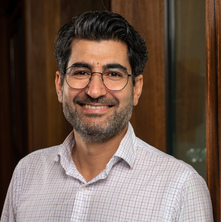
Dr Abbas Shafiee is leading a multidisciplinary program in Regenerative Dermatology and Biofabrication. His research integrates stem cell biology, organoid technology, and bioengineering to develop advanced human models and regenerative therapies for skin repair and disease.
Dr Shafiee completed his PhD in stem cell biology, discovering a previously unknown vascular stem cell population, termed the Meso-Endothelial Bipotent Progenitor, and mapping its molecular signatures (Stem Cell Reports 2018). This seminal discovery advanced the understanding of human vascular development and regeneration.
He subsequently joined Distinguished Professor Dietmar Hutmacher’s group, where he developed humanised tissue-engineered bone and tumour models that mimic cancer metastasis and tumor–stroma interactions. These models (International Journal of Cancer (2018), Biomaterials (2018, 2020), and Bone Research (2019), Acta Biomaterialia (2020), Bone (2022)) provided unprecedented insights into human-specific cancer biology and preclinical drug testing.
Dr Shafiee joined Metro North Health (MNH) in 2020 to lead a research program and develop, implement, and evaluate the applications of 3D printing, scanning, cell therapies, and biofabrication technologies in skin wound settings, and dermatology research. His team has developed vascularised and immune-integrated skin organoids and 3D-printed bioengineered grafts that accelerate wound closure with minimal scarring (Biomaterials 2021; Advanced Healthcare Materials (2022; 2025); Small 2024; Burns & Trauma 2025). These breakthroughs underpin new patient-specific skin disease models, and drug screening platforms (Acta Biomaterialia 2025). He is the lead inventor on an international patent protecting an Optimized Method for Generating Human Skin Organoids (WO/2025/097221), which forms the foundation for emerging commercial and translational partnerships. This body of work led to the establishment of the International Consortium for Organoid Research in Dermatology, a global network accelerating discovery and translation in skin biology, rare genetic skin diseases, and regenerative dermatology.
Dr Shafiee has secured >AUD $2.4M as Chief Investigator (>AUD $1.1M as CIA) in competitive research funding from national, international, philanthropic, and industry-supported schemes. Dr Shafiee has supervised more than ten PhD, Masters, honours students and contributed to multiple professional, editorial, and scientific leadership roles. He has authored over 88 peer-reviewed publications (>5,500 citations, h-index 40) and delivered more than 50 invited, keynote, and plenary presentations internationally. He serves on multiple professional and editorial boards, including Australian Wound & Tissue Repair Society (AWTRS), Burns & Trauma, and Engineered Regeneration. In recognition of his pioneering contributions to regenerative medicine and science communication, he has received multiple honours, including the 2024 Frazer Institute Rising Star Award, the 2025 AWTRS EMCR Award, and the 2025 Queensland Young Tall Poppy Science Award, and selection as a 2026 TEDx speaker, recognising his leadership in translating complex science to global audiences.
He actively engages with the media, schools, and community programs to inspire future scientists and raise public awareness of regenerative medicine and organoid technologies. His outreach has reached millions nationwide through major media coverage (e.g., The Australian, 7NEWS, ABC NEWS) .
Research areas:
- Human iPSC-derived skin organoids and skin-on-chip models
- Vascularization and immune integration in skin tissue engineering
- Rare genetic skin diseases and personalized regenerative therapies
- Translational biofabrication and wound healing technologies
- Organoid-based preclinical drug discovery platforms
Honours, Masters, and PhD opportunities are available for motivated students interested in regenerative dermatology, biofabrication, and organoid biology.
Availability
- Dr Abbas Shafiee is:
- Available for supervision
- Media expert
Fields of research
Qualifications
- Doctor of Philosophy, Queensland University of Technology
Research interests
-
Hydrogels, Biomaterials and Tissue Engineering
-
Stem Cell Bioengineering
-
Wound care
-
Vascular development and homeostasis
Research impacts
Dr Abbas Shafiee’s research is driving innovation in regenerative medicine and skin health, improving how we treat wounds, burns, and genetic skin disorders. By combining stem cell biology, organoid technology, and 3D biofabrication, his work is enabling the development of safer, more effective, and ethically sound therapies that can transform patient care.
His team has created the world’s first vascularised and immune-integrated skin organoids, living “mini-skins” that mimic real human tissue (The Australian). These organoids are being used to test new drugs, understand rare genetic conditions, and design personalised skin grafts, reducing dependence on animal testing and speeding up the path from discovery to treatment (7NEWS).
Dr Shafiee’s research directly benefits society by:
- Advancing wound healing technologies that promote faster, scar-free recovery for patients.
- Supporting pharmaceutical and biotech industries in developing reliable preclinical testing platforms aligned with new international regulations (e.g., FDA Modernization Act 2.0).
- Building global collaborations through the International Consortium for Organoid Research in Dermatology to accelerate therapies for skin diseases.
- Training the next generation of researchers in regenerative medicine and dermatology.
His discoveries have led to a patent filing, CRC and MRFF-funded projects, and collaborations with major industry partners. With more than 5,500 citations (h-index 40) and recognition as a 2025 Queensland Young Tall Poppy Science Award winner, his work is positioning Australia as a global leader in human organoid and biofabrication innovation, contributing to improving health outcomes, reducing healthcare costs, and creating new opportunities for the biotechnology sector.
Works
Search Professor Abbas Shafiee’s works on UQ eSpace
2013
Journal Article
A comparison of pluripotency and differentiation status of four mesenchymal adult stem cells
Adegani, Fatemeh Jamshidi, Langroudi, Lida, Arefian, Ehsan, Shafiee, Abbas, Dinarvand, Peyman and Soleimani, Masoud (2013). A comparison of pluripotency and differentiation status of four mesenchymal adult stem cells. Molecular Biology Reports, 40 (5), 3693-3703. doi: 10.1007/s11033-012-2445-7
2013
Journal Article
Novel approach to reduce postsurgical adhesions to a minimum: administration of losartan plus atorvastatin intraperitoneally
Dinarvand, Peyman, Farhadian, Shirin, Seyedjafari, Ehsan, Shafiee, Abbas, Jalali, Arash, Sanaei-rad, Parisa, Dinarvand, Babak and Soleimani, Masoud (2013). Novel approach to reduce postsurgical adhesions to a minimum: administration of losartan plus atorvastatin intraperitoneally. Journal of Surgical Research, 181 (1), 91-98. doi: 10.1016/j.jss.2012.05.035
2013
Journal Article
Comparative immunomodulatory properties of adipose-derived mesenchymal stem cells conditioned media from BALB/c, C57BL/6, and DBA mouse strains
Hashemi, Seyed Mahmoud, Hassan, Zuhair Mohammad, Pourfathollah, Ali Akbar, Soudi, Sara, Shafiee, Abbas and Soleimani, Masoud (2013). Comparative immunomodulatory properties of adipose-derived mesenchymal stem cells conditioned media from BALB/c, C57BL/6, and DBA mouse strains. Journal of Cellular Biochemistry, 114 (4), 955-965. doi: 10.1002/jcb.24437
2013
Journal Article
Isolation, characterization, and mesodermic differentiation of stem cells from adipose tissue of camel (Camelus dromedarius)
Mohammadi-Sangcheshmeh, Abdollah, Shafiee, Abbas, Seyedjafari, Ehsan, Dinarvand, Peyman, Toghdory, Abdolhakim, Bagherizadeh, Iman, Schellander, Karl, Cinar, Mehmet Ulas and Soleimani, Masoud (2013). Isolation, characterization, and mesodermic differentiation of stem cells from adipose tissue of camel (Camelus dromedarius). In Vitro Cellular and Developmental Biology-Animal, 49 (2), 147-154. doi: 10.1007/s11626-012-9578-9
2013
Journal Article
In vitro immunomodulatory properties of osteogenic and adipogenic differentiated mesenchymal stem cells isolated from three inbred mouse strains
Hashemi, Seyed Mahmoud, Hassan, Zuhair Mohammad, Pourfathollah, Ali Akbar, Soudi, Sara, Shafiee, Abbas and Soleimani, Masoud (2013). In vitro immunomodulatory properties of osteogenic and adipogenic differentiated mesenchymal stem cells isolated from three inbred mouse strains. Biotechnology Letters, 35 (1), 135-142. doi: 10.1007/s10529-012-1051-z
2012
Journal Article
Genetic modification of mesenchymal stem cells to overexpress CXCR4 and CXCR7 does not improve the homing and therapeutic potentials of these cells in experimental acute kidney injury
Gheisari, Yousof, Azadmanesh, Kayhan, Ahmadbeigi, Naser, Nassiri, Seyed Mahdi, Golestaneh, Azadeh Fahim, Naderi, Mahmood, Vasei, Mohammad, Arefian, Ehsan, Mirab-Samiee, Siamak, Shafiee, Abbas, Soleimani, Masoud and Zeinali, Sirous (2012). Genetic modification of mesenchymal stem cells to overexpress CXCR4 and CXCR7 does not improve the homing and therapeutic potentials of these cells in experimental acute kidney injury. Stem Cells and Development, 21 (16), 2969-2980. doi: 10.1089/scd.2011.0588
2012
Journal Article
The aggregate nature of human mesenchymal stromal cells in native bone marrow
Ahmadbeigi, Naser, Soleimani, Masoud, Babaeijandaghi, Farshad, Mortazavi, Yousef, Gheisari, Yousof, Vasei, Mohammad, Azadmanesh, Kayhan, Rostami, Shahrbano, Shafiee, Abbas and Nardi, Nance Beyer (2012). The aggregate nature of human mesenchymal stromal cells in native bone marrow. Cytotherapy, 14 (8), 917-924. doi: 10.3109/14653249.2012.689426
2012
Journal Article
miRNAs expressed differently in cancer stem cells and cancer cells of human gastric cancer cell line MKN-45
Golestaneh, Azadeh Fahim, Atashi, Amir, Langroudi, Lida, Shafiee, Abbas, Ghaemi, Nasser and Soleimani, Masoud (2012). miRNAs expressed differently in cancer stem cells and cancer cells of human gastric cancer cell line MKN-45. Cell Biochemistry and Function, 30 (5), 411-418. doi: 10.1002/cbf.2815
2012
Journal Article
Effects of low level laser therapy on proliferation and neurotrophic factor gene expression of human schwann cells in vitro
Yazdani, Saeed Oraee, Golestaneh, Azadeh Fahim, Shafiee, Abbas, Hafizi, Maryam, Omrani, Hossein-Ali Ghelichnia and Soleimani, Masoud (2012). Effects of low level laser therapy on proliferation and neurotrophic factor gene expression of human schwann cells in vitro. Journal of Photochemistry and Photobiology, B: Biology, 107 (1), 9-13. doi: 10.1016/j.jphotobiol.2011.11.001
2011
Journal Article
Electrospun nanofiber-based regeneration of cartilage enhanced by mesenchymal stem cells
Shafiee, Abbas, Soleimani, Masoud, Chamheidari, Gholamreza Abedi, Seyedjafari, Ehsan, Dodel, Masumeh, Atashi, Amir and Gheisari, Yousof (2011). Electrospun nanofiber-based regeneration of cartilage enhanced by mesenchymal stem cells. Journal of Biomedical Materials Research. Part A, 99A (3), 467-478. doi: 10.1002/jbm.a.33206
2011
Journal Article
Nasal septum-derived multipotent progenitors: a potent source for stem cell-based regenerative medicine
Shafiee, Abbas, Kabiri, Mahboubeh, Ahmadbeigi, Naser, Yazdani, Saeed Oraee, Mojtahed, Mohammad, Amanpour, Saeid and Soleimani, Masoud (2011). Nasal septum-derived multipotent progenitors: a potent source for stem cell-based regenerative medicine. Stem Cells and Development, 20 (12), 2077-2091. doi: 10.1089/scd.2010.0420
2011
Journal Article
Cytotoxicity evaluation of 63S bioactive glass and bone-derived hydroxyapatite particles using human bone-marrow stem cells
Doostmohammadi, Ali, Monshi, Ahmad, Salehi, Rasoul, Fathi, Mohammad Hossein, Seyedjafari, Ehsan, Shafiee, Abbas and Soleimani, Masoud (2011). Cytotoxicity evaluation of 63S bioactive glass and bone-derived hydroxyapatite particles using human bone-marrow stem cells. Biomedical Papers, 155 (4), 323-326. doi: 10.5507/bp.2011.028
2011
Journal Article
New approach to bone tissue engineering: simultaneous application of hydroxyapatite and bioactive glass coated on a poly(L-lactic acid) scaffold
Dinaryand, Peyman, Seyedjafari, Ehsan, Shafiee, Abbas, Jandaghi, Ali Babaei, Doostmohammadi, Ali, Fathi, Mohammad Hossein, Farhadian, Shirin and Soleimani, Masoud (2011). New approach to bone tissue engineering: simultaneous application of hydroxyapatite and bioactive glass coated on a poly(L-lactic acid) scaffold. ACS Applied Materials and Interfaces, 3 (11), 4518-4524. doi: 10.1021/am201212u
2011
Journal Article
Dormant phase and multinuclear cells: two key phenomena in early culture of murine bone marrow mesenchymal stem cells
Ahmadbeigi, Naser, Soleimani, Masoud, Gheisari, Yousof, Vasei, Mohammad, Amanpour, Saeid, Bagherizadeh, Iman, Shariati, Seyed Ali Mohammad, Azadmanesh, Kayhan, Amini, Sepideh, Shafiee, Abbas, Arabkari, Vahid and Nardi, Nance Beyer (2011). Dormant phase and multinuclear cells: two key phenomena in early culture of murine bone marrow mesenchymal stem cells. Stem Cells and Development, 20 (8), 1337-1347. doi: 10.1089/scd.2010.0266
2011
Journal Article
A comparison between osteogenic differentiation of human unrestricted somatic stem cells and mesenchymal stem cells from bone marrow and adipose tissue
Shafiee, Abbas, Seyedjafari, Ehsan, Soleimani, Masoud, Ahmadbeigi, Naser, Dinarvand, Peyman and Ghaemi, Nasser (2011). A comparison between osteogenic differentiation of human unrestricted somatic stem cells and mesenchymal stem cells from bone marrow and adipose tissue. Biotechnology Letters, 33 (6), 1257-1264. doi: 10.1007/s10529-011-0541-8
2011
Journal Article
Early spontaneous immortalization and loss of plasticity of rabbit bone marrow mesenchymal stem cells
Ahmadbeigi, N., Shafiee, A., Seyedjafari, E., Gheisari, Y., Vassei, M., Amanpour, S., Amini, S., Bagherizadeh, I. and Soleimani, M. (2011). Early spontaneous immortalization and loss of plasticity of rabbit bone marrow mesenchymal stem cells. Cell Proliferation, 44 (1), 67-74. doi: 10.1111/j.1365-2184.2010.00731.x
2011
Journal Article
Poly (epsilon-caprolactone) nanofibrous ring surrounding a polyvinyl alcohol hydrogel for the development of a biocompatible two-part artificial cornea
Bakhshandeh, Haleh, Soleimani, Masoud, Hosseini, Saied Shah, Hashemi, Hassan, Shabani, Iman, Shafiee, Abbas, Nejad, Amir Houshang Behesht, Erfan, Mohammad, Dinarvand, Rassoul and Atyabi, Fatemeh (2011). Poly (epsilon-caprolactone) nanofibrous ring surrounding a polyvinyl alcohol hydrogel for the development of a biocompatible two-part artificial cornea. International journal of nanomedicine, 6, 1509-1515. doi: 10.2147/IJN.S19011
2011
Journal Article
A collagen-poly(vinyl alcohol) nanofiber scaffold for cartilage repair
Abedi, Gholamreza, Sotoudeh, Amir, Soleymani, Masoud, Shafiee, Abbas, Mortazavi, Pejhman and Aflatoonian, Mohammad Reza (2011). A collagen-poly(vinyl alcohol) nanofiber scaffold for cartilage repair. Journal of Biomaterials Science-Polymer Edition, 22 (18), 2445-2455. doi: 10.1163/092050610x540503
Supervision
Availability
- Dr Abbas Shafiee is:
- Available for supervision
Looking for a supervisor? Read our advice on how to choose a supervisor.
Available projects
-
Skin stem cell biology
Stem cell-based therapies have been proposed to improve wound healing outcomes. Although epidermal stem/progenitor cells have shown potential to improve wound healing through re-epithelialization, they have limited ability to overcome the challenges of full skin regeneration. In this project, we are aiming to isolate and characterize different types of stem/progenitor cells from skin and use them to develop in vitro skin substitute, or utilize stem cells for cutaneous wound restoration. Projects are available for undergraduate, postgraduate (MPhil, MSc and PhD) or medical students.
In this project, we utilize following techniques: Cell and tissue culture; Immunostaining; Flow cytometry; Real time - PCR and other molecular biology assays; Animal experiment; Histology.
Keywords: Skin; Stem cell; Organoid; Pluripotent stem cells; Wound healing.
Relevant research:
1- https://onlinelibrary.wiley.com/doi/full/10.1002/smll.202304879
2- https://academic.oup.com/biomethods/article/9/1/bpae019/7633922?login=true
3- https://onlinelibrary.wiley.com/doi/full/10.1002/adhm.202201626
-
Improving Skin Regeneration through the Design and Development of New Skin Grafts
Treatment of cutaneous scar after wounding or trauma has a significant emotional and social impact on the patients and represents a major health burden, costing the economy billions of dollars annually. Using 3D printing and biofabrication technologies we are aiming to develop new dressings and skin grafts which favour skin wound healing. Projects are available for undergraduate, postgraduate (MPhil, MSc and PhD) or medical students.
In this project, we utilize following techniques: Cell and tissue culture; Scaffold fabrication; 3D printing; Immunostaining; Flow cytometry; Real time - PCR and other molecular biology assays; Animal experiment; Histology.
Keywords: Skin; Wound healing; Hydrogel; Polymers; 3D printing; Vascularization; Bioprinting; Stem cells; Keratinosyte, Dressing; Dermal grafts.
Relevant research:
1- https://www.sciencedirect.com/science/article/pii/S0142961220308048
2- https://onlinelibrary.wiley.com/doi/full/10.1002/smll.202101384
-
Development of novel therapeutic targets and biomarkers for wound healing
The body's reparative response to skin wounds differs between different individuals. While some people's bodies simply respond to the treatment others do not. In this project we are aiming to understand the genetic factors which effect the wound healing and ultimately develop candidate biomarkers with potential clinical value. Using the genomics, and proteomics approaches we are aiming to discover novel therapeutic targets for skin regeneration. Projects are available for undergraduate, postgraduate (MPhil, MSc and PhD) or medical students.
In this project, we utilize genomics, proteomics and bioinformatic technologies.
Supervision history
Current supervision
-
Doctor Philosophy
Understanding Melanoma Vascularisation to prevent metastasis
Principal Advisor
Other advisors: Professor Kiarash Khosrotehrani
-
Doctor Philosophy
A human iPSC organoid platform for interrogating genotype¿phenotype relationships in inflammatory skin disease.
Principal Advisor
Other advisors: Professor Kiarash Khosrotehrani
-
Doctor Philosophy
Non-equilibrium atmospheric plasma for sterilisation and wound healing
Associate Advisor
Other advisors: Professor Nidhi Bansal, Associate Professor Rahul Sharma, Dr Carolyn Jacobs
-
Doctor Philosophy
Targeting epigenetic regulation to overcome immunotherapy resistance in cutaneous melanoma
Associate Advisor
Other advisors: Professor Nikolas Haass, Professor Kiarash Khosrotehrani, Associate Professor Jason Lee
Media
Enquiries
Contact Dr Abbas Shafiee directly for media enquiries about:
- 3D Printing
- Biomaterials
- Dermatology
- Regenerative Medicine
- Skin
- Stem cell
- Wound Healing
Need help?
For help with finding experts, story ideas and media enquiries, contact our Media team: