
Overview
Background
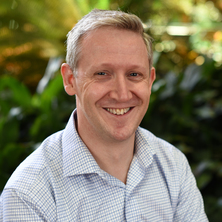
Associate Professor James Wells is an innovative cancer immunologist who leads the Novel Cancer Therapeutics Group at the Frazer Institute and serves as Director of Immunology at the Dermatology Research Centre, University of Queensland. His research programme is focused on deciphering the fundamental mechanisms that govern immune responses within tumours and translating those discoveries into transformative new cancer therapies. He has a particular track record in skin cancer and an expanding portfolio of novel therapeutic approaches across oncology more generally.
A/Prof Wells has secured over $7.6 million in competitive funding as lead investigator from the NHMRC, ARC, US Department of Defense, Cancer Council Queensland, NFMRI, and international sources. His body of work spans 111 peer-reviewed publications cited over 3,115 times, with 5.8% ranking in the top 5% most cited globally (SciVal). His influence extends across 26 disciplines beyond medicine, including biochemistry, genetics, molecular biology, and neuroscience, and his research has been featured 42 times in leading media outlets including New Scientist, Forbes, MedicalXpress, and EurekAlert!. He holds two patents and has completed advanced commercialisation training through QUT's Bridge Program.
Biography
A/Prof Wells completed his PhD in cancer immunotherapy at King's College London, followed by postdoctoral training at Harvard Medical School, where he founded a new orthopaedic oncology research programme, secured independent grant funding, and was recognised with a Research Excellence Award and promotion to Faculty as Instructor of Orthopaedic Surgery within just two years. In 2011, he was recruited to the University of Queensland by Professor Ian Frazer AC, co-inventor of the human papillomavirus vaccine, to establish and lead an independent cancer immunology laboratory, supported by a prestigious five-year Perpetual Trustees Fellowship.
Key Discoveries
A hallmark achievement of A/Prof Wells’ laboratory is the discovery and patenting of Q-2361 — a world-first topical antagonist of the immunosuppressive drugs tacrolimus, sirolimus, and everolimus. Q-2361 is a first-in-class drug candidate designed to combat the huge issue of skin cancer development in immune suppressed solid organ transplant recipients through the reactivation of anti-tumour CD8 T cells locally in the skin without disturbing systemic immunosuppression or risking graft survival. Preclinical proof-of-concept studies demonstrated 100% tumour regression, and Q-2361 is now advancing through formulation towards IND-enabling studies and first-in-human clinical trials. This research programme was supported by an NHMRC Development Grant and an NFMRI grant. Building on this translational foundation, A/Prof Wells now leads multiple drug discovery programmes targeting cancer beyond the skin.
Research Training
A/Prof Wells has trained more than 55 students and trainees, including PhD graduates who have gone on to postdoctoral positions at the NIH, UCSF, The Scripps Research Institute, and the University of Cambridge. He serves as Vice President of the Molecular and Experimental Pathology Society of Australasia and regularly reviews grants for the NHMRC, ARC, MRC (UK), Wellcome Trust/DBT India Alliance, and Health Research Council of New Zealand.
Research Areas
- Cancer immunology and immune-based cancer therapy
- First-in-class drug discovery and translational oncology
- T cell regulation in tumours and the immune microenvironment
- Targeted therapy for immunosuppressed patients with skin cancer
- Novel metabolic and immune targets for pan-cancer therapeutics
James would like to thank the granting bodies and philanthropic partnerships that make his goal of delivering new and effective cancer drugs possible.
Availability
- Associate Professor James Wells is:
- Available for supervision
Qualifications
- Bachelor of Science, University of Edinburgh
- Doctor of Philosophy, University College London
Research impacts
A/Prof Wells' research is driving a new paradigm in cancer treatment — one that harnesses, restores, and re-engineers the immune system to fight tumours across a range of cancer types and patient populations. His near-term translational focus is Q-2361, which addresses a critical unmet need for the ~50,000 Australians living as organ transplant recipients who face dramatically elevated skin cancer risk but cannot access existing immunotherapies without risking graft rejection. His longer-term pipeline targets fundamental vulnerabilities shared by many cancers, with the potential to benefit patients in the broader immune-competent population.
His work benefits patients and society by:
- Delivering first-in-class therapeutics: advancing Q-2361 towards clinical trial, and developing novel drug candidates targeting cancer cell metabolism and T cell activation with broad oncological relevance.
- Unlocking new therapeutic mechanisms: identifying previously unrecognised immune regulatory pathways, novel T cell subsets, and druggable targets applicable across multiple cancer types and treatment modalities.
- Accelerating translation to the clinic: driving Q-2361 through formulation development with industry partner Formulytica Pty Ltd.
- Generating foundational discoveries: producing 111 peer-reviewed publications cited across 88 countries and 160 leading institutions, including Harvard Medical School, Johns Hopkins, King's College London, and the Mayo Clinic.
- Building Australia's research capacity: training the next generation of cancer immunologists, with mentees who have collectively attracted over 20 competitive grants and fellowships, including NIH Cancer Research Training Fellowships, MRFF awards, and ARC DECRAs.
- Engaging the broader community: contributing to national and international conversations about cancer, immunotherapy, and transplant medicine through 42 media appearances in outlets reaching audiences worldwide.
Works
Search Professor James Wells’s works on UQ eSpace
2023
Journal Article
Mono-phosphorylation at Ser4 of barrier-to-autointegration factor (Banf1) significantly reduces its DNA binding capability by inducing critical changes in its local conformation and DNA binding surface
Tang, Ming, Suraweera, Amila, Nie, Xuqiang, Li, Zilin, Lai, Pinglin, Wells, James W., O’Byrne, Kenneth J., Woods, Robert J, Bolderson, Emma and Richard, Derek J (2023). Mono-phosphorylation at Ser4 of barrier-to-autointegration factor (Banf1) significantly reduces its DNA binding capability by inducing critical changes in its local conformation and DNA binding surface. Physical Chemistry Chemical Physics, 25 (36), 24657-24677. doi: 10.1039/d3cp02302h
2023
Journal Article
Enhanced hydrophobicity of CeO2 thin films: role of the morphology, adsorbed species and crystallography
Mamedov, D., Asland, A. C., Cooil, S. P., Rost, H. I., Bakkelund, J., Allaniyazov, A., Wells, J. W. and Karazhanov, S. (2023). Enhanced hydrophobicity of CeO2 thin films: role of the morphology, adsorbed species and crystallography. Materials Today Communications, 35 106323, 1-8. doi: 10.1016/j.mtcomm.2023.106323
2023
Journal Article
Liposomal formulations of a polyleucine–antigen conjugate as therapeutic vaccines against cervical cancer
Firdaus, Farrhana Z., Bartlett, Stacey, Hussein, Waleed M., Lu, Lantian, Wright, Quentin, Huang, Wenbin, Nahar, Ummey J., Yang, Jieru, Khongkow, Mattaka, Veitch, Margaret, Koirala, Prashamsa, Ruktanonchai, Uracha R., Monteiro, Michael J., Gonzalez Cruz, Jazmina L., Stephenson, Rachel J., Wells, James W., Toth, Istvan and Skwarczynski, Mariusz (2023). Liposomal formulations of a polyleucine–antigen conjugate as therapeutic vaccines against cervical cancer. Pharmaceutics, 15 (2) 602, 1-15. doi: 10.3390/pharmaceutics15020602
2022
Journal Article
Cytokine/Chemokine assessment as a complementary diagnostic tool for inflammatory skin diseases
Liu, Timothy J., Lin, Lynlee L., McMeniman, Erin, Wu, Jason, Kao, Yung-Ching, Kumari, Snehlata, Boyle, Glen M., Wells, James W., Soyer, H. Peter and Gonzalez-Cruz, Jazmina L. (2022). Cytokine/Chemokine assessment as a complementary diagnostic tool for inflammatory skin diseases. Frontiers in Immunology, 13 1028435, 1-8. doi: 10.3389/fimmu.2022.1028435
2022
Journal Article
Assessment of patient-to-patient and intra-individual human abdominal skin immune cell variability
Veitch, Margaret, Layt, Craig, Raymond, Emma, Croaker, Andrew and Wells, James (2022). Assessment of patient-to-patient and intra-individual human abdominal skin immune cell variability. Archives of Medical Science, 18 (6), 1683-1688. doi: 10.5114/aoms/155183
2022
Journal Article
Prevalence of AAV2.5 neutralizing antibodies in synovial fluid and serum of patients with osteoarthritis
Abdul, Temilola Y., Hawse, Gresin P., Smith, Jay, Sellon, Jacob L., Abdel, Matthew P., Wells, James W., Coenen, Michael J., Evans, Christopher H. and De La Vega, Rodolfo E. (2022). Prevalence of AAV2.5 neutralizing antibodies in synovial fluid and serum of patients with osteoarthritis. Gene Therapy, 30 (7-8), 1-5. doi: 10.1038/s41434-022-00326-5
2021
Other Outputs
Compound for prevention or treatment of a skin cancer or skin precancer
Wells, James, Dymock, Brian William, Harvey, Andrew, Cock, Terrie-Anne, Pouwer, Rebecca and Beaumont, Kimberley (2021). Compound for prevention or treatment of a skin cancer or skin precancer. WO2021248189.
2021
Journal Article
Cellular responses at the application site of a high-density microarray patch delivering an influenza vaccine in a randomized, controlled phase I clinical trial
Depelsenaire, Alexandra C. I., Witham, Katey, Veitch, Margaret, Wells, James W., Anderson, Christopher D., Lickliter, Jason D., Rockman, Steve, Bodle, Jesse, Treasure, Peter, Hickling, Julian, Fernando, Germain J. P. and Forster, Angus H. (2021). Cellular responses at the application site of a high-density microarray patch delivering an influenza vaccine in a randomized, controlled phase I clinical trial. PLoS One, 16 (7) e0255282, e0255282. doi: 10.1371/journal.pone.0255282
2021
Journal Article
Targeting Replication Stress Using CHK1 Inhibitor Promotes Innate and NKT Cell Immune Responses and Tumour Regression
Proctor, Martina, Gonzalez Cruz, Jazmina L., Daignault-Mill, Sheena M., Veitch, Margaret, Zeng, Bijun, Ehmann, Anna, Sabdia, Muhammed, Snell, Cameron, Keane, Colm, Dolcetti, Riccardo, Haass, Nikolas K., Wells, James W. and Gabrielli, Brian (2021). Targeting Replication Stress Using CHK1 Inhibitor Promotes Innate and NKT Cell Immune Responses and Tumour Regression. Cancers, 13 (15) 3733, 1-19. doi: 10.3390/cancers13153733
2021
Journal Article
PD-1 and beyond to activate T cells in cutaneous squamous cell cancers: the case for 4-1BB and VISTA antibodies in combination therapy
Wright, Quentin, Gonzalez Cruz, Jazmina L., Wells, James W. and Leggatt, Graham R. (2021). PD-1 and beyond to activate T cells in cutaneous squamous cell cancers: the case for 4-1BB and VISTA antibodies in combination therapy. Cancers, 13 (13) 3310, 3310. doi: 10.3390/cancers13133310
2021
Journal Article
Evolution of cancer vaccines—challenges, achievements and future directions
Tay, Ban Qi, Wright, Quentin, Ladwa, Rahul, Perry, Christopher, Leggatt, Graham, Simpson, Fiona, Wells, James W., Panizza, Benedict J., Frazer, Ian H. and Cruz, Jazmina L. G. (2021). Evolution of cancer vaccines—challenges, achievements and future directions. Vaccines, 9 (5) 535, 535. doi: 10.3390/vaccines9050535
2021
Journal Article
IFN-γ critically enables the intratumoural infiltration of CXCR3+ CD8+ T cells to drive squamous cell carcinoma regression
Zeng, Zhen, Veitch, Margaret, Kelly, Gabrielle A., Tuong, Zewen K., Cruz, Jazmina G., Frazer, Ian H. and Wells, James W. (2021). IFN-γ critically enables the intratumoural infiltration of CXCR3+ CD8+ T cells to drive squamous cell carcinoma regression. Cancers, 13 (9) 2131, 2131. doi: 10.3390/cancers13092131
2021
Journal Article
Healing of sub-critical femoral osteotomies in mice is unaffected by tacrolimus and deletion of recombination activating gene 1
Liu, T-Y, Bartnikowski, M., Wu, A. C., Veitch, M., Sokolowski, K. A., Millard, S. M., Pettit, A. R., Glatt, V., Evans, C. H. and Wells, J. W. (2021). Healing of sub-critical femoral osteotomies in mice is unaffected by tacrolimus and deletion of recombination activating gene 1. European Cells and Materials, 41, 345-354. doi: 10.22203/eCM.v041a22
2021
Journal Article
Investigating T cell immunity in cancer: achievements and prospects
Zeng, Zhen, Chew, Hui Yi, Cruz, Jazmina G., Leggatt, Graham R. and Wells, James W. (2021). Investigating T cell immunity in cancer: achievements and prospects. International Journal of Molecular Sciences, 22 (6) 2907, 1-17. doi: 10.3390/ijms22062907
2021
Journal Article
Manganese-doped silica-based nanoparticles promote the efficacy of antigen-specific immunotherapy
Chandra, Janin, Teoh, Siok Min, Kuo, Paula, Tolley, Lynn, Bashaw, Abate Assefa, Tuong, Zewen Kelvin, Liu, Yang, Chen, Zibin, Wells, James W., Yu, Chengzhong, Frazer, Ian H. and Yu, Meihua (2021). Manganese-doped silica-based nanoparticles promote the efficacy of antigen-specific immunotherapy. The Journal of Immunology, 206 (5), ji2000355-998. doi: 10.4049/jimmunol.2000355
2020
Journal Article
Peripheral tolerance checkpoints imposed by ubiquitous antigen expression limit antigen-specific B cell responses under strongly immunogenic conditions
Brooks, Jeremy F., Murphy, Peter R., Barber, James E. M., Wells, James W. and Steptoe, Raymond J. (2020). Peripheral tolerance checkpoints imposed by ubiquitous antigen expression limit antigen-specific B cell responses under strongly immunogenic conditions. The Journal of Immunology, 205 (5), ji2000377-1247. doi: 10.4049/jimmunol.2000377
2020
Journal Article
Safety, tolerability and immunogenicity of influenza vaccination with a high-density microarray patch: results from a randomized, controlled phase I clinical trial
Forster, Angus H, Witham, Katey, Depelsenaire, Alexandra C.I., Veitch, Margaret, Wells, James W., Wheatley, Adam, Pryor, Melinda, Lickliter, Jason, Francis, Barbara, Rockman, Steve, Bodle, Jesse, Treasure, Peter, Hickling, Julian and Fernando, Germain J.P. (2020). Safety, tolerability and immunogenicity of influenza vaccination with a high-density microarray patch: results from a randomized, controlled phase I clinical trial. PLoS Medicine, 17 (3) e1003024, e1003024. doi: 10.1371/journal.pmed.1003024
2020
Journal Article
Endocytosis Inhibition in Humans to Improve Responses to ADCC-Mediating Antibodies
Chew, Hui Yi, De Lima, Priscila O., Gonzalez Cruz, Jazmina L., Banushi, Blerida, Echejoh, Godwins, Hu, Lingbo, Joseph, Shannon R., Lum, Benedict, Rae, James, O'Donnell, Jake S., Merida de Long, Lilia, Okano, Satomi, King, Brigid, Barry, Rachael, Moi, Davide, Mazzieri, Roberta, Thomas, Ranjeny, Souza-Fonseca-Guimaraes, Fernando, Foote, Matthew, McCluskey, Adam, Robinson, Phillip J., Frazer, Ian H., Saunders, Nicholas A., Parton, Robert G., Dolcetti, Riccardo, Cuff, Katharine, Martin, Jennifer H., Panizza, Benedict, Walpole, Euan ... Simpson, Fiona (2020). Endocytosis Inhibition in Humans to Improve Responses to ADCC-Mediating Antibodies. Cell, 180 (5), 895-914.e27. doi: 10.1016/j.cell.2020.02.019
2020
Journal Article
Poly(amino acids) as a potent self-adjuvanting delivery system for peptide-based nanovaccines
Skwarczynski, Mariusz, Zhao, Guangzu, Boer, Jennifer C., Ozberk, Victoria, Azuar, Armira, Gonzalez Cruz, Jazmina, Kumar Giddam, Ashwini, Khalil, Zeinab G., Pandey, Manisha, Shibu, Mohini A., Hussein, Waleed M., Nevagi, Reshma J., Batzloff, Michael R., Wells, James W., Capon, Robert J., Plebanski, Magdalena, Good, Michael F. and Toth, Istvan (2020). Poly(amino acids) as a potent self-adjuvanting delivery system for peptide-based nanovaccines. Science Advances, 6 (5) eaax2285, eaax2285. doi: 10.1126/sciadv.aax2285
2020
Journal Article
Transfer of antigen-encoding bone marrow under immune-preserving conditions deletes mature antigen-specific B cells in recipients and inhibits antigen-specific antibody production
Brooks, Jeremy F., Barber, James E.M., Davies, Janet M., Wells, James W. and Steptoe, Raymond J. (2020). Transfer of antigen-encoding bone marrow under immune-preserving conditions deletes mature antigen-specific B cells in recipients and inhibits antigen-specific antibody production. Cytotherapy, 22 (8), 436-444. doi: 10.1016/j.jcyt.2020.04.041
Funding
Current funding
Supervision
Availability
- Associate Professor James Wells is:
- Available for supervision
Looking for a supervisor? Read our advice on how to choose a supervisor.
Supervision history
Current supervision
-
Doctor Philosophy
The impact of arginine treatment and arginine depletion on the adoptive transfer of melanoma-specific T cells
Principal Advisor
-
Doctor Philosophy
Investigating molecular mechanisms of Q-2361 as an enhancer of T cell activation
Principal Advisor
Other advisors: Associate Professor Graham Leggatt
-
Doctor Philosophy
Piecing it Together: Deciphering T cell Receptor-Peptide Recognition
Principal Advisor
Completed supervision
-
2026
Doctor Philosophy
Understanding the role of myeloid lineages in early melanoma establishment
Principal Advisor
Other advisors: Associate Professor Arutha Kulasinghe
-
2025
Doctor Philosophy
Role of Regulatory T cells in the Establishment of UV-induced Skin Tumours
Principal Advisor
-
2025
Doctor Philosophy
Understanding the regulatory nature of double-positive CD4/CD8¿ß T cells
Principal Advisor
-
2024
Master Philosophy
Diagnostic differentiation of inflammatory skin conditions by patterns of inflammatory marker expression
Principal Advisor
Other advisors: Professor Peter Soyer
-
2021
Doctor Philosophy
The role of CD8+ T cells in the regression of squamous cell carcinoma
Principal Advisor
Other advisors: Emeritus Professor Ian Frazer
-
2020
Master Philosophy
Resistance to therapy in metastatic melanoma: Comparing the expression of immune inhibitory modulators in vitro with refractory metastatic melanoma patients.
Principal Advisor
Other advisors: Honorary Professor Li Li
-
2019
Doctor Philosophy
EGFR and Treg targeted therapies for cutaneous squamous cell carcinoma
Principal Advisor
Other advisors: Professor Fiona Simpson, Dr Shannon Joseph
-
2017
Doctor Philosophy
Uncovering novel regulators of CD8+ T-cell function in the skin
Principal Advisor
Other advisors: Emeritus Professor Ian Frazer
-
2016
Doctor Philosophy
Evaluating CD8+ T-cell function in skin and squamous cell carcinoma following systemic suppression with rapamycin and tacrolimus.
Principal Advisor
Other advisors: Emeritus Professor Ian Frazer, Professor Fiona Simpson
-
2026
Doctor Philosophy
The Immunomodulatory Role of Damage-Associated Molecular Patterns in Inflammatory Skin Conditions
Associate Advisor
Other advisors: Associate Professor Graham Leggatt, Dr Snehlata Kumari
-
2025
Doctor Philosophy
Spatial Multi-Omics Analysis of HPV-Positive Head and Neck Cancer: Tumour Oncogenesis and Discovery of Targeted Therapies
Associate Advisor
Other advisors: Emeritus Professor Ian Frazer, Dr Quan Nguyen
-
2021
Doctor Philosophy
Endocytosis Inhibition to Improve Responses to Antibody Dependent Cellular Cytotoxicity-Mediating Antibodies
Associate Advisor
Other advisors: Professor Michael Piper, Professor Ben Panizza, Professor Fiona Simpson
-
2019
Doctor Philosophy
Dynamin inhibition increases monoclonal antibody-dependent cellular cytotoxicity and reverses signalling pathway resistance
Associate Advisor
Other advisors: Professor Fiona Simpson
-
2019
Doctor Philosophy
Defining B cell tolerance checkpoints and their modulation by immunotherapy
Associate Advisor
-
2017
Master Philosophy
In-vitro imaging of the interactions between CD8+T cells and lymphoma cells using an Eµ-myc lymphoma model
Associate Advisor
-
2017
Master Philosophy
The role of immune regulators in induced drug tolerant cells (IDTC) in melanoma
Associate Advisor
-
2016
Doctor Philosophy
Manipulation of Epidermal Growth Factor Receptor (EGFR) Trafficking to Improve anti-EGFR Monoclonal Antibody Therapies
Associate Advisor
Other advisors: Professor Fiona Simpson
-
Master Philosophy
The chemokine content of Squamous Cell Carcinoma
Associate Advisor
Other advisors: Professor Peter Soyer
Media
Enquiries
For media enquiries about Associate Professor James Wells's areas of expertise, story ideas and help finding experts, contact our Media team: