
Overview
Background
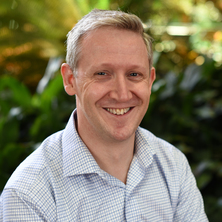
Associate Professor James Wells is an innovative cancer immunologist who leads the Novel Cancer Therapeutics Group at the Frazer Institute and serves as Director of Immunology at the Dermatology Research Centre, University of Queensland. His research programme is focused on deciphering the fundamental mechanisms that govern immune responses within tumours and translating those discoveries into transformative new cancer therapies. He has a particular track record in skin cancer and an expanding portfolio of novel therapeutic approaches across oncology more generally.
A/Prof Wells has secured over $7.6 million in competitive funding as lead investigator from the NHMRC, ARC, US Department of Defense, Cancer Council Queensland, NFMRI, and international sources. His body of work spans 111 peer-reviewed publications cited over 3,115 times, with 5.8% ranking in the top 5% most cited globally (SciVal). His influence extends across 26 disciplines beyond medicine, including biochemistry, genetics, molecular biology, and neuroscience, and his research has been featured 42 times in leading media outlets including New Scientist, Forbes, MedicalXpress, and EurekAlert!. He holds two patents and has completed advanced commercialisation training through QUT's Bridge Program.
Biography
A/Prof Wells completed his PhD in cancer immunotherapy at King's College London, followed by postdoctoral training at Harvard Medical School, where he founded a new orthopaedic oncology research programme, secured independent grant funding, and was recognised with a Research Excellence Award and promotion to Faculty as Instructor of Orthopaedic Surgery within just two years. In 2011, he was recruited to the University of Queensland by Professor Ian Frazer AC, co-inventor of the human papillomavirus vaccine, to establish and lead an independent cancer immunology laboratory, supported by a prestigious five-year Perpetual Trustees Fellowship.
Key Discoveries
A hallmark achievement of A/Prof Wells’ laboratory is the discovery and patenting of Q-2361 — a world-first topical antagonist of the immunosuppressive drugs tacrolimus, sirolimus, and everolimus. Q-2361 is a first-in-class drug candidate designed to combat the huge issue of skin cancer development in immune suppressed solid organ transplant recipients through the reactivation of anti-tumour CD8 T cells locally in the skin without disturbing systemic immunosuppression or risking graft survival. Preclinical proof-of-concept studies demonstrated 100% tumour regression, and Q-2361 is now advancing through formulation towards IND-enabling studies and first-in-human clinical trials. This research programme was supported by an NHMRC Development Grant and an NFMRI grant. Building on this translational foundation, A/Prof Wells now leads multiple drug discovery programmes targeting cancer beyond the skin.
Research Training
A/Prof Wells has trained more than 55 students and trainees, including PhD graduates who have gone on to postdoctoral positions at the NIH, UCSF, The Scripps Research Institute, and the University of Cambridge. He serves as Vice President of the Molecular and Experimental Pathology Society of Australasia and regularly reviews grants for the NHMRC, ARC, MRC (UK), Wellcome Trust/DBT India Alliance, and Health Research Council of New Zealand.
Research Areas
- Cancer immunology and immune-based cancer therapy
- First-in-class drug discovery and translational oncology
- T cell regulation in tumours and the immune microenvironment
- Targeted therapy for immunosuppressed patients with skin cancer
- Novel metabolic and immune targets for pan-cancer therapeutics
James would like to thank the granting bodies and philanthropic partnerships that make his goal of delivering new and effective cancer drugs possible.
Availability
- Associate Professor James Wells is:
- Available for supervision
Qualifications
- Bachelor of Science, University of Edinburgh
- Doctor of Philosophy, University College London
Research impacts
A/Prof Wells' research is driving a new paradigm in cancer treatment — one that harnesses, restores, and re-engineers the immune system to fight tumours across a range of cancer types and patient populations. His near-term translational focus is Q-2361, which addresses a critical unmet need for the ~50,000 Australians living as organ transplant recipients who face dramatically elevated skin cancer risk but cannot access existing immunotherapies without risking graft rejection. His longer-term pipeline targets fundamental vulnerabilities shared by many cancers, with the potential to benefit patients in the broader immune-competent population.
His work benefits patients and society by:
- Delivering first-in-class therapeutics: advancing Q-2361 towards clinical trial, and developing novel drug candidates targeting cancer cell metabolism and T cell activation with broad oncological relevance.
- Unlocking new therapeutic mechanisms: identifying previously unrecognised immune regulatory pathways, novel T cell subsets, and druggable targets applicable across multiple cancer types and treatment modalities.
- Accelerating translation to the clinic: driving Q-2361 through formulation development with industry partner Formulytica Pty Ltd.
- Generating foundational discoveries: producing 111 peer-reviewed publications cited across 88 countries and 160 leading institutions, including Harvard Medical School, Johns Hopkins, King's College London, and the Mayo Clinic.
- Building Australia's research capacity: training the next generation of cancer immunologists, with mentees who have collectively attracted over 20 competitive grants and fellowships, including NIH Cancer Research Training Fellowships, MRFF awards, and ARC DECRAs.
- Engaging the broader community: contributing to national and international conversations about cancer, immunotherapy, and transplant medicine through 42 media appearances in outlets reaching audiences worldwide.
Works
Search Professor James Wells’s works on UQ eSpace
2019
Journal Article
Cytokine/chemokine profiles in squamous cell carcinoma correlate with precancerous and cancerous disease stage
Tuong, Zewen, Lewandowski, Andrew, Bridge, Jennifer, Gonzalez-Cruz, Jazmina, Yamada, Miko, Lambie, Duncan, Lewandowski, Richard, Steptoe, Raymond, Leggatt, Graham, Simpson, Fiona, Frazer, Ian, Soyer, Peter and Wells, James W. (2019). Cytokine/chemokine profiles in squamous cell carcinoma correlate with precancerous and cancerous disease stage. Scientific Reports, 9 (1) 17754, 17754. doi: 10.1038/s41598-019-54435-0
2019
Journal Article
Editorial: Insights into biomarkers, cytokines, and chemokines in skin cancer
Barrett, Lucy W., Gray, Elin S., Wells, James W. and Waithman, Jason (2019). Editorial: Insights into biomarkers, cytokines, and chemokines in skin cancer. Frontiers in Medicine, 6 199, 199. doi: 10.3389/fmed.2019.00199
2019
Journal Article
Bacillus anthracis Protective Antigen Shows High Specificity for a UV Induced Mouse Model of Cutaneous Squamous Cell Carcinoma
Crawford, Theo, Fletcher, Nicholas, Veitch, Margaret, Gonzalez Cruz, Jazmina L., Pett, Nicola, Brereton, Ian, Wells, James W., Mobli, Mehdi and Tesiram, Yasvir (2019). Bacillus anthracis Protective Antigen Shows High Specificity for a UV Induced Mouse Model of Cutaneous Squamous Cell Carcinoma. Frontiers in Medicine, 6 (FEB) 22, 22. doi: 10.3389/fmed.2019.00022
2019
Conference Publication
Antigen-encoding bone marrow deletes mature antigen-specific B cells in recipients and inhibits antigen-specific antibody production
Steptoe, R. J., Brooks, J. F. and Wells, J. W. (2019). Antigen-encoding bone marrow deletes mature antigen-specific B cells in recipients and inhibits antigen-specific antibody production. ESGCT 27th Annual Congress in collaboration with SETGyc Meeting, Barcelona Spain, 22-25 October 2019 . New Rochelle, NY, United States: Mary Anne Liebert.
2019
Conference Publication
The involvement of IFN-gamma and CXCR3 in the CD8(+) T-cell-mediated regression of squamous cell carcinoma
Zeng, Z., Cruz, J. G., Pett, N., Veitch, M., Frazer, I. H. and Wells, J. W. (2019). The involvement of IFN-gamma and CXCR3 in the CD8(+) T-cell-mediated regression of squamous cell carcinoma. 17th International Congress of Immunology (IUIS), Beijing, Peoples R China, 19-23 October 2019. Weinheim, Germany: Wiley.
2018
Journal Article
Liposomal formulation of polyacrylate-peptide conjugate as a new vaccine candidate against cervical cancer
Khongkow, Mattaka, Liu, Tzu-yu, Bartlett, Stacey, Hussein, Waleed M., Nevagi, Reshma, Jia, Zhongfan, Monteiro, Michael J., Wells, James, Ruktanonchai, Uracha Rungsardthong, Skwarczynski, Mariusz and Toth, Istvan (2018). Liposomal formulation of polyacrylate-peptide conjugate as a new vaccine candidate against cervical cancer. Precision Nanomedicine, 1 (3), 183-193. doi: 10.33218/prnano1(3).181003.1
2018
Journal Article
Cytokines, chemokines, and other biomarkers of response for checkpoint inhibitor therapy in skin cancer
Bridge, Jennifer A., Lee, James C., Daud, Adil, Wells, James W. and Bluestone, Jeffrey A. (2018). Cytokines, chemokines, and other biomarkers of response for checkpoint inhibitor therapy in skin cancer. Frontiers in Medicine, 5 (DEC) 351, 351. doi: 10.3389/fmed.2018.00351
2018
Journal Article
The role of CXCR3 and its chemokine ligands in skin disease and cancer
Kuo, Paula T., Zeng, Zhen, Salim, Nazhifah, Mattarollo, Stephen, Wells, James W. and Leggatt, Graham R. (2018). The role of CXCR3 and its chemokine ligands in skin disease and cancer. Frontiers in Medicine, 5 (SEP) 271, 271. doi: 10.3389/fmed.2018.00271
2018
Journal Article
An ex vivo human tumour assay reveals distinct patterns of EGFR trafficking in squamous cell carcinoma correlating to therapeutic outcomes
Joseph, Shannon R., Gaffney, Daniel, Barry, Rachael, Hu, Lingbo, Banushi, Blerida, Wells, James W., Lambie, Duncan, Strutton, Geoff, Porceddu, Sandro V., Burmeister, Bryan, Leggatt, Graham R., Schaider, Helmut, Dolcetti, Riccardo, Frazer, Ian H., Saunders, Nicholas A., Foote, Matthew, Soyer, H. Peter and Simpson, Fiona (2018). An ex vivo human tumour assay reveals distinct patterns of EGFR trafficking in squamous cell carcinoma correlating to therapeutic outcomes. Journal of Investigative Dermatology, 139 (1), 213-223. doi: 10.1016/j.jid.2018.06.190
2018
Journal Article
Clinically-relevant rapamycin treatment regimens enhance CD8+ effector memory T cell function in the skin and allow their infiltration into cutaneous squamous cell carcinoma
Jung, Ji-Won, Veitch, Margaret, Bridge, Jennifer A., Overgaard, Nana H., Cruz, Jazmina L., Linedale, Richard, Franklin, Michael E., Saunders, Nicholas A., Simpson, Fiona, Frazer, Ian H., Steptoe, Raymond J. and Wells, James W. (2018). Clinically-relevant rapamycin treatment regimens enhance CD8+ effector memory T cell function in the skin and allow their infiltration into cutaneous squamous cell carcinoma. OncoImmunology, 7 (9) e1479627, 1-16. doi: 10.1080/2162402X.2018.1479627
2018
Journal Article
Tetramer-based identification of naïve antigen-specific B cells within a polyclonal repertoire
Brooks, Jeremy F., Liu, Xiao, Davies, Janet M., Wells, James W. and Steptoe, Raymond J. (2018). Tetramer-based identification of naïve antigen-specific B cells within a polyclonal repertoire. European Journal of Immunology, 48 (7), 1251-1254. doi: 10.1002/eji.201747447
2018
Journal Article
Characterization of 7A7, an anti-mouse EGFR monoclonal antibody proposed to be the mouse equivalent of cetuximab
He, Xuzhi, Cruz, Jazmina L., Joseph, Shannon, Pett, Nicola, Chew, Hui Yi, Tuong, Zewen K., Okano, Satomi, Kelly, Gabrielle, Veitch, Margaret, Simpson, Fiona and Wells, James W. (2018). Characterization of 7A7, an anti-mouse EGFR monoclonal antibody proposed to be the mouse equivalent of cetuximab. Oncotarget, 9 (15), 12250-12260. doi: 10.18632/oncotarget.24242
2018
Conference Publication
Dendritic cell-targeted self-antigen restrains autoreactive B cells by deletion and anergy
Brooks, J., Davies, J., Wells, J. and Steptoe, R. (2018). Dendritic cell-targeted self-antigen restrains autoreactive B cells by deletion and anergy. 15th International Symposium on Dendritic Cells (DC), Aachen, Germany, 10-14 June 2018 . Weinheim, Germany: Wiley.
2017
Journal Article
Re-educating immunity in respiratory allergies: the potential for hematopoietic stem cell-mediated gene therapy
Brooks, Jeremy F, Davies, Janet M, Wells, James W and Steptoe, Raymond J (2017). Re-educating immunity in respiratory allergies: the potential for hematopoietic stem cell-mediated gene therapy. Journal of Molecular Medicine (Berlin, Germany), 96 (1), 21-30. doi: 10.1007/s00109-017-1611-8
2017
Journal Article
CD4+CD8β+ double-positive T cells in skin-draining lymph nodes respond to inflammatory signals from the skin
Overgaard, Nana H., Cruz, Jazmina L., Bridge, Jennifer A., Nel, Hendrik J., Frazer, Ian H., La Gruta, Nicole K., Blumenthal, Antje, Steptoe, Raymond J. and Wells, James W. (2017). CD4+CD8β+ double-positive T cells in skin-draining lymph nodes respond to inflammatory signals from the skin. Journal of Leukocyte Biology, 102 (3), 837-844. doi: 10.1189/jlb.1AB0217-065R
2017
Journal Article
Overcoming resistance to targeted therapy with immunotherapy and combination therapy for metastatic melanoma
Keller, Hilary R., Zhang, Xin, Li, Li, Schaider, Helmut and Wells, James W. (2017). Overcoming resistance to targeted therapy with immunotherapy and combination therapy for metastatic melanoma. Oncotarget, 8 (43), 75675-75686. doi: 10.18632/oncotarget.18523
2017
Journal Article
Sirolimus increases T-cell abundance in the sun exposed skin of kidney transplant recipients
Burke, Michael Thomas, Sambira Nahum, Lauren C., Isbel, Nicole M., Carroll, Robert P., Soyer, Hans Peter, Francis, Ross, Bridge, Jennifer Anne, Hawley, Carmel, Oliver, Kimberly, Staatz, Christine E. and Wells, James William (2017). Sirolimus increases T-cell abundance in the sun exposed skin of kidney transplant recipients. Transplantation Direct, 3 (7), e171. doi: 10.1097/TXD.0000000000000694
2017
Journal Article
Short-course rapamycin treatment enables engraftment of immunogenic gene-engineered bone marrow under low-dose irradiation to permit long-term immunological tolerance
Bhatt, Kunal H., Rudraraju, Rajeev, Brooks, Jeremy F., Jung, Ji-Won, Galea, Ryan, Wells, James W. and Steptoe, Raymond J. (2017). Short-course rapamycin treatment enables engraftment of immunogenic gene-engineered bone marrow under low-dose irradiation to permit long-term immunological tolerance. Stem Cell Research and Therapy, 8 (1) 57, 57. doi: 10.1186/s13287-017-0508-3
2017
Journal Article
DNA vaccine encoding HPV16 oncogenes E6 and E7 induces potent cell-mediated and humoral immunity which protects in tumor challenge and drives E7-expressing skin graft rejection
Chandra, Janin, Dutton, Julie L., Li, Bo, Woo, Wai-Ping, Xu, Yan, Tolley, Lynn K., Yong, Michelle, Wells, James W., Leggatt, Graham R., Finlayson, Neil and Frazer, Ian H. (2017). DNA vaccine encoding HPV16 oncogenes E6 and E7 induces potent cell-mediated and humoral immunity which protects in tumor challenge and drives E7-expressing skin graft rejection. Journal of Immunotherapy, 40 (2), 62-70. doi: 10.1097/CJI.0000000000000156
2016
Journal Article
Interaction between living bone particles and rhBMP-2 in large segmental defect healing in the rat femur
Liu, Fangjun, Wells, James W., Porter, Ryan M., Glatt, Vaida, Shen, Zhenxin, Schinhan, Martina, Ivkovic, Alan, Vrahas, Mark S., Evans, Christopher H. and Ferreira, Elisabeth (2016). Interaction between living bone particles and rhBMP-2 in large segmental defect healing in the rat femur. Journal of Orthopaedic Research, 34 (12), 2137-2145. doi: 10.1002/jor.23255
Funding
Current funding
Supervision
Availability
- Associate Professor James Wells is:
- Available for supervision
Looking for a supervisor? Read our advice on how to choose a supervisor.
Supervision history
Current supervision
-
Doctor Philosophy
Piecing it Together: Deciphering T cell Receptor-Peptide Recognition
Principal Advisor
Other advisors: Professor Brandon Wainwright
-
Doctor Philosophy
The impact of arginine treatment and arginine depletion on the adoptive transfer of melanoma-specific T cells
Principal Advisor
-
Doctor Philosophy
Investigating molecular mechanisms of Q-2361 as an enhancer of T cell activation
Principal Advisor
Other advisors: Associate Professor Graham Leggatt
Completed supervision
-
2026
Doctor Philosophy
Understanding the role of myeloid lineages in early melanoma establishment
Principal Advisor
Other advisors: Associate Professor Arutha Kulasinghe
-
2025
Doctor Philosophy
Role of Regulatory T cells in the Establishment of UV-induced Skin Tumours
Principal Advisor
-
2025
Doctor Philosophy
Understanding the regulatory nature of double-positive CD4/CD8¿ß T cells
Principal Advisor
-
2024
Master Philosophy
Diagnostic differentiation of inflammatory skin conditions by patterns of inflammatory marker expression
Principal Advisor
Other advisors: Professor Peter Soyer
-
2021
Doctor Philosophy
The role of CD8+ T cells in the regression of squamous cell carcinoma
Principal Advisor
Other advisors: Emeritus Professor Ian Frazer
-
2020
Master Philosophy
Resistance to therapy in metastatic melanoma: Comparing the expression of immune inhibitory modulators in vitro with refractory metastatic melanoma patients.
Principal Advisor
Other advisors: Honorary Professor Li Li
-
2019
Doctor Philosophy
EGFR and Treg targeted therapies for cutaneous squamous cell carcinoma
Principal Advisor
Other advisors: Professor Fiona Simpson, Dr Shannon Joseph
-
2017
Doctor Philosophy
Uncovering novel regulators of CD8+ T-cell function in the skin
Principal Advisor
Other advisors: Emeritus Professor Ian Frazer
-
2016
Doctor Philosophy
Evaluating CD8+ T-cell function in skin and squamous cell carcinoma following systemic suppression with rapamycin and tacrolimus.
Principal Advisor
Other advisors: Emeritus Professor Ian Frazer, Professor Fiona Simpson
-
2026
Doctor Philosophy
The Immunomodulatory Role of Damage-Associated Molecular Patterns in Inflammatory Skin Conditions
Associate Advisor
Other advisors: Associate Professor Graham Leggatt, Dr Snehlata Kumari
-
2025
Doctor Philosophy
Spatial Multi-Omics Analysis of HPV-Positive Head and Neck Cancer: Tumour Oncogenesis and Discovery of Targeted Therapies
Associate Advisor
Other advisors: Emeritus Professor Ian Frazer, Dr Quan Nguyen
-
2021
Doctor Philosophy
Endocytosis Inhibition to Improve Responses to Antibody Dependent Cellular Cytotoxicity-Mediating Antibodies
Associate Advisor
Other advisors: Professor Michael Piper, Professor Ben Panizza, Professor Fiona Simpson
-
2019
Doctor Philosophy
Dynamin inhibition increases monoclonal antibody-dependent cellular cytotoxicity and reverses signalling pathway resistance
Associate Advisor
Other advisors: Professor Fiona Simpson
-
2019
Doctor Philosophy
Defining B cell tolerance checkpoints and their modulation by immunotherapy
Associate Advisor
-
2017
Master Philosophy
In-vitro imaging of the interactions between CD8+T cells and lymphoma cells using an Eµ-myc lymphoma model
Associate Advisor
-
2017
Master Philosophy
The role of immune regulators in induced drug tolerant cells (IDTC) in melanoma
Associate Advisor
-
2016
Doctor Philosophy
Manipulation of Epidermal Growth Factor Receptor (EGFR) Trafficking to Improve anti-EGFR Monoclonal Antibody Therapies
Associate Advisor
Other advisors: Professor Fiona Simpson
-
Master Philosophy
The chemokine content of Squamous Cell Carcinoma
Associate Advisor
Other advisors: Professor Peter Soyer
Media
Enquiries
For media enquiries about Associate Professor James Wells's areas of expertise, story ideas and help finding experts, contact our Media team: