
Overview
Background
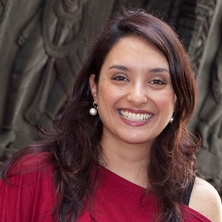
Adriana Díaz (she/her/ella) works at the intersections of language, power, and pedagogy, asking what becomes possible when language education is approached as an unfinished, decolonial, and hopeful practice of becoming otherwise. Born in Argentina and now living and working on the unceded lands of the Turrbal and Jagera Peoples, her work critically examines the colonial, patriarchal, and monolingual structures embedded in curricula and classrooms. In response, she cultivates inclusive, empowering, and critically reflexive pedagogies that honour plurality and relationality.
With over two decades of experience in multilingual and intercultural education, Adriana’s scholarship, teaching, and leadership seek to unsettle dominant paradigms while nurturing more equitable and generative approaches to language learning. Drawing on critical pedagogy, intersectional feminism, and decolonial thought, she traces raciolinguistic and ideological patterns that shape educational practice and works collaboratively to reimagine their possibilities.
Deeply committed to collective transformation, she supports and (un)learns alongside fellow language educators and scholars, co-creating pedagogical approaches that are responsive, dialogic, and grounded in shared responsibility. Her work invites ongoing inquiry into how we teach, learn, and live with language in ways that are just, liberatory, and yet always emergent.
Availability
- Dr Adriana Diaz is:
- Not available for supervision
Fields of research
Qualifications
- Bachelor of Arts, Griffith University
- Bachelor (Honours), Griffith University
- Doctor of Philosophy, Griffith University
Research interests
-
Critical, Decolonial Language Pedagogies
Approaches to language learning and teaching that challenge traditional, Eurocentric views of 'language,' prioritizing social justice, inclusivity, and equity through a critical examination of power structures, cultural hierarchies, and historical contexts that have marginalised certain languages and knowledge systems.
-
Intercultural language learning
Educational approach that fosters critical reflection on cultural diversity, aiming to build communicative competence and intercultural sensitivity essential for effective interaction in a globalised world.
-
Critical Translation Studies
A lens through which to advance language studies as a socially situated act that reflects and influences power dynamics, cultural representation, and ideology. This perspective views translation as a transformative process, highlighting issues of ethics, agency, and cultural bias, and urging a critical awareness of its role in shaping narratives.
Works
Search Professor Adriana Diaz’s works on UQ eSpace
2017
Book Chapter
Prologue
Dasli, Maria and Diaz, Adriana (2017). Prologue. The critical turn in language and intercultural communication pedagogy: theory, research and practice. (pp. xiii-xxiv) edited by Maria Dasli and Adriana Raquel Díaz. New York, NY United States: Taylor & Francis.
2017
Book Chapter
Epilogue
Dasli, Maria and Diaz, Adriana Raquel (2017). Epilogue. The critical turn in language and intercultural communication: Pedagogy theory, research and practice. (pp. 217-228) edited by Maria Dasli and Adriana Raquel Díaz. New York, NY United States: Routledge. doi: 10.4324/9781315667294
2017
Book
The critical turn in language and intercultural communication pedagogy: theory, research and practice
Maria Dasli and Adriana Raquel Diaz eds. (2017). The critical turn in language and intercultural communication pedagogy: theory, research and practice. Routledge Studies in Language and Intercultural Communication, New York, United States: Taylor & Francis. doi: 10.4324/9781315667294
2016
Other Outputs
Languages literature review: Senior syllabus redevelopment
Iwashita, Noriko, Rochecouste, Judith, Diaz, Adriana, Hanna, Barbara, Kennett, Belinda and Kim, Sun Hee Ok (2016). Languages literature review: Senior syllabus redevelopment. South Brisbane, Australia: Queensland Curriculum and Assessment Authority.
2016
Journal Article
Intercultural language teaching and learning
Diaz, Adriana Raquel (2016). Intercultural language teaching and learning. Language and Intercultural Communication, 16 (1), 117-119. doi: 10.1080/14708477.2015.1059551
2016
Book Chapter
Exploring the professional chasm in exam-driven English language education contexts
Guo, Xuhong, Diaz, Adriana and Liyanage, Indika (2016). Exploring the professional chasm in exam-driven English language education contexts. Global language policies and local educational practices and cultures. (pp. 215-232) edited by Shirley O'Neill and Henriette van Rensburg. Blue Mounds, WI United States: Deep University Press.
2016
Journal Article
TELL-ING IT LIKE IT IS: Practical implications from a critical stance on technology-enhanced language learning
Diaz, Adriana and Hortiguera, Hugo (2016). TELL-ING IT LIKE IT IS: Practical implications from a critical stance on technology-enhanced language learning. Revista de Lenguas para Fines Específicos, 22 (1), 54-79. doi: 10.20420/rlfe.2016.0090
2016
Book Chapter
Uncertainty and reluctance in teaching taboo language: a case study of an experienced teacher of English as an additional language
Guo, Xuhong, Liyanage, Indika, Bartlett, Brendan, Walker, Tony and Diaz, Adriana (2016). Uncertainty and reluctance in teaching taboo language: a case study of an experienced teacher of English as an additional language. Global language policies and local educational practices and cultures. (pp. 233-243) edited by Shirley O'Neill and Henriette van Rensburg. Blue Mounds, WI United States: Deep University Press.
2016
Book Chapter
Re-envisioning teacher education programmes for international students: towards an emancipatory and transformative educational stance
Liyanage, Indika, Diaz, Adriana and Gurney, Laura (2016). Re-envisioning teacher education programmes for international students: towards an emancipatory and transformative educational stance. Sociological and philosophical perspectives on education in the Asia-Pacific Region. (pp. 165-178) edited by Chi-Ming Lam and Jae Park. Singapore: Springer. doi: 10.1007/978-981-287-940-0_11
2015
Journal Article
Quality assurance and foreign languages - Reflecting on oral assessment practices in two university Spanish language programs in Australia
Diaz, Adriana, Hortiguera, Hugo and Espinoza Vera, Marcia (2015). Quality assurance and foreign languages - Reflecting on oral assessment practices in two university Spanish language programs in Australia. Journal of University Teaching & Learning Practice, 12 (3).
2015
Book Chapter
Developing interculturally-oriented teaching resources in CFL: meeting the challenge
Diaz, Adriana Raquel (2015). Developing interculturally-oriented teaching resources in CFL: meeting the challenge. Exploring innovative pedagogy in the teaching and learning of Chinese as a foreign language. (pp. 115-135) edited by Robyn Moloney and Hui Ling Xu. Singapore, Singapore: Springer. doi: 10.1007/978-981-287-772-7_7
2014
Journal Article
Extendiendo los muros de la clase de ELE: una aproximación (neuro) cognitiva a través de la tecnología
Hortiguera, Hugo and Diaz, Adriana (2014). Extendiendo los muros de la clase de ELE: una aproximación (neuro) cognitiva a través de la tecnología. MarcoELE: revista de didactica, 19 (July-December).
2013
Journal Article
Intercultural understanding and professional learning through critical engagement
Diaz, Adriana (2013). Intercultural understanding and professional learning through critical engagement. Babel, 48 (1), 12-19.
2013
Book
Developing Critical Languaculture Pedagogies in Higher Education: Theory and Practice
Diaz, Adriana Raquel (2013). Developing Critical Languaculture Pedagogies in Higher Education: Theory and Practice. Bristol, United Kingdom: Multilingual Matters. doi: 10.21832/9781783090365
2012
Conference Publication
Intercultural competence through language education in Australian higher education: Mission (im)possible?
Diaz, Adriana (2012). Intercultural competence through language education in Australian higher education: Mission (im)possible?. LCNAU's Inaugural Colloquium, Melbourne, VIC Australia, 26-28 September 2011. Melbourne: Languages and Cultures Network for Australian Universities (LCNAU).
2008
Journal Article
Engaging with diversity: the construction of policy for intercultural education in Italy
Liddicoat, Anthony J. and Diaz, Adriana (2008). Engaging with diversity: the construction of policy for intercultural education in Italy. Intercultural Education, 19 (2), 137-150. doi: 10.1080/14675980801889666
Funding
Past funding
Supervision
Availability
- Dr Adriana Diaz is:
- Not available for supervision
Supervision history
Current supervision
-
Doctor Philosophy
Fostering Intercultural Capability: Exploring secondary school students' perspectives on language learning
Principal Advisor
Other advisors: Dr Barbara Hanna
-
Doctor Philosophy
What are the prevailing attitudes, perceptions and context that underpin the low retention rate for Queensland students of foreign languages, and comparing this issue nationally and internationally, how can it be resolved through education policy, curriculum, and schools?
Associate Advisor
Other advisors: Dr Barbara Hanna
-
Doctor Philosophy
THE ROLE OF LANGUAGE IN EARLY LITERACY POLICIES AND PROGRAMS
Associate Advisor
Other advisors: Professor Marnee Shay, Dr Samantha Disbray
Completed supervision
-
2022
Doctor Philosophy
Building belonging through everyday otherness and conviviality: A study of people from African backgrounds and long-term residents in the community of Moorooka, Brisbane
Principal Advisor
Other advisors: Dr Sol Rojas-Lizana
-
2024
Doctor Philosophy
Perceptions of diversity beyond nationality: An exploratory study on the student experience of intercultural group work at an Australian university
Associate Advisor
Other advisors: Dr Paul Moore
-
2022
Doctor Philosophy
Spanish as a world(ing) languaging: A multimodal critical discourse analysis of teachers' everyday practices in Australia
Associate Advisor
-
2020
Doctor Philosophy
Beyond and within the NS/NNS Discourses: English Teaching in the Saudi PYPs
Associate Advisor
Other advisors: Dr Barbara Hanna
-
2017
Doctor Philosophy
The Effects of Planning Time on Discourse Competence in Oral Task Performance
Associate Advisor
Other advisors: Dr Noriko Iwashita
Media
Enquiries
For media enquiries about Dr Adriana Diaz's areas of expertise, story ideas and help finding experts, contact our Media team: