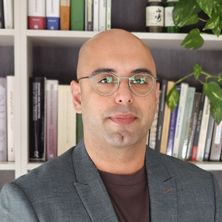
Dr Reza Arab is a Lecturer in Applied Linguistics at the School of Languages and Cultures. His expertise lies in pragmatics, cultural linguistics, and intercultural communication, with a focus on how humour, metaphor, and language practices shape belonging, identity, and interaction across cultural and institutional contexts.
His research spans historical pragmatics, contrastive semantics, and discourse analysis, particularly in national settings. He has led and contributed to projects on humour in prison discourse, media representations, and political communication. Dr Arab is also the major convenor for English as an International Language (EIL) at UQ.
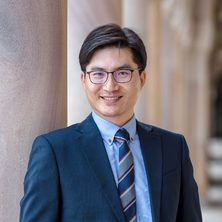
Dr. Ki Young Choi has been a researcher and educator in the field of Korean language, conducting research and teaching at universities in Korea, Thailand, and Australia since 2010. His key research interests include the critical analysis of Korean textbooks. Dr. Choi employs methods such as Critical Discourse Analysis (CDA) and Visual Image Analysis (VIA) to examine how ideologies, norms, and cultural values are represented in educational materials. His work significantly contributes to understanding and improving the quality of Korean language education internationally, aligning with broader efforts to promote Korean language and culture globally.
Centre Director of Research Centre in Creative Arts and Human Flourishing
Research Centre in Creative Arts and Human Flourishing
Faculty of Humanities, Arts and Social Sciences
Availability:
Available for supervision
Media expert
I am a classicist, a theatre and performance studies scholar, and Director of the Research Centre in Creative Arts and Human Flourishing. I work across academia and the creative industries, and have particular expertise in the performance of Greek tragedy in contemporary theatre. My work has been funded by the Australian Research Council, for a project on tragedy and translation, and the Arts and Humanities Research Council in the UK, for a project with British theatre company Punchdrunk. My collaboration with Punchdrunk saw me work as dramaturg on their large-scale masked performance The Burnt City, as well as write the monograph Punchdrunk on the Classics, which won the 2024 ADSA Rob Jordan Prize for best book over a two year period. My current work includes authoring my own translations of Euripides' final trilogy (Bacchae, Iphigenia at Aulis, and Alcmaeon in Corinth), developing a Beckett-inspired methodology for translating tragic fragments for performance, and writing a new monograph titled Greek Tragedy and the Australian Psyche.
There are two key strands that encompass all of my research to date. The first relates to the translation and adaptation of Greek tragedy in contemporary theatre, and the second relates to experimental, postdramatic, and immersive forms of performance. These often collide; I am paritcularly interested in how we can spatialise Greek tragedy in immersive theatre, and how we can communicate cannonical stories through abstract forms of image, sound, and affect in postdramatic theatre. Alongside my Punchdrunk monograph, my other publications include the edited collection Experiencing Immersion in Antiquity and Modernity (2025), a student edition of Women of Troy (2024), a co-edited (with Professor Chris Hay) special issue of Contemporary Theatre Review on the director Simon Stone, the book Postdramatic Tragedies (OUP, 2019), and the co-edited collection Adapting Translation for the Stage (with Professor Geraldine Brodie, for Routledge's Advances in Theatre and Performance Studies series, shortlisted for the 2019 TaPRA prize for editing). I have also published articles and chapters on Punchdrunk, Sarah Kane, Martin Crimp, and Katie Mitchell.
I am a Fellow of the Higher Education Academy and the Royal Historical Society, a UQ Ally and a friend of the Reconcilliation Action Network. I joined the University of Queensland in 2023, and previously worked at the University of Bristol.
I am an Associate Professor in the School of Languages and Cultures at UQ (since 2017), having formerly been an assistant professor at the Centre for Applied English Studies (CAES), University of Hong Kong (since 2014). I hold an MA TESOL from the University of London and an M.Phil/Ph.D in applied linguistics from the University of Cambridge.
My areas of research and supervisory expertise include generative AI, corpus linguistics and the use of AI/corpora for language learning (known as 'data-driven learning'), as well as L2 writing research and English for General and Specific Academic Purposes. I have featured in Stanford's Top 2% Scientists lists for 2023 and 2024.
I am currently Co-Editor in Chief of Language Learning & Technology (SSCI, Q1); Editor in Chief of the Australian Review of Applied Linguistics (SCOPUS, Q1), have served as Associate Editor for the Journal of English for Academic Purposes (Q1), sit on the editorial boards of JSLW, IRAL, System, Applied Corpus Linguistics, Research Syntheses in Applied Linguistics, Research Methods in Applied Linguistics, and the book series Studies in Corpus Linguistics.
Adriana Díaz (she/her/ella) works at the intersections of language, power, and pedagogy, asking what becomes possible when language education is approached as an unfinished, decolonial, and hopeful practice of becoming otherwise. Born in Argentina and now living and working on the unceded lands of the Turrbal and Jagera Peoples, her work critically examines the colonial, patriarchal, and monolingual structures embedded in curricula and classrooms. In response, she cultivates inclusive, empowering, and critically reflexive pedagogies that honour plurality and relationality.
With over two decades of experience in multilingual and intercultural education, Adriana’s scholarship, teaching, and leadership seek to unsettle dominant paradigms while nurturing more equitable and generative approaches to language learning. Drawing on critical pedagogy, intersectional feminism, and decolonial thought, she traces raciolinguistic and ideological patterns that shape educational practice and works collaboratively to reimagine their possibilities.
Deeply committed to collective transformation, she supports and (un)learns alongside fellow language educators and scholars, co-creating pedagogical approaches that are responsive, dialogic, and grounded in shared responsibility. Her work invites ongoing inquiry into how we teach, learn, and live with language in ways that are just, liberatory, and yet always emergent.
Will is a lecturer in Chinese translation within the University of Queensland’s Master of Arts in Chinese Translation and Interpreting programme and a practicing NAATI accredited professional translator. Having completed his BA (Hons) from the School of Oriental & African Studies (SOAS) in London, Will worked in Beijing at the British Embassy and then subsequently completed his PhD at the University of Queensland. In addition to Will’s teaching and research roles at UQ he is also a practicing commercial translator currently specialising in the translation of Chinese medical research into English.
I'm a linguistic anthropologist who studies how communicative events in Indonesia figure in the building and maintenance of social relationships and common knowledge among Indonesians. During my PhD and post-PhD early years my research often involved long periods of fieldwork in Indonesia. As research funding and sabbatical have become scarce, I have increasingly turned to publically available data, such as Indonesian films, newspapers, social media and so on. I have published extensively on my research, including Language, Migration, and Identity: Neighbourhood Talk in Indonesia (Cambridge University Press, 2010); Language and Superdiversity: Indonesians Knowledging at Home and Abroad (Oxford University Press, 2015), Global Leadership Talk: Constructing Good Governance in Indonesia (Oxford University Press, 2020); Reimagining Rapport (Oxford University Press, 2021); Rapport and the discursive co-construction of social relations in fieldwork settings (Mouton De Gruyter, 2019); and Contact Talk: The Discursive Organization of Contact and Boundaries (with Deborah Cole and Howard Manns, Routledge, 2020).
The continuing interest underpinning my research is that of the self-presentation of the non-native speaker, in different genres. This has led me to work on: culturally determined practices; cross-cultural comparisons; and on intercultural behaviour, how this is conceptualized and how, in practice, encounters between different expectations of appropriate behaviour play out.
One focus of my attention has been the proliferation of new intercultural encounters which are made possible by online technologies. In particular, Juliana de Nooy and I undertook a project examining discussion fora on media websites, culminating in our 2009 book. The pedagogical implications of this work, and my own teaching practices have allowed me to develop expertise in language learning and technology which I have extended through other collaborations (e.g. Cowley & Hanna, 2013 on Wikipedia; a forthcoming chapter based on a cross institutional project on AI in languages teaching) research supervisions and publications which derive from it (Gao & Hanna, 2016, on instructional software; work with Khosravi, Gyamfit et al on technology mediated peer-review; and a paper with Aljohani on online oral discussion).
I have also undertaken research on Study Abroad experiences, and particularly looking at the ‘selves’ which testimonials from returnees hold up as exemplary (see Hanna 2016 on food; also Hanna & de Nooy 2003 b; 2006). What, the student reader of these testimonials might ask, will I feel like? How will I change? What counts as successful life as a Study Abroad student? How can I be successful too? In order to tackle these questions, I draw on theories of learner motivation and imaginary or ideal selves. This work influences my current teaching in COMU3060 and COMU3065, Learning from the International Experience, taken by International Studies studies during and after their semester abroad.
This interest in self-presentation underpins a current project on employability and language students (SLC funded project, undertaken with Alicia Toohey; work with Peter Cowley on employability and French).
Dr Kayoko Hashimoto is a Senior Lecturer in the School of Languages and Cultures at The University of Queensland, Australia. She is a leading scholar in language policy, Japanese and English language teaching in Asia, specialising in the construction of national and individual identities within fluid multicultural and multilingual contexts. Her work bridges the gap between political and cultural ideology and language teaching practice. As an author/editor, she has published five books including Rethinking the Asian Language Learning Paradigm in Australia (Palgrave Macmillan, 2024), Beyond Native-Speakerism (Routledge, 2018), and Japanese Language and Soft Power in Asia (Palgrave Macmillan, 2017). Her most recent research, featured in Ideologies of Communication in Japan (2025), critically examines the tension between monolingual approaches and multilingual learners.Kayoko maintains a significant international profile, with research and teaching collaborations across Australia, Japan, Vietnam, the UK, and Poland, including a Visiting Fellowship at Tokyo College, The University of Tokyo (2024–2025), and appointment as an Erasmus+ Mobility Program scholar at Adam Mickiewicz University (2025–2027). A thematic editor (language & education) of Asian Studies Review, she is also the founder of the annual “Empowering Asian Language Speakers Symposium” at The University of Queensland, with “language and history” as the 2026 theme.
Affiliate of Centre for Digital Cultures & Societies
Centre for Digital Cultures & Societies
Faculty of Humanities, Arts and Social Sciences
Affiliate of Research Centre in Creative Arts and Human Flourishing
Research Centre in Creative Arts and Human Flourishing
Faculty of Humanities, Arts and Social Sciences
Senior Lecturer
School of Communication and Arts
Faculty of Humanities, Arts and Social Sciences
Availability:
Available for supervision
Media expert
Dr Leah Henrickson is a Senior Lecturer in Digital Media and Cultures at the University of Queensland. She is the author of Reading Computer-Generated Texts (Cambridge University Press, 2021) and other peer-reviewed articles about how we understand text generation systems and output, artificial intelligence, and digital media environments. Dr Henrickson also studies digital storytelling for critical self-reflection, pedagogy, community building, and commercial benefit. She is the author of Digital Storytelling: An Introduction (Polity, 2025).
Dr Henrickson serves as the School of Communication and Arts' Deputy Director, Teaching and Learning. She is also an elected non-professorial member of the University of Queensland's Academic Board, and a nominated member of the Academic Board's Digital Learning Sub-Committee. She is an elected member of the Board of Directors for the Society for the History of Authorship, Reading and Publishing (SHARP) and the Executive Committee of the Australasian Association for Digital Humanities (aaDH), and serves on the Editorial Boards of New Review of Hypermedia and Multimedia and Anthem Press' 'Anthem Studies in Book History, Publishing and Print Culture' series.
Dr Henrickson is especially keen to collaborate on projects involving digital methods and media, hermeneutics, histories of communications media, and unconventional text production and dissemination.
Amy is a specialist in Francophone autobiographies of exile and trauma. She is author of Hoarding Memory: Covering the Wounds of the Algerian War (U of Nebraska P, 2020), Remembering French Algeria: Pieds-Noirs, Identity and Exile (U of Nebraska P, 2015), and A la recherche d'un emploi: Business French in a Communicative Context (Hackett, 2017). She has co-edited several volumes including Places of Traumatic Memory - a Global Context (Palgrave Macmillan 2020), The Unspeakable: Representations of Trauma in Francophone Literature and Art (2013), and Textual and Visual Selves: Photography, Film and Comic Art in French Autobiography (U of Nebraska P, 2011). She is currently working on her new project, Terrorism Testimony: French Narratives of Survival.
Dr Wenying (Wendy) Jiang taught at the Department of East Asian Studies, University of Alberta in Canada and The University of Western Australia in Perth before taking a position at School of Languages and Cultures at The University of Queensland in Australia. She is a specialist in Applied Linguistics, a graduate of Qufu Normal University (BA 1988, MA 1998) in China, University of Luton (MA 2001) in UK and The University of Queensland (PhD 2006) in Australia. She taught English at Taishan Medical University in China for more than ten years before switching to teaching Chinese as a foreign language in English-speaking countries such as the UK, Canada and Australia. She has been publishing regularly in the fields of second language acquisition, language teaching and learning, and computer assisted language learning (CALL) since 1992. Her monograph "Acquisition of Word Order in Chinese as a Foreign Language" was published by Mouton de Gruyter in 2009. Her article "Measurements of development of L2 written production: the case of Chinese L2" appeared in the journal Applied Linguistics in 2013 is a widely cited piece of publication.
Beth (she/elle) is Lecturer in French and Francophone Studies. Her research focuses broadly on francophone literature and visual cultures (20th-21st centuries); gender studies; global feminisms; and decolonial and transnational theory.
Her first book, Unfixing the Self in Contemporary Women's Phototexts of the Francophone World (forthcoming, Edinburgh University Press) studies works of experimental autobiography in French – including autofiction, biofiction, autotheory – that include photographs alongside text. This monograph explores the ways that the combination of photography and autobiographical text disrupts fixed modes of understanding identity and experience by challenging hegemonic narratives about the self.
Her current research focuses on contemporary narratives of sexual and gender violence in world literature. This research investigates the ways that literature can offer unique modes of conceptualising sexual and gender violence, thus offering alternative discourses to those found in judicial, medical, and psychoanalytic contexts. She is also working on two edited volumes: The Heirs of Annie Ernaux with Alexandra Pugh and Questioning Republican Feminism: Intersectional, Transnational, and Decolonial Perspectives with Josephine Goldman and Sophie Tallis.
Beth is Fellow of the Higher Education Academy, Treasurer for the Australian Society of French Studies, and Secretary for Women in French: Australia. She is on the editorial board of the book series Annie Ernaux International Studies (De Gruyter Brill) and is the proud co-founder and co-producer of the podcast Positionalities (with Josephine Goldman and Pooja Booluck-Miller). She is also Peer Group Leader for the WiF Mentorship Cluster ‘I’m Writing a Monograph.’
School of Electrical Engineering and Computer Science
Faculty of Engineering, Architecture and Information Technology
Availability:
Available for supervision
Media expert
Dr Jessica Korte is passionate about the ways good technology can improve lives. To ensure technology is “good”, she advocates involving end users in the design process; especially when those people belong to “difficult” user groups - which usually translates to “minority” user groups. Her philosophy for technology design (and life in general) is that the needs of people who are disempowered or disabled by society should be considered first; everyone else will then benefit from technology that maximises usability. Her research areas include Human-Computer Interaction, Machine Learning, and Participatory & Collaborative Design.
Jessica was drawn to research by a desire to explore some of the ways technology and design can empower and support people from marginalised groups. She has worked with Deaf children and members of the Deaf community to create a technology design approach, and successfully organised and run international workshops on Pushing the Boundaries of Participatory Design, leading to the World’s Most Inclusive Distributed Participatory Design Project.
Jessica has recently been awarded a TAS DCRC Fellowship to create an Auslan Communication Technologies Pipeline, a modular, AI-based Auslan-in, Auslan-out system capable of recognising, processing and producing Auslan signing.
Jessica is currently looking to recruit research students with an interest in exploring topics in an Auslan context, including machine learning, natural language processing, chatbots, video GAN, or procedural animation.
Narah Lee is a Lecturer in Korean at the School of Languages and Cultures. She received her PhD in Linguistics from the Australian National University. Her research lies at the intersection of pragmatics, discourse analysis, and sociolinguistics, with particular interest in Korean honorifics, speech styles, and intercultural pragmatics. Her work contributes to understanding how language reflects and negotiates social relationships in Korean and cross-cultural settings.
Affiliate of Centre for Digital Cultures & Societies
Centre for Digital Cultures & Societies
Faculty of Humanities, Arts and Social Sciences
Senior Lecturer in Applied Linguistics
School of Languages and Cultures
Faculty of Humanities, Arts and Social Sciences
Availability:
Available for supervision
Media expert
I'm a Senior Lecturer in Applied Linguistics at the University of Queensland, where I use computational methods and large text and speech corpora to study how English is actually used — in everyday conversation, across social groups, and by learners.
My research focuses on features that traditional grammars overlook but that shape real communication: discourse markers (like, you know), general extenders, terms of address, vulgarity, and adjective amplification. I also work in corpus phonetics, particularly vowel production and voice-onset timing in first- and second-language English speakers.
Alongside my research, I hold several roles focused on language research infrastructure:
Director of Research, School of Languages and Cultures, UQ
Director of the Language Technology and Data Analysis Laboratory (LADAL), a free open-access hub for language data science (https://ladal.edu.au/)
Chief Investigator on the Language Data Commons of Australia (LDaCA), a national research infrastructure project (https://www.ldaca.edu.au/)
I'm also an advocate for reproducibility and open science in the humanities and social sciences, and I develop tools and workflows that make text and speech analysis more transparent and rigorous.
Research areas: applied linguistics, corpus linguistics, computational linguistics, sociolinguistics, language variation and change, learner corpus research, corpus pragmatics, reproducibility, digital humanities.
Dr. Simone Smala is a senior lecturer in teacher education, educational psychology and multilingualism in education. Drawing from a background as a middle years and secondary teacher, Simone now focuses her research on Content and Language Integrated Learning (CLIL) in bilingual, immersion and TESOL settings, and the emerging world of Generative AI in K-12 education. Simone's research is based in socio-cultural learning theories, educational policy and blended learning.She publishes in both English and German and has extensive research connections in Europe and the USA.