
Overview
Background
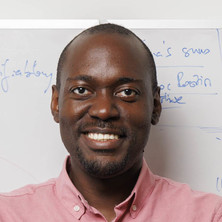
Dr Loic Yengo is a Professor of Statistical Genomics at The University of Queensland (UQ) and Group Leader of the Statistical Genomics Laboratory within UQ’s Institute for Molecular Bioscience. He was awarded a prestigious Snow Medical Research Fellowship in 2024 to dramatically advance the use of genomics to prevent chronic disease such as type 2 diabetes, heart disease and Alzheimer’s, with a particular focus on increasing participation of people with diverse ancestries. After completing a PhD in applied mathematics and statistics at the University of Lille (France) in 2014, he joined UQ in 2016 for postdoctoral training in Quantitative and Statistical Genetics. Loic started his own lab in 2020 to investigate the causes and consequences of genetic variation within and between human populations. His group develops and applies novel statistical methods to analyse large volumes of genomic data. Loic’s research has contributed to improving understanding of the genetic and phenotypic consequences of non-random mating (inbreeding and assortative mating) in human populations and has led to identifying novel genetic variants associated with complex traits and diseases. Loic was named among the top 40 rising stars of research by The Australian newspaper in 2021 and received the UQ Foundation research excellence award the same year. Loic is the 2022 recipient of the Ruth Stephens Gani Medal of the Australian Academy of Science recognizing outstanding contributions to research in human genetics, and was named in Nature Medicine’s 2022 Yearbook among 11 early-career researchers “to watch”.
In 2024, he was the recipient of the American Society of Human Genetics Early Career Award and a Snow Medical Research Foundation Fellowship to accelerate the deployment of genomic risk prediction in the clinic and improve the benefit of genomic medicine in all populations.
Availability
- Professor Loic Yengo is:
- Available for supervision
Qualifications
- Doctor of Philosophy, Université Lille 1 - Sciences et Technologies
Research impacts
The research in the Yengo Lab contributes to the discovery of genes and biological pathways involved in the etiology of multifactorial diseases such as obesity and type 2 diabetes. The ultimate goal of our research is to better understand what genes underlie inter-individual variation in disease susceptibility and help translate that knowledge into new and personalised therapies.
Works
Search Professor Loic Yengo’s works on UQ eSpace
2022
Journal Article
Phenotypic and genetic factors associated with donation of DNA and consent to record linkage for prescription history in the Australian Genetics of Depression Study
Gomez, Lina, Díaz-Torres, Santiago, Colodro-Conde, Lucía, Garcia-Marin, Luis M., Yap, Chloe X., Byrne, Enda M., Yengo, Loic, Lind, Penelope A., Wray, Naomi R., Medland, Sarah E., Hickie, Ian B., Lupton, Michelle K., Rentería, Miguel E., Martin, Nicholas G. and Campos, Adrian I. (2022). Phenotypic and genetic factors associated with donation of DNA and consent to record linkage for prescription history in the Australian Genetics of Depression Study. European Archives of Psychiatry and Clinical Neuroscience, 273 (6), 1359-1368. doi: 10.1007/s00406-022-01527-0
2022
Journal Article
The effect of the scale of grant scoring on ranking accuracy
Visscher, Peter M. and Yengo, Loic (2022). The effect of the scale of grant scoring on ranking accuracy. F1000Research, 11 1197, 1-18. doi: 10.12688/f1000research.125400.1
2022
Journal Article
A saturated map of common genetic variants associated with human height
Yengo, Loïc, Vedantam, Sailaja, Marouli, Eirini, Sidorenko, Julia, Bartell, Eric, Sakaue, Saori, Graff, Marielisa, Eliasen, Anders U., Jiang, Yunxuan, Raghavan, Sridharan, Miao, Jenkai, Arias, Joshua D., Graham, Sarah E., Mukamel, Ronen E., Spracklen, Cassandra N., Yin, Xianyong, Chen, Shyh-Huei, Ferreira, Teresa, Highland, Heather H., Ji, Yingjie, Karaderi, Tugce, Lin, Kuang, Lüll, Kreete, Malden, Deborah E., Medina-Gomez, Carolina, Machado, Moara, Moore, Amy, Rüeger, Sina, Sim, Xueling ... Understanding Society Scientific Group (2022). A saturated map of common genetic variants associated with human height. Nature, 610 (7933), 704-712. doi: 10.1038/s41586-022-05275-y
2022
Journal Article
Genetic footprints of assortative mating in the Japanese population
Yamamoto, Kenichi, Sonehara, Kyuto, Namba, Shinichi, Konuma, Takahiro, Masuko, Hironori, Miyawaki, Satoru, Kamatani, Yoichiro, Hizawa, Nobuyuki, Ozono, Keiichi, Yengo, Loic, Okada, Yukinori and The BioBank Japan Project (2022). Genetic footprints of assortative mating in the Japanese population. Nature Human Behaviour, 7 (1), 1-9. doi: 10.1038/s41562-022-01438-z
2022
Journal Article
Multi-ancestry genetic study of type 2 diabetes highlights the power of diverse populations for discovery and translation
Mahajan, Anubha, Spracklen, Cassandra N., Zhang, Weihua, Ng, Maggie C. Y., Petty, Lauren E., Kitajima, Hidetoshi, Yu, Grace Z., Rüeger, Sina, Speidel, Leo, Kim, Young Jin, Horikoshi, Momoko, Mercader, Josep M., Taliun, Daniel, Moon, Sanghoon, Kwak, Soo-Heon, Robertson, Neil R., Rayner, Nigel W., Loh, Marie, Kim, Bong-Jo, Chiou, Joshua, Miguel-Escalada, Irene, della Briotta Parolo, Pietro, Lin, Kuang, Bragg, Fiona, Preuss, Michael H., Takeuchi, Fumihiko, Nano, Jana, Guo, Xiuqing, Lamri, Amel ... Morris, Andrew P. (2022). Multi-ancestry genetic study of type 2 diabetes highlights the power of diverse populations for discovery and translation. Nature Genetics, 54 (5), 560-572. doi: 10.1038/s41588-022-01058-3
2022
Conference Publication
The Impact of Socioeconomic Status in the Polygenic Risk of Psychiatric Traits and Disorders: Evidence of Assortative Mating and Participation Bias in UK Biobank
Mendoza, Brenda Cabrera, Wendt, Frank, Pathak, Gita, Yengo, Loic and Polimanti, Renato (2022). The Impact of Socioeconomic Status in the Polygenic Risk of Psychiatric Traits and Disorders: Evidence of Assortative Mating and Participation Bias in UK Biobank. 77th Annual Scientific Convention and Meeting of the Society-of-Biological-Psychiatry (SOBP), New Orleans La, Apr 28-30, 2022. NEW YORK: ELSEVIER SCIENCE INC.
2022
Journal Article
Polygenic prediction of educational attainment within and between families from genome-wide association analyses in 3 million individuals
Okbay, Aysu, Wu, Yeda, Wang, Nancy, Jayashankar, Hariharan, Bennett, Michael, Nehzati, Seyed Moeen, Sidorenko, Julia, Kweon, Hyeokmoon, Goldman, Grant, Gjorgjieva, Tamara, Jiang, Yunxuan, Hicks, Barry, Tian, Chao, Hinds, David A., Ahlskog, Rafael, Magnusson, Patrik K E, Oskarsson, Sven, Hayward, Caroline, Campbell, Archie, Porteous, David J., Freese, Jeremy, Herd, Pamela, Watson, Chelsea, Jala, Jonathan, Conley, Dalton, Koellinger, Philipp D., Johannesson, Magnus, Laibson, David, Meyer, Michelle N. ... Social Science Genetic Association Consortium (2022). Polygenic prediction of educational attainment within and between families from genome-wide association analyses in 3 million individuals. Nature Genetics, 54 (4), 437-449. doi: 10.1038/s41588-022-01016-z
2022
Journal Article
Assessing the contribution of rare variants to complex trait heritability from whole-genome sequence data
Wainschtein, Pierrick, Jain, Deepti, Zheng, Zhili, Aslibekyan, Stella, Becker, Diane, Bi, Wenjian, Brody, Jennifer, Carlson, Jenna C., Correa, Adolfo, Du, Margaret Mengmeng, Fernandez-Rhodes, Lindsay, Ferrier, Kendra R., Graff, Misa, Guo, Xiuqing, He, Jiang, Heard-Costa, Nancy L., Highland, Heather M., Hirschhorn, Joel N., Howard-Claudio, Candace M., Isasi, Carmen R., Jackson, Rebecca, Jiang, Jicai, Joehanes, Roby, Justice, Anne E., Kalyani, Rita R., Kardia, Sharon, Lange, Ethan, LeBoff, Meryl, Lee, Seunggeun ... NHLBI Trans-Omics for Precision Medicine (TOPMed) Consortium (2022). Assessing the contribution of rare variants to complex trait heritability from whole-genome sequence data. Nature Genetics, 54 (3), 263-273. doi: 10.1038/s41588-021-00997-7
2022
Journal Article
Constrained human genes under scrutiny
Yengo, Loic and Colleran, Heidi (2022). Constrained human genes under scrutiny. Nature, 603 (7903), 799-801. doi: 10.1038/d41586-022-00693-4
2022
Journal Article
Assortative mating biases marker-based heritability estimators
Border, Richard, O’Rourke, Sean, de Candia, Teresa, Goddard, Michael E., Visscher, Peter M., Yengo, Loic, Jones, Matt and Keller, Matthew C. (2022). Assortative mating biases marker-based heritability estimators. Nature Communications, 13 (1) 660. doi: 10.1038/s41467-022-28294-9
2021
Journal Article
Mapping the human genetic architecture of COVID-19
Niemi, Mari E. K., Karjalainen, Juha, Daly, Mark, Ganna, Andrea, Mehtonen, Juha, Cordioli, Mattia, Kaunisto, Mari, Pigazzini, Sara, Donner, Kati, Kivinen, Katja, Palotie, Aarno, Daly, Mark J., Liao, Rachel G., Kanai, Masahiro, Veerapen, Kumar, Minica, Camelia, Trankiem, Amy, Balaconis, Mary K., Nguyen, Huy, Solomonson, Matthew, Francioli, Laurent, Wang, Qingbo, Green, Robert C., Bryant, Sam, Finucane, Hilary, Martin, Alicia R., Zhou, Wei, Nkambule, Lindokuhle, Karczewski, Konrad J. ... COVID-19 Host Genetics Initiative (2021). Mapping the human genetic architecture of COVID-19. Nature, 600 (7889), 472-477+. doi: 10.1038/s41586-021-03767-x
2021
Journal Article
Sex-dimorphic genetic effects and novel loci for fasting glucose and insulin variability
Lagou, Vasiliki, Mägi, Reedik, Hottenga, Jouke- Jan, Grallert, Harald, Perry, John R. B., Bouatia-Naji, Nabila, Marullo, Letizia, Rybin, Denis, Jansen, Rick, Min, Josine L., Dimas, Antigone S., Ulrich, Anna, Zudina, Liudmila, Gådin, Jesper R., Jiang, Longda, Faggian, Alessia, Bonnefond, Amélie, Fadista, Joao, Stathopoulou, Maria G., Isaacs, Aaron, Willems, Sara M., Navarro, Pau, Tanaka, Toshiko, Jackson, Anne U., Montasser, May E., O’Connell, Jeff R., Bielak, Lawrence F., Webster, Rebecca J., Saxena, Richa ... Prokopenko, Inga (2021). Sex-dimorphic genetic effects and novel loci for fasting glucose and insulin variability. Nature Communications, 12 (1) 24, 24. doi: 10.1038/s41467-020-19366-9
2021
Journal Article
Integrative genomic analyses identify susceptibility genes underlying COVID-19 hospitalization
Pathak, Gita A., Singh, Kritika, Miller-Fleming, Tyne W., Wendt, Frank R., Ehsan, Nava, Hou, Kangcheng, Johnson, Ruth, Lu, Zeyun, Gopalan, Shyamalika, Yengo, Loic, Mohammadi, Pejman, Pasaniuc, Bogdan, Polimanti, Renato, Davis, Lea K. and Mancuso, Nicholas (2021). Integrative genomic analyses identify susceptibility genes underlying COVID-19 hospitalization. Nature Communications, 12 (1) 4569, 4569. doi: 10.1038/s41467-021-24824-z
2021
Journal Article
Triangulating evidence from longitudinal and Mendelian randomization studies of metabolomic biomarkers for type 2 diabetes
Porcu, Eleonora, Gilardi, Federica, Darrous, Liza, Yengo, Loic, Bararpour, Nasim, Gasser, Marie, Marques-Vidal, Pedro, Froguel, Philippe, Waeber, Gerard, Thomas, Aurelien and Kutalik, Zoltán (2021). Triangulating evidence from longitudinal and Mendelian randomization studies of metabolomic biomarkers for type 2 diabetes. Scientific Reports, 11 (1) 6197, 6197. doi: 10.1038/s41598-021-85684-7
2021
Journal Article
Publisher Correction: Sex-dimorphic genetic effects and novel loci for fasting glucose and insulin variability (Nature Communications, (2021), 12, 1, (24), 10.1038/s41467-020-19366-9)
Lagou, Vasiliki, Mägi, Reedik, Hottenga, Jouke- Jan, Grallert, Harald, Perry, John R. B., Bouatia-Naji, Nabila, Marullo, Letizia, Rybin, Denis, Jansen, Rick, Min, Josine L., Dimas, Antigone S., Ulrich, Anna, Zudina, Liudmila, Gådin, Jesper R., Jiang, Longda, Faggian, Alessia, Bonnefond, Amélie, Fadista, Joao, Stathopoulou, Maria G., Isaacs, Aaron, Willems, Sara M., Navarro, Pau, Tanaka, Toshiko, Jackson, Anne U., Montasser, May E., O’Connell, Jeff R., Bielak, Lawrence F., Webster, Rebecca J., Saxena, Richa ... Prokopenko, Inga (2021). Publisher Correction: Sex-dimorphic genetic effects and novel loci for fasting glucose and insulin variability (Nature Communications, (2021), 12, 1, (24), 10.1038/s41467-020-19366-9). Nature Communications, 12 (1) 995, 995. doi: 10.1038/s41467-021-21276-3
2021
Conference Publication
Polygenic prediction within and between families from a 3-million-person GWAS of educational attainment
Okbay, Aysu, Wu, Yeda, Wang, Nancy, Jayashankar, Hariharan, Bennett, Michael, Nehzati, Seyed Moeen, Sidorenko, Julia, Kweon, Hermon, Goldman, Grant, Gjorgjieva, Tamara, Jiang, Yunxuan, Tian, Chao, Ahlskog, Rafael, Magnusson, Patrik K. E., Oskarsson, Sven, Hayward, Caroline, Campbell, Archie, Porteous, David, Freese, Jeremy, Herd, Pamela, Watson, Chelsea, Jala, Jonathan, Conley, Dalton C., Koellinger, Philipp D., Johannesson, Magnus, Laibson, David I., Meyer, Michelle N., Lee, James J., Kong, Augustine ... Young, Alexander I. (2021). Polygenic prediction within and between families from a 3-million-person GWAS of educational attainment. Behavior Genetics Association 51st Annual Meeting, Online, 2021. New York, NY United States: Springer. doi: 10.1007/s10519-021-10087-3
2021
Conference Publication
Detection of Assortative Mating in the Absence of Spousal Information
Zhang, Yuanxiang, McRae, Allan F., Visscher, Peter M. and Yengo, Loic (2021). Detection of Assortative Mating in the Absence of Spousal Information. NEW YORK: SPRINGER.
2021
Journal Article
Polygenic burden could explain high rates of affective disorders in a community with restricted founder population
Wang, Xiaotong, Lin, Tian, Yengo, Loic, Sidorenko, Julia, Wray, Naomi R. and Levinson, Douglas F. (2021). Polygenic burden could explain high rates of affective disorders in a community with restricted founder population. American Journal of Medical Genetics Part B: Neuropsychiatric Genetics, 186 (6), 367-375. doi: 10.1002/ajmg.b.32876
2021
Journal Article
Discovery and implications of polygenicity of common diseases
Visscher, Peter M., Yengo, Loic, Cox, Nancy J. and Wray, Naomi R. (2021). Discovery and implications of polygenicity of common diseases. Science, 373 (6562), 1468-1473. doi: 10.1126/science.abi8206
2021
Journal Article
Using symptom-based case predictions to identify host genetic factors that contribute to COVID-19 susceptibility
van Blokland, Irene V., Lanting, Pauline, Ori, Anil P.S., Vonk, Judith M., Warmerdam, Robert C.A., Herkert, Johanna C., Boulogne, Floranne, Claringbould, Annique, Lopera-Maya, Esteban A., Bartels, Meike, Hottenga, Jouke-Jan, Ganna, Andrea, Karjalainen, Juha, Hayward, Caroline, Fawns-Ritchie, Chloe, Campbell, Archie, Porteous, David, Cirulli, Elizabeth T., Barrett, Kelly M. Schiabor, Riffle, Stephen, Bolze, Alexandre, White, Simon, Tanudjaja, Francisco, Wang, Xueqing, Ramirez, Jimmy M., Lim, Yan Wei, Lu, James T., Washington, Nicole L., de Geus, Eco J. C. ... Yengo, Loic (2021). Using symptom-based case predictions to identify host genetic factors that contribute to COVID-19 susceptibility. PLoS One, 16 (8) e0255402, 1-18. doi: 10.1371/journal.pone.0255402
Funding
Current funding
Past funding
Supervision
Availability
- Professor Loic Yengo is:
- Available for supervision
Looking for a supervisor? Read our advice on how to choose a supervisor.
Available projects
-
Genetic and Molecular consequences of non-random mating in humans
Short Project description. This projects aims at utilising genetic and phenotypic data from ~500,000 participants of the UK Biobank to investigate phenotypic and genetic patterns induced by non-random mating in humans. Two forms of non-random mating will be investigated: assortative mating (resemblance between spouses) and inbreeding (mating between relatives). Findings from this project have implications in the analysis and interpretation of genome-wide association studies. The project will involve advanced modelling and statistical analyses of large volumes of data (genotyped and imputed SNP data, whole-exome sequencing, gene-expression, brain-imaging derived-traits).
Candidate. Candidates with a background in quantitative/population genetics, statistics, mathematics and other quantitative fields will be considered. Programming skills (R, python, C/C++) and prior experience in analysing genetic data (e.g. GWAS) is desirable. (Note: if required, lectures on fundamental concepts of quantitative and population genetics can be taken as part of the PhD training).
The Team. The successful candidate will be doing their research within the Program in Complex Traits Genomics (PCTG) Lab co-led by Professors Jian Yang, Naomi Wray and Peter Visscher, who are internationally recognized leaders in the field of complex traits genetics and have been recently listed among the world’s top one per cent most cited researchers of their field. PCTG provides a stimulating and highly interdisciplinary environment for PhD candidates to form and develop their research.
PhD advisor. Dr Loic Yengo is a senior research officer of the Institute of Molecular Bioscience at the University of Queensland, Australia; and the Statistical Genetics Team leader within PCTG. He did his PhD in applied mathematics and is an expert in statistical modelling and analysis of genetic data. His research interests intersect quantitative genetics, genetic epidemiology and sociogenomics.
Expected start. First semester of 2020.
Contact. If you’re interested, please send your CV and cover letter and two references to Dr Loic Yengo: l.yengo@imb.uq.edu.au
URLs
The team PCTG: http://cnsgenomics.com/
PhD advisor: https://scholar.google.fr/citations?user=iv8dxlIAAAAJ&hl=en
-
DNA sequence deep learning to map genome-wide genetic variants underlying complex traits and disease
Short Project description. This project aims to develop and apply new methods for identifying genetic variants that are causal for human traits and diseases. The primary approach will focus on leveraging DNA foundational models to improve the prioritisation of such variants. Training of DNA foundational models, especially when coupled with other sources of data (e.g., protein-level data), is notoriously computationally challenging. Throughout the project the successful candidate will, therefore, develop and optimise GPU parallelization and sub-network isolation to run inference across the entire genome. Beyond optimisation, the successful candidate will also develop new methods to quantify (prior to training) information content in a given dataset. This work will build nonlinear mixed models literature. Finally, the project will integrate predictions from DNA foundational models into various statistical genetics analyses such as polygenic scores and fine-mapping.
Candidate. Candidates with a background in machine learning, statistics, mathematics, ideally coupled with training in quantitative/population genetics and other quantitative fields will be considered. Programming skills (R, python, C/C++) and prior experience in analysing genetic data (e.g. GWAS) is desirable. (Note: if required, lectures on fundamental concepts of quantitative and population genetics can be taken as part of the PhD training).
The Team. The successful applicant will join the Statistical Genomics Laboratory led by Professor Yengo to conduct cutting-edge research at the intersection of data science and human genetics. The mission of the Yengo lab is to improve prevention and treatment of common disease by discovering genes and biological pathways involved in the etiology of human complex traits. The Yengo lab develops scalable analysis tools that can maximise the utility of genetics studies across all human populations. These tools are generally applied to analyse large scale biobank datasets available worldwide. This project will be a unique opportunity for an outstanding and curious mind to grow an international profile in statistical genetics.
PhD advisory team. The project will be co-supervised by Professor Loic Yengo (Snow Fellow, ARC Future Fellow and Group Leader at the Institute of Molecular Bioscience), and Dr Brad Balderson (Senior Research Associate within the Yengo Lab). The advisory team brings strong expertise in machine learning and statistical genetics applied to the analysis of large biobank and genomic datasets.
Expected start. First semester of 2027.
Contact. If you’re interested, please send your CV and cover letter and two references to Dr Brad Balderson: uqbbalde@uq.edu.au.
Supervision history
Current supervision
-
Doctor Philosophy
Investigating the time and tissue dependent genetic architecture of complex traits
Principal Advisor
Other advisors: Dr Nicole Warrington
-
Doctor Philosophy
Genomic Selection for Bull Fertility Traits
Associate Advisor
Other advisors: Associate Professor Marina Fortes
-
Doctor Philosophy
New approaches to quantify the genetic cause of disease
Associate Advisor
Other advisors: Dr Drew Neavin, Professor Nathan Palpant
Completed supervision
-
2024
Doctor Philosophy
Genomic signature of non-random mating in human complex traits
Principal Advisor
Other advisors: Professor Peter Visscher
-
2021
Doctor Philosophy
Within and Across Populations Complex Traits and Diseases Prediction Using Summary Statistics from Large-scale Genome-wide Association Studies
Principal Advisor
Other advisors: Professor Peter Visscher
Media
Enquiries
For media enquiries about Professor Loic Yengo's areas of expertise, story ideas and help finding experts, contact our Media team: