
Overview
Background
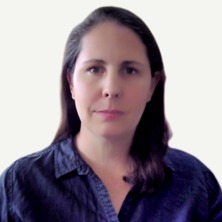
Dr Helen Mayfield is an interdisciplinary researcher whose work lies at the intersection of epidemiology, infectious diseases and environmental conservation. With a decade of experience studying zoonotic and vector-borne diseases, she employs advanced data modelling techniques like Bayesian networks and spatial models to explore the environmental drivers of disease. Helen holds a PhD in machine learning for environmental management. Her research focus is on refining and testing new disease surveillance methods and strategies, such as molecular xenomonitoring of mosquitoes, and targeted sampling to combat lymphatic filariasis in the Pacific islands. In addition, her current project collaborating with the NSW Saving our Species programme aims to facilitate adaptive management for threatened species using structured expert knowledge to improve decision outcomes for biodiversity.
Helen teaches in courses for conservation planning and practice, and conservation policy. She is currently president of the Bayesian Network Modelling Association and a member of the International Union for the Conservation of Nature (IUCN) Decision Science Working Group.
Availability
- Dr Helen Mayfield is:
- Available for supervision
Qualifications
- Doctor of Philosophy, The University of Queensland
- Member, Australasian Bayesian Network Society, Australasian Bayesian Network Society
- Member, Centre for Biodiversity and Conservation Science, Centre for Biodiversity and Conservation Science
- Collaboration / Affiliation, Griffith University Systems Modelling Group, Griffith University Systems Modelling Group
- Associate Fellow, QUT Centre for Data Science, QUT Centre for Data Science
Research interests
-
Improving indicator selection and design
In both conservation science and infectious disease epidemiology, what we measure and how, will affect how accurately we detect changes in the system. This could be as part of a threatened species management plan or for informing programmatic decisions for disease elimination. By exploring alternative indicators and sampling methods, we can improve our understanding of the system to informed management decisions.
-
Linking local environments to infectious disease risk
The environment where we live and work can affect our exposure to vector-borne or zoonotic diseases. This potentially creates win-win scenarios where we can optimise interventions so that they benefit both people and nature.
-
Decision support and analysis tools
Tools and models that help to structure and analyse data from a range of sources including academic studies, monitoring and expert elicitation can facilitate informed decision making. This is equally true in data-rich and data-poor scenarios. Using the right modelling technique to suit the problem at hand, and making the tool user-friendly for the intended audience are crucial for ensuring the product is fit-for-purpose
Works
Search Professor Helen Mayfield’s works on UQ eSpace
2017
Conference Publication
Predictive risk mapping of Human Leptospirosis in Fiji using spatial Bayesian networks
Mayfield, Helen, Smith, Carl, Lowry, John, Watson, Conall, Karma, Mike, Nilles, Eric and Lau, Colleen (2017). Predictive risk mapping of Human Leptospirosis in Fiji using spatial Bayesian networks. 10th International Leptospirosis Society Meeting, Palmerston North, New Zealand, 27nd November-01 December 2017.
2017
Journal Article
Use of freely available datasets and machine learning methods in predicting deforestation
Mayfield, Helen, Smith, Carl, Gallagher, Marcus and Hockings, Marc (2017). Use of freely available datasets and machine learning methods in predicting deforestation. Environmental Modelling and Software, 87, 17-28. doi: 10.1016/j.envsoft.2016.10.006
2017
Journal Article
Twenty years of bat monitoring at the London Wetland Centre: showing the biodiversity value of a man-made urban reserve
Mayfield, H.J., Bullock, R.J., Briggs, P.A., Faulkner, S.C. and Hilton, G.M. (2017). Twenty years of bat monitoring at the London Wetland Centre: showing the biodiversity value of a man-made urban reserve. The London Naturalist, 96, 102-114.
2017
Conference Publication
Using geographically-weighted regression to understand spatial variation in the influence of environmental drivers on Leptospirosis transmission in Fiji
Mayfield, Helen, Lowry, John, Watson, Conall, Karma, Mike, Nilles, Eric and Lau, Colleen (2017). Using geographically-weighted regression to understand spatial variation in the influence of environmental drivers on Leptospirosis transmission in Fiji. 10th International Leptospirosis Society Meeting, Palmerston North, New Zealand, 27 November - 1 December 2017. International Leptospirosis Society.
2017
Conference Publication
Structurally aware discretisation for Bayesian networks
Mayfield, Helen, Bertone, Edoardo, Sahin, Oz and Smith, Carl (2017). Structurally aware discretisation for Bayesian networks. The 22nd International Congress on Modelling and Simulation, Hobart, Tasmania, Australia, 3-8 December 2017. Modelling and Simulation Society of Australia and New Zealand.
2015
Other Outputs
Making the most of machine learning and freely available datasets: a deforestation case study
Mayfield, Helen (2015). Making the most of machine learning and freely available datasets: a deforestation case study. PhD Thesis, School of Geography, Planning and Environmental Management, The University of Queensland. doi: 10.14264/uql.2015.1018
2002
Book Chapter
UQ CrocaRoos: An Initial Entry to the Simulation League
Wyeth, Gordon, Venz, Mark, Mayfield, Helen, Akiyama, Jun and Heathwood, Rex (2002). UQ CrocaRoos: An Initial Entry to the Simulation League. RoboCup 2001: Robot Soccer World Cup V. (pp. 547-550) Berlin, Heidelberg: Springer Berlin Heidelberg. doi: 10.1007/3-540-45603-1_80
Supervision
Availability
- Dr Helen Mayfield is:
- Available for supervision
Looking for a supervisor? Read our advice on how to choose a supervisor.
Available projects
-
Analysing antibodies as indicators for lymphatic filariasis surveillance in Samoa using Bayesian networks.
Location: UQ CCR, Herston
Description: Lymphatic filariasis (LF) is a mosquito-transmitted disease which causes a significant disease burden, particularly in low-income countries. Surveillance plays a crucial role in global elimination efforts, with human antigen being the most widely used indicator. There is evidence however that antibodies may be more sensitive than antigen for detecting changes in infection prevalence. This project will use an established methodology (https://shorturl.at/fqzAP) to design and implement a data-driven Bayesian network model to evaluate the relative utility of different infection markers for detecting signals of transmission in Samoa.
Expected outcomes and deliverables: The student will develop skills in Bayesian network modelling and an understanding of how data modelling can be applied to operational research in infectious diseases. Deliverables will be a fully parameterised Bayesian network, and a report including a sensitivity analysis and discussion. Upon completion of the project, there will be an opportunity to write up and publish the results as a scientific paper.
Suitable for: Students with basic epidemiology, good analytical skills and in interest in data science. No previous knowledge of Bayesian networks is assumed.
Supervision history
Completed supervision
-
2026
Doctor Philosophy
Integrated watershed management for public and ecosystem health in the Pacific Islands: overlapping drivers and strategies to prevent leptospirosis and improve coral reef health
Associate Advisor
Other advisors: Professor Colleen Lau, Dr Amelia Wenger, Associate Professor Carissa Klein
-
2026
Doctor Philosophy
Spatial epidemiological methods to support decision-making for infectious disease prevention and control in the Dominican Republic
Associate Advisor
Other advisors: Associate Professor Benn Sartorius, Professor Colleen Lau
-
2026
Doctor Philosophy
The long-term cardiovascular complications of SARS-CoV-2 infection and COVID-19 vaccines
Associate Advisor
Other advisors: Professor Colleen Lau, Professor Nathan Palpant, Professor Kirsty Short
Media
Enquiries
For media enquiries about Dr Helen Mayfield's areas of expertise, story ideas and help finding experts, contact our Media team: