
Overview
Background
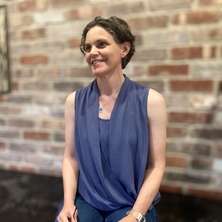
Professor Kate O'Brien applies modelling and data analysis to explore sustainability challenges in engineered, ecological and human systems. Professor O'Brien works with a diverse network of local and international collaborators, from academia, government and industry, to tackle important questions such as: In restoring valuable coastal habitat, what is the minimum patch size required for success, and why? How much oil can individual fossil fuel producers extract without compromising global climate targets? Why is gender equality in the workplace so hard to achieve? She uses modelling as a tool to connect ideas across traditional disciplinary boundaries to promote innovation and tackle complex, open-ended problems. Professor O'Brien is the former Director of Teaching and Learning in the UQ School of Chemical Engineering. She has won numerous awards for teaching students critical thinking and other transferrable skills needed to lead the shift from the current "take-make-waste" paradigm to genuine sustainability. She teaches new academics to take a practical, student-centred approach to teaching called "Ruthless Compassion", and she is passionate about finding creative solutions to work-family conflict.
Availability
- Professor Kate O'Brien is:
- Available for supervision
- Media expert
Fields of research
Qualifications
- Bachelor of Engineering, The University of Queensland
- Bachelor of Science, The University of Queensland
- Doctor of Philosophy, University of Western Australia
Research interests
-
Environmental systems modelling and analysis
Sustainability is a wicked problem, characterized by high uncertainty, divergent values and complex interactions within and between social, economic and ecological systems. Applying a systems approach and working in interdisciplinary teams as an environmental engineer, I apply a collection of modelling tools across a range of scales to address the question, how can resources be utilized more sustainably? In practice, this means improving our ability to value, manage and restore environmental systems, ensuring that they can continue to provide the ecosystem services on which our societies depend. My research has three key themes: Water-energy-climate-nutrient nexus; Socio-ecological resilience; Education.
Research impacts
The current sustainability crises are a collection of interconnected problems, including climate change, resource depletion, ecosystem degradation, water quality decline, urbanization, poverty. Collectively, these constitute a wicked problem, which cannot be “solved” by traditional technical solutions, or by any one discipline or industry. Shifting from “take-make-waste” to genuine sustainability will require collaboration across traditional boundaries, and in universities we need to train our graduates in working across disciplines, and other sustainability competencies, to prepare for the future of work.
Cross-disciplinary collaboration across is easier said than done however. Building successful collaboration takes time and effort, results are not guaranteed, and outcomes can be hard to publish. In an increasingly competitive job market, it can be risky to spread finite resources too thin: moving between disciplines can make you a “jack of all trades, master of none”. On the up side, crossing traditional divides brings inspiration and innovation: big advances often occur when ideas and techniques are taken from one field, and applied in a completely new context.
Spanning a wide variety of sustainability research throughout my career, I have developed a systems approach to making cross-disciplinary collaboration work. I’m regularly invited to speak with diverse audiences on the topic of sustainability education and effective approaches to working across disciplines, e.g.
- Invited speaker to Peter Cullen Trust Alumni 2023: Bridging science, people and the environment to tackle the sustainability crises Nov 2023;
- Invited Seminar, University of Melbourne Faculty of Engineering and IT Teaching and Learning Laboratory March 2023
- Plenary address Chemeca conference Inaugural David Woods Memorial Lecture Teaching sustainability upside down: it takes a wicked approach to teach a wicked problem Sep 2022;
- Keynote address Brisbane Hatch sustainability week Planetary Boundaries - sustainability for engineers June 2021;
- Invited presentation to Healthy Land and Water 2021 leadership team Regional sustainability: applications of the planetary boundaries framework
- Plenary address International Congress on Modelling and Simulation Hazards of working across disciplines: how models (and modellers) can bridge the gaps Canberra 2019
Works
Search Professor Kate O'Brien’s works on UQ eSpace
2011
Conference Publication
Viability criteria for the presence of the seagrass Zostera muelleri in Moreton Bay, based on benthic light dose
O'Brien, K. R., Grinham, A., Roelfsema, C. M., Saunders, M. I. and Dennison, W. C. (2011). Viability criteria for the presence of the seagrass Zostera muelleri in Moreton Bay, based on benthic light dose. Modelling and Simulation Society of Australia and New Zealand (MODSIM 2011), Perth, Australia, 12 - 16 December 2011. Perth, Australia: Modelling and Simulation Society of Australia and New Zealand.
2010
Journal Article
Vertical distributions of chlorophyll in deep, warm monomictic lakes
Hamilton, David P., O'Brien, Katherine R., Burford, Michele A., Brookes, Justin D. and McBride, Chris G. (2010). Vertical distributions of chlorophyll in deep, warm monomictic lakes. Aquatic Sciences, 72 (3), 295-307. doi: 10.1007/s00027-010-0131-1
2009
Journal Article
Effects of light history on primary productivity in a phytoplankton community dominated by the toxic cyanobacterium Cylindrospermopsis raciborskii
O'Brien, Katherine R., Burford, M.A. and Brookes, J.D. (2009). Effects of light history on primary productivity in a phytoplankton community dominated by the toxic cyanobacterium Cylindrospermopsis raciborskii. Freshwater Biology, 54 (2), 272-282. doi: 10.1111/j.1365-2427.2008.02106.x
2008
Conference Publication
The role of public transport in reducing Brisbane's greenhouse gas emissions and oil consumption
Hearps, P., O'Brien, K. and O'Chee, W. (2008). The role of public transport in reducing Brisbane's greenhouse gas emissions and oil consumption. Enviro 08 - Australasia's Environmental & Sustainability Conference and Exhibition, Melbourne, VIC Australia, 5-7 May 2008.
2006
Journal Article
Particle tracking in a salinity gradient: A method for measuring sinking rate of individual phytoplankton in the laboratory
O'Brien, Katherine R., Waite, Anya M., Alexander, Bridget L., Perry, Karen A. and Neumann, Luis E. (2006). Particle tracking in a salinity gradient: A method for measuring sinking rate of individual phytoplankton in the laboratory. Limnology and Oceanography: Methods, 4 (9), 329-335. doi: 10.4319/lom.2006.4.329
2004
Journal Article
Disaggregation of Microcystis aeruginosa colonies under turbulent mixing: laboratory experiments in a grid-stirred tank
O'Brien, Katherine R., Meyer, David L., Waite, Anya M., Ivey, Gregory N. and Hamilton, David P. (2004). Disaggregation of Microcystis aeruginosa colonies under turbulent mixing: laboratory experiments in a grid-stirred tank. Hydrobiologia, 519 (1-3), 143-152. doi: 10.1023/B:HYDR.0000026501.02125.cf
2003
Journal Article
Simple mixing criteria for the growth of negatively buoyant phytoplankton
OBrien, Katherine R., Ivey, Gregory N., Hamilton, David P., Waite, Anya M. and Visser, Petra M. (2003). Simple mixing criteria for the growth of negatively buoyant phytoplankton. Limnology And Oceanography, 48 (3), 1326-1337. doi: 10.4319/lo.2003.48.3.1326
Funding
Current funding
Supervision
Availability
- Professor Kate O'Brien is:
- Available for supervision
Looking for a supervisor? Read our advice on how to choose a supervisor.
Available projects
-
To buy, borrow or mend? Assessing the potential of sharing and repairing consumer items as a path to sustainability
The “sharing and circular economy” has influenced practices in many sectors over the past decade. For example, there has been a growth in the sharing and repairing of consumer products, through various mechanisms, e.g. tool libraries and repair cafes. While these models have been viewed by many as sustainable alternatives to productivism and consumerism, the costs and benefits of have not been assessed.
The purpose of this project is to quantify and compare the social, economic and environmental impacts of producing, owning, sharing and repairing common consumer items, in order to assess the sustainability potential of the sharing economy.
-
Is there a business case for family-friendly career paths?
This project will investigate the business case for more diverse career paths for professionals in STEM (science, technology, engineering and mathematics) fields. Specifically, the project will explore how flexible work arrangements (including part-time work and career breaks) affect career opportunities, and under what conditions flexible work arrangements provide benefits in business (to employees and employers) and academic (to staff, research groups, faculties and universities). A range of methodologies are available to the candidate, including interview methods, surveys, data analysis, implicit bias assessment and mathematical/systems modelling. An honours undergraduate degree or masters in science, economics, engineering, social science, psychology or another suitable field is essential. Applicants must have excellent critical thinking skills, demonstrated expertise in quantitative research, and ability to analyse and synthesize information from across a range of disciplines. The successful applicant must obtain a UQ scholarship for domestic students, International Postgraduate Research Scholarship (IPRS) or equivalent, and will receive $ 5 000 per annum top-up scholarship. This scholarship will be awarded for 3.5 years.
-
Recalcitrant resilience: barriers to sustainability in socio-ecological systems
Resilience is the ability of a system to bounce back after disturbance such that core structures and functions are not lost. Resilience is often presumed to be desirable, but that’s not always the case: many entrenched problems are difficult to resolve because the current (unsatisfactory) state is resilient. The health of social and ecological systems is therefore dependent on both their current state and their future trajectory, i.e. their resilience.
This project explores two intractable problems which exhibit “recalcitrant resilience”, i.e. where change is desired but the status quo is resilient. This approach is based on the recognition than many of the complex challenges facing the world are “wicked problems”, i.e. are complex, contested and subject to high uncertainty. Traditional technocratic solutions are insufficient to address such problems: finding a “solution” and implementing or communicating it is ineffective when key stakeholders have contested certitudes and conflicting world views.
This project will use participatory modelling and engagement with stakeholders to examine how resilience in social systems inhibits progress in two social-environmental issues: catchment management in the Great Barrier Reef and ocean plastics pollution. Five aspects of resilience will be used to synthesize barriers to sustainable practices: Diversity; Resistance; Recovery; Adaptability and Responsiveness. These attributes of resilience synthesize current knowledge of socio-ecological resilience in a form in which they can be assessed in social systems which are “stuck”. Through analysing five key components of resilience, the project will characterize what makes each situation so “sticky”, and how change might become possible. From this regional issue, the insights will then be applied to a global environmental problem.
The project will be co-supervised by Dr Angela Dean (UQ/QUT Environmental Social Scientist). Dr Paul Maxwell and Dr Tracy Schultz from Alluvium Consulting will act as external advisors on the project.
-
Modelling sustainable water extraction in Northern Queensland
Freshwater flow and nutrient inputs from catchments into the Gulf of Carpentaria effect estuarine productivity, with flow-on effects on fisheries species, and endangered species. Thus sustained water extraction has the potential to impact the estuaries, and associated ecosystems and economies. Water development is underway in some of these catchments, with plans for further development. In river systems worldwide, unsustainable water extraction has had major impacts on water quality and quantity.
The purpose of this PhD is to assess how water development in surrounding catchments will affect the health of socio-ecological systems associated with the Gulf of Carpentaria. The project will have four key components: 1. Charactering the system through analysis and synthesis of existing data from the three river catchments and estuaries; 2. Development of a conceptual model for the estuary which includes key processes for health and productivity of socio-ecological systems, including interactions and feedbacks affecting resilience; 3. Engagement with a variety of stakeholder groups, using participatory modelling to collect knowledge from diverse sources; 4.Quantifying critical thresholds for health, productivity and resilience of key socio-ecological systems. Where current knowledge is insufficient to identify thresholds, a method to collect that information will be identified.
The project will engage with a team of experts from Griffith University (Professor Michele Burford) and Queensland Government agencies
Supervision history
Current supervision
-
Doctor Philosophy
Supporting Indigenous fire management through collaborative social-ecological partnerships
Associate Advisor
Other advisors: Associate Professor Angela Dean, Dr Coen Hird
Completed supervision
-
2021
Doctor Philosophy
Seagrass and coastal protection: separating myths from facts
Principal Advisor
Other advisors: Associate Professor David Callaghan
-
2010
Doctor Philosophy
Modelling of physical and physiological processes controlling primary production and growth in cyanobacteria
Principal Advisor
-
2009
Doctor Philosophy
Seagrass and Caulerpa taxifolia interactions: comunity function in invasive vs native populations
Principal Advisor
Other advisors: Associate Professor Ian Tibbetts
-
2026
Doctor Philosophy
Characterising global implications of water and energy consumption for residential showering
Associate Advisor
Other advisors: Professor Steven Kenway
-
2026
Doctor Philosophy
Interconnections between water supply, cooling and drainage through urban greenery and alternative water sources
Associate Advisor
Other advisors: Professor Steven Kenway
-
2024
Doctor Philosophy
Evaluating governances of coastal wetlands in Australia and Brazil: Variation in polycentric governance and the distribution of power
Associate Advisor
Other advisors: Professor Catherine Lovelock
-
2023
Doctor Philosophy
Seaweed Farming for Sustainable Development
Associate Advisor
Other advisors: Professor Eve McDonald-Madden
-
2019
Doctor Philosophy
Integrated Modelling of Residential Water-Related Energy
Associate Advisor
Other advisors: Professor Steven Kenway
-
2019
Doctor Philosophy
Measuring Corporate Performance in meeting Climate Change limits using a Planetary Boundaries Approach
Associate Advisor
Other advisors: Associate Professor Jacquelyn Humphrey
-
Media
Enquiries
Contact Professor Kate O'Brien directly for media enquiries about:
- Engineering Education
- Sustainability
- Women in STEM
Need help?
For help with finding experts, story ideas and media enquiries, contact our Media team: