
Overview
Background
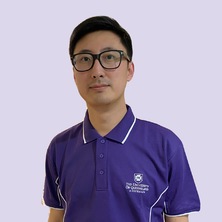
Dr Hongfu Sun completed his PhD in Biomedical Engineering at the University of Alberta in 2015, followed by postdoctoral training in Calgary until 2018. He joined the Imaging, Sensing and Biomedical Engineering team in the School of ITEE at UQ in 2019 and was awarded the ARC DECRA fellowship in 2021. His research interests include developing novel magnetic resonance imaging (MRI) contrast mechanisms, e.g. Quantitative Susceptibility Mapping (QSM), fast and multi-parametric MRI acquisitions, and advanced image reconstruction techniques, including deep learning and artificial intelligence, to advance medical imaging techniques for clinical applications.
Dr Sun is currently recruiting graduate students. Check out Available Projects for details. Open to both Domestic and International students.
Availability
- Dr Hongfu Sun is:
- Available for supervision
Fields of research
Qualifications
- Doctor of Philosophy, University of Alberta
Research interests
-
MR image processing through advanced optimization techniques and deep learning
My research interest is to develop advanced image reconstruction and processing methods to solve some of the mathematical challenges in MRI research, such as the ill-posed inverse problem in Quantitative Susceptibility Mapping (QSM). Some of the approaches I am particularly interested in are (1) image optimization techniques such as image regularization and compressed sensing, and (2) machine learning and especially deep learning through the convolutional neural network (CNN) and transformers in vision.
-
Fast, multi-parametric, and quantitative MRI acquisition methods at ultra-high field
A single MRI acquisition usually takes 3-5 minutes, and a standard clinical protocol may require a couple of them for complementary contrasts. My research interest is to significantly reduce the total scan time for each patient while maintaining the same amount of information for diagnosis, by (1) accelerating individual scans with parallel imaging techniques at ultra-high field, and (2) designing novel MRI sequences that can produce multi-contrast weighted images and multi-parametric quantitative maps from a single MR acquisition.
-
Brain imaging applications in neuroscience and neurological diseases
MRI is one of the best tools to study the brain in vivo, thanks to its excellent soft tissue contrast and its versatile contrast mechanisms. I am interested in applying advanced and comprehensive image analysis on different MRI methods to better understand neuroscience, such as brain development in children and structural and functional connectivity of the brain, as well as some of the neurological diseases such as Alzheimer/Dementia, Multiple Sclerosis, Schizophrenia, and Stroke.
Research impacts
Dr Hongfu Sun is one of the early pioneers in developing a novel MRI technique - Quantitative Susceptibility Mapping (QSM), which is one of the most significant MRI contrast breakthroughs in recent years, that has demonstrated wide clinical applications in healthy, aging and diseased human brains, such as dementia, Alzheimer's disease, Parkinson's disease, multiple sclerosis, schizophrenia, stroke, etc. Since commencing at UQ, Dr Sun has extended his research topics to exploiting novel reconstruction algorithms using state-of-the-art deep learning-based artificial intelligence techniques.
Works
Search Professor Hongfu Sun’s works on UQ eSpace
2020
Journal Article
Quantification of brain oxygen extraction fraction using QSM and a hyperoxic challenge
Ma, Yuhan, Mazerolle, Erin L., Cho, Junghun, Sun, Hongfu, Wang, Yi and Pike, G. Bruce (2020). Quantification of brain oxygen extraction fraction using QSM and a hyperoxic challenge. Magnetic Resonance in Medicine, 84 (6) mrm.28390, 3271-3285. doi: 10.1002/mrm.28390
2020
Journal Article
A diagnostic model for coronavirus disease 2019 (COVID-19) based on radiological semantic and clinical features: a multi-center study
Chen, Xiaofeng, Tang, Yanyan, Mo, Yongkang, Li, Shengkai, Lin, Daiying, Yang, Zhijian, Yang, Zhiqi, Sun, Hongfu, Qiu, Jinming, Liao, Yuting, Xiao, Jianning, Chen, Xiangguang, Wu, Xianheng, Wu, Renhua and Dai, Zhuozhi (2020). A diagnostic model for coronavirus disease 2019 (COVID-19) based on radiological semantic and clinical features: a multi-center study. European Radiology, 30 (9), 4893-4902. doi: 10.1007/s00330-020-06829-2
2020
Journal Article
On the value of QSM from MPRAGE for segmenting and quantifying iron-rich deep gray matter
Naji, Nashwan, Sun, Hongfu and Wilman, Alan H. (2020). On the value of QSM from MPRAGE for segmenting and quantifying iron-rich deep gray matter. Magnetic Resonance in Medicine, 84 (3) mrm.28226, 1486-1500. doi: 10.1002/mrm.28226
2020
Journal Article
Long Non-Coding RNA SNHG14 Impedes Viability, Migration and Invasion of Endometrial Carcinoma Cells Through Modulating miR-93-5p/<i>ZBTB7A</i> Axis
Zhang, Kai, Qi, Yongqin, Zhou, Qi, Sun, Hong and Wei, Jinying (2020). Long Non-Coding RNA SNHG14 Impedes Viability, Migration and Invasion of Endometrial Carcinoma Cells Through Modulating miR-93-5p/ZBTB7A Axis. Cancer Management and Research, 12, 9515-9525. doi: 10.2147/CMAR.S257419
2019
Journal Article
Cerebral OEF quantification: a comparison study between quantitative susceptibility mapping and dual‐gas calibrated BOLD imaging
Ma, Yuhan, Sun, Hongfu, Cho, Junghun, Mazerolle, Erin L., Wang, Yi and Pike, G. Bruce (2019). Cerebral OEF quantification: a comparison study between quantitative susceptibility mapping and dual‐gas calibrated BOLD imaging. Magnetic Resonance in Medicine, 83 (1) mrm.27907, 68-82. doi: 10.1002/mrm.27907
2019
Journal Article
Five year iron changes in relapsing-remitting multiple sclerosis deep gray matter compared to healthy controls
Elkady, Ahmed M., Cobzas, Dana, Sun, Hongfu, Seres, Peter, Blevins, Gregg and Wilman, Alan H. (2019). Five year iron changes in relapsing-remitting multiple sclerosis deep gray matter compared to healthy controls. Multiple Sclerosis and Related Disorders, 33, 107-115. doi: 10.1016/j.msard.2019.05.028
2019
Journal Article
Rapid quantitative susceptibility mapping of intracerebral hemorrhage
De, Ashmita, Sun, Hongfu, Emery, Derek J., Butcher, Kenneth S. and Wilman, Alan H. (2019). Rapid quantitative susceptibility mapping of intracerebral hemorrhage. Journal of Magnetic Resonance Imaging, 51 (3) jmri.26850, 712-718. doi: 10.1002/jmri.26850
2018
Journal Article
Discriminative analysis of regional evolution of iron and myelin/calcium in deep gray matter of multiple sclerosis and healthy subjects
Elkady, Ahmed M., Cobzas, Dana, Sun, Hongfu, Blevins, Gregg and Wilman, Alan H. (2018). Discriminative analysis of regional evolution of iron and myelin/calcium in deep gray matter of multiple sclerosis and healthy subjects. Journal of Magnetic Resonance Imaging, 48 (3), 652-668. doi: 10.1002/jmri.26004
2018
Journal Article
Hematocrit measurement with R2* and quantitative susceptibility mapping in postmortem brain
Walsh, A. J., Sun, H., Emery, D. J. and Wilman, A. H. (2018). Hematocrit measurement with R2* and quantitative susceptibility mapping in postmortem brain. American Journal of Neuroradiology, 39 (7), 1260-1266. doi: 10.3174/ajnr.A5677
2017
Journal Article
Progressive iron accumulation across multiple sclerosis phenotypes revealed by sparse classification of deep gray matter
Elkady, Ahmed M., Cobzas, Dana, Sun, Hongfu, Blevins, Gregg and Wilman, Alan H. (2017). Progressive iron accumulation across multiple sclerosis phenotypes revealed by sparse classification of deep gray matter. Journal of Magnetic Resonance Imaging, 46 (5), 1464-1473. doi: 10.1002/jmri.25682
2017
Journal Article
Cognitive implications of deep gray matter iron in multiple sclerosis
Fujiwara, E., Kmech, J. A., Cobzas, D., Sun, H., Seres, P., Blevins, G. and Wilman, A. H. (2017). Cognitive implications of deep gray matter iron in multiple sclerosis. American Journal of Neuroradiology, 38 (5), 942-948. doi: 10.3174/ajnr.A5109
2017
Journal Article
Deep grey matter iron accumulation in alcohol use disorder
Juhas, Michal, Sun, Hongfu, Brown, Matthew R. G., MacKay, Marnie B., Mann, Karl F., Sommer, Wolfgang H., Wilman, Alan H., Dursun, Serdar M. and Greenshaw, Andrew J. (2017). Deep grey matter iron accumulation in alcohol use disorder. NeuroImage, 148, 115-122. doi: 10.1016/j.neuroimage.2017.01.007
2016
Journal Article
Importance of extended spatial coverage for quantitative susceptibility mapping of iron-rich deep gray matter
Elkady, Ahmed M., Sun, Hongfu and Wilman, Alan H. (2016). Importance of extended spatial coverage for quantitative susceptibility mapping of iron-rich deep gray matter. Magnetic Resonance Imaging, 34 (4), 574-578. doi: 10.1016/j.mri.2015.12.032
2015
Journal Article
Subcortical gray matter segmentation and voxel-based analysis using transverse relaxation and quantitative susceptibility mapping with application to multiple sclerosis
Cobzas, Dana, Sun, Hongfu, Walsh, Andrew J., Lebel, R. Marc, Blevins, Gregg and Wilman, Alan H. (2015). Subcortical gray matter segmentation and voxel-based analysis using transverse relaxation and quantitative susceptibility mapping with application to multiple sclerosis. Journal of Magnetic Resonance Imaging, 42 (6), 1601-1610. doi: 10.1002/jmri.24951
2015
Journal Article
Pattern of lymph node metastases and its implication in radiotherapeutic clinical target volume in patients with non-small-cell lung cancer: a study of 2062 cases
Wang, Y-x, Li, B-sh, Huang, W., Yi, Y., Zhang, J., Wang, Zh-t, Sun, H-f, Li, H-sh and Wei, Y-m (2015). Pattern of lymph node metastases and its implication in radiotherapeutic clinical target volume in patients with non-small-cell lung cancer: a study of 2062 cases. British Journal of Radiology, 88 (1056) 20140288. doi: 10.1259/bjr.20140288
Supervision
Availability
- Dr Hongfu Sun is:
- Available for supervision
Looking for a supervisor? Read our advice on how to choose a supervisor.
Available projects
-
MRI and deep learning methods development and applications at ultra-high field
I am currently recruiting Master and PhD students to innovate on novel MRI methods and deep learning image reconstruction techniques that can be eventually applied to neuroscience and neurological diseases. We have an excellent and accessible MRI facility here at UQ, e.g. a state-of-the-art 3T Prisma and a prestigious 7T whole-body system (only two in Australia, the other one in UniMelb). The research projects will involve MRI physics, pulse sequence programming, image processing (e.g. deep learning), and image analysis. By the end of your graduate study, you will be an expert in MRI with comprehensive skills in maths, physics, computer programming, and artificial intelligence.
https://graduate-school.uq.edu.au/project/developing-ai-based-mri-methods-microscopic-imaging
Supervision history
Current supervision
-
Doctor Philosophy
Development of novel deep learning methods for medical imaging
Principal Advisor
Other advisors: Professor Feng Liu, Dr Nan Ye
-
Doctor Philosophy
MR image processing through advanced optimisation techniques and deep learning
Principal Advisor
Other advisors: Professor Fred Roosta
-
Doctor Philosophy
MR image processing through advanced optimisation techniques and deep learning
Principal Advisor
Other advisors: Professor Feng Liu
-
Doctor Philosophy
Magnetic Resonance Image Processing with Artificial Intelligence
Associate Advisor
Other advisors: Associate Professor Craig Engstrom, Dr Shakes Chandra
Completed supervision
-
2026
Doctor Philosophy
Deep learning-based methods for magnetic resonance fingerprinting reconstruction
Principal Advisor
Other advisors: Professor Feng Liu
-
2025
Doctor Philosophy
Robust and generalizable deep Learning quantitative susceptibility mapping for human brains
Principal Advisor
Other advisors: Professor Feng Liu
-
2026
Doctor Philosophy
Deep Neural Architectures for Robust Feature Localization in Computer Tomography and Spectroscopy
Associate Advisor
Other advisors: Professor Kwun Fong, Associate Professor Henry Marshall, Professor Feng Liu
-
2024
Doctor Philosophy
Key Applications in Deep Learning Based Quantitative Susceptibility Mapping
Associate Advisor
Other advisors: Emeritus Professor Stuart Crozier, Professor Feng Liu
-
2022
Doctor Philosophy
Deep Learning-based Quantitative Susceptibility Mapping: Methods Development and Applications
Associate Advisor
Other advisors: Emeritus Professor Stuart Crozier, Professor Feng Liu
Media
Enquiries
For media enquiries about Dr Hongfu Sun's areas of expertise, story ideas and help finding experts, contact our Media team: