
Overview
Background
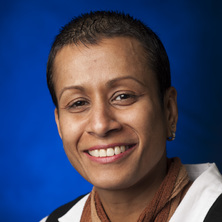
I am a Pacific Fijian academic, researcher and community leader providing senior leadership in community‑engaged research and teaching across Australian and international higher education. My work sits at the intersection of Indigenous knowledge systems, health equity and public policy, driving system‑level change through culturally grounded scholarship.
I lead and shape programs that embed Indigenous methodologies, community participatory action research and social justice principles into policy‑relevant research, professional education and practice. Through long‑term, co‑designed partnerships, I advance culturally safe solutions that address the social, cultural, environmental and political determinants of health affecting Māori and Pasifika, Culturally and Linguistically Diverse (CALD) and First Nations communities nationally and internationally.
My strength‑based research program focuses on health equity and the burden of chronic conditions, with a strong emphasis on research translation, policy development and advocacy impact. My work informs health systems, service design and decision‑making at local, national and international levels, contributing to improved and more equitable health outcomes—particularly for First Nations including Māori and Pasifika and CALD communities in Australia and globally.
Availability
- Dr Heena Akbar is:
- Available for supervision
- Media expert
Qualifications
- Bachelor (Honours), Queensland University of Technology
- Masters (Research) of Public Health, The University of Queensland
- Doctor of Philosophy, Queensland University of Technology
Research interests
-
Health and Wellbeing of Māori and Pasifika communities
We are currently working with Māori and Pasifika communities to co-design and co-develop programs and initiatives that promote holistic health and wellbeing.
-
Women’s health with a particular focus on chronic condition prevention and management
We are currently piloting the Pasifika Women's Wellness Program for Maori and Pasifika women living with type 2 diabetes. This program was co-developed with the Pasifika communities in Southeast Queensland.
-
Community- based participatory action research
We use Pacific Indigenous frameworks (Pacific Health Models) and methodologies and approaches embedded within emancipatory and social justice principles.
-
Cultural and social determinants of health
Health inequities and cultural and social determinants of health are foundational in my teaching and research. My teaching focuses on Aboriginal and Torres Strait Islander Health, Public Health and Social Determinants of Health to address health inequities. I use my research and community development experiences with First Nations communities and share these in the teaching & learning space with my students.
-
Indigenous methodologies (Pacific Indigenous approaches)
-
First Nations Health and Wellbeing
Research impacts
Dr Akbar's work frames Pacific knowledge systems, Pacific Health models and Indigenous methodology to develop participatory co-designed solutions with First Nations, Maori and Pacific communities to address health inequities. As a Pacific researcher, Heena works with Maori and Pacific communities in Australia and internationally to promote health and wellness as well as bringing the Pacific researchers to lead Māori and Pacific research in Australia.
Works
Search Professor Heena Akbar’s works on UQ eSpace
2021
Conference Publication
Development of a Pasifika Women’s Diabetes Wellness Program: from the perspective of Māori and Pasifika women living in Queensland
Akbar, Heena, Chow, Iree, Nuimata, Winnie, Te Kani, Wynn , Langan, Violet and Gallegos, Danielle (2021). Development of a Pasifika Women’s Diabetes Wellness Program: from the perspective of Māori and Pasifika women living in Queensland. Queensland Women’s Heath Forum, Brisbane, QLD, Australia, 27-28 May, 2021. Brisbane, QLD, Australia: The Australian Health Research Alliance (AHRA) WHRTN.
2020
Conference Publication
Sustaining research students’ support
Baguley, Graeme, Akbar, Heena, Wang, Christine, Baek, Youngnam and Song, Jun Seok (2020). Sustaining research students’ support. ISANA ONAIR: 2020 Online Conference – Turning challenges into opportunities, Virtual, 3-4 and 8-9 December 2020. Hobart, TAS Australia: ISANA: International Education Association.
2020
Conference Publication
Exploring type 2 diabetes and medication adherence in the Maori and Pacific Islander population: participant interviews
Taufatofua, N., Cottrell, N., Akbar, H. and La Caze, A. (2020). Exploring type 2 diabetes and medication adherence in the Maori and Pacific Islander population: participant interviews. ASCEPT- APSA Joint Virtual Scientific Meeting 2020, Virtual, 24-26 November 2020. Brisbane, QLD Australia: Australasian Pharmaceutical Science Association (APSA).
2020
Conference Publication
Supporting medication adherence in the Maori and Pacific Islander community with type 2 diabetes in Australia
Natasha Taufatofua , Heena Akbar , Neil Cottrell and Adam La Caze (2020). Supporting medication adherence in the Maori and Pacific Islander community with type 2 diabetes in Australia. ASCEPT-APSA 2020 Joint Virtual Scientific Meeting: Oral Abstracts, Virtual, 24 -26 November 2020. Hamilton, QLD, Australia: ASCEPT Virtual .
2019
Conference Publication
Socio-cultural factors influencing self-management of Australian Pacific Islander women with type 2 diabetes
Akbar, H. (2019). Socio-cultural factors influencing self-management of Australian Pacific Islander women with type 2 diabetes. International Diabetes Federation (IDF) Congress 2019, Busan, South Korea, 2nd December-6th December 2019. South Korea: IDF.
2019
Conference Publication
Predictors of self-care for Australian Pacific women with type 2 diabetes
Akbar, H. (2019). Predictors of self-care for Australian Pacific women with type 2 diabetes. The 16th International Diabetes Epidemiology Symposium, Seoul, South Korea , 28th November-2nd December 2019. South Korea: IDEG.
2019
Conference Publication
Using Talanoa to explore diabetes self-management of Australian Pacific Islander women with type 2 diabetes
Akbar, H. (2019). Using Talanoa to explore diabetes self-management of Australian Pacific Islander women with type 2 diabetes. Public Health Prevention Conference, Melbourne, VIC Australia, 12-14th June 2019. Melbourne Convention and Exhibition Centre: Public Health Association Australia.
2018
Other Outputs
Socio-cultural context of managing type 2 diabetes in Australian Pacific Islander women living in Queensland
Akbar, Heena G. (2018). Socio-cultural context of managing type 2 diabetes in Australian Pacific Islander women living in Queensland. PhD Thesis, School of Exercise & Nutrition Sciences, Queensland University of Technology. doi: 10.5204/thesis.eprints.119162
2016
Other Outputs
Diabetes Prevention and Management: Stories from the Pasifika Communities in Queensland
Akbar, Heena (2016). Diabetes Prevention and Management: Stories from the Pasifika Communities in Queensland. Brisbane, QLD, Australia: Queensland University of Technology.
2015
Journal Article
Predicting intentions and behaviours in populations with or at-risk of diabetes: A systematic review
Akbar, Heena, Anderson, Debra and Gallegos, Danielle (2015). Predicting intentions and behaviours in populations with or at-risk of diabetes: A systematic review. Preventive Medicine Reports, 2, 270-282. doi: 10.1016/j.pmedr.2015.04.006
2011
Journal Article
Multicultural melting pot: painting for the planet
Tindle, Elizabeth, McCarthy, Maria, Lincoln, Debbie, Lawson, Lynda and Akbar, Heena (2011). Multicultural melting pot: painting for the planet. Congruence, 10 (3), 28-31.
2005
Journal Article
Identifying competencies for Australian health professionals working in international health
Akbar, H., Hill, P. S., Rotem, A., Riley, I. D., Zwi, A. B., Marks, G. C. and Mark, T. (2005). Identifying competencies for Australian health professionals working in international health. Asia-Pacific Journal of Public Health., 17 (2), 99-103. doi: 10.1177/101053950501700207
2003
Other Outputs
Flexible Options for International Health in Australia
Riley, I. D., Rotem, A., Zwi, A., Marks, G., Hill, P. S., Mark, T. and Akbar, H. (2003). Flexible Options for International Health in Australia. Canberra, ACT Australia: Commonwealth Department of Health and Ageing.
Supervision
Availability
- Dr Heena Akbar is:
- Available for supervision
Looking for a supervisor? Read our advice on how to choose a supervisor.
Available projects
-
Translating Evidence Into Practice: Improving Health and Health Systems for Māori, Pasifika and Priority Populations
Health and Wellbeing of Māori and Pasifika Communities
We partner closely with Māori and Pasifika communities to co-design and co-develop culturally grounded solutions that promote health equity and holistic wellbeing. HDR projects in this area may involve:
- community‑led participatory action research
- Indigenous and Pacific research methodologies
- holistic frameworks of health, identity, culture, and belonging
- evaluation of community‑driven programs or services
These projects are best suited for students who value relational, community-centred research and aspire to contribute to meaningful, culturally relevant outcomes.
Implementation Science and Translation Research for Priority Communities
We are exploring how implementation science can strengthen the uptake, scalability, and sustainability of health initiatives within Priority communities (including Māori, Pasifika, and culturally and linguistically diverse groups). HDR projects could focus on:
- applying and adapting implementation frameworks within Indigenous or Pacific contexts
- translating evidence into culturally safe and responsive practice
- measuring research impact on community health outcomes
- identifying barriers and enablers to culturally responsive service delivery
These projects aim to generate real-world impact by bridging the gap between research, policy, and practice for priority communities.
Evaluation and Health Service Research Translation
We are also interested in evaluation research and the translation of evidence into health service improvement. HDR projects may explore:
- mixed‑methods evaluations of health programs or models of care
- culturally safe evaluation frameworks for Māori, Pasifika, or Priority populations
- pathways for translating research into health service redesign
- impact assessment and continuous quality improvement within health systems
These projects suit students interested in strengthening health systems, improving service delivery, and ensuring that evidence leads to meaningful, equitable outcomes for communities.
Supervision history
Current supervision
-
Doctor Philosophy
Exploring the psychological impact of type 2 diabetes among Kiribati women living in Queensland, Australia
Principal Advisor
-
Doctor Philosophy
Towards Social Justice for the Hijra Community
Associate Advisor
Other advisors: Dr Dorothee Hölscher, Associate Professor Kathy Ellem
-
Doctor Philosophy
Exploration of Health System Responsiveness to Provide Sexual and Reproductive Health Care to Refugee and Migrant Women in Queensland
Associate Advisor
Other advisors: Associate Professor Yibeltal Alemu, Associate Professor Judith Dean
-
Doctor Philosophy
Smallholder agriculture and food and nutrition security: strategies to empower farming families in Solomon Islands
Associate Advisor
Other advisors: Dr Natalie Jones, Associate Professor Severine van Bommel
Completed supervision
-
2025
Master Philosophy
Teacher perspectives on school gardens in educational contexts
Associate Advisor
Other advisors: Associate Professor Severine van Bommel
-
2024
Doctor Philosophy
Supporting Type 2 Diabetes Management and Medication Adherence in the Maori and Pacific Islander Community in Queensland
Associate Advisor
Other advisors: Associate Professor Adam La Caze
Media
Enquiries
Contact Dr Heena Akbar directly for media enquiries about:
- Chronic Conditions prevention & management
- culturally responsive healthcare and research
- Decolonising research methods
- Food Security
- Health Equity
- Indigenising curriculum
- Pasifika Wellness Program
- Women's Wellness
Need help?
For help with finding experts, story ideas and media enquiries, contact our Media team: