
Overview
Background
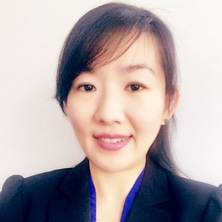
Moe Thuzar (MBBS, FRCP UK, FRACP, PhD) is a Senior Endocrinologist at the Princess Alexandra Hospital (PAH), the Director of Translational Engagement at the Translational Research Institute (TRI), and a Senior Research Fellow at the Faculty of Medicine, University of Queensland, Brisbane. She is the clinical & research Lead in Adrenal Endocrinology in the Endocrinology Department at the PAH, and has a strong research interest in the Neuroendocrine Regulation of Metabolism and Cardiovascular Health in Humans, particularly the Adrenal Endocrine System and Primary Aldosteronsim.
After completing her specialist training and receiving FRACP (Fellowship of the Royal Australasian College of Physicians) in early 2014, she undertook her PhD study (2014-2018, UQ) investigating the role of adrenal neuroendocrine system in the regulation of human brown adipose tissue and energy metabolism under the primary supervision of Professor Ken Ho. Moe then joined the Endocrine Hypertension Unit of Professor Michael Stowasser, pursuing further research in Cardiovascular Endocrinology, in particular, elucidating the role of the mineralocorticoid system in the regulation of cardiometabolic health and its interplay with other systems in humans, and investigating optimal diagnostic and management strategies for primary aldosteronism. She joined the Executive Leadership Team of the TRI as the Director of Translational Engagement in 2026, providing strategic leadship for programs fostering partnerships between scientists, clinicians, industry and consumers, and an innovative ecosystem accelerating discoveries into clinical solutions.
Her research has informed a number of National and International Clinical Practice Guidelines including the US Endocrine Society's Guidelines for Diagnosis and Management of Primary Aldosteronism (2025), Lipid Management in Patients with Endocrine Disorders (2020), the Chinese Society of Cardiology/Chinese Medical Association's Joint Guideline for Management of Hypertension (2024), Australian & New Zealand Guideline for Adrenal Venous Sampling in Primary Aldosteronism (2025), the Endocrine Society of Australia/Australian Association of Clinical Biochemist/Royal Australasian College of Pathologists' Joint Guideline for Endocrine Dynamic Testing (2021), QLD Statewide Protocol for Management of Diabetes Ketoacidosis (2014).
She has received numerous awards for her work including US Endocrine Society’s Presidential Awards for Excellence in Cardiovascular Endocrinology Research (2017) and in Adipocyte Biology Research (2017), Early Career Researcher Award from the Australian & New Zealand Obesity Society (2016), Australasian Women in Endocrinology Young Investigator Award (2017), Queensland Health & Medical Research Award (Previously “Premier’s award”, finalist, 2017), Young Investigator Award, International Aldosterone Conference (runner-up, 2019), Endocrine Society of Australia's Paul Lee Award (2023). She is a Principal Investigator (PI) or Chief Investigator (CI) of a number of successful competitive grants, totalling ~4 millions to date, which include Royal Australasian College of Physicians-Australian Diabetes Society Research Establishment Fellowship (2023), MRFF Clinician Researchers Project Grant (CI, 2022-2025), Metro South Research Support Scheme Program Grant (PI, 2021-2023), Diabetes Australia Project Grant (PI, 2019-2021), Metro South Research Support Scheme Early Career Researcher Grant (PI, 2019-2022), Endocrine Society of Australia Postdoctoral Fellowship (2019). She has served as an expert reviewer for Grant review panels including UK Research & Innovation Grants Scheme, NHMRC Project Grants Scheme and for top journals in the field, and held editorial roles for a number of journals including the Frontiers in Endocrinology, Metabolites.
Availability
- Dr Moe Thuzar is:
- Available for supervision
Qualifications
- Doctor of Philosophy, The University of Queensland
Works
Search Professor Moe Thuzar’s works on UQ eSpace
2019
Conference Publication
Defining the optimal cut-off plasma aldosterone level measured by immunoassay for the diagnosis of primary aldosteronism using seated salines suppression test
Thuzar, M., Young, K., Ahmed, A., Wolley, M., Guo, Z., Ward, G., McWhinney, B., Ungerer, J. and Stowasser, M. (2019). Defining the optimal cut-off plasma aldosterone level measured by immunoassay for the diagnosis of primary aldosteronism using seated salines suppression test. 29th European Meeting of Hypertension and Cardiovascular Protection of the European-Society-of-Hypertension (ESH), Milan, Italy, 21-24 June 2019. Philadelphia, PA United States: Lippincott Williams & Wilkins. doi: 10.1097/01.hjh.0000570272.55373.54
2018
Conference Publication
Effect of mineralocorticoid blockade on human brown fat-a randomised placebo-controlled cross-over study
Thuzar, Moe, Law, W. Phillip, Dimeski, Goce, Stowasser, Michael and Ho, Ken K. Y. (2018). Effect of mineralocorticoid blockade on human brown fat-a randomised placebo-controlled cross-over study. Joint Annual Scientific Meetings of Endocrine-Society-of-Australia (ESA) and Society-for-Reproductive-Biology (SRB), Perth Australia, Aug 27-30, 2017. HOBOKEN: WILEY.
2018
Other Outputs
Regulation and metabolic significance of brown adipose tissue in humans
Thuzar, Moe (2018). Regulation and metabolic significance of brown adipose tissue in humans. PhD Thesis, Faculty of Medicine, The University of Queensland. doi: 10.14264/uql.2018.397
2018
Journal Article
An Adrenocortical Carcinoma Evolving From A Small Adrenal Incidentaloma After Years Of Latency
Thuzar, Moe, Perry-Keene, Donald A, d'Emden, Michael C and Duncan, Emma L (2018). An Adrenocortical Carcinoma Evolving From A Small Adrenal Incidentaloma After Years Of Latency. AACE Clinical Case Reports, 4 (1), e65-e69. doi: 10.4158/EP171931.CR
2017
Conference Publication
Effect of formoterol, a selective beta(2)-adrenergic agonist, on brown adipose tissue function in humans: a double-blind placebo controlled study
Thuzar, Moe, Law, W. Phillip, Ratnasingam, Jeyakantha, Franklin, Michael, Dimeski, Goce and Ho, Ken K. Y. (2017). Effect of formoterol, a selective beta(2)-adrenergic agonist, on brown adipose tissue function in humans: a double-blind placebo controlled study. HOBOKEN: WILEY-BLACKWELL.
2016
Journal Article
MECHANISMS IN ENDOCRINOLOGY: brown adipose tissue in humans: regulation and metabolic significance
Thuzar, Moe and Ho, Ken K. Y. (2016). MECHANISMS IN ENDOCRINOLOGY: brown adipose tissue in humans: regulation and metabolic significance. European Journal of Endocrinology, 175 (1), R11-R25. doi: 10.1530/EJE-15-1217
2014
Journal Article
Extreme hypertriglyceridemia managed with insulin
Thuzar, Moe, Shenoy, Vasant V., Malabu, Usman H., Schrale, Ryan and Sangla, Kunwarjit S. (2014). Extreme hypertriglyceridemia managed with insulin. Journal of Clinical Lipidology, 8 (6), 630-634. doi: 10.1016/j.jacl.2014.09.004
2014
Journal Article
Infrared thermography in the detection of brown adipose tissue in humans
Jang, Christina, Jalapu, Sandya, Thuzar, Moe, Law, Phillip W., Jeavons, Susanne, Barclay, Johanna L. and Ho, Ken K. Y. (2014). Infrared thermography in the detection of brown adipose tissue in humans. Physiological Reports, 2 (11) e12167, e12167.1-e12167.7. doi: 10.14814/phy2.12167
2014
Journal Article
Use of a standardised diabetic ketoacidosis management protocol improved clinical outcomes
Thuzar, Moe, Malabu, Usman H., Tisdell, Ben and Sangla, Kunwarjit S. (2014). Use of a standardised diabetic ketoacidosis management protocol improved clinical outcomes. Diabetes Research and Clinical Practice, 104 (1), E8-E11. doi: 10.1016/j.diabres.2014.01.016
Supervision
Availability
- Dr Moe Thuzar is:
- Available for supervision
Looking for a supervisor? Read our advice on how to choose a supervisor.
Available projects
-
Elucidating pathophysiological mechanisms underlying the divergent cardiometabolic effects of obesity between individuals
Obesity is a recognized risk factor for cardiometabolic diseases. Not all individuals with obesity suffer cardiometabolic issues; approximately 50% of them do not have these issues and are termed "metabolically-healthy obese". Available evidence suggests a role of adipose tissue in the pathophysiology of cardiometabolic issues, but the underlying mechanism of differences in adipose tissue distribution/function between individuals with obesity is unclear.
This project will explore potential pathophysiological mechanisms including the role of the adrenal endocrine system in a number of cohorts including a large community cohort who have been prospectively followed up with cardiometabolic assessments over many years.
-
Mineralocorticoid Receptor Antagonist To Counteract Cardiometabolic Adverse Effects of Steroids/Glucocorticoids
Metabolic syndrome and cardiovascular diseases are common side effects of steroids/glucocorticoids such as prednisolone, widely used for inflammatory diseases; there is no specific agent to counteract these adverse effects. There is evidence that these side effects are likely mediated by closely-related hormone receptors called mineralocorticoid receptors (MRs), present in fat and cardiac tissues and immune cells. We have previously discovered in healthy humans that MR antagonists exert opposing effects to those of glucocorticoids on adipose tissue metabolism.
This project will examine if blocking the MRs by spironolactone can counteract metabolic and cardiac side effects without compromising beneficial antiinflammatory effects in people requiring prednisolone in a randomised placebo-controlled clnical trial.
Supervision history
Current supervision
-
Doctor Philosophy
Optimising the diagnosis of primary aldosteronismand predicting long-term outcomes of surgical treatment
Associate Advisor
Other advisors: Professor Michael Stowasser
-
Doctor Philosophy
Defining The Role Of Mineralocorticoid Receptor In Cardiometabolic Health & Inflammation & Optimising The Diagnostic Approach For Aldosterone-producing Adenoma
Associate Advisor
Other advisors: Professor Michael Stowasser
Media
Enquiries
For media enquiries about Dr Moe Thuzar's areas of expertise, story ideas and help finding experts, contact our Media team: