
Overview
Background
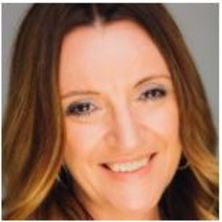
Dr Stephanie MacMahon is a Senior Lecturer in the Science of Learning and in Arts Education, teaching in both the ITE and post-graduate programs in the School of Education at The University of Queensland, and is the program coordinator for the Science of Learning Field of Study. She has over 20 years’ experience as a P-12 educator and school leader, and draws on this experience to support her students in understanding how research can be used meaningfully in educational practice.
Stephanie is also the Co-Founder and Program Director of the UQ Learning Lab: a group of multi-disciplinary researchers, educators, and industry partners who collaborate to transform learning, teaching and training in diverse school and post-school contexts through the science of learning. Her research within the UQ Learning Lab are in human connection and learning, and in understanding how to effectively mobilise insights from the Science of Learning into practice in diverse educational and workplace learning contexts, collaborating with partners to develop, implement and evaluate contextually relevant, actionable, scalable and sustainable solutions to real-world teaching, learning and training needs. Stephanie is a member of the UNESCO Science of Learning Alliance.
Her teaching and leadership in the Science of Learning have recently been recognised with a UQ Citation for Outstanding Contributions to Student Learning (2025), an Australian Council for Educational leaders (ACEL) National Excellence in Leadership Award, and the ACEL Miller-Grassie Award for Outstanding Leadership in Education (2025).
Stephanie collaborates widely with multi-disciplinary researchers on science of learning projects using a range of methodologies.
Availability
- Dr Stephanie Macmahon is:
- Not available for supervision
Fields of research
Qualifications
- Bachelor, University of Sydney
- Masters (Research) of Music Education, University of Western Australia
- Doctor of Philosophy, The University of Queensland
Research interests
-
Human Connectedness and Learning
My research interests fit broadly under the heading of ‘Human Connectedness and Learning’. I use a science of learning lens - often in collaboration with multi-disciplinary researchers from across neuroscience, education and psychology - to explore how individuals across the lifespan, in diverse learning and teaching contexts, and using different modalities, connect and learn with and from one another.
-
Science of Learning
Learning is a highly complex process involving the integration of biological, cognitive, emotional, social, behavioural, cultural, and environmental processes. The science of learning uses a multi-disciplinary and inter-disciplinary approach to better understand how people learn individually and collectively, what the factors are that affect learning, and how we can use this understanding to inform the design of teaching and learning experiences, practices, resources and technologies. As Lecturer in the Science of Learning I am interested in the interconnected, embodied, individual and social processes involved in learning and teaching. In particular, my current research interests are in social synchrony and connection, the development of metacognition, emotional regulation and self- and social regulatory processes, the role of emotions in learning and teaching, and the development of positive learning environments.
-
Knowledge Mobilisation
Knowing about research and the principles of the science of learning is valuable, but being able to mobilise this knowledge into real-world contexts – schools, higher education, vocational education and training, workplaces, industry – is essential if this research is to have a positive impact, and if it is to address authentic needs and priorities. My research into Knowledge Mobilisation has led the development of our Partner Schools Program, an evidence-informed approach to mobilising the science of learning into school contexts. In my role as Program Director of the UQ Learning Lab, I lead diverse projects that use a similar multi-disciplinary and inter-professional collaborative Knowledge Mobilisation process to better understand learning in diverse contexts including school, higher education, health education and the resources sectors.
Research impacts
I work directly with key stakeholders in education and industry, building their capability in the science of learning, and co-constructing evidence-informed solutions to real-world learning and teaching problems and priorities. This work therefore enables real-world, timely impact on industry-identified outcomes. The impact of this partnership work can be seen in a range of learner, teacher, and organisational outcomes such as improved achievement, engagement, wellbeing, self-regulation, motivation and sense of belonging. Importantly, this work is shared through multiple academic and industry forums to enable access by practitioners and industry leaders locally, nationally and internationally, including in Australian Council for Educational Researchers (ACER) Teacher magazine, and Times Higher Education: Campus Magazine THE: Campus. The impact of my work in education has been recognised with an Australian Council for Educational Leaders (ACEL) Leadership Award in 2022, an ACEL National Leadership Award (2025), and the ACEL Miller-Grassie Award (2025).
My work in mobilising the science of learning into educational and organisational practice has led to increased interest in this multi-disciplinary approach to understanding learning, reflected through collaborations with schools across all sectors through our UQ Partner Schools Program, system-wide scaling of the Science of Learning through a collaboration with Brisbane Catholic Education, and projects with various industry partners.
Works
Search Professor Stephanie Macmahon’s works on UQ eSpace
2018
Other Outputs
Social Synchrony Matrix for teachers
MacMahon, Stephanie (2018). Social Synchrony Matrix for teachers. The University of Queensland. (Dataset) doi: 10.14264/uql.2018.657
2017
Newspaper Article
Research to practice – classroom educators engaging with researchers
MacMahon, Stephanie, Nugent, Annita and Carroll, Annemaree (2017, 12 01). Research to practice – classroom educators engaging with researchers Teacher
2016
Newspaper Article
The role of synchrony in collaborative learning
Palghat, Kelsey, Wiseman, Paul and MacMahon, Stephanie (2016, 12 08). The role of synchrony in collaborative learning Teacher
Funding
Past funding
Supervision
Availability
- Dr Stephanie Macmahon is:
- Not available for supervision
Supervision history
Current supervision
-
Doctor Philosophy
The diagnostic assessment of critical thinking to inform teaching design
Principal Advisor
Other advisors: Associate Professor Kay Colthorpe
-
Master Philosophy
Teacher Identity at the Threshold: AI Governance,Policy Enactment, and the Future of a Human Profession
Principal Advisor
Other advisors: Professor Robin Shields
-
Doctor Philosophy
Promoting Learners Autonomy through feedback provision
Principal Advisor
Other advisors: Dr Simone Smala, Dr Chase Sherwell
-
Doctor Philosophy
Thriving as Early-Career Professionals: Understanding Lived Experiences of Students on Permission to Teach
Principal Advisor
Other advisors: Professor Annemaree Carroll, Dr Stevie Hepburn
-
Master Philosophy
Supporting professional growth of middle leaders in schools: a self-regulated learning approach.
Principal Advisor
Other advisors: Dr Stevie Hepburn
-
Master Philosophy
What Supervisors Need to Succeed: Competency Requirements for Safe and Psychologically Healthy Workin HighRisk Settings
Associate Advisor
Other advisors: Professor Maureen Hassall
Completed supervision
-
2026
Doctor Philosophy
The role of metacognition in adolescence: Contributions to cognitive control and academic wellbeing
Associate Advisor
Other advisors: Professor Annemaree Carroll, Professor Paul Dux, Dr Natasha Matthews
-
2025
Doctor Philosophy
The multi-instrumental percussionist: An exploratory study on the roles of teachers, parents, and students towards high school percussion practise across school and home
Associate Advisor
Other advisors: Associate Professor Mary Broughton, Associate Professor Julie Ballantyne
-
2025
Doctor Philosophy
Compassion fatigue and secondary traumatic stress in teachers: How they contribute to burnout and how they are related to trauma-awareness
Associate Advisor
Other advisors: Professor Annemaree Carroll
-
2023
Doctor Philosophy
Can Teacher Spatial Practices and Cognitions be Conceptualised to Realise the Impact of the Built Environment on Teachers¿ Professional Activities?
Associate Advisor
Other advisors: Professor Annemaree Carroll
Media
Enquiries
For media enquiries about Dr Stephanie Macmahon's areas of expertise, story ideas and help finding experts, contact our Media team: