
Overview
Background
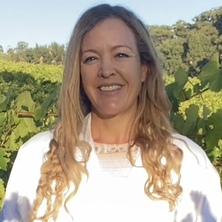
Dr Marlize Bekker is a Senior Lecturer in Food Chemistry in the School of Agriculture and Food Sustainability at The University of Queensland. She holds a PhD in Chemistry and has more than 15 years of experience in flavour and aroma chemistry, analytical food chemistry, and food and beverage research. Her research investigates how fermentation, post-harvest handling, and food processing influence the formation, transformation, stability, and sensory significance of volatile and non-volatile compounds in complex food systems. A central focus of her work is establishing relationships between processing conditions, chemical composition, and sensory quality to identify opportunities for improving product quality, differentiation, and value. Marlize has extensive expertise in targeted and untargeted chromatographic and mass spectrometric approaches, including GC-MS/MS- and LC-MS/MS-based profiling, together with complementary analyses of bioactive, compositional, and quality-related compounds. She integrates analytical chemistry with sensory and consumer evaluation to understand how chemical composition translates into aroma, flavour, product quality, and consumer response.
Her research spans a diverse range of food and beverage systems, including coffee, cocoa, vanilla, wine, distilled beverages, tea, fruits and vegetables, and Australian native plant foods. Current research themes include fermentation-driven flavour development, formation and transformation pathways of flavour-active compounds, optimisation of post-harvest processing, extraction and characterisation of plant bioactives, and the identification of chemical markers associated with food quality and sensory properties. A further focus of her research is the chemical and sensory characterisation of Australian native plant materials and the development of novel, high-value food products. This work is undertaken in partnership with Indigenous communities and with an emphasis on respectful, collaborative research approaches.
Marlize works extensively with academic, industry, and community partners to translate fundamental and applied food chemistry research into practical outcomes for food and beverage production, processing, product development, and value creation. She is also an Associate Editor for Food Research International and Food Research International: Translational Research.
Research capabilities include:
- Flavour and aroma chemistry
- Targeted and untargeted GC-MS and LC-MS profiling
- Fermentation and post-harvest processing
- Formation, transformation, and stability of flavour compounds
- Bioactive compound extraction and characterisation
- Chemical markers of food quality and sensory properties
- Sensory and consumer evaluation
- Australian native foods and botanicals
- Food and beverage product innovation
Marlize welcomes collaborations with academic, industry, Indigenous, and community partners interested in flavour chemistry, fermentation, food processing, analytical food chemistry, native plant foods, and value-added food and beverage innovation.
Active projects:
- A Deadly Solution: Towards an Indigenous-led Bushfood Industry (ARC Discovery-Indigenous, 2024 - 2027)
- Unlocking Nature's Signals: Discovering the Semiochemicals for Effective Management of Australian Native Sugarcane Soldier Fly (Sugar Research Australia’s 2024/2025)
- Developing Bushfood Bites: Naturally nourishing, wildly delicious (FaBA Industry Kickstarter, 2026)
- Integrating Metagenomics and Flavour Chemistry in Carbonic Maceration of Coffee (Faculty of Science BIRRST Partner 2027 funding scheme)
Recently completed projects:
- Maximising flavour throughout the vanilla production process (Faculty of Science BIRRST Partner 2025 funding scheme)
- Exploring the Flavour Potential of Australian Cocoa (Faculty of Science BIRRST Partner 2025 funding scheme)
- Optimising Cold Brew Tea Extraction and Concentration Processes (FaBA Industry Kickstarter, 2025)
- Identifying heirloom sugarcane varieties with high sugar and unique flavour profiles (UQ’s Agri-Food Innovation Alliance (AFIA) Industry Kickstarter Grant program, 2024)
- Identifying the desirable flavour, aroma, and sensory profiles of novel Australian native lime hybrids (UQ’s Agri-Food Innovation Alliance (AFIA) Industry Kickstarter Grant program, 2024)
Availability
- Dr Marlize Bekker is:
- Available for supervision
- Media expert
Fields of research
Qualifications
- Bachelor of Industrial Chemistry, Stellenbosch University
- Bachelor (Honours) of Chemistry, Stellenbosch University
- Masters (Research) of Chemistry, Stellenbosch University
- Doctor of Philosophy of Chemistry, Stellenbosch University
Works
Search Professor Marlize Bekker’s works on UQ eSpace
2016
Journal Article
Formation of Hydrogen Sulfide in Wine: Interactions between Copper and Sulfur Dioxide
Bekker, Marlize Z., Smith, Mark E., Smith, Paul A. and Wilkes, Eric N. (2016). Formation of Hydrogen Sulfide in Wine: Interactions between Copper and Sulfur Dioxide. Molecules, 21 (9) 1214, 1214. doi: 10.3390/molecules21091214
2016
Conference Publication
Synergistic effects of copper and pH - wine making variables that significantly impact reductive aromas in wines
Bekker, Marlize, Smith, Mark, Mierczynska-Vasilev, Agnieszka, Smith, Paul and Wilkes, Eric (2016). Synergistic effects of copper and pH - wine making variables that significantly impact reductive aromas in wines. ACS Spring 2016: Computers in Chemistry, San Diego, CA United States, 13 - 17 March 2016. Washington, DC United States: American Chemical Society.
2016
Journal Article
Effect of oxygen exposure during fermentation on volatile sulfur compounds in Shiraz wine and a comparison of strategies for remediation of reductive character
Bekker, M. Z., Day, M. P., Holt, H., Wilkes, E. and Smith, P. A. (2016). Effect of oxygen exposure during fermentation on volatile sulfur compounds in Shiraz wine and a comparison of strategies for remediation of reductive character. Australian Journal of Grape and Wine Research, 22 (1), 24-35. doi: 10.1111/ajgw.12172
2015
Journal Article
Sources of volatile sulfur compounds in wine
Smith, M. E., Bekker, M. Z., Smith, P. A. and Wilkes, E. N. (2015). Sources of volatile sulfur compounds in wine. Australian Journal of Grape and Wine Research, 21, 705-712. doi: 10.1111/ajgw.12193
2015
Journal Article
Characterization of amniotic fluid of Dohne Merino ewes (Ovis aries) and its possible role in neonatal recognition
Viviers, Marlize Z., Bekker, Jan P. I., Burger, Barend V., Le Roux, Niel J., Morris, John and Le Roux, Maritha (2015). Characterization of amniotic fluid of Dohne Merino ewes (Ovis aries) and its possible role in neonatal recognition. Zeitschrift Fur Naturforschung Section C-A Journal of Biosciences, 70 (5-6), 115-128. doi: 10.1515/znc-2014-4120
2014
Journal Article
Temporal Changes in the Neonatal Recognition Cue of Dohne Merino Lambs (Ovis aries)
Viviers, Marlize Z., Burger, Barend V., le Roux, Niel J., Morris, John and le Roux, Maritha (2014). Temporal Changes in the Neonatal Recognition Cue of Dohne Merino Lambs (Ovis aries). Chemical Senses, 39 (3), 249-262. doi: 10.1093/chemse/bjt075
2013
Journal Article
Effects of Five Metals on the Evolution of Hydrogen Sulfide, Methanethiol, and Dimethyl Sulfide during Anaerobic Storage of Chardonnay and Shiraz Wines
Viviers, Marlize Z., Smith, Mark E., Wilkes, Eric and Smith, Paul (2013). Effects of Five Metals on the Evolution of Hydrogen Sulfide, Methanethiol, and Dimethyl Sulfide during Anaerobic Storage of Chardonnay and Shiraz Wines. Journal of Agricultural and Food Chemistry, 61 (50), 12385-12396. doi: 10.1021/jf403422x
2013
Conference Publication
Neonatal recognition in sheep
Burger, Barend V., Viviers, Marlize Z., le Roux, Niel J., Morris, John, Bekker, Jan P. I. and le Roux, Maritha (2013). Neonatal recognition in sheep. 12th Meeting of the Chemical Signals in Vertebrates International Symposium, Berlin, Germany, 28-31 August 2011. New York, United States: Springer. doi: 10.1007/978-1-4614-5927-9_5
2013
Book Chapter
Neonatal recognition in sheep
Burger, Barend V., Viviers, Marlize Z., Morris, John, Bekker, Jan P. I. and Le Roux, Maritha (2013). Neonatal recognition in sheep. Chemical Signals in Vertebrates 12. (pp. 61-75) Springer New York. doi: 10.1007/9781461459279
2011
Journal Article
Olfactory Cue Mediated Neonatal Recognition in Sheep, Ovis aries
Burger, Barend V., Viviers, Marlize Z., Le Roux, Neil J., Morris, John, Bekker, Jan P. I. and Le Roux, Maritha (2011). Olfactory Cue Mediated Neonatal Recognition in Sheep, Ovis aries. Journal of Chemical Ecology, 37 (10), 1150-1163. doi: 10.1007/s10886-011-0020-7
2008
Journal Article
Chemical characterization of territorial marking fluid of male Bengal tiger, Panthera tigris
Burger, B. V., Viviers, M. Z., Bekker, J. P. I., le Roux, M., Fish, N., Fourie, W. B. and Weibchen, G. (2008). Chemical characterization of territorial marking fluid of male Bengal tiger, Panthera tigris. Journal of Chemical Ecology, 34 (5), 659-671. doi: 10.1007/s10886-008-9462-y
Funding
Current funding
Supervision
Availability
- Dr Marlize Bekker is:
- Available for supervision
Looking for a supervisor? Read our advice on how to choose a supervisor.
Supervision history
Current supervision
-
Doctor Philosophy
Passionfruit Sensory Genomics for Improved Quality
Associate Advisor
Other advisors: Professor Heather Smyth, Dr Mobashwer Alam
-
Doctor Philosophy
Optimization of the extraction of bioactive compounds from different types of seaweed for the production of fortified foods
Associate Advisor
Other advisors: Dr Alberto Baldelli
-
Doctor Philosophy
Modelling fresh produce quality in the supply chain
Associate Advisor
Other advisors: Dr Rajendra Adhikari
-
Doctor Philosophy
Bushfoods and native plants of three Indigenous communities in Queensland: A cultural stewardship approach.
Associate Advisor
-
Doctor Philosophy
Influence of structurally different polysaccharides and their interactions with saliva and tannins on mouthfeel in wine
Associate Advisor
Other advisors: Professor Esteban Marcellin, Dr Huadong Peng, Professor Heather Smyth
Media
Enquiries
Contact Dr Marlize Bekker directly for media enquiries about their areas of expertise.
Need help?
For help with finding experts, story ideas and media enquiries, contact our Media team: