
Overview
Background
Biography
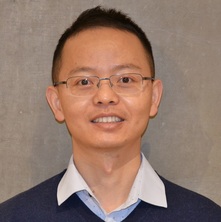
Dr Huadong Peng is a Group Leader and Senior Research Fellow at the UQ's Biosustainability Hub, Australian Institute for Bioengineering and Nanotechnology (AIBN), UQ. He is a Future Academic Leader in the Australia’s Food and Beverage Accelerator (FaBA), and part of ARC Centre of Excellence in Synthetic Biology (CoESB). He earned his PhD from Monash University in Nov 2018, followed by postdoctoral training at Imperial College London and the Technical University of Denmark until Dec 2023. Prior to his PhD, he received his Master Degree from the University of Chinese Academy of Sciences in 2013 and a Bachelor Degree from China Three Gorges University in 2010. Additionally, he worked as a research associate at Novozymes (now Novonesis) from Nov 2013 to Jan 2015.
Since Jan 2024, Dr Peng has led the Yeast Engineering and Synthetic Biology (YESBio) research group (10-15 members), focusing on sustainable biomanufacturing. His research interests include 1) developing innovative synthetic biology tools, such as gene assembly methods, CRISPR-based genome editing tools, and biosensors; 2) modular metabolic engineering for advanced microbial cell factories, 3) synthetic microbial communities and 4) emerging Bio+ enabling technologies for applications in food ingredients, biochemicals, biofuels, and biomedicines.
Dr Peng secured $4.8M funding as Chief Investigator ($2.1M to his team), including the prestigious Marie Skłodowska-Curie Fellowship. He has published 40+ peer-reviewed papers in prestigious journals, including Nature Microbiology, Nature Chemical Biology, Nature Communications. He actively contributes to the scientific community through editorial roles, including Associate Editor for Frontiers in Bioengineering and Biotechnology and Youth Editor for The Innovation (IF 26), BioDesign Research and mLife. He is also an invited peer reviewer for 30+ international journals and grants such as Nature Synthesis, ACS Synthetic Biology, etc.
Dr Peng is looking for highly motivated Honours, Master and PhD students, and highly competitive full scholarship may be provided. The University of Queensland ranks in the top 50 as measured by the Performance Ranking of Scientific Papers for World Universities. The University also ranks 45 in the QS World University Rankings, 52 in the US News Best Global Universities Rankings, 60 in the Times Higher Education World University Rankings and 55 in the Academic Ranking of World Universities.
Industry
Dr Peng is keen to translate the technologies developed by his team into real-world commercial applications, including advanced microbial cell factories, synthetic microbial communities, and optimised bioprocesses. These innovations enable the delivery of sustainable bio-solutions for industrial sectors spanning agri-food, industrial biotechnology and human health. He has established close collaborations with industry partners such as Woodside Energy, Noumi Operations, and Cauldron Fermentation, and he is actively engaging with additional partners, including Levur and NeweraBio.
Dr Peng has experience consulting with multiple companies and is open to taking on casual consulting roles as opportunities arise.
Selected Funding & Awards
Dr Peng has secured $4.8M funding as Chief Investigator ($2.1M to his team), including
- 2025 Australia’s Food and Beverage Accelerator (FaBA)-Cauldron ferm, $2M, CIB
- 2025 Australia’s Food and Beverage Accelerator (FaBA)-Noumi Operations, $2M, co-CIA
- 2025 NCRIS Synthetic Biology Voucher Scheme, $40K, CIA
- 2024 UQ Biosustainability hub seed funding, $50K, CIA
- 2024 Australia’s Food and Beverage Accelerator seed funding, $160K, CIA
- 2023 Chinese Government Award for Outstanding Self-financed Students Abroad, $15K
- 2022 Marie Skłodowska-Curie Fellowship ($266K, 8% success rate)
Key Publications (#, co-first author; *, corresponding author)
- Chen, H.#, Peng, H.#, Ellis, T., & Ledesma-Amaro, R. Programmable cell–cell adhesion in synthetic yeast communities for improved bioproduction. Nature Chemical Biology 2026. https://doi.org/10.1038/s41589-025-02081-1
- Peng, H.; Darlington, A. P. S.; South, E. J.; Chen, H.-H.; Jiang, W.; Ledesma-Amaro, R*. A molecular toolkit of cross-feeding strains for engineering synthetic yeast communities. Nature Microbiology 2024. 9(3), 848-863.
- Park Y.-K., Peng H, Hapeta P., Sellés Vidal L. and Ledesma-Amaro R*. Engineered cross-feeding creates inter- and intra-species synthetic yeast communities with enhanced bioproduction. Nature Communications 2024, 15(1): 8924.
- Aulakh S#, Vidal L#, South E#, Peng H, Varma S, Herrera-Dominguez L, Ralser M*, Ledesma-Amaro R*. Spontaneously establishing syntrophic yeast communities improves biosynthetic yield through shared labour. Nature Chemical Biology 2023, 19(8), 951-961.
- Jiang W, Hernández V-D, Peng H, Liu L, Haritos VS, Ledesma-Amaro R* Metabolic engineering strategies to enable microbial utilization of C1 feedstocks. Nature Chemical Biology 2021, 17(8), 845-855. `
- P Gao, Sun H., Ledesma-Amaro R., Marcellin E. and Peng H.* Advancements and Challenges in the Bioproduction of Raspberry Ketone by Precision Fermentation. Future Foods 2025: 100606.
- Wen, Q., Xu, X., He, Q., Wang, C., Chen, Z., Zhong, W., Peng, H.*, Yang, M.*, & Xing, J*. Dual-pathway engineering enables robust vanillin bioproduction in Pseudomonas putida. Chemical Engineering Journal 2025, 526.
- Peng, H.*; Chen, R.; Shaw, W. M.; Hapeta, P.; Jiang, W.; Bell, D. J.; Ellis, T.; Ledesma-Amaro, R*. Modular Metabolic Engineering and Synthetic Coculture Strategies for the Production of Aromatic Compounds in Yeast. ACS Synthetic Biology 2023, 12 (6), 1739-1749.
- Peng, H.; He, L.; Haritos, V. S*. Flow-cytometry-based physiological characterisation and transcriptome analyses reveal a mechanism for reduced cell viability in yeast engineered for increased lipid content. Biotechnology for Biofuels 2019, 12 (1), 98.
- Peng, H.; Chen, H.; Qu, Y.; Li, H.; Xu, J*. Bioconversion of different sizes of microcrystalline cellulose pretreated by microwave irradiation with/without NaOH. Applied Energy 2014, 117 (0), 142-148
Updated on 2 Jan 2026
Availability
- Dr Huadong Peng is:
- Available for supervision
- Media expert
Fields of research
Qualifications
- Doctor of Philosophy, Monash University
Research interests
-
Synthetic Biology
-
Metabolic Engineering
-
Synthetic Microbial Communities
-
Lipid Metabolism
-
Microbial Food
-
Industrial Biotechnology
-
Precision Fermentation
Research impacts
Dr Peng’s research in synthetic biology is making a tangible contribution to the economy, society, and environment by developing innovative solutions for sustainable production. His work focuses on developing advanced microbial platforms to optimise the production of essential products such as food ingredients, biochemicals, biofuels, and biomedicines. Dr Peng's research on synthetic microbial communities has been featured in > 10 media outlets such as Phys.org, Mirage News, showcasing his work to a broader audience.
Through these innovations, Dr Peng is helping industries such as Woodside Energy, Noumi Operations, etc. reduce their reliance on traditional, resource-intensive methods, which in turn lowers carbon emissions and waste. His research promotes the use of bio-based alternatives via precision fermentation, directly contributing to a more sustainable and environmentally friendly industrial sector.
Beyond environmental benefits, Dr Peng’s work strengthens the economy by enabling more efficient biomanufacturing processes, offering cost-effective and sustainable solutions for the agri-food and industrial biotechnology. His research addresses global challenges such as food security and climate change mitigation, ensuring that vital resources are produced sustainably for future generations.
Works
Search Professor Huadong Peng’s works on UQ eSpace
2018
Journal Article
Functional assessment of plant and microalgal lipid pathway genes in yeast to enhance microbial industrial oil production
Peng, Huadong, Moghaddam, Lalehvash, Brinin, Anthony, Williams, Brett, Mundree, Sagadevan and Haritos, Victoria S. (2018). Functional assessment of plant and microalgal lipid pathway genes in yeast to enhance microbial industrial oil production. Biotechnology and Applied Biochemistry, 65 (2), 138-144. doi: 10.1002/bab.1573
2014
Journal Article
Effect of acetylation/deacetylation on enzymatic hydrolysis of corn stalk
Jiang, Wei, Peng, Huadong, Li, Hongqiang and Xu, Jian (2014). Effect of acetylation/deacetylation on enzymatic hydrolysis of corn stalk. Biomass and Bioenergy, 71, 294-298. doi: 10.1016/j.biombioe.2014.09.028
2014
Journal Article
Bioconversion of different sizes of microcrystalline cellulose pretreated by microwave irradiation with/without NaOH
Peng, Huadong, Chen, Hongzhang, Qu, Yongshui, Li, Hongqiang and Xu, Jian (2014). Bioconversion of different sizes of microcrystalline cellulose pretreated by microwave irradiation with/without NaOH. Applied Energy, 117, 142-148. doi: 10.1016/j.apenergy.2013.12.002
2014
Journal Article
Improved bioethanol production from corn stover by alkali pretreatment with a novel pilot-scale continuous microwave irradiation reactor
Peng, Huadong, Luo, Hao, Jin, Shengying, Li, Hongqiang and Xu, Jian (2014). Improved bioethanol production from corn stover by alkali pretreatment with a novel pilot-scale continuous microwave irradiation reactor. Biotechnology and Bioprocess Engineering, 19 (3), 493-502. doi: 10.1007/s12257-014-0014-8
2013
Journal Article
A novel combined pretreatment of ball milling and microwave irradiation for enhancing enzymatic hydrolysis of microcrystalline cellulose
Peng, Huadong, Li, Hongqiang, Luo, Hao and Xu, Jian (2013). A novel combined pretreatment of ball milling and microwave irradiation for enhancing enzymatic hydrolysis of microcrystalline cellulose. Bioresource Technology, 130, 81-87. doi: 10.1016/j.biortech.2012.10.167
2011
Journal Article
Optimization of microwave pretreatment on wheat straw for ethanol production
Xu, Jian, Chen, Hongzhang, Kádár, Zsófia, Thomsen, Anne Belinda, Schmidt, Jens Ejbye and Peng, Huadong (2011). Optimization of microwave pretreatment on wheat straw for ethanol production. Biomass and Bioenergy, 35 (9), 3859-3864. doi: 10.1016/j.biombioe.2011.04.054
Funding
Current funding
Supervision
Availability
- Dr Huadong Peng is:
- Available for supervision
Looking for a supervisor? Read our advice on how to choose a supervisor.
Available projects
-
Engineering modular light-driven yeast biohybrid platform
Inorganic-biological hybrid systems hold the potential to become sustainable, efficient, and versatile platforms for chemical synthesis by combining the light-harvesting properties of semiconductors with the synthetic capabilities of biological cells (Science 362, 813-816, 2018). Meanwhile, yeast was reported to use light as an energy source by adding a special light-sensitive protein (Current Biology 34, 648–654, 2024). Porphyrin based metal organic frameworks are promising nanomaterials which can efficiently captures light and facilitates the transfer of photo-generated electrons into biological cells. Few studies have explored the feasibility of this biohybrid strategy for improved cell fitness and producing chemicals. This project aims to first utilize state-of-the-art synthetic biology tools to construct advanced yeast cell factories capable of utilizing light or producing high-value compounds, followed by the verification of the efficiency and modularity of a light-driven yeast-nanomaterials biohybrid system. This project is a collaboration between UQ Biosustainability hub and UQ Dow Centre.
-
Engineering biology of yeast for the production of high-value aromatic compounds
Aromatics have a wide range of applications in food, pharmaceutical and chemical industries. Nowadays, the production of aromatics is mainly from petroleum-derived chemical process or extraction from plant resources. Microbial-derived aromatics provides an alternative renewable approach, which could be engineered, easily scalable and standardised (Peng et al. 2023 ACS Synth Biol 12(6): 1739-1749). However, the development of aromatics-producing microbial cell factories is limited by the time-consuming design-build-test-learn (DBTL) cycle, and the often complex and very long aromatics synthesis pathways. This project aims to develop advanced yeast microbial cell factories with improved production capabilities using cutting-edge synthetic biology tools and novel metabolic engineering strategies. These include advanced cloning methods such as Golden Gate and USER cloning, as well as genome editing tools like CRISPR-Cas9, genome-scale metabolic modeling (GEMs), and precision fermentation. This project will revolutionize the supply chain for aromatics by developing sustainable biosolutions that reduce dependency on non-renewable resources.
-
Metabolic dynamics of synthetic microbial communities
Microbial communities have attracted interest due to their wide applications in industrial processes (such as the production of biochemicals, biofuels, biomedicines and biomaterials) and their important role in human, animal and crop health. Despite the importance of microbial communities, we still know little about how communities are established and maintained, which restricts our ability to engineer them for either improving human health or industrial purposes. Our previous work has established a molecular toolkit that can build various types of synthetic yeast communities from scratch via the cross-feeding metabolic exchange (Peng et al. 2024 Nature Microbiology 9(3): 848-863.). However, the long-term stability of these communities is not known but essential for practical applications in the bioprocess of precision fermentation. This project aims to understand and control the stability of synthetic yeast communities in the long-term by combining the state of art synthetic biology tools and the open-source robotic bioreactor platform, Chi.Bio.
Supervision history
Current supervision
-
Doctor Philosophy
Designing a Programmable Food Ingredient Library via Precision Fermentation in Yarrowia lipolytica
Principal Advisor
Other advisors: Professor Esteban Marcellin
-
Doctor Philosophy
Engineering biology of yeast for sustainable fragrance production through precision fermentation
Principal Advisor
Other advisors: Professor Esteban Marcellin, Dr Axa Gonzalez
-
Doctor Philosophy
Synthetic microbial communities
Principal Advisor
Other advisors: Professor Esteban Marcellin
-
Doctor Philosophy
AI-driven design of formate-dependent growth-coupled yeast cell factories for high-value pigments
Principal Advisor
Other advisors: Professor Esteban Marcellin
-
Doctor Philosophy
Yeast Metabolic Engineering for High-Value Bioproducts
Principal Advisor
Other advisors: Professor Esteban Marcellin
-
Doctor Philosophy
Using membrane aerated bioreactors to removal emerging contaminants and mitigate greenhouse gas emissions
Associate Advisor
Other advisors: Professor Jianhua Guo
-
Doctor Philosophy
Hybridising nanoparticles with genetically engineered bacterial membrane vesicles for oral vaccine applications
Associate Advisor
Other advisors: Dr Hao Song
-
Doctor Philosophy
Influence of structurally different polysaccharides and their interactions with saliva and tannins on mouthfeel in wine
Associate Advisor
Other advisors: Professor Esteban Marcellin, Dr Marlize Bekker, Professor Heather Smyth
Media
Enquiries
Contact Dr Huadong Peng directly for media enquiries about their areas of expertise.
Need help?
For help with finding experts, story ideas and media enquiries, contact our Media team: