
Overview
Background
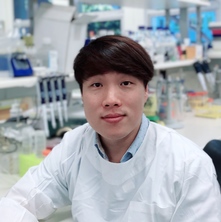
Dr John Lee is the Ross Maclean Senior Research Fellow and a Group Leader at the Queensland Brain Institute (QBI). He holds a joint appointment at UQ’s School of Biomedical Sciences. A mid-career researcher with training in neuroscience, pharmacology, and inflammatory pathways, including the complement system and inflammasomes in motor neuron disease (MND), Huntington’s disease, and Parkinson’s disease.
Dr. Lee completed his PhD at UQ in 2014, before pursuing postdoctoral research in neuroinflammation and neurodegeneration. His translational studies have demonstrated the therapeutic potential of anti-inflammatory compounds to reduce neuronal cell death in animal models, with one candidate advancing to Phase 1B clinical trials. He is also collaborating on novel liquid drug formulations to meet the needs of MND patients who lose the ability to swallow.
Supported by the Ross Maclean Fellowship, which was established in memory of Ross Maclean, who lost his battle with MND in 2005, Dr Lee is working to accelerate drug programs towards the clinic and improve the quality of life for people living with MND.
Availability
- Dr John Lee is:
- Available for supervision
- Media expert
Fields of research
Qualifications
- Bachelor (Honours) of Science (Advanced), The University of Queensland
- Doctor of Philosophy, The University of Queensland
Research interests
-
Neuroimmunology in neurodegenerative diseases
We explore the involvement of innate immune cells in the pathogenesis of MND, HD, and PD to identify potential therapeutic targets. By elucidating the mechanisms underlying neuroinflammation, we aim to develop interventions that halt or slow disease progression.
-
Immunometabolism in neuroinflammation
Our group investigates the metabolic capacity of innate immune cells within the central nervous system, including neutrophils, macrophages, microglia, and astrocytes. By understanding how alterations in cellular metabolism impact immune function, we aim to uncover new strategies for modulating neuroinflammatory responses.
-
Immune system – Stress response crosstalk
We explore the intricate relationship between the immune system and the stress response, particularly its implications in neuropsychiatric disorders. By unravelling the molecular mechanisms underlying this crosstalk, we aim to identify new therapeutic targets for conditions such as depression, anxiety, and post-traumatic stress disorder (PTSD).
-
Immunosenescence and Neurological Aging
Our group investigates the link between the immune system and aging within the context of neurological health. By studying age-related changes in immune function and their impact on brain health, we aim to develop interventions that promote healthy aging and mitigate age-related neurological disorders.
Works
Search Professor John Lee’s works on UQ eSpace
2018
Journal Article
Defects in synaptic transmission at the neuromuscular junction precedes motor deficits in a TDP-43Q331K transgenic mouse model of amyotrophic lateral sclerosis
Chand, Kirat K., Lee, Kah Meng, Lee, John D., Qiu, Hao, Willis, Emily F., Lavidis, Nickolas A., Hilliard, Massimo A. and Noakes, Peter G. (2018). Defects in synaptic transmission at the neuromuscular junction precedes motor deficits in a TDP-43Q331K transgenic mouse model of amyotrophic lateral sclerosis. FASEB Journal : Official Publication of the Federation of American Societies for Experimental Biology, 32 (5), fj201700835R-2689. doi: 10.1096/fj.201700835R
2017
Journal Article
Complement C5a-C5aR1 signalling drives skeletal muscle macrophage recruitment in the hSOD1G93A mouse model of amyotrophic lateral sclerosis
Wang, Haitao A., Lee, John D., Lee, Kah Meng, Woodruff, Trent M. and Noakes, Peter G. (2017). Complement C5a-C5aR1 signalling drives skeletal muscle macrophage recruitment in the hSOD1G93A mouse model of amyotrophic lateral sclerosis. Skeletal Muscle, 7 (1) 10, 10. doi: 10.1186/s13395-017-0128-8
2017
Journal Article
Complement C5aR1 signaling promotes polarization and proliferation of embryonic neural progenitor cells through PKCζ
Coulthard, Liam G., Hawksworth, Owen A., Li, Rui, Balachandran, Anushree, Lee, John D., Sepehrband, Farshid, Kurniawan, Nyoman, Jeanes, Angela, Simmons, David G., Wolvetang, Ernst and Woodruff, Trent M. (2017). Complement C5aR1 signaling promotes polarization and proliferation of embryonic neural progenitor cells through PKCζ. Journal of Neuroscience, 37 (22), 5395-5407. doi: 10.1523/JNEUROSCI.0525-17.2017
2017
Journal Article
Non-invasive assessment of altered activity following restraint in mice using an automated physiological monitoring system
Spiers, Jereme G., Chen, Hsiao-Jou Cortina, Steyn, Frederik J., Lavidis, Nickolas A., Woodruff, Trent M. and Lee, John D. (2017). Non-invasive assessment of altered activity following restraint in mice using an automated physiological monitoring system. Stress, 20 (1), 59-67. doi: 10.1080/10253890.2016.1276898
2017
Conference Publication
Motor neuron disease proteins activate complement and generate C5a
Deora, Vandana, Mantovani, Susanna, Yerbury, Justin, Clark, Richard, Atkin, Julie, Lee, John, Gordon, Richard and Woodruff, Trent M. (2017). Motor neuron disease proteins activate complement and generate C5a. 16th European Meeting on Complement in Human Disease (EMCHD), Copenhagen, Denmark, 8-12 September 2017. Kidlington, Oxford, United Kingdom: Pergamon Press. doi: 10.1016/j.molimm.2017.06.144
2016
Journal Article
Cortical synaptic and dendritic spine abnormalities in a presymptomatic TDP-43 model of amyotrophic lateral sclerosis
Fogarty, Matthew J., Klenowski, Paul M., Lee, John D., Drieberg-Thompson, Joy R., Bartlett, Selena E., Ngo, Shyuan T., Hilliard, Massimo A., Bellingham, Mark C. and Noakes, Peter G. (2016). Cortical synaptic and dendritic spine abnormalities in a presymptomatic TDP-43 model of amyotrophic lateral sclerosis. Scientific Reports, 6 (1) 37968, 37968. doi: 10.1038/srep37968
2016
Conference Publication
A pathogenic role for the C5a receptor, C5aR2, in mouse models of Huntington's and Parkinson's disease
Li, Rui, Lee, John D., Levin, Samantha, Gordon, Richard and Woodruff, Trent M. (2016). A pathogenic role for the C5a receptor, C5aR2, in mouse models of Huntington's and Parkinson's disease. The XXVI International Complement Workshop (ICW), Kanazawa, Japan, 4-8 September 2016. Muenchen, Germany: Elsevier. doi: 10.1016/j.imbio.2016.06.186
2016
Conference Publication
The complement C5a receptor, C5aR2 contributes to motor deficits in mouse models of Huntington's and Parkinson's disease
Li, R., Levin, S., Lee, J., Gordon, R. and Woodruff, T. (2016). The complement C5a receptor, C5aR2 contributes to motor deficits in mouse models of Huntington's and Parkinson's disease. International Congress of Immunology (ICI), Melbourne, Australia, 21-26 August 2016. Weinheim, Germany: Wiley - VCH. doi: 10.1002/eji.201670200
2016
Journal Article
Therapeutic targeting of complement to modify disease course and improve outcomes in neurological conditions
Brennan, Faith H., Lee, John D., Ruitenberg, Marc J. and Woodruff, Trent M. (2016). Therapeutic targeting of complement to modify disease course and improve outcomes in neurological conditions. Seminars in Immunology, 28 (3), 292-308. doi: 10.1016/j.smim.2016.03.015
2015
Journal Article
Absence of toll-like receptor 4 (TLR4) extends survival in the hSOD1<sup>G93A</sup> mouse model of amyotrophic lateral sclerosis
Lee, Jia Y., Lee, John D., Phipps, Simon, Noakes, Peter G. and Woodruff, Trent M. (2015). Absence of toll-like receptor 4 (TLR4) extends survival in the hSOD1G93A mouse model of amyotrophic lateral sclerosis. Journal of Neuroinflammation, 12 (1) 90, 90. doi: 10.1186/s12974-015-0310-z
2015
Conference Publication
Blood brain barrier impairment alters the pharmacokinetic properties of the complement C5aR1 antagonist PMX205 in mouse models of neurodegeneration
Kumar, Vinod, Lee, John, Noakes, Peter and Woodruff, Trent (2015). Blood brain barrier impairment alters the pharmacokinetic properties of the complement C5aR1 antagonist PMX205 in mouse models of neurodegeneration. 8th International Conference on Complement Therapeutics, Chania, Crete, Greece, 1-6 January 2015.
2014
Other Outputs
The role of complement system in amyotrophic lateral sclerosis
Lee, John (2014). The role of complement system in amyotrophic lateral sclerosis. PhD Thesis, School of Biomedical Sciences, The University of Queensland. doi: 10.14264/uql.2015.156
2014
Journal Article
Role for terminal complement activation in amyotrophic lateral sclerosis disease progression
Woodruff, Trent M., Lee, John D. and Noakes, Peter G. (2014). Role for terminal complement activation in amyotrophic lateral sclerosis disease progression. Proceeding of the National Academy of Sciences of the United States of America, 111 (1), E3-E4. doi: 10.1073/pnas.1321248111
2013
Journal Article
Silencing of ghrelin receptor expression inhibits endometrial cancer cell growth in vitro and in vivo
Fung, Jenny N. T., Jeffery, Penny L., Lee, John D., Seim, Inge, Roche, Deborah, Obermair, Andreas, Chopin, Lisa K. and Chen, Chen (2013). Silencing of ghrelin receptor expression inhibits endometrial cancer cell growth in vitro and in vivo. American Journal of Physiology-Endocrinology and Metabolism, 305 (2), E305-E313. doi: 10.1152/ajpendo.00156.2013
2012
Journal Article
Impairments to the GH-IGF-I axis in hSOD1(G93A) mice give insight into possible mechanisms of GH dysregulation in patients with amyotrophic lateral sclerosis
Steyn, F. J., Ngo, S. T, Lee, J. D., Leong, J. W., Buckley, A. J., Veldhuis, J. D., McCombe, P. A., Chen, C. and Bellingham, M. C. (2012). Impairments to the GH-IGF-I axis in hSOD1(G93A) mice give insight into possible mechanisms of GH dysregulation in patients with amyotrophic lateral sclerosis. Endocrinology, 153 (8), 3735-3746. doi: 10.1210/en.2011-2171
2012
Book Chapter
Innate immunity in ALS
Lee, John D., Lee, Jia Y., Taylor, Stephen M., Noakes, Peter G. and Woodruff, Trent M. (2012). Innate immunity in ALS. Amyotrophic lateral sclerosis. (pp. 393-412) edited by Martin H. Maurer. Croatia: InTech - Open Access Publisher. doi: 10.5772/30341
2010
Conference Publication
Dysregulation of the complement system in neurodegenerative disease
Woodruff, T. M., Lee, J. D., Taylor, S. M. and Noakes, P. G. (2010). Dysregulation of the complement system in neurodegenerative disease. XXIII International Complement Workshop, New York, NY, U.S.A., 1-5 August 2010. Oxford, U.K.: Pergamon Press. doi: 10.1016/j.molimm.2010.05.215
2009
Journal Article
The C5a anaphylatoxin receptor CD88 is expressed in presynaptic terminals of hippocampal mossy fibres
Crane, James W., Baiquni, Gilang P., Sullivan, Robert K. P., Lee, John D, Sah, Pankaj, Taylor, Stephen M, Noakes, Peter G. and Woodruff, Trent (2009). The C5a anaphylatoxin receptor CD88 is expressed in presynaptic terminals of hippocampal mossy fibres. Journal of Neuroinflammation, 6 (34) 34, 34.1-34.10. doi: 10.1186/1742-2094-6-34
Funding
Current funding
Supervision
Availability
- Dr John Lee is:
- Available for supervision
Looking for a supervisor? Read our advice on how to choose a supervisor.
Available projects
-
The role of innate immune and inflammatory pathways in neurodegenerative diseases
-
The link between innate immune system and energy metabolism and its contribution to neurodegeneration
Supervision history
Current supervision
-
Doctor Philosophy
The role of neutrophils in motor neuron disease
Principal Advisor
Other advisors: Professor Trent Woodruff, Professor Pamela McCombe, Dr Jenny Fung, Dr Cedric Cui
-
Doctor Philosophy
Unravelling the Role of Astrocytes in Motor Neuron Disease to discover new therapeutic targets
Principal Advisor
Other advisors: Professor Trent Woodruff, Dr Jenny Fung
-
Doctor Philosophy
Targeting IL-6 Trans-Signalling as a therapeutic strategy in Motor Neuron Disease
Principal Advisor
Other advisors: Professor Trent Woodruff, Dr Jenny Fung
-
Doctor Philosophy
Therapeutic blockade of neuroinflammation for the treatment of Huntington's disease
Associate Advisor
Other advisors: Dr Eduardo Albornoz Balmaceda, Professor Trent Woodruff
-
Master Philosophy
Preclinical evaluation of C3a agonist drugs for treatment MND/ALS.
Associate Advisor
Other advisors: Associate Professor Richard Clark, Dr Vinod Kumar, Professor Trent Woodruff
-
Doctor Philosophy
Complement in subarachnoid haemorrhage
Associate Advisor
Other advisors: Professor Trent Woodruff, Dr Liam Coulthard
Completed supervision
-
2026
Doctor Philosophy
Unravelling the role of CXCR2 in amyotrophic lateral sclerosis
Principal Advisor
Other advisors: Professor Trent Woodruff, Professor Pamela McCombe, Dr Jenny Fung
-
2024
Doctor Philosophy
Complement Modulation of Peripheral Immunity in Motor Neurone Disease and Huntington's Disease
Associate Advisor
Other advisors: Professor Naomi Wray, Professor Trent Woodruff
-
2022
Doctor Philosophy
Preclinical development of complement C5aR1 antagonists for the treatment of inflammatory bowel disease
Associate Advisor
Other advisors: Associate Professor Richard Clark, Dr Vinod Kumar, Dr Felicity Han, Professor Trent Woodruff
-
2021
Doctor Philosophy
Investigating the Immunopharmacology of the Complement C5a Receptors, C5aR1 and C5aR2
Associate Advisor
Other advisors: Associate Professor Richard Clark, Professor Mark Blaskovich, Professor Trent Woodruff
-
2019
Doctor Philosophy
The role of GPR43 in neuroinflammation and the hSOD1G93A mouse model of motor neuron disease
Associate Advisor
Other advisors: Professor Trent Woodruff
Media
Enquiries
Contact Dr John Lee directly for media enquiries about their areas of expertise.
Need help?
For help with finding experts, story ideas and media enquiries, contact our Media team: