
Overview
Background
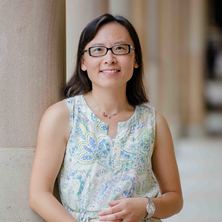
Dr Jihong Wang (English name: Lily) has the following NAATI credentials: Certified Interpreter (Mandarin/English), Certified Translator (from English into Chinese) and Certified Translator (from Chinese into English).
She completed a PhD thesis entitled "Working Memory and Signed Language Interpreting" at Macquarie University in 2013 and then worked there as a full-time researcher on a research project regarding the Adult Migrant English Program (AMEP) for one and a half years. She is working full-time as a Lecturer in the Master of Arts in Translation and Interpreting (MATI) program at The University of Queensland.
Lily conducts empirical and interdisciplinary research on Mandarin/English interpreting, Auslan (Australian Sign Language)/English interpreting, simultaneous interpreting, cognitive processing in interpreting and translation (e.g., cognitive load, processing time/time lag/ear-voice span, working memory), expertise in interpreting, telephone interpreting, machine interpreting versus professional interpreting, interpreting performance assessment, sight translation and deaf signers' working memory capacity.
She uses a wide range of research methods such as questionnaire-based surveys, interviews, experiments, case studies (of authentic simultaneous interpreting data and real-life telephone interpreting data), role-plays (of face-to-face and remote interpreting), corpus (of interpretation data) and microanalysis (i.e., local analysis) to conduct empirical studies on various aspects of interpreting and translation. Moreover, she also employs useful tools such as SPSS, NVivo (for analysing qualitative data such as interviews) and ELAN (for analysing audio- and video-recordings of interpretation data, see https://archive.mpi.nl/tla/elan) to analyse research data.
She has published a book, some book chapters and many research articles in high-quality journals in Translation and Interpreting Studies, including Interpreting, Target, Perspectives, Meta, The Interpreter and Translator Trainer, Translation and Interpreting Studies and The Interpreters' Newsletter.
In October 2019, she gave a presentation entitled 'What goes around comes around: How interpreting practice informs research and vice versa' when she was a visiting scholar at Gallaudet University, Washington DC, United States. Here is the link to the video and transcript:
https://www.gallaudet.edu/department-of-interpretation-and-translation/department-of-interpretation-and-translation-research/colloquium-lecture-series.
Availability
- Dr Lily Wang is:
- Available for supervision
Qualifications
- Doctor of Philosophy, Macquarie University
Research interests
-
Cognitive processing in interpreting and translation
working memory, expertise, self-monitoring
-
Remote interpreting
telephone interpreting, videoconference interpreting, remote simultaneous interpreting
-
Signed language interpreting
cognitive processing, similarities and differences between spoken language interpreting and signed language interpreting
-
Spoken language interpreting
simultaneous interpreting, consecutive interpreting, telephone interpreting, sight translation, cognitive overload, processing time (time lag), working memory, demand and control, quality assessment of interpreting performance, language direction (directionality), experts vs. novices, interpreting pedagogy, dialogue interpreters' interactional management skill
-
Machine interpreting and translation tools
Professional interpreters vs. interpreting students vs. Youdaofanyiguan (有道翻译官) vs. Mr Translator
-
Deaf studies
Deaf signers’ memory and cognitive abilities
Research impacts
Lily's innovative research on professional signed language interpreters' working memory capacity has shed light on how the interpreters' brain works when they engage in simultaneous interpreting. By exploring the similarities and differences between spoken language interpreting and signed language interpreting, her research has provided insights into the impact of language modality (spoken vs. signed) on cognitive processing.
In addition, her research on the assessment of interpreting performance has produced assessment rubrics that can be used by interpreter educators and interpreting students to conduct evidence-based evaluation of interpreting performance.
Furthermore, her empirical studies on telephone interpreting have yielded interesting findings that inform the development of guidelines for best practices in telephone interpreting, telephone interpreting training and quality assessment of telephone interpreting performance.
Her current research projects focus on microanalysis of professional conference interpreters' authentic simultaneous interpretation data and detailed analysis of professional interpreters' real-life telephone interpretation data.
Works
Search Professor Lily Wang’s works on UQ eSpace
2012
Conference Publication
Working memory capacity in Australian Sign Language (Auslan)/English interpreters and deaf signers
Wang, Jihong (2012). Working memory capacity in Australian Sign Language (Auslan)/English interpreters and deaf signers. ICBPS 2012: International Conference on Behavioral and Psychological Sciences, Paris, France, June 2012.
2011
Conference Publication
Strategies to deal with working memory overload in Auslan/English simultaneous interpreting
Wang, Jihong (2011). Strategies to deal with working memory overload in Auslan/English simultaneous interpreting. Australian Sign Language Interpreters’ Association (ASLIA) National Conference in 2011, Sydney, NSW, Australia, 27-28 August 2011.
2010
Conference Publication
Signed language interpreting: perspectives of working memory and expertise
Wang, Jihong (2010). Signed language interpreting: perspectives of working memory and expertise. Australian Sign Language Interpreters’ Association (ASLIA) National Conference in 2010, Brisbane, QLD, Australia, 28-29 August 2010.
2010
Conference Publication
Experiments on spoken/signed-language interpreting and working memory: A review and my experiment design
Wang, Jihong (2010). Experiments on spoken/signed-language interpreting and working memory: A review and my experiment design. Emerging Topics in Translation and Interpreting, Trieste University, Trieste, Italy, 16-18 June 2010.
2008
Conference Publication
The episodic buffer of working memory and its implications for simultaneous interpreting training
Wang, Jihong (2008). The episodic buffer of working memory and its implications for simultaneous interpreting training. 7th National Conference and International Forum on Interpreting, Guangzhou, China, 24-25 May 2008.
Funding
Past funding
Supervision
Availability
- Dr Lily Wang is:
- Available for supervision
Looking for a supervisor? Read our advice on how to choose a supervisor.
Supervision history
Completed supervision
-
2022
Doctor Philosophy
Challenges to Acquiring Modal Verbs in Learning Chinese as a Second Language
Associate Advisor
Other advisors: Dr Wendy Jiang
Media
Enquiries
For media enquiries about Dr Lily Wang's areas of expertise, story ideas and help finding experts, contact our Media team: