
Overview
Background
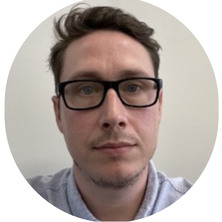
Dr Ariotti is a Senior Research Fellow and Group Leader at the University of Queensland, Australia. Nick's Lab is focused on using cell biology, structural biology, and biochemistry to understand the molecular mechanisms of endocytosis including the organization of cargo for the transport and packaging of proteins into cells and, specialises in how defects in protein trafficking, and plasma membrane organisation can result in human diseases. He completed his PhD in 2013 at the University of Queensland. He then spent 4 years postdoctoral researcher at the Institute for Molecular Biosciences in Rob Parton’s laboratory where he focused on developing and applying correlative light and electron microscopy approaches to better understand endocytosis. In 2017, Dr Ariotti moved to the Electron Microscope Unit at UNSW to serve as the Associate Director of Biological EM. He spent 5 years at the Electron Microscope Unit establishing Cryo-EM and cryogenic-Correlative Light and Electron Microscopy. In 2022, Dr Ariotti returned to the IMB at UQ as an independent research group leader with a focus on developing and applying novel cryogenic correlative approaches to uncover protein structures in situ.
Availability
- Dr Nicholas Ariotti is:
- Available for supervision
Fields of research
Qualifications
- Bachelor of Science (Honours), The University of Queensland
- Doctor of Philosophy, The University of Queensland
Research interests
-
Membrane microdomain organisation in the endosome and on the cell surface
-
The structure, composition, and function of caveolae
-
Development of advanced Electron Microscopy techniques to answer questions in cell biology
Research impacts
Nick has an exceptional track record of producing high-quality transformative research that challenges long-held hypotheses and breaks new ground. He has secured competitive external funding (16 competitive grant successes), an outstanding publication profile (>75 publications; > 5000 citations), a strong record of supervision, invitations to speak at national and international conferences and a dedication to contributing to the advancement of cell biology research and electron microscopy through service on various national and international committees and associations.
He haspublished in journals such as Nature, Cell, Nature Nanotechnology, Nature Cell Biology, Nature Immunology, Nature Materials, Nature Communications, Developmental Cell, PLoS Biology, The Journal of Cell Biology, Current Biology and EMBO Journal highlighting the impact of his research.
These interests have resulted in significant high-quality publications in three related fields:
i) The structure, composition, and function of caveolae:
ii) The organsiation of membrane microdomains and signalling molecules on the cell surface and within endosomes:
ii) Development of advanced Electron Microscopy techniques to answer questions in cell biology.
Works
Search Professor Nicholas Ariotti’s works on UQ eSpace
2008
Journal Article
A novel switch region regulated H-ras membrane orientation and signal output
Abankwa, Daniel, Hanzal-Bayer, Michael, Ariotti, Nicolas, Plowman, Sarah J., Gorfe, Alemayehu A, Parton, Robert G., McCammon, J. Andrew and Hancock, John F. (2008). A novel switch region regulated H-ras membrane orientation and signal output. The EMBO journal, 27 (5), 727-735. doi: 10.1038/emboj.2008.10
2007
Conference Publication
Protozoan symbionts in hindgut-fermenting mammals
O'Donoghue, P. J., Yuen, S. Y. and Ariotti, N. R. (2007). Protozoan symbionts in hindgut-fermenting mammals. Australian Society for Parasitology Annual Scientific Meeting, Canberra, ACT, Australia, 8-11 July 2007.
2006
Conference Publication
Unique endosymbiotic ciliates of wombats in Australia
Ariotti, N. R. and O'Donoghue, P J (2006). Unique endosymbiotic ciliates of wombats in Australia. ASP & ARC/NHMRC Network for Parasitology Annual Conference, Gold Coast, QLD Australia, 2-5 July 2006.
Funding
Current funding
Past funding
Supervision
Availability
- Dr Nicholas Ariotti is:
- Available for supervision
Looking for a supervisor? Read our advice on how to choose a supervisor.
Available projects
-
Structural and Molecular Characterisation of Chikungunya Virus Replication Organelles
The Ariotti Group applies correlative microscopy to investigate the replication cycle of Chikungunya virus (CHIKV), a single-stranded, positive-sense alphavirus. CHIKV forms distinct plasma membrane–associated RNA replication organelles termed spherules, yet the identity and role of host factors recruited to these domains remain poorly understood. This project will develop new tools to selectively label and target CHIKV recplication organelle enriched sites for high-resolution and molecular analyses. These studies aim to elucidate how CHIKV co-opts host factors for viral amplification.
-
Structural Analysis of Receptor Tyrosine Kinases in situ
The Ariotti Lab has established a novel structural pipeline integrating cell-free protein expression with cryo-correlative light and electron tomography (cryo-CLEM) and sub-tomogram averaging. This platform has already yielded the first full-length structure of the filamentous form of ASC (Apoptosis-associated speck-like protein containing a CARD) (bioRxiv). This project will extend will investigate receptor tyrosine kinases (RTKs) Despite their critical roles in signalling, the endosomal organisation of RTKs during protein trafficking remains poorly understood.
-
Tools for whole animal correlative targeting of cells of interest
In collaboration with the Parton Group (IMB, University of Queensland), this project will advance correlative imaging approaches to investigate zebrafish macrophages during bacterial infection. The Parton Group have developed infection assays and high-throughput correlative microscopy workflows linking light microscopy with X-ray microscopy and volume electron imaging. The Ariotti Group will focus on developing automated multimodal correlation pipelines to achieve accurate, unbiased, and rapid three-dimensional registration across imaging modalities.
Supervision history
Current supervision
-
Doctor Philosophy
Developing and applying a Cryo-Correlative Structural Pipeline for Microtubule Associated Proteins
Principal Advisor
Other advisors: Professor Brett Collins
-
Doctor Philosophy
Functional Analysis of Caveolae
Associate Advisor
Other advisors: Dr Harriet Lo, Professor Robert Parton
-
Doctor Philosophy
Dissecting the bacterial cell envelope for antibiotic drug discovery
Associate Advisor
Other advisors: Professor Rob Capon, Professor Waldemar Vollmer
-
Doctor Philosophy
Multi-modal, high-resolution analysis of neural tube development
Associate Advisor
Other advisors: Dr Mel White
Completed supervision
-
2017
Doctor Philosophy
Cell-free caveola formation as a system for high throughput interaction analysis
Associate Advisor
Other advisors: Professor Robert Parton
Media
Enquiries
For media enquiries about Dr Nicholas Ariotti's areas of expertise, story ideas and help finding experts, contact our Media team: