
Overview
Background
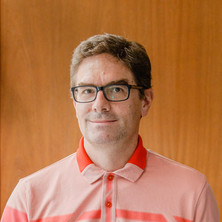
Markus graduated from the Vienna University of Technology in Technical Physics in 1995 and was awarded his Doctorate in 1999 after which he worked as postdoctoral research associate and then Assistant Professor at the Department of Radiodiagnostics, Medical University Vienna (AT). From 2004 he worked as Senior Researcher at the Donders Institute for Brain, Cognition and Behaviour (Radboud University Nijmegen, NL) and at the Erwin L. Hahn Institute for Magnetic Resonance Imaging (University Essen-Duisburg, DE). In 2014 he relocated to the University of Queensland to lead the Ultra-high Field Human MR Research program at the Centre for Advanced Imaging and was awarded an ARC Future Fellowship. Since 2019 he is Professor Biomedical Engineering in the School of Electrical Engineering and Computer Science with a focus on Medical Imaging and MR Physics research. He served in various roles including Director for the National Imaging Facility – Queensland Node, Deputy Head of School – Research, and member of the ARC College of Experts, and is currently serving as Discipline Lead for Imaging, Sensing and Biomedical Engineering.
Availability
- Professor Markus Barth is:
- Available for supervision
- Media expert
Fields of research
Qualifications
- Doctor of Philosophy of Science (Advanced), Technical University Vienna
Research interests
-
Improving MRI
Markus is investigating how MRI can be improved by using new image contrasts by mapping quantitative tissue parameters and by using increased spatial resolution. For example, very small venous vessels and small bleedings in the brain can be visualised using specific contrasts using the MR phase reflecting magnetic susceptibility (SWI and QSM). This information can be used as a very sensitive disease marker in a range of neurodegenerative diseases (traumatic brain injuries, tumours, dementia). He is also developing faster image acquisition methods such as 3D Echo-Planar-Imaging (EPI) that allows reducing the acquisition time by a factor 5-10 compared to standard techniques while keeping the high image fidelity.
-
Understanding brain activity using functional MRI
Blood oxygenation level dependent (BOLD) functional MRI gives a good picture of neural activation and connectivity in the living human brain non-invasively. Markus is particularly interested to identify small functional units of the brain, such as cortical layers and columns, in order to better understand brain function by developing very fast functional MRI techniques with the highest spatial resolution possible. Recently, he also addressed important neuroscientific questions such as memory consolidation during sleep and decoding measured functional signals (brain reading). He also explored the possibilities of simultaneous acquisition of EEG and fMRI to examine the link between electrophysiology and BOLD task activity and large scale brain networks.
Research impacts
Markus has made significant scientific contributions in the fields of Cognitive Neuroscience, Neuroimaging, and MR methods at (ultra-)high field and key contributions to MRI scanner software packages, which are used in MR labs worldwide. Markus’ main interest is to improve our understanding of brain function and dysfunction in cognition, neurodegenerative diseases, and cancer by developing new medical imaging techniques. With a focus on human neuroimaging using magnetic resonance imaging (MRI), he achieved fast, high resolution mapping of magnetic susceptibility related anatomical and functional information in vivo, including characterisation of blood oxygenation, iron storage in tissue, haemorrhage and calcifications. Recent achievements include the development of accurate detection of layer specific functional activation in the human brain, decoding of brain activity and ultra-fast MRI. His research interests are in the fields of MR method development including applications in neuroimaging and neurological diseases including dementia, motor neurone disease, and cancer.
Works
Search Professor Markus Barth’s works on UQ eSpace
2025
Journal Article
AI improves consistency in regional brain volumes measured in ultra-low-field MRI and 3T MRI
Islam, Kh Tohidul, Zhong, Shenjun, Zakavi, Parisa, Kavnoudias, Helen, Farquharson, Shawna, Durbridge, Gail, Barth, Markus, Dwyer, Andrew, McMahon, Katie L., Parizel, Paul M., McIntyre, Richard, Egan, Gary F., Law, Meng and Chen, Zhaolin (2025). AI improves consistency in regional brain volumes measured in ultra-low-field MRI and 3T MRI. Frontiers in Neuroimaging, 4 1588487, 1588487. doi: 10.3389/fnimg.2025.1588487
2025
Journal Article
An annotated multi-site and multi-contrast magnetic resonance imaging dataset for the study of the human tongue musculature
Ribeiro, Fernanda L., Zhu, Xiangyun, Ye, Xincheng, Tu, Sicong, Ngo, Shyuan T., Henderson, Robert D., Steyn, Frederik J., Kiernan, Matthew C., Barth, Markus, Bollmann, Steffen and Shaw, Thomas B. (2025). An annotated multi-site and multi-contrast magnetic resonance imaging dataset for the study of the human tongue musculature. Scientific Data, 12 (1) 790, 790. doi: 10.1038/s41597-025-05092-8
2025
Journal Article
Body size and intracranial volume interact with the structure of the central nervous system: a multi-center in vivo neuroimaging study
Labounek, René, Bondy, Monica T., Paulson, Amy L., Bédard, Sandrine, Abramovic, Mihael, Alonso-Ortiz, Eva, Atcheson, Nicole T., Barlow, Laura R., Barry, Robert L., Barth, Markus, Battiston, Marco, Büchel, Christian, Budde, Matthew D., Callot, Virginie, Combes, Anna, De Leener, Benjamin, Descoteaux, Maxime, de Sousa, Paulo Loureiro, Dostál, Marek, Doyon, Julien, Dvorak, Adam V., Eippert, Falk, Epperson, Karla R., Epperson, Kevin S., Freund, Patrick, Finsterbusch, Jürgen, Foias, Alexandru, Fratini, Michela, Fukunaga, Issei ... Nestrašil, Igor (2025). Body size and intracranial volume interact with the structure of the central nervous system: a multi-center in vivo neuroimaging study. Imaging Neuroscience, 3 imag_a_00559, 3. doi: 10.1162/imag_a_00559
2025
Journal Article
Phase locking of 40 Hz auditory steady state responses is modulated by sensory predictability and linked to cerebellar myelination
Larsen, Kit Melissa, Thapaliya, Kiran, Barth, Markus, Lin, Chin-Husan Sophie, Siebner, Hartwig R. and Garrido, Marta I. (2025). Phase locking of 40 Hz auditory steady state responses is modulated by sensory predictability and linked to cerebellar myelination. Human Brain Mapping, 46 (5) e70178, 1-9. doi: 10.1002/hbm.70178
2025
Other Outputs
T1-weighted fMRI in mouse visual cortex using an Iron Oxide Nanoparticle contrast agent and Ultrashort Echo Time (UTE) imaging at 9.4 T
Jain, Naman, Bollmann, Saskia, Chuang, Kai-Hsiang, Polimeni, Jonathan R. and Barth, Markus (2025). T1-weighted fMRI in mouse visual cortex using an Iron Oxide Nanoparticle contrast agent and Ultrashort Echo Time (UTE) imaging at 9.4 T. doi: 10.1101/2025.03.17.643844
2025
Journal Article
Hippocampal subfield volume alterations and associations with severity measures in long COVID and ME/CFS: A 7T MRI study
Thapaliya, Kiran, Marshall-Gradisnik, Sonya, Eaton-Fitch, Natalie, Barth, Markus, Inderyas, Maira and Barnden, Leighton (2025). Hippocampal subfield volume alterations and associations with severity measures in long COVID and ME/CFS: A 7T MRI study. PLoS One, 20 (1) e0316625, 1-13. doi: 10.1371/journal.pone.0316625
2024
Journal Article
VesselBoost: a Python toolbox for small blood vessel segmentation in human magnetic resonance angiography data
Xu, Marshall, Ribeiro, Fernanda L., Barth, Markus, Bernier, Michaël, Bollmann, Steffen, Chatterjee, Soumick, Cognolato, Francesco, Gulban, Omer F., Itkyal, Vaibhavi, Liu, Siyu, Mattern, Hendrik, Polimeni, Jonathan R., Shaw, Thomas B., Speck, Oliver and Bollmann, Saskia (2024). VesselBoost: a Python toolbox for small blood vessel segmentation in human magnetic resonance angiography data. Aperture Neuro, 4, 1-13. doi: 10.52294/001c.123217
2024
Journal Article
Three-dimensional EPI with shot-selective CAIPIRIHANA for rapid high-resolution quantitative susceptibility mapping at 3 T
Tourell, Monique, Jin, Jin, Bachrata, Beata, Stewart, Ashley, Ropele, Stefan, Enzinger, Christian, Bollmann, Saskia, Bollmann, Steffen, Robinson, Simon Daniel, O'Brien, Kieran and Barth, Markus (2024). Three-dimensional EPI with shot-selective CAIPIRIHANA for rapid high-resolution quantitative susceptibility mapping at 3 T. Magnetic Resonance in Medicine, 92 (3), 997-1010. doi: 10.1002/mrm.30101
2024
Journal Article
Long-term improvement in hippocampal-dependent learning ability in healthy, aged individuals following high intensity interval training
Blackmore, Daniel G., Schaumberg, Mia A., Ziaei, Maryam, Belford, Samuel, To, Xuan Vinh, O’Keeffe, Imogen, Bernard, Anne, Mitchell, Jules, Hume, Emily, Rose, Grace L., Shaw, Thomas, York, Ashley, Barth, Markus, Cooper, Elizabeth J., Skinner, Tina L., Nasrallah, Fatima, Riek, Stephan and Bartlett, Perry F. (2024). Long-term improvement in hippocampal-dependent learning ability in healthy, aged individuals following high intensity interval training. Aging and Disease, 16 (3), 1732-1754. doi: 10.14336/AD.2024.0642
2024
Journal Article
B1+ inhomogeneity mitigation for diffusion weighted MRI at 7T using TR‐FOCI pulses
Abbasi‐Rad, Shahrokh, Cloos, Martijn A., Jin, Jin, O'Brien, Kieran and Barth, Markus (2024). B1+ inhomogeneity mitigation for diffusion weighted MRI at 7T using TR‐FOCI pulses. Magnetic Resonance in Medicine, 91 (6), 2508-2518. doi: 10.1002/mrm.30024
2024
Journal Article
Neurochemical predictors of generalised learning induced by brain stimulation and training
Ehrhardt, Shane E., Wards, Yohan, Rideaux, Reuben, Marjańska, Małgorzata, Jin, Jin, Cloos, Martijn A., Deelchand, Dinesh K., Zöllner, Helge J., Saleh, Muhammad G., Hui, Steve C. N., Ali, Tonima, Shaw, Thomas B., Barth, Markus, Mattingley, Jason B., Filmer, Hannah L. and Dux, Paul E. (2024). Neurochemical predictors of generalised learning induced by brain stimulation and training. The Journal of Neuroscience, 44 (21) e1676232024, 1-15. doi: 10.1523/jneurosci.1676-23.2024
2024
Conference Publication
A data-driven framework for whole-brain network modeling with simultaneous EEG-SEEG data
Lou, Kexin, Li, Jingzhe, Barth, Markus and Liu, Quanying (2024). A data-driven framework for whole-brain network modeling with simultaneous EEG-SEEG data. 13th IFIP TC 12 International Conference, Shenzhen, China, 3-6 May 2024. Cham, Switzerland: Springer Cham. doi: 10.1007/978-3-031-57808-3_24
2024
Journal Article
Subcortical and default mode network connectivity is impaired in myalgic encephalomyelitis/chronic fatigue syndrome
Inderyas, Maira, Thapaliya, Kiran, Marshall-Gradisnik, Sonya, Barth, Markus and Barnden, Leighton (2024). Subcortical and default mode network connectivity is impaired in myalgic encephalomyelitis/chronic fatigue syndrome. Frontiers in Neuroscience, 17 1318094, 1318094. doi: 10.3389/fnins.2023.1318094
2024
Conference Publication
Computationally efficient multi-echo QSM
Eckstein, Korbinian, Dao, Thanh, Stewart, Ashley, Robinson, Simon, Barth, Markus and Bollmann, Steffen (2024). Computationally efficient multi-echo QSM. 2023 ISMRM & ISMRT Annual Meeting & Exhibition, Toronto, ON, Canada, 3-8 June 2023. Berkeley, CA, United States: International Society for Magnetic Resonance in Medicine. doi: 10.58530/2023/4184
2024
Conference Publication
Longitudinal reproducibility of 3D-FID-CRT-MRSI in the human brain at 3T and 7T
Eftekhari, Zeinab, Shaw, Thomas B., Eckstein, Korbinian, Strasser, Bernhard, Niess, Fabian, Hingerl, Lukas, Bogner, Wolfgang and Barth, Markus (2024). Longitudinal reproducibility of 3D-FID-CRT-MRSI in the human brain at 3T and 7T. ISMRM Annual Meeting, Singapore, Singapore, 4 - 9 May 2024. Berkeley, CA, United States: International Society for Magnetic Resonance in Medicine. doi: 10.58530/2024/1852
2024
Conference Publication
T1-weighted fMRI in mouse visual cortex at 0.1 mm resolution using a UTE sequence after iron-oxide contrast injection
Jain, Naman, Bollmann, Saskia, Chuang, Kai-Hsiang, Polimeni, Jonathan and Barth, Markus (2024). T1-weighted fMRI in mouse visual cortex at 0.1 mm resolution using a UTE sequence after iron-oxide contrast injection. 2024 ISMRM & ISMRT Annual Meeting, Singapore, 4-9 May 2024. Concord, CA United States: ISMRM. doi: 10.58530/2024/3410
2024
Conference Publication
Fast, High-resolution Whole Brain SWI and QSM with CAIPIRINHA 3D-EPI and Deep Learning Reconstruction
Jin, Jin, Nickel, Dominik, Pfeuffer, Josef, Tourell, Monique, Stewart, Ashley, Bollmann, Steffen, Bollmann, Saskia, Barth, Markus and O‘Brien, Kieran (2024). Fast, High-resolution Whole Brain SWI and QSM with CAIPIRINHA 3D-EPI and Deep Learning Reconstruction. 2024 ISMRM & ISMRT Annual Meeting, Singapore, 4-9 May 2024. Concord, CA United States: ISMRM. doi: 10.58530/2024/2822
2024
Conference Publication
Reliability and reproducibility of neurochemical profiles obtained with sLASER and STEAM at 3T and 7T in lower and upper limb regions
Eftekhari, Zeinab, Shaw, Thomas B., Deelchand, Dinesh, Marjańska, Małgorzata, Bogner, Wolfgang and Barth, Markus (2024). Reliability and reproducibility of neurochemical profiles obtained with sLASER and STEAM at 3T and 7T in lower and upper limb regions. ISMRM Annual Meeting, Singapore, Singapore, 4 - 9 May 2024. Berkeley, CA, United States: International Society for Magnetic Resonance in Medicine. doi: 10.58530/2024/1835
2023
Journal Article
Velocity selective spin labeling using parallel transmission
Wu, Chia‐Yin, Jin, Jin, Dixon, Carl, Maillet, Donald, Barth, Markus and Cloos, Martijn A. (2023). Velocity selective spin labeling using parallel transmission. Magnetic Resonance in Medicine, 91 (4), 1576-1585. doi: 10.1002/mrm.29955
2023
Journal Article
Super-resolution QSM in little or No Additional Time for Imaging (NATIve) using 2D EPI imaging in 3 orthogonal planes
Bachrata, Beata, Bollmann, Steffen, Jin, Jin, Tourell, Monique, Dal-Bianco, Assunta, Trattnig, Siegfried, Barth, Markus, Ropele, Stefan, Enzinger, Christian and Robinson, Simon Daniel (2023). Super-resolution QSM in little or No Additional Time for Imaging (NATIve) using 2D EPI imaging in 3 orthogonal planes. NeuroImage, 283 120419, 1-17. doi: 10.1016/j.neuroimage.2023.120419
Funding
Current funding
Supervision
Availability
- Professor Markus Barth is:
- Available for supervision
Looking for a supervisor? Read our advice on how to choose a supervisor.
Available projects
-
Characterising blood oxygenation changes in functional human brain imaging
This project aims to characterise and image the human vasculature in vivo that underlies functional brain mapping techniques, which can blur and mask the accurate mapping of human cognition. Expected outcomes include a detailed map of the blood vessel anatomy of the living human brain, and vascular models of functional brain signals in space and time describing systemic and neurovascular processes.
Supervision history
Current supervision
-
Doctor Philosophy
Additive manufacturing in the patient specific optimisation of intracavitary brachytherapy
Associate Advisor
Other advisors: Dr Scott Crowe
-
Doctor Philosophy
Improving vascular MRI with deep learning.
Associate Advisor
Other advisors: Dr Fernanda Lenita Ribeiro, Dr Saskia Bollmann
-
Doctor Philosophy
Ultra-high field magnetic resonance imaging methods development
Associate Advisor
Other advisors: Dr Monique Tourell
-
Doctor Philosophy
Noise Suppression techniques for Portable Low Field MRI
Associate Advisor
Other advisors: Dr Jiaxin Du, Dr Viktor Vegh
Completed supervision
-
2026
Doctor Philosophy
Evaluating Magnetic Resonance Spectroscopy and Spectroscopic Imaging Techniques in Motor Neuron Disease at 3T and 7T
Principal Advisor
Other advisors: Dr Kieran O'Brien, Dr Thomas Shaw
-
2025
Doctor Philosophy
Towards QSM validation: reference measurement, doping materials, and anthropomorphic phantoms
Principal Advisor
Other advisors: Dr Kieran O'Brien, Dr Monique Tourell
-
2025
Doctor Philosophy
Automation of Daily MRI Quality Assurance and Standardisation of Preclinical PET/CT Reconstruction Protocols Using Phantom-Based Evaluation
Principal Advisor
Other advisors: Dr Viktor Vegh, Dr Monique Tourell
-
2025
Doctor Philosophy
Neural Network-Enhanced Multimodal Brain Electrical Source Imaging and Applications
Principal Advisor
Other advisors: Dr Steffen Bollmann
-
2023
Doctor Philosophy
Improving functional MRI through Modelling and Imaging Microvascular Dynamics
Principal Advisor
Other advisors: Dr Saskia Bollmann
-
2022
Doctor Philosophy
Modelling the Depth-dependent Functional Responses in Human Primary Visual and Motor Cortices
Principal Advisor
Other advisors: Dr Saskia Bollmann
-
2021
Doctor Philosophy
Sequence Development to Improve Image Quality for T2- and Diffusion Weighted Imaging at 7T
Principal Advisor
Other advisors: Dr Kieran O'Brien, Dr Steffen Bollmann
-
2020
Doctor Philosophy
MR signal modelling approaches to characterise tissue microstructure in in-vivo human brain
Principal Advisor
Other advisors: Dr Viktor Vegh, Dr Steffen Bollmann
-
2018
Doctor Philosophy
Evaluating Acquisition Techniques for Functional Magnetic Resonance Imaging at Ultra-High Field
Principal Advisor
-
2019
Doctor Philosophy
Radiofrequency safety and shimming near metal hip prostheses at high and ultra-high field MRI
Joint Principal Advisor
Other advisors: Professor Feng Liu, Dr Kieran O'Brien, Emeritus Professor Stuart Crozier
-
2024
Doctor Philosophy
Efficient Image Representations for Compressed Sensing MRI
Associate Advisor
Other advisors: Associate Professor Craig Engstrom, Professor Feng Liu, Dr Shakes Chandra
-
2024
Doctor Philosophy
Parallel Transmission for Advanced MRI Techniques at Ultra-High Field
Associate Advisor
-
2023
Master Philosophy
Solving Quantitative Susceptibility Mapping using Deep Learning
Associate Advisor
Other advisors: Dr Steffen Bollmann
-
2023
Doctor Philosophy
Automated Quantitative Susceptibility Mapping for Clinical Applications
Associate Advisor
Other advisors: Dr Kieran O'Brien, Dr Monique Tourell, Dr Steffen Bollmann
-
2021
Doctor Philosophy
Computational in vivo Tissue Characterisation for Multi-Contrast High-Resolution Magnetic Resonance Imaging Data
Associate Advisor
Other advisors: Dr Steffen Bollmann
-
2019
Doctor Philosophy
Measuring tissue variations in the human brain using quantitative MRI
Associate Advisor
Other advisors: Dr Viktor Vegh
-
2018
Doctor Philosophy
Neural correlates of visual function in agenesis of the corpus callosum
Associate Advisor
Other advisors: Professor Jason Mattingley
Media
Enquiries
Contact Professor Markus Barth directly for media enquiries about:
- Biomedical engineering
- Biomedical Imaging
- Brain imaging
- Diffusion imaging
- fMRI
- Image analysis
- Image reconstruction
- Imaging Processing
- Magnetic Resonance Imaging
- MR Imaging Techniques
- MRI
- Neuroimaging
Need help?
For help with finding experts, story ideas and media enquiries, contact our Media team: