
Overview
Background
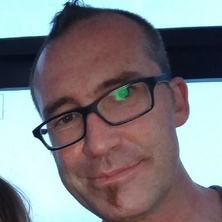
My research interests are centred around the structure and function of venom and silk polypeptides produced by arthropods, and their use in biotechnology and medicine. I am a Postdoctoral Fellow in the King laboratory in the Institute for Molecular Bioscience, the University of Queensland, Australia. Currently, I am investigating the composition, function and evolution of neglected insect venoms produced by assassin bugs (Hemiptera: Reduviidae), robber flies (Diptera: Asilidae) and nettle caterpillars (Lepidoptera: Limacodidae).
Availability
- Dr Andrew Walker is:
- Available for supervision
- Media expert
Fields of research
Qualifications
- Bachelor (Honours) of Science (Advanced), Australian National University
- Doctor of Philosophy, Australian National University
Research interests
-
Evolution of venom systems
Venom use has evolved >100 times across the tree of life. Venom systems are the subject of increasing attention for studies of molecular evolution, trait evolution, pharmacology, drug discovery, and toxinology.
-
Silk processing and evolution, production of artificial silks
Silks are protein supermaterials made by arthropods. The production of artificial silks in the laboratory (for example using recombinant arthropod silk proteins expressed in bacteria) has the potential to deliver new smart protein materials with tunable properties and green chemistry.
-
Uniting omics technologies
Mass spectrometry and next-generation sequencing of RNA and DNA have undergone rapid improvements in sensitivity and decrease in cost. Integrating these new technologies offers a powerful platform for biodiscovery and experimentation.
-
Biodiscovery from insects
Insects are the most diverse class, probably accounting for the majority of eukaryotic species and containing many novel evolutionary innovations. This diversity can be harnessed for the biodiscovery of new molecules with applications in research, biotechnology, and medicine.
Works
Search Professor Andrew Walker’s works on UQ eSpace
2012
Journal Article
Silk from crickets: a new twist on spinning
Walker, Andrew A., Weisman, Sarah, Church, Jeffrey S., Merritt, David J., Mudie, Stephen T. and Sutherland, Tara D. (2012). Silk from crickets: a new twist on spinning. Plos One, 7 (2) e30408, e30408-1-e30408-8. doi: 10.1371/journal.pone.0030408
2012
Journal Article
Invited review: The coiled coil silk of bees, ants, and hornets
Sutherland, Tara D., Weisman, Sarah, Walker, Andrew A. and Mudie, Stephen T. (2012). Invited review: The coiled coil silk of bees, ants, and hornets. Biopolymers, 97 (6), 446-454. doi: 10.1002/bip.21702
2010
Journal Article
The Ig-like domain of human GM-CSF receptor α plays a critical role in cytokine binding and receptor activation
Mirza, Shamaruh, Walker, Adrew, Chen, Jinglong, Murphy, James M. and Young, Ian G. (2010). The Ig-like domain of human GM-CSF receptor α plays a critical role in cytokine binding and receptor activation. Biochemical Journal, 426 (3), 307-317. doi: 10.1042/BJ20091745
2009
Journal Article
A new isoform of interleukin-3 receptor α with novel differentiation activity and high affinity binding mode
Chen, Jinglong, Olsen, Jane, Ford, Sally, Mirza, Shamaruh, Walker, Andrew, Murphy, Jame M. and Young, Ian G. (2009). A new isoform of interleukin-3 receptor α with novel differentiation activity and high affinity binding mode. Journal of Biological Chemistry, 284 (9), 5763-5773. doi: 10.1074/jbc.M808197200
Supervision
Availability
- Dr Andrew Walker is:
- Available for supervision
Looking for a supervisor? Read our advice on how to choose a supervisor.
Available projects
-
Characterising venom toxins of veterinary importance in Australia
Several Australian invertebrates cause serious harm to pets and livestock through the production and delivery of potent venom toxins. Despite their economic importance, the mechanisms by which these toxins work are unknown. This project aims to elucidate the mechanism of action of toxins produced by two species of venomous invertebrates, the Australian paralysis tick Ixodes holocyclus and the Australian processionary caterpillar Ochrogaster lunifer, with a view to the development of strategies to limit their impact.
I. holocyclus is a major threat to our pets and livestock, affecting >10,000 dogs and numerous other animals each year, resulting in hundreds of animal deaths and massive veterinary costs. It is highly prevalent on the densely populated east coast, and it is the most common species of tick to parasitise pets and livestock in Australia. I. holocyclus injects saliva or venom containing paralytic neurotoxins that delay or prevent host detection and removal. A single tick will kill 99% of dogs if allowed to feed for more than three days, with a characteristic onset of paralysis on the fourth day, followed by limb paralysis, systemic and respiratory paralysis, and death if the tick is not removed. One group of disulphide-rich peptides, the holocyclotoxins (HCTXs), has been isolated from salivary gland extract and is proposed to constitute the relevant paralytic neurotoxins. However, the molecular mechanism by which HCTXs act is unknown.
The processionary caterpillar O. lunifer causes contact dermatitis and severe allergic reactions in mammals. The responsible structures are venom-filled urticating hairs that are tiny (~100 µm long), spear-shaped structures. These setae are also the causative agent of equine foetal loss syndrome (EAFL), a condition in which pregnant mares that ingest setae abort their foetuses. However, the function of O. lunifer venom toxins, and if they contribute to EAFL, is unknown.
This project would focus on determining the mode of action of either I. holocyclus or O. lunifer venom peptides, using techniques such as peptide synthesis or heterologous expression, electrophysiology, mass spectrometry, confocal microscopy, biolayer interferometry, and nuclear magnetic resonance.
Supervision history
Current supervision
-
Doctor Philosophy
Alpha-gal synthesis in the salivary glands of the Australian eastern paralysis tick, Ixodes holocyclus
Principal Advisor
-
Doctor Philosophy
Characterising venom toxins of veterinary importance in Australia
Principal Advisor
-
Doctor Philosophy
Characterising arthropod venom toxins of veterinary importance in Australia
Principal Advisor
Other advisors: Dr Tom Hall
-
Doctor Philosophy
Evolutionary shifts in venom function and chemistry within Bees (Hymenoptera: Apiformes)
Associate Advisor
Other advisors: Professor Irina Vetter, Dr Sam Robinson
-
Master Philosophy
Comparative Coagulotoxicity of Asian Pit Vipers (Viperidae: Crotalinae) and Its Implications for Antivenom Efficacy
Associate Advisor
Other advisors: Professor Bryan Fry
-
Doctor Philosophy
Treatment options to neutralise the coagulopathiceffects of Mexican rattlesnake venoms
Associate Advisor
Other advisors: Professor Bryan Fry
-
Doctor Philosophy
Evolution of venom in vipers (Serpentes: Viperidae): A molecular and ecological perspective with preclinical insights
Associate Advisor
Other advisors: Professor Bryan Fry
Completed supervision
-
2026
Master Philosophy
Towards understanding the venom toxins of Ochrogaster lunifer, a caterpillar of medical and veterinary importance
Principal Advisor
Other advisors: Professor Glenn King
-
2026
Doctor Philosophy
Salivary adaptations in Australian blood-feeding arthropods: Insights from tabanid flies and the eastern paralysis tick
Principal Advisor
Other advisors: Professor Glenn King
-
2025
Doctor Philosophy
Evolution and function of nettle caterpillar venom toxins
Principal Advisor
Other advisors: Professor Glenn King
-
2025
Doctor Philosophy
Clinical and ecological implications of venom variation in Latin American pitvipers
Associate Advisor
Other advisors: Professor Bryan Fry
-
2025
Doctor Philosophy
Understanding the production, composition, and function of venom produced by the box jellyfish Chironex fleckeri and the Irukandji jellyfish Carukia barnesi
Associate Advisor
Other advisors: Professor Nathan Palpant, Professor Glenn King
-
2025
Doctor Philosophy
Clinical implications and evolutionary insights of Latin American pit viper venom function
Associate Advisor
Other advisors: Dr Fernanda Cardoso, Professor Bryan Fry
-
2023
Doctor Philosophy
Coagulotoxicity and neurotoxicity variation in Bitis venoms: Evolutionary, pathophysiological and biodiscovery implications
Associate Advisor
Other advisors: Professor Bryan Fry
-
2022
Doctor Philosophy
The Co-Evolutionary Dynamics of alpha-Neurotoxic Snake Venoms and their Nicotinic Acetylcholine Receptor Targets
Associate Advisor
Other advisors: Professor Bryan Fry
Media
Enquiries
Contact Dr Andrew Walker directly for media enquiries about:
- assassin bugs
- caterpillars
- silk
- venom
Need help?
For help with finding experts, story ideas and media enquiries, contact our Media team: