
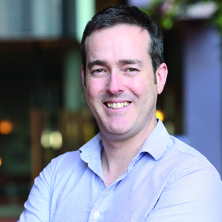
Overview
Background
David Evans is an NHMRC Leadership Fellow and Professor of Statistical Genetics at the University of Queensland Institute for Molecular Bioscience. He is a winner of the NHMRC Marshall and Warren Award.
He completed his PhD in Statistical Genetics at the University of Queensland in 2003, before undertaking a four-year post-doctoral fellowship at the Wellcome Trust Centre for Human Genetics, University of Oxford where he worked as part of the The International HapMap Consortium and co-led the analysis of four diseases within the first Wellcome Trust Case Control Consortium. In 2007 he moved to take up a Senior Lecturer position at the University of Bristol where he led much of the genome-wide association studies work in the Avon Longitudinal Study of Parents and Children (ALSPAC). In 2013 he returned to take up a chair at the University of Queensland whilst continuing to lead an MRC Programme in statistical genetics at the University of Bristol.
His research interests include the genetic mapping of complex traits and diseases (including birthweight and other perinatal traits, osteoporosis, ankylosing spondylitis, sepsis, laterality) and the development of statistical methodologies in genetic epidemiology including approaches for gene mapping, individual risk prediction, causal modelling and dissecting the genetic architecture of complex traits. He has a particular interest in Mendelian randomization and has used it and other causal methods to investigate the Developmental Origins of Health and Disease (DOHaD)- the idea that adverse intrauterine exposures lead to increased risk of disease in later life.
He is Academic Codirector at the NIH funded International Workshop on Statistical Genetics Methods and is faculty on the European Programme in Educational Epidemiology.
He is Associate Editor at the International Journal of Epidemiology and Behavior Genetics journals.
Availability
- Professor David Evans is:
- Available for supervision
- Media expert
Fields of research
Qualifications
- Bachelor (Honours), The University of Queensland
- Doctor of Philosophy, The University of Queensland
Research interests
-
Gestational Diabetes
-
Developmental Origins of Health and Disease (DOHaD)
-
Mendelian randomization
-
Genome-wide association studies
-
Causal Modeling
-
Sepsis
-
Osteoporosis
-
Ankylosing Spondylitis
Works
Search Professor David Evans’s works on UQ eSpace
2016
Conference Publication
Using Mendelian randomization to investigate a possible causal relationship between adiposity and increased bone mineral density at different skeletal sites in children
Kemp, John, Sayers, Adrian, Smith, George Davey, Tobias, Jonathan and Evans, David (2016). Using Mendelian randomization to investigate a possible causal relationship between adiposity and increased bone mineral density at different skeletal sites in children. 46th Annual Meeting of the Behavior Genetics Association, Brisbane, Australia, 20-23 June 2016. New York, NY, United States: Springer.
2016
Conference Publication
Investigation into the genetic architecture of Giant Cell Arteritis through a genome-wide association study
De Smit, Elisabeth, Hill, Catherine, Merriman, Tony, Cremin, Katie, Leo, Paul, McKelvie, Penny, Evans, David, Brown, Matta and Hewitt, Alex W. (2016). Investigation into the genetic architecture of Giant Cell Arteritis through a genome-wide association study. Annual Meeting of the Association for Research in Vision and Ophthalmology (ARVO), Seattle, WA, United States, May 01-05, 2016. Rockville, MD, United States: Association for Research in Vision and Ophthalmology.
2016
Journal Article
Effect of Regulatory Requirement for Patient-Specific Prescriptions for Off-label Medications on the Use of Intravitreal Bevacizumab
Holfinger, Steven, Miller, Alexander G., Rao, Llewelyn J., Rowland, Douglas Y., Hornik, Joan H. and Miller, David G. (2016). Effect of Regulatory Requirement for Patient-Specific Prescriptions for Off-label Medications on the Use of Intravitreal Bevacizumab. Jama Ophthalmology, 134 (1), 45-48. doi: 10.1001/jamaophthalmol.2015.4331
2015
Journal Article
Sixteen new lung function signals identified through 1000 Genomes Project reference panel imputation
Artigas, Maria Soler, Wain, Louise V., Miller, Suzanne, Kheirallah, Abdul Kader, Huffman, Jennifer E., Ntalla, Ioanna, Shrine, Nick, Obeidat, Ma'en, Trochet, Holly, McArdle, Wendy L., Alves, Alexessander Couto, Hui, Jennie, Zhao, Jing Hua, Joshi, Peter K., Teumer, Alexander, Albrecht, Eva, Imboden, Medea, Rawal, Rajesh, Lopez, Lorna M., Marten, Jonathan, Enroth, Stefan, Surakka, Ida, Polasek, Ozren, Lyytikainen, Leo-Pekka, Granell, Raquel, Hysi, Pirro G., Flexeder, Claudia, Mahajan, Anubha, Beilby, John ... Zeggini, Eleftheria (2015). Sixteen new lung function signals identified through 1000 Genomes Project reference panel imputation. Nature Communications, 6 (8658) 89658, 1-12. doi: 10.1038/ncomms9658
2015
Journal Article
Multi-ancestry genome-wide association study of 21,000 cases and 95,000 controls identifies new risk loci for atopic dermatitis
Paternoster, Lavinia, Standl, Marie, Waage, Johannes, Baurecht, Hansjoerg, Hotze, Melanie, Strachan, David P., Curtin, John A., Bonnelykke, Klaus, Tian, Chao, Takahashi, Atsushi, Esparza-Gordillo, Jorge, Alves, Alexessander Couto, Thyssen, Jacob P., den Dekker, Herman T., Ferreira, Manuel A., Altmaier, Elisabeth, Sleiman, Patrick M. A., Xiao, Feng Li, Gonzalez, Juan R., Marenholz, Ingo, Kalb, Birgit, Pino-Yanes, Maria, Xu, Cheng-Jian, Carstensen, Lisbeth, Groen-Blokhuis, Maria M., Venturini, Cristina, Pennell, Craig E., Barton, Sheila J., Levin, Albert M. ... Weidinger, Stephan (2015). Multi-ancestry genome-wide association study of 21,000 cases and 95,000 controls identifies new risk loci for atopic dermatitis. Nature Genetics, 47 (12), 1449-1456. doi: 10.1038/ng.3424
2015
Journal Article
Integrative pathway genomics of lung function and airflow obstruction
Gharib, Sina A., Loth, Daan W., Artigas, Maria Soler, Birkland, Timothy P., Wilk, Jemma B., Wain, Louise V., Brody, Jennifer A., Obeidat, Ma'en, Hancock, Dana B., Tang, Wenbo, Rawal, Rajesh, Boezen, H. Marike, Imboden, Medea, Huffman, Jennifer E., Lahousse, Lies, Alves, Alexessander C., Manichaikul, Ani, Hui, Jennie, Morrison, Alanna C., Ramasamy, Adaikalavan, Smith, Albert Vernon, Gudnason, Vilmundur, Surakka, Ida, Vitart, Veronique, Evans, David M., Strachan, David P., Deary, Ian J., Hofman, Albert, Glaeser, Sven ... SpiroMeta Consortium (2015). Integrative pathway genomics of lung function and airflow obstruction. Human Molecular Genetics, 24 (23), 6836-6848. doi: 10.1093/hmg/ddv378
2015
Journal Article
Phase 1 clinical trials of DAS181, an inhaled sialidase, in healthy adults
Zenilman, Jonathan M., Fuchs, Edward J., Hendrix, Craig W., Radebaugh, Christine, Jurao, Robert, Nayak, Seema U., Hamilton, Robert G. and Griffiss, J. McLeod (2015). Phase 1 clinical trials of DAS181, an inhaled sialidase, in healthy adults. Antiviral Research, 123, 114-119. doi: 10.1016/j.antiviral.2015.09.008
2015
Journal Article
Incorporating known genetic variants does not improve the accuracy of psa testing to identify high risk prostate cancer on biopsy
Gilbert, Rebecca, Martin, Richard M., Evans, David M., Tilling, Kate, Smith, George Davey, Kemp, John P., Lane, J. Athene, Hamdy, Freddie C., Neal, David E., Donovan, Jenny L. and Metcalfe, Chris (2015). Incorporating known genetic variants does not improve the accuracy of psa testing to identify high risk prostate cancer on biopsy. PL o S One, 10 (10) e136735, 1-17. doi: 10.1371/journal.pone.0136735
2015
Journal Article
The UK10K project identifies rare variants in health and disease
The UK10K Consortium, Evans, David M., Kemp, John P., Visscher, Peter M. and Yang, Jian (2015). The UK10K project identifies rare variants in health and disease. Nature, 526 (7571), 82-89. doi: 10.1038/nature14962
2015
Journal Article
Whole-genome sequencing identifies EN1 as a determinant of bone density and fracture
Zheng, Hou-Feng, Forgetta, Vincenzo, Hsu, Yi-Hsiang, Estrada, Karol, Rosello-Diez, Alberto, Leo, Paul J., Dahia, Chitra L., Park-Min, Kyung Hyun, Tobias, Jonathan H., Kooperberg, Charles, Kleinman, Aaron, Styrkarsdottir, Unnur, Liu, Ching-Ti, Uggla, Charlotta, Evans, Daniel S., Nielson, Carrie M., Walter, Klaudia, Pettersson-Kymmer, Ulrika, McCarthy, Shane, Eriksson, Joel, Kwan, Tony, Jhamai, Mila, Trajanoska, Katerina, Memari, Yasin, Min, Josine, Huang, Jie, Danecek, Petr, Wilmot, Beth, Li, Rui ... UK10K Consortium (2015). Whole-genome sequencing identifies EN1 as a determinant of bone density and fracture. Nature, 526 (7571), 112-117. doi: 10.1038/nature14878
2015
Journal Article
Improved imputation of low-frequency and rare variants using the UK10K haplotype reference panel
Huang, Jie, Howie, Bryan, McCarthy, Shane, Memari, Yasin, Walter, Klaudia, Min, Josine L., Danecek, Petr, Malerba, Giovanni, Trabetti, Elisabetta, Zheng, Hou-Feng, Gambaro, Giovanni, Richards, J. Brent, Durbin, Richard, Timpson, Nicholas J., Marchini, Jonathan, Soranzo, Nicole, UK10K Consortium, Evans, David M., Kemp, John P., Visscher, Peter M. and Yang, Jian (2015). Improved imputation of low-frequency and rare variants using the UK10K haplotype reference panel. Nature Communications, 6 (1) 8111, 8111.1-8111.9. doi: 10.1038/ncomms9111
2015
Journal Article
Meta-analysis of Genome-Wide Association Studies for Extraversion: Findings from the Genetics of Personality Consortium
van Den Berg, Stephanie M., de Moor, Marleen H.M., Verweij, Karin J.H., Krueger, Robert F., Luciano, Michelle, Arias Vasquez, Alejandro, Matteson, Lindsay K., Derringer, Jaime, Esko, Tonu, Amin, Najaf, Gordon, Scott D., Hansell, Narelle K., Hart, Amy B., Seppala, Ilkka, Huffman, Jennifer, Konte, Bettina, Lahti, Jari, Lee, Minyoung, Miller, Mike, Nutile, Teresa, Tanaka, Toshiko, Teumer, Alexander, Viktorin, Alexander, Wedenoja, Juho, Abdellaoui, Abdel, Abecasis, Goncalo R., Adkins, Daniel E., Agrawal, Arpana, Allik, Juri ... Boomsma, Dorret I. (2015). Meta-analysis of Genome-Wide Association Studies for Extraversion: Findings from the Genetics of Personality Consortium. Behavior Genetics, 46 (2), 170-182. doi: 10.1007/s10519-015-9735-5
2015
Journal Article
ERAP2 is associated with ankylosing spondylitis in HLA-B27-positive and HLA-B27-negative patients
Robinson, Philip C., Costello, Mary-Ellen, Leo, Paul, Bradbury, Linda A., Hollis, Kelly, Cortes, Adrian, Lee, Seunghun, Joo, Kyung Bin, Shim, Seung-Cheol, Weisman, Michael, Ward, Michael, Zhou, Xiaodong, Garchon, Henri-Jean, Chiocchia, Gilles, Nossent, Johannes, Lie, Benedicte A., Forre, Oystein, Tuomilehto, Jaakko, Laiho, Kari, Jiang, Lei, Liu, Yu, Wu, Xin, Elewaut, Dirk, Burgos-Vargas, Ruben, Gensler, Lianne S., Stebbings, Simon, Haroon, Nigil, Mulero, Juan, Luis Fernandez-Sueiro, Jose ... Brown, Matthew A. (2015). ERAP2 is associated with ankylosing spondylitis in HLA-B27-positive and HLA-B27-negative patients. Annals of the Rheumatic Diseases, 74 (8), 1627-1629. doi: 10.1136/annrheumdis-2015-207416
2015
Journal Article
Are obesity risk genes associated with binge eating in adolescence?
Micali, Nadia, Field, Alison E., Treasure, Janet L. and Evans, David M. (2015). Are obesity risk genes associated with binge eating in adolescence?. Obesity, 23 (8), 1729-1736. doi: 10.1002/oby.21147
2015
Journal Article
Meta-analysis of genome-wide association studies for neuroticism, and the polygenic association with major depressive disorder
De Moor, Marleen H.M, Van Den Berg, Stephanie M, Verweij, Karin J.H, Krueger, Robert F, Luciano, Michelle, Arias Vasquez, Alejandro, Matteson, Lindsay K, Derringer, Jaime, Esko, Tonu, Amin, Najaf, Gordon, Scott D, Hansell, Narelle K, Hart, Amy B, Seppala, Ilkka, Huffman, Jennifer E, Konte, Bettina, Lahti, Jari, Lee, Minyoung, Miller, Mike, Nutile, Teresa, Tanaka, Toshiko, Teumer, Alexander, Viktorin, Alexander, Wedenoja, Juho, Abecasis, Goncalo R, Adkins, Daniel E, Agrawal, Arpana, Allik, Juri, Appel, Katja ... Boomsma, Dorret I (2015). Meta-analysis of genome-wide association studies for neuroticism, and the polygenic association with major depressive disorder. JAMA Psychiatry, 72 (7), 642-650. doi: 10.1001/jamapsychiatry.2015.0554
2015
Journal Article
A genome-wide approach to children's aggressive behavior: the EAGLE consortium
Pappa, Irene, St Pourcain, Beate, Benke, Kelly, Cavadino, Alana, Hakulinen, Christian, Nivard, Michel G., Nolte, Ilja M., Tiesler, Carla M. T., Bakermans-Kranenburg, Marian J., Davies, Gareth E., Evans, David M., Geoffroy, Marie-Claude, Grallert, Harald, Groen-Blokhuis, Maria M., Hudziak, James J., Kemp, John P., Keltikangas-Järvinen, Liisa, McMahon, George, Mileva-Seitz, Viara R., Motazedi, Ehsan, Power, Christine, Raitakari, Olli T., Ring, Susan M., Rivadeneira, Fernando, Rodriguez, Alina, Scheet, Paul A., Seppälä, Ilkka, Snieder, Harold, Standl, Marie ... Tiemeier, Henning (2015). A genome-wide approach to children's aggressive behavior: the EAGLE consortium. American Journal of Medical Genetics, Part B: Neuropsychiatric Genetics, 171 (5), 1-11. doi: 10.1002/ajmg.b.32333
2015
Journal Article
TCTEX1D2 mutations underlie Jeune asphyxiating thoracic dystrophy with impaired retrograde intraflagellar transport
Schmidts, Miriam, Hou, Yuqing, Cortes, Claudio R., Mans, Dorus A., Huber, Celine, Boldt, Karsten, Patel, Mitali, van Reeuwijk, Jeroen, Plaza, Jean-Marc, van Beersum, Sylvia E. C., Yap, Zhi Min, Letteboer, Stef J. F., Taylor, S. Paige, Herridge, Warren, Johnson, Colin A., Scambler, Peter J., Ueffing, Marius, Kayserili, Hulya, Krakow, Deborah, King, Stephen M., Beales, Philip L., Al-Gazali, Lihadh, Wicking, Carol, Cormier-Daire, Valerie, Roepman, Ronald, Mitchison, Hannah M., Witman, George B., Al-Turki, Saeed, Anderson, Carl ... Zheng, Hou-Feng (2015). TCTEX1D2 mutations underlie Jeune asphyxiating thoracic dystrophy with impaired retrograde intraflagellar transport. Nature Communications, 6 (7074) 7074, 1-13. doi: 10.1038/ncomms8074
2015
Journal Article
Major histocompatibility complex associations of ankylosing spondylitis are complex and involve further epistasis with ERAP1
Cortes, Adrian, Pulit, Sara L., Leo, Paul J., Pointon, Jenny J., Robinson, Philip C., Weisman, Michael H., Ward, Michael, Gensler, Lianne S., Zhou, Xiaodong, Garchon, Henri-J., Chiocchia, Gilles, Nossent, Johannes, Lie, Benedicte A., Forre, Oystein, Tuomilehto, Jaakko, Laiho, Kari, Bradbury, Linda A., Elewaut, Dirk, Burgos-Vargas, Ruben, Stebbings, Simon, Appleton, Louise, Farrah, Claire, Lau, Jonathan, Haroon, Nigil, Mulero, Juan, Blanco, Francisco J., Gonzalez-Gay, Miguel A., Lopez-Larrea, C., Bowness, Paul ... Brown, Matthew A. (2015). Major histocompatibility complex associations of ankylosing spondylitis are complex and involve further epistasis with ERAP1. Nature Communications, 6 (7146) 7146, 1-8. doi: 10.1038/ncomms8146
2015
Journal Article
Data Resource Profile: Accessible Resource for Integrated Epigenomic Studies (ARIES)
Relton, Caroline L., Gaunt, Tom, MCardle, Wendy, Ho, Haren, Shihab, Hashem, Woodward, Geoff, Lyttleton, Oliver, Evans, David M., Reik, Wolf, Paul, Yu-Lee, Ticz, Gabriella, Ozanne, Susan E., Wipat, Anil, Flanagan, Keith, Lister, Allyson, Heijmans, Bastiaan T., Ring, Susan M. and Smith, George Davey (2015). Data Resource Profile: Accessible Resource for Integrated Epigenomic Studies (ARIES). International Journal of Epidemiology, 44 (4), 1181-1190. doi: 10.1093/ije/dyv072
2015
Journal Article
Genetic variants in adult bone mineral density and fracture risk genes are associated with the rate of bone mineral density acquisition in adolescence
Warrington, Nicole M., Kemp, John P., Tilling, Kate, Tobias, Jonathan H. and Evans, David M. (2015). Genetic variants in adult bone mineral density and fracture risk genes are associated with the rate of bone mineral density acquisition in adolescence. Human Molecular Genetics, 24 (14) ddv143, 4158-4166. doi: 10.1093/hmg/ddv143
Funding
Current funding
Supervision
Availability
- Professor David Evans is:
- Available for supervision
Looking for a supervisor? Read our advice on how to choose a supervisor.
Available projects
-
Sometimes Correlation DOES Equal Causation: Developing Statistical Methods to Determine Causality Using Genetic Data
There is a well-known mantra that correlation does not necessarily equal causation. This is why randomized controlled trials in which participants are physically randomized into treatment and placebo groups are the gold standard for assessing causality in epidemiological investigations. However, what is less appreciated is that strong evidence for causality can sometimes be obtained using observational data only. In particular, genotypes are randomly transmitted from parents to their offspring independent of the environment and other confounding factors, meaning that genotypes associated with particular traits can be used like natural “randomized controlled trials” to examine whether these traits causally affect risk of disease.
The aim of this PhD project is to develop statistical methods to assess causality using observational data alone. The successful candidate will gain experience across a wide range of advanced statistical genetics methodologies including Mendelian randomization (a way of using genetic variants to investigate putatively causal relationships), structural equation modelling, genome-wide association analysis (GWAS), genetic restricted maximum likelihood (G-REML) analysis of genome-wide data which can be used to partition variation in phenotypes into genetic and environmental sources of variation, and instrumental variables analysis (using natural “experiments” to obtain information on causality from observational data). The candidate will apply the new statistical methods that they develop to large genetically informative datasets like the UK Biobank (500,000 individuals with genome-wide SNP data).
-
Using Genetics To Unravel The Developmental Origins of Health and Disease (DOHaD)
During the final winter of the Second World War, a German blockade of food supplies to the occupied Netherlands precipitated a severe famine known as the Dutch Hunger Winter of 1944–45. This tragic episode created an unprecedented natural experiment for studying how severe nutritional deprivation during pregnancy can influence the long term health of the offspring of these mothers across their life course.
Genetic approaches such as Mendelian randomization provide another powerful natural experiment, using inherited genetic variants as proxies for potentially causal exposures. This allows researchers to investigate whether factors experienced during development or later in life have a causal influence on health and disease, helping to disentangle causation from correlation.
The aim of this PhD project is to develop and apply statistical genetic methods to assess the impact of adverse maternal exposures during pregnancy on increased risk of disease in offspring.
-
Understanding the Causes and Consequences of Gestational Diabetes
Gestational diabetes mellitus (GDM) is a form of diabetes that develops during pregnancy, arising when the body cannot produce enough insulin to meet the increased demands of pregnancy and resulting in elevated blood glucose levels. Women who experience GDM have a substantially increased risk of developing type 2 diabetes later in life, with estimates suggesting a 7–10-fold higher risk compared with women without GDM.
This PhD project will use Mendelian randomization and large scale genetic studies to investigate the causes and consequences of gestational diabetes, identifying potentially modifiable risk factors and clarifying its longer-term impact on the health of mothers and their children. The project will harness genetic data to help disentangle causal relationships from correlation and uncover new insights into the developmental and lifelong pathways linking gestational diabetes with later disease.
Supervision history
Current supervision
-
Doctor Philosophy
Understanding the genetic epidemiology of women's reproductive health
Principal Advisor
Other advisors: Dr Gunn-Helen Moen
-
Doctor Philosophy
Using genetics to predict drug efficacy and on-target side effects of pharmacological agents
Principal Advisor
Other advisors: Professor Glenn King, Associate Professor Sonia Shah
-
Doctor Philosophy
Genetics of sensory nutrition - using genetics to understand how taste and olfactory perception influences eating behaviour and health
Associate Advisor
Other advisors: Dr Brooke Devlin, Dr Daniel Hwang
-
Doctor Philosophy
Investigating the relationship between adverse perinatal environments and the development of childhood depression and anxiety using statistical genetics methods
Associate Advisor
Other advisors: Dr Daniel Hwang
Completed supervision
-
2026
Doctor Philosophy
Improved understanding of complex traits through intermediate phenotypes and robust statistical genetics methodologies
Principal Advisor
Other advisors: Dr Daniel Hwang
-
2026
Doctor Philosophy
Developing and Applying Statistical Genetics Methods to Elucidate the Developmental Origins of Health and Disease
Principal Advisor
Other advisors: Dr Nicole Warrington
-
2024
Doctor Philosophy
Using genetics to investigate the interplay of maternal and fetal factors in pregnancy outcomes
Principal Advisor
-
2024
Doctor Philosophy
Harnessing Genetically Informative Within-Family Research Designs for Deeper Insights into the Intrauterine Developmental Period and Downstream Effects on Offspring Neurodevelopmental Outcomes
Principal Advisor
Other advisors: Dr Daniel Hwang, Dr Gunn-Helen Moen
-
2023
Doctor Philosophy
Using Genetics to Understand the Relationship Between the Intrauterine Environment and Future Offspring Cardiometabolic Risk
Principal Advisor
Other advisors: Dr Nicole Warrington
-
2019
Doctor Philosophy
Detecting and Quantifying the Effect of Assortative mating and Maternal Effects on Statistical Genetics Analyses
Principal Advisor
Other advisors: Dr Nicole Warrington
-
2026
Doctor Philosophy
Using genomics to characterize determinants of early growth trajectories and their consequences on later life health
Associate Advisor
Other advisors: Honorary Professor Jake Gratten, Dr Nicole Warrington
-
Media
Enquiries
Contact Professor David Evans directly for media enquiries about:
- Genetics
- Genome-wide association
- Mendelian randomization
- Twin Studies
Need help?
For help with finding experts, story ideas and media enquiries, contact our Media team: