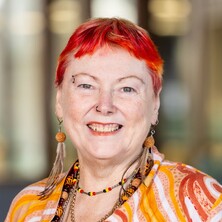
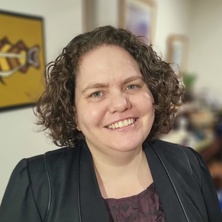
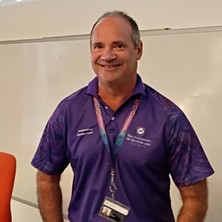
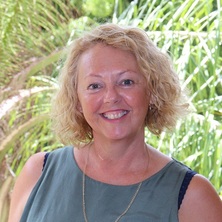
Associate Professor Sharlene Leroy-Dyer is a Saltwater woman; she is a descendant of Matora (Awabakal) and Bungaree (Garigal / Darug) with family ties through Diana Mudgee to the Wiradyuri Nation. She is a fulltime academic in at the UQ Business School where she is an Associate Professor and the Director of the Indigenous Business Hub, and the Associate PRME Director - Indigenous Engagement for UQ Business School.. Sharlene has extensive experience as an equity practitioner, having worked for over 40 years in industry and academia. Sharlene has been on several ministerial advisory boards, and her work has been cited in Ministerial papers and in Bills introduced into Parliament.
Sharlene Leroy-Dyer’s research centres on Indigenous employment, leadership, and organisational transformation, with a particular focus on the experiences of Aboriginal and Torres Strait Islander peoples in professional and institutional contexts. Her scholarship advances Indigenous standpoint theory and decolonial approaches to examine how colonial legacies, structural inequities, and organisational practices shape workforce participation and inclusion. Through interdisciplinary and community-engaged methodologies, her work critiques mainstream diversity, equity, and inclusion frameworks and proposes culturally responsive and relational alternatives that support self-determination and economic justice. Spanning industrial relations, human resource management, business education, and leadership studies, her research contributes to policy, practice, and theory by foregrounding Indigenous knowledges and advocating for systemic change in workplaces and institutions for real-world impact.
Her PhD is in Business, having obtained her Doctor of Philosophy (Business) in 2016. The thesis title is 'Private-sector employment programs for Aboriginal and Torres Strait Islander peoples: Comparative case studies'. Sharlene was the first Aboriginal person to gain a PhD in Business from the University of Newcastle.
She completed her Honours thesis in 2006, entitled 'Is mentoring an effective Human Resource strategy to redress labour market disadvantage for Indigenous Australians: A qualitative study of mentoring outcomes for Indigenous trainees at the University of Newcastle'.
Sharlene is a staunch Unionist and Activist with left wing political views.
Research Expertise Sharlene's current research areas include: Closing the Gap on Aboriginal and Torres Strait Islander disadvantage in Education and Employment, Labour Market disadvantage of Aboriginal and Torres Strait Islander peoples, Aboriginal and Torres Strait Islander Employment strategies, Managing Diversity in Organisations, Employment Relations and the importance of unions, Aboriginal and Torres Strait Islander labour history, Indigenous Entrepreneurship / Indigenous Social Enterprise / Indigenous Leadership, Indigenous Enabling education & Indigenous HDR success.
She is a member of the UQ Business School Social Impact Hub, Sustainable Infrastructure Research Hub, and the Business Educators Hub, in addition to leading the Indigenous Business Hub.
Teaching Expertise Sharlene is leading the Indigenisation of curriculum for the UQ Business School. Other teaching expertise are: Industrial relations, diversity management, negotiation and advocacy, Aboriginal studies, Aboriginal labour history, Aboriginal employment, enabling courses for Aboriginal students.
Administrative Expertise 14 successful grants
Collaborations Research collaborations include: Building resilience of Social Enterprises in QLD, Aboriginal and Torres Strait Islander community engagement, Aboriginal and Torres Strait Islander inclusion in the workplace, Workplace mentoring for Aboriginal and Torres Strait Islander peoples, Increasing participation of Aboriginal and Torres Strait Islander peoples in Business Schools, Aboriginal leadership, Stolen Wages, Disability in employment, Indigenous research methods, Enabling Pedagogies, Enabling education.
Service / Leadership Sharlene is an active participant in university and community service roles. At a University level, Sharlene sits on the Aboriginal and Torres Strait Islander Employment Consultative Committee and the NTEU Branch Committee as the Aboriginal representative. At a Faculty level, Sharlene is on the Bel RAP Implementation Committee and the Indigenous Staff Network group. At a school level, Sharlene is the Director of the UQBS Indigenous Business Hub, the Associate PRME Director for Indigenous Engagement, and leads the Indigenisation of the curriculum within the UQ Business School. External to the university, Sharlene is the Treasurer and Director of Hymba Yumba Indpendant School, the Chair of the National Tertiary Education Union (NTEU) Aboriginal and Torres Strait Islander Policy Committee, a member of the Queensland Council of Unions (QCU) First Nations Committee and a member of the Aboriginal and Torres Strait Islander Committee of the Australian Council of Trade Unions (ACTU). Sharlene is a member of the National Aboriginal and Torres Strait Islander Higher Education Consortium (NATSIHEC), the peak organisation for Indigenous Higher Education. Sharlene is the President of the National Aboriginal and Torres Strait Islander Postgraduates Association (NATSIPA) and sits on the National representative Committee and the Board of the Council of Australian Postgraduates Association (CAPA).
Sharlene is an elected member of the Academic Board and the Research and Innovation Committee for 2026-2028. Prior to this Sharlene was an elected member of Academic Board and the HDR committee of Academic Board from 2021-2023.
Awards Sharlene was the recipient of the BEL Faculty Award for Excellence in Citizenship - Leadership in 2025, the Dr Robert (Uncle Bob) Anderson award in 2023 for outstanding contribution to the union movement, the BEL Faculty EDI Award in 2022, the UQ Business School Recognition of Outstanding Achievement Award for Excellence in Community, Diversity and Inclusion in 2021 and a UQ Commendation Award for Excellence in Reconciliaiton in 2021 and 2022. In 2008 Sharlene was the recipient of an Australia Day Award from the Council of Women NSW - Office of Women - Department of Premier and Cabinet.
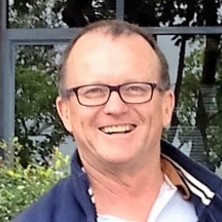
Emeritus Professor Ian Lilley FSA FAHA (BA Hons, MA Qld, PhD ANU) is an internationally-renowned leader in archaeology and heritage across Australasia, the Asia-Pacific and globally. He is based in the UQ School of Social Science, to where he moved in retirement in 2019 after 25 years leading the academic program in UQ's Aboriginal and Torres Strait Islander Studies Unit (ATSISU). From 2015, he was also the invited inaugural Willem Willems Chair for Contemporary Issues in Archaeological Heritage Management at Leiden University in the Netherlands, from which he retired at the end of 2022. Leiden is continental Europe's leading university in archaeology and among the global Top 10 in the discipline.
Ian has an exceptional research record and remains research active. He is currently a CI on a $2M NHMRC Medical Research Future Fund grant concerning the mental health impacts of climate change damage to heritage as well as a member of the Policy Working Group on a $35M ARC Centre of Excellence on Transforming Human Origins Research. In addition, he is an Advisor to the Centre for Global Heritage and Development based in Leiden's Faculty of Archaeology and an Honorary Professor in the Centre for Heritage and Culture within the Institute for Community and Regional Development at the University of Southern Queensland. Ian has supervised 20 PhD and MPhil research projects to completion in various schools across UQ as well as 10 others at Leiden and as external supervisor at several other universities in Australia and overseas.
Ian's pioneering Honours and Masters research examined the precolonial archaeology of Southeast Queensland. Following ground-breaking work in Papua New Guinea with the Australian Museum during time out from his MA, Ian then did his PhD on ancient maritime trading systems which linked the New Guinea mainland and nearby Bismarck Archipelago. During his PhD, he took time out to lead a team in PNG's Duke of York Islands as a part of the international ANU-National Geographic Lapita Homeland Project. He then built on his PhD with a UQ Postdoctoral Fellowship, for which he won National Geographic funding to return to PNG. He has since undertaken archaeological and cultural heritage research, consultancies and advisory missions throughout Australasia and the Asia-Pacific and in Europe and the Americas, most recently with the Asian Development Bank regarding its heritage safeguards and the Chilean Ministry of Culture and Heritage concerning proposed new national heritage legislation. Ian's current work focuses primarily on global issues in World Heritage, particularly in relation to Indigenous and other traditional/ descendent communities. He is also involved in the global fight against looting and illicit cultural trafficking, in collaboration with the Antiquities Coalition in Washington DC. In 2024, he published a policy brief with the Coalition regarding the G20's plans for heritage protection. In addition, Ian is an accredited Subject Matter Expert with the US Defense POW-MIA Accounting Agency (DPAA), which endeavours to find and repatriate the remains of missing service personnel. In that broad connection, he undertook a project with Dutch partners including the Netherlands Ministry of Defence and funded by the Netherlands Embassy, concerning the WWII headquarters of the Netherlands East Indies government in exile, which were located at Wacol just outside Brisbane.
Ian is a Fellow and past International Secretary and Vice President of the Australian Academy of Humanities, a Fellow of the Society of Antiquaries of London and a member of the Australian Institute of Aboriginal and Torres Strait Islander Studies, a federal statutory body. At UQ, Ian is an emeritus member of the UQ Centre for Marine Science. Externally, Ian is a member of Australia ICOMOS, for which he convenes the Strategic Advocacy Reference Group regarding state and federal heritage issues. He is also an ICOMOS International World Heritage Assessor and past Secretary-General of the ICOMOS International Committee on Archaeological Heritage Management (ICAHM). In these connections, he sat on the Conservation Advisory Committee for the Port Arthur World Heritage site complex and on the Scientific Advisory Committee for the Willandra Lakes World Heritage region. In addition, he is a member of the IUCN World Commission on Protected Areas, for which he is a member of the World Heritage Specialist Group, as well as the IUCN Commission on Environmental, Economic and Social Policy. In these capacities, he undertakes IUCN assessments of World Heritage cultural landscapes. He was also a member of the Advisory Group for a major IUCN-coordinated multi-agency project to reshape the assessment of protected area management effectiveness to include cultural as well as natural factors. ICOMOS and IUCN are the statutory independent Advisory Bodies to UNESCO on cultural and natural heritage respectively, and Ian is one of the few people globally who is a member of both world bodies. He is also immediate past Secretary-General of the Indo-Pacific Prehistory Association, the region's peak professional archaeological body, served three consecutive terms as President of the Australian Archaeological Association and is past Chair of and continuing invited Advisor to the International Government Affairs Committee (IGAC) of the Society for American Archaeology (SAA), the world's largest professional archaeological body. Among other matters, IGAC advises SAA on submissions to the US State Department regarding bilateral international agreements on the trafficking of cultural property. Ian also served for 10 years on the Advisory Committee of the Shanghai Archaeology Forum, run by the Institute of Archaeology in the Chinese Academy of Social Sciences. His other professional interests are archaeology and social identity, archaeological ethics, and the role of archaeology and archaeological heritage in contemporary society.
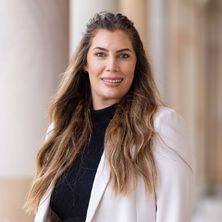
Dr. Dani Linder is a Bundjalung, Kungarakany woman from Grafton, New South Wales, a public lawyer, and a Senior Lecturer in Law at the University of Queensland, Australia (UQ), where she teaches "Foundations of Law" and "Law and Indigenous Peoples". As an Indigenous legal academic, feminist, and advocate for constitutional reform and political empowerment of First Nations, her research interests include Indigenous self-determination and cultural identity, electoral law and policy reform, Indigenous political participation and representation, comparative constitutional law, and international human rights.
Dr. Linder is an admitted lawyer with a Bachelor of Laws degree, a Graduate Diploma in Legal Practice, a Master of Laws degree which specialises in Corporate and Commercial Law and Practice, and a Doctor of Philosophy in Law. Her Ph.D. thesis is titled "The Law and Policy of Indigenous Cultural Identity and Political Participation: A Comparative Analysis between Australia, Canada, and New Zealand". During her Ph.D., Dr. Linder was selected as a 2017 Kathleen Fitzpatrick Laureate visiting Fellow for Comparative Constitutional Law at the University of Melbourne under Professor Adrienne Stone and soon after, became a commentator on issues of First Nations justice in the national media and scholarly publications. Dr Linder was also the 2024 recipient of the Indigenous Legal Research award for the Australian Legal Research Awards and the 2024 UQ BEL Academic Excellence Award for her work supporting Equity, Diversity and Inclusion in the BEL Faculty and T.C Beirne School of Law.
Affiliate of Centre for Public, International and Comparative Law
Centre for Public, International and Comparative Law
Faculty of Business, Economics and Law
Senior Lecturer
School of Law
Faculty of Business, Economics and Law
Availability:
Available for supervision
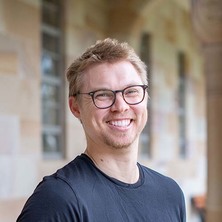
Dylan Lino researches in constitutional law and colonialism, especially in their historical and theoretical contexts. Much of his research has focused on the rights and status of Aboriginal and Torres Strait Islander peoples within Australia's settler constitutional order. He has also written on the imperial entanglements of British constitutional thought, focusing on the work of Victorian jurist AV Dicey. He holds a Bachelor of Laws (Honours) and a Bachelor of Arts from UNSW, a Master of Laws from Harvard University and a PhD from the University of Melbourne.
Dylan's research can be downloaded from SSRN. He is also on Twitter at @Dylan_Lino.
Dr Krystal Lockwood is a Gumbaynggirr and Dunghutti woman, and Research Fellow in the ARC Centre of Excellence for Indigenous Futures at The University of Queensland. Krystal is an applied justice researcher with experience in using co-design, realist, and Indigenous methodologies. Broadly, she has focused her work on addressing the impact of the carceral system on Indigenous peoples and communities, and is particularly interested in supporting Indigenous knowledges, perspectives, and programs of justice. Krystal’s research has focused on influencing evidence-informed practice, with projects in sentencing, Indigenous initiatives in the justice sector, and reintegration programs.
Affiliate of Minerals Industry Safety and Health Centre
Minerals Industry Safety and Health Centre
Faculty of Engineering, Architecture and Information Technology
Affiliate of Centre for Social Responsibility in Mining
Centre for Social Responsibility in Mining
Faculty of Engineering, Architecture and Information Technology
Senior Research Fellow
Sustainable Minerals Institute
Faculty of Engineering, Architecture and Information Technology
Availability:
Available for supervision
Media expert
Julia Loginova is a dedicated researcher passionate about sustainability and justice in the minerals and energy sectors in an era of energy transitions, climate change, and geopolitical volatility. Growing up in northern Russia (Komi Zyrian) sparked her interest in socioeconomic, environmental and political transformations in regions affected by resource extraction. She has academic qualifications in economics and law, natural resource management, and human geography, and completed her PhD at the University of Melbourne on Indigenous community responses to climate change and resource extraction in the Arctic. Julia is highly skilled in qualitative research, data science, network analysis, and spatial research, providing unique mixed-method insights on complex challenges.
Since joining the University of Queensland in 2018, she has focused her research on globalization of the resources sector, governance of energy transitions, socioeconomic redistributions, and Indigenous and non-Indigenous community participation in multiple geographies, including Australia, China, Russia, Ecuador, and the Arctic region. Julia's current research projects include Indigenous co-ownership of renewable energy projects, coal transitions in multiple geographies, and assessment of risks in resource extraction regions. She is a Chief Investigator on the ARC Discovery project that aims to improve the sustainability of copper global production networks in Australia, Zambia, and Chile, and is a collaborator on a research project on the geopolitics of critical minerals. At UQ, Julia contributes to teaching courses on global change, sustainable cities and regions, and geopolitics. She is an Associate Editor for The Extractive Industries and Society journal.
Richard is a cultural anthropologist in the School of Social Science at UQ. His research focuses on Indigenous land rights and native title, cultural heritage, Australian anthropology, and Australian history and culture.
Richard has a PhD in social and cultural studies from The University of Western Australia. His PhD research examined relations between Indigenous and non-Indigenous people in the remote Gulf Country of northern Australia, where he began fieldwork in 2007. After completing his PhD in 2012, Richard has continued to work in the Gulf Country on a range of academic and applied research projects, continuing to develop friendships and collaborations with Indigenous and non-Indigenous people across this area.
Since joining UQ in 2012, Richard has published a range of scholarly articles in leading academic journals as well as the book, The Gulf Country: The story of people and place in outback Queensland (Allen & Unwin, 2019). He has also carried out extensive applied research with Indigenous people on native title claims and cultural heritage matters across Australia, and given expert evidence in the Federal Court of Australia.
Faculty of Health, Medicine and Behavioural Sciences
Availability:
Not available for supervision
Media expert
Dr Lisa McHugh is a perinatal and infectious diseases epidemiologist at the UQ School of Public Health (SPH). A Level C Senior Research Fellow and NHMRC Emerging Leader (EL1) Investigator Grant recipient, Lisa leads her own small team of researchers through her 5-year program ‘VaxiMums’, which is evaluating the uptake, effectiveness and equity of maternal vaccinations and respiratory infections.
Lisa is a CI on a national study evaluating RSV hospitalisations in children <5yrs of age, and a CI on a Qld Health project looking at the acceptability of new RSV strategies among parents.
Lisa is currently leading a pilot study investigating pregnancy loss after receiving influenza and COVID-19 vaccinations in early pregnancy-the first of its kind in Australia, and one of only a few internationally. Lisa’s extensive collaborations involve Primary Health Care Networks, First Nations midwives, maternal and child health nurse immunisers, consumers, Queensland Health, and national and international experts in the field.
Lisa has supervised 3 MEpi students to completion-all with the highest GPA of 7. She is currently the primary advisor of 2 PhD students, 2 MEpi students and a MBiostats student.
Projects currently being investigated by her and her students include:
Effectiveness of influenza, pertussis & COVID vaccinations in pregnancy against adverse maternal-infant outcomes
RSV hospitalisations among First Nations children aged <2yrs (Lisa is leading this collaboration with UQCCR)
Adverse birth outcomes among NT mother-infant pairs after maternal vaccinations
Pertussis vaccine effectiveness among preterm infants
Vaccine failures after influenza + pertussis vaccination in pregnancy
Lisa is the Academic Integrity Officer for SPH, and mentors 2 academics in the SPH Mentoring Program. Her research expertise and interests include clinical midwifery, First Nations health, infectious diseases, pregnancy and birth outcomes, and maternal vaccination. She has been a member of the Public Health Association of Australia since 2014, and Immunisation Special Interest Group working group member, contributing to the latest Immunisation Policy Review (2026).
Lisa is also member of the Australasian Epidemiological Association and Editor for the Aust and New Zealand Journal of Public Health.
She reviews for NHMRC grant applications.
When not working Lisa can be found (or not found) trail running, hiking in the middle of nowhere and swimming.
My work focuses on Indigenous sovereignty, digital infrastructure, and the global education reform movement (GERM), with a particular emphasis on how Māori assert self-determination in systems traditionally shaped by settler-colonial and neoliberal logics.
Karen is a Professor of Development Geography in the School of the Environment and an ARC Industry Laureate Fellow (2026–2031). Her work examines how people experience and respond to the intersecting challenges of climate change, disaster risk, poverty, and displacement. Over the past two decades, she has led long-term, collaborative research partnerships across the Asia-Pacific, working with governments, NGOs, and local communities to understand lived experiences of vulnerability, resilience, and adaptation.
Karen’s research has included supporting farming communities in Aceh rebuilding after the 2004 Indian Ocean tsunami; examining the experiences of newly settled migrants in Dhaka displaced by erosion and flooding; partnering with Torres Strait Elders to record traditional environmental knowledge; and documenting everyday climate impacts and adaptation stories across rural Pacific Island communities.
She has led a series of major research projects, including an ARC Future Fellowship, and has served in advisory roles for national governments and international organisations. She currently sits on the Expert Group on Non‑Economic Losses under the Warsaw International Mechanism for Loss and Damage (UNFCCC), contributing her expertise on climate-related impacts and social equity.
Karen grew up in Quirindi on Kamilaroi Country in NSW. Her rural upbringing fostered a deep commitment to research that is grounded, community-focused, and centred on supporting more just and resilient futures.
Affiliate of UQ Poche Centre for Indigenous Health
UQ Poche Centre for Indigenous Health
Faculty of Health, Medicine and Behavioural Sciences
Senior Lecturer
School of Pharmacy and Pharmaceutical Sciences
Faculty of Health, Medicine and Behavioural Sciences
Availability:
Available for supervision
Media expert
Jared is a proud Yuwi man, pharmacist and early-career researcher with interests spanning from culturally safe and effective pharmacy practice through to new technologies for pharmaceutical development and delivery. After graduating from UQ with a Bachelor of Pharmacy (Honours) in 2012, he worked as a community pharmacist before returning to undertake a PhD in pharmaceutical sciences, focusing on discovering new drugs for Alzheimer’s disease. Throughout his PhD, Jared developed an interest in teaching and tutored for many pharmacy courses. Ultimately this led to his current role as a Senior Lecturer with UQ School of Pharmacy and Pharmaceutical Sciences upon finishing his PhD in 2021. Jared also works as a clinical and research pharmacist with the Institute of Urban Indigenous Health (IUIH).
Dr Jodie Miller is an Associate Professor in mathematics education, in the School of Education at The University of Queensland. Her research focuses on improving the educational outcomes of students most at risk of marginalisation in school, particularly in the fields of Mathematics and Indigenous education.
Jodie is internationally recognised for her research in early algebraic thinking and evidenced based strategies to support engagement in mathematics in primary school settings. She leads research projects with a focus on classroom and mathematical practices, teacher professional development, culturally responsive teaching, and examining student understanding. This research has been conducted in countries including Australia, New Zealand, and Germany.
In addition to this, Jodie’s recent research collaborations focus on examining excellence in Indigenous education. This work is led by Associate Professor Marnee Shay, where the voices of Aboriginal and Torres Strait Islander people are brought to the forefront to re-imagine the notion of excellence in Indigenous education.
I work in medical anthropology and critical global health in Indonesia and Fiji. Funded by the Australian Research Council, I am currently researching obstetrics and childbirth experiences in Indonesian maternity care settings. This project is conducted with Dr Els Rieke (Universitas Papua), Associate Professor Najmah (Universitas Sriwijaya), Dr Elan Lazuardi (Universitas Gadjah Mada), with further support from Dr John Wantania and Dr Grace Korompis (Sam Ratulangi University). We are looking at diverse experiences in North Sulawesi, West Papua, South Sumatra, and Central Java.
I also value recent collaborations with researchers at the National University of Singapore (Associate Professor Shefaly Shorey, Alice Lee Centre for Nursing Studies) and Fiji National University focused on maternity care. In 2026, I will begin working with collaborators in Fiji on community-based ethnographic research on maternity care and cultural difference, supported by an ARC Future Fellowship. This involves ethnographic research in health settings in Fiji, looking at interactions and cultural norms to understand local ideals and practices of respectful care.
Prior to this I have worked closely with West Papuan and other international researchers on studies of maternity care and hospital experiences, older women's life stories, and HIV/AIDS. I completed a study with Dr Els Tieneke Rieke and Meki Wetipo on how urban Papuans understand and experience hospital childbirth, as part of an effort to understand dire maternal health conditions in this location (2023, The Asia Pacific Journal of Anthropology). This was published in a special issue on 'Reproducing Life in Conditions of Abandonment in Oceania', I edited with Alexandra Widmer (York University, Canada).
Other recent publications look at competing ideas of respectful maternity care in Singapore, gender inequality in Indonesia's frontier economy, older Papuan women’s narratives of economic agency and survivance (co-authored with Yohana Baransano), and the challenges faced by Indonesian newlyweds. My article in Asian Studies Review, "West Papuan ‘Housewives’ with HIV: Gender, Marriage, and Inequality in Indonesia," was awarded the 2025 Wang Gungwu Prize by the Asian Studies Association of Australia (ASAA).
I am an experienced PhD supervisor in medical anthropology and welcome research students who wish to conduct anthropological research in Indonesia or the Pacific Islands, especially in medical anthropology and hospital ethnography. My teaching experience includes undergraduate and postgraduate courses in medical anthropology (ANTH2250/7250), Pacific anthropology (ANTH2020) and gender (SOCY2050). I also enjoy contributing to Oceania journal as an associate editor.
Faculty of Health, Medicine and Behavioural Sciences
Availability:
Available for supervision
Media expert
Dr. Bushra Nasir is the lead researcher on multiple large-scale, national studies, and a mid-career researcher with a substantial career trajectory in health research. Her expertise and instrumental involvement in multiple large-scale grants are demonstrated through numerous top-tier publications, media and news citations, and recognition in national and international policy documents. She has contributed to developing several global health policy recommendation publications, including a World Health Organisation review investigating the retention of the health workforce in rural and remote areas. Her contribution to this discipline is further substantiated by her peer-review activities and international and national collaborations with wide outreach and engagement initiatives.
Her collaborative networking qualities contribute to numerous roles in various research committees, including as a previous Chair of the Faculty of Medicine Early Career Researcher Committee. Her work has also resulted in increased research capacity building in regional and rural South East Queensland, supporting clinicians, medical students and educators, and other healthcare service providers conducting clinical and epidemiological research projects. She is also a research mentor and member of several national organisations. Her ongoing leadership, management, networking, and knowledge expertise contribute to the progress of research practices with academics, experts, and clinical scientists.
Affiliate of Centre for Digital Cultures & Societies
Centre for Digital Cultures & Societies
Faculty of Humanities, Arts and Social Sciences
Affiliate of Research Centre in Creative Arts and Human Flourishing
Research Centre in Creative Arts and Human Flourishing
Faculty of Humanities, Arts and Social Sciences
Associate Professor
School of Communication and Arts
Faculty of Humanities, Arts and Social Sciences
Availability:
Available for supervision
Maggie Nolan is an Associate Professor in Digital Cultural Heritage in the School of Communication and Arts and the recently appointed Director of AustLit. AustLit is a comprehensive information resource and research environment for Australian literary, print, and narrative culture and it supports and promotes research into Australian story-telling.
Maggie values interdisciplinary and collaborative approaches to humanities research.
Maggie's research is in the broad field of Australian Literary Cultures. Her most recent project, "Close Relations: Irishness in Australian Literature", with Professor Ronan McDonald (UoM) and Professor Kath Bode (ANU) was awarded an ARC Discovery Grant in 2022.
Her research interests include:
Contemporary Indigenous Literatures
Hoaxes, Imposture and Mistaken Identity in Australian Literary Culture
Reading, reception and the civic role of book clubs
Digital literary studies
Value in literary studies and the impact of ranking systems on the discipline.
Maggie is an experienced postgraduate supervisor and is available to supervise topics on Australian literary cultures. She also welcomes students and researcher who would like to work on projects linked to AustLit.
Affiliate of Centre of Architecture, Theory, Culture, and History
Centre of Architecture, Theory, Culture and History
Faculty of Engineering, Architecture and Information Technology
Senior Lecturer in Architecture
School of Architecture, Design and Planning
Faculty of Engineering, Architecture and Information Technology
Availability:
Available for supervision
Media expert
Tim O’Rourke's research investigates past and present applications of cross-cultural design across different building types and settings. Such projects often require multi-disciplinary approaches to the study of architectural problems, informed by the histories of buildings and the people who use them. A Discovery Project on healthcare architecture combined different research methods to ask if design can improve the experience and participation of Aboriginal and Torres Strait Islander people in hospitals and clinics.
Tim's current research focuses on the design and social histories of Indigenous housing from the 1950s assimilation era to the 2000s. These studies seek to answer questions about design intentions and the origins, development and evaluation of architectural methods that improved public housing for Aboriginal and Torres Strait Islander people. His PhD examined the history and use of Aboriginal building traditions in the Wet Tropics Region of Queensland. He has contributed to a range of research projects related to Indigenous housing, settlements and landscapes. Research topics include self-constructed dwellings and vernacular building technologies, cultural tourism, adaption to climate change and housing sustainability. Results from these studies have been published in technical reports, conference proceedings, journals and book chapters.
Tim is a registered architect, having worked in architectural practices in Brisbane and Sydney, and he maintains an interest in timber construction and joinery. As a sole practitioner, he has designed residential projects and worked on a range of building types for Aboriginal communities. He teaches architectural technology and design and has offered a range of research topics in the Master of Architecture program.
Memberships
Fellow Australian Institute of Architects
Society of Architectural Historians Australia and New Zealand
Emma Olssen is a Koori Aboriginal woman from the Wiradjuri Nation of New South Wales through her mother and grandparents, and a Middle-Eastern Australian through her father's lineage. Born in Muloobinba (Newcastle, NSW), she grew up in Winnam (Wynnum) on Quandamooka Country (Moreton Bay).
Emma has an extensive professional background in leadership, executive management, organisational change, and Indigenous engagement across diverse sectors. As an Indigenous researcher, her work is grounded in Indigenous methodologies and explores the experiences of Aboriginal and Torres Strait Islander employees across identified and non-identified roles.
Her research examines how organisational structures, workplace cultures, and employment practices shape Indigenous employees' experiences of inclusion, wellbeing, leadership, and career progression. Through qualitative yarning, her work challenges assumptions that representation alone leads to meaningful inclusion and highlights the organisational conditions that enable Aboriginal and Torres Strait Islander peoples to thrive in the workplace. Her research contributes to contemporary discussions on Indigenous employment, equity, and organisational transformation.
I am a Quandamooka researcher and educator whose work sits at the intersection of Indigenous education, culturally safe engagement, and Indigenous data governance. With more than twenty‑five years’ experience across schooling, VET and higher education, I focus on creating systems, policies, and learning environments that strengthen Indigenous participation, leadership, and workforce capability.
I am a Lecturer in Indigenous Education in the School of Education and was previously the Director for Indigenous Education in UQ’s Faculty of Health, Medicine and Behavioural Sciences. In these roles, I work closely with Aboriginal and Torres Strait Islander students, staff, and communities, and collaborate with academic, industry, and government partners to progress Indigenous‑led educational reform.
My research centres on Indigenous workforce pathways, retention, and accountability, informed by strengths‑based Indigenous methodologies. My PhD examined the sustainability of the Indigenous teacher workforce, and this work now extends through ARC and Teaching Innovation Grant projects focusing on Indigenous workforce data practices, governance, and culturally grounded policy design.
I welcome HDR students and collaborators who are interested in Indigenous education, workforce development, community‑led methodologies, and ethical approaches to Indigenous data. I am particularly interested in projects that partner with communities and contribute to practical, strengths‑focused change.
Faculty of Health, Medicine and Behavioural Sciences
Availability:
Available for supervision
Media expert
Professor Rae received her PhD in 2007 in the area of reproductive physiology and has been working in the area of Aboriginal and Torres Strait Islander maternal and infant health and chronic disease since that time. She began as the Group Lead for the Indigenous Health Research group at the Mater Research Institute in a role that bridges the Mater, University of QLD and is actively growing partnerships with the Aboriginal community-controlled health sector in QLD. The importance of maternal health for Indigenous communities has been identified as a critical national research priority by Indigenous communities. Her work has had a multidisciplicinary nature and while always focused on the health of Indigneous Australians she has published in areas including pregnancy and birth outcomes, nutrition, psychosocial health, growth and development during infancy, the use of arts in health education to name a few.She has a particular passion for working in partnership to co-design research projects that support improving health outcomes for Aboriginal and Torres Strait Islanders. Her specific focus has primarily been to develop programs that reduce chronic diseases which afflict Aboriginal people more commonly through early detection and diagnosis, health education, and developing a thorough understanding of risk factors that impact on this community. She has mentored her team of staff and students to co-produce and co-disseminate findings from these programs of work and to build research capacity for all team members including those who identify as Indigenous and for those from rural locations of research studies.
Prior to her role at Mater Research, she was the inaugaral Director of the Gomeroi gaaynggal program (2007-2019), which had two major programs of work 1. ArtsHealth for community engagement, health education and health promotion and 2. A Health research program for understanding the development of chronic disease in the Indigenous community through the Gomeroi gaaynggal cohort. Program 1 was successful in transitioning its funding to local Aboriginal community-controlled sector in Tamworth (2019). Prior to its transition, she led a community focussed ArtsHealth program to improve health knowledge, particularly in the areas of social and emotional wellbeing in the community, with the assistance of a team of beginning Indigenous researchers. Over 100,000 hours of community education were delivered through this program. 2. The Gomeroi gaaynggal cohort work has involved the recruitment and retention of a prospective longitudinal cohort of Indigenous women from pregnancy through until the infants are 10 years of age highlighting her expertise in working with Indigenous families during their antenatal and early childhood years. The importance of maternal health for this population is a critical priority to improving the life-long health of the Indigenous communities of Australia.
Affiliate of Research Centre in Creative Arts and Human Flourishing
Research Centre in Creative Arts and Human Flourishing
Faculty of Humanities, Arts and Social Sciences
Lecturer
School of Communication and Arts
Faculty of Humanities, Arts and Social Sciences
Availability:
Not available for supervision
Media expert
Melanie Saward is a proud Bigambul and Wakka Wakka woman. She is a lecturer of Australian Studies in the School of Communication and Arts and has recently (July 2024) been appointed as the coordinator of BlackWords. Her research looks at Indigeneity in romantic comedy fiction with a focus on diversity, intersectionality, and the Australian publishing industry.
Melanie is a writer and editor. Her debut fiction book, Burn, was published in 2023 with Affirm press and her first romantic comedy novel, Love Unleashed, was published in August 2024.