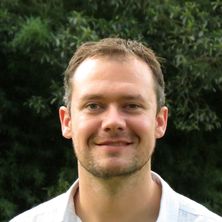
Paul Dennis leads an exciting research group that applies cutting-edge technologies to understand the roles of microorganisms and their responses to environmental change.
He is also a passionate educator and public speaker who advocates for the importance of biological diversity and evidence-based environmental awareness. He has talked about his research on ABC Radio and a range of other media outlets.
His teaching covers aspects of ecology, microbiology, plant and soil science, and climatology. He considers these topics to be of fundamental importance for the development of more sustainable societies and takes pride in helping others to obtain the knowledge and skills they need to build a better future.
Paul's research has taken him to Antarctica, the Amazon Rainforest, high mountains and oceans. The approaches used in his lab draw on a wide range of expertise in molecular biology, ecology, statistics, computer science, advanced imaging and soil science. He applies these skills to a wide-range of topics and systems including plant-microbe interactions, Antarctic marine and terrestrial ecology, biogeography, pollution and human health.
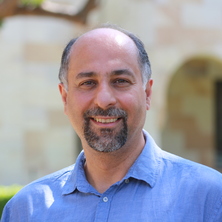
I am an entomologist with a research interest focused on studying host-pathogen interactions and discovering insect-specific viruses. I have investigated gene expression and the role of small non-coding RNAs in various host-pathogen models, particularly in crucial agricultural pests and medically significant vectors like the Aedes aegypti, responsible for transmitting dengue and Zika viruses. My previous project, aimed at exploring the function of Oryctes rhinoceros nudivirus in the biological control of the coconut rhinoceros beetle in the Pacific Islands, has substantially enhanced our comprehension of this invasive pest within the framework of an offshore biosecurity strategy. By establishing industry partnerships and securing funding to improve the Australian sugar industry, one of Australia's largest agricultural sectors, I have been able to focus on entomopathogenic viruses that affect root-feeding pests in sugarcane.
Deputy Director of Centre for Biodiversity and Conservation Science of Centre for Biodiversity and C
Centre for Biodiversity and Conservation Science
Faculty of Science
Affiliate of Centre for Biodiversity and Conservation Science
Centre for Biodiversity and Conservation Science
Faculty of Science
Senior Lecturer in AgroEcology
School of Agriculture and Food Sustainability
Faculty of Science
Senior Lecturer in AgroEcology
School of the Environment
Faculty of Science
Availability:
Available for supervision
Media expert
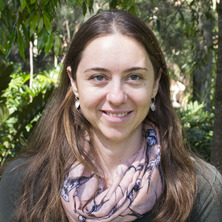
April Reside is a senior lecturer in the School of the Environment and School of Agriculture and Food Sustainability, affiliated with the Centre for Biodiversity and Conservation Science.
Dr Reside's research encompasses ecology, conservation, and policy; investigating refuges and refugia; and recovery actions and their costs for Australia’s threatened species. April also works on conservation of woodland bird communities, the impact of climate change on biodiversity, and strategies for climate change adaptation. This work has involved applying conservation planning frameworks to identify spatial priorities for climate change adaptation for biodiversity and carbon sequestration.
April has a particular fascination of flying vertebrates, and has worked on bats on three continents and nine countries. She worked as a field ecologist for non-government organisations before her PhD on understanding potential impacts of climate change on Australian tropical savanna birds. She adapted species distribution modelling techniques to account for temporal and spatial variability in the distributions of highly vagile bird species. These dynamic species distribution models take into account species’ responses to fluctuations in weather and short-term climatic conditions rather than long-term climate averages. In her first postdoctoral position, Dr Reside modelled the distribution of c.1700 vertebrates across Australia at a fine resolution, and located the future location of suitable climate for all these species for each decade until 2085. From this, she identified hotspots across Australia where species were moving to in order to track their suitable climate, informing the IUCN SSC Guidelines for Assessing Species’ Vulnerability to Climate Change by the IUCN Species Survival Commission.
April has been involved in conservation of the Black-throated Finch for over 12 years, and is Chair of the Black-throated Finch Recovery Team. She has served on Birdlife Australia's Research and Conservation Committee and Threatened Species Committee; and the Science Committee for the Invasive Species Council.
Affiliate of Centre for Biodiversity and Conservation Science
Centre for Biodiversity and Conservation Science
Faculty of Science
Professor
School of the Environment
Faculty of Science
Availability:
Not available for supervision
Media expert
Ecological and evolutionary genomics
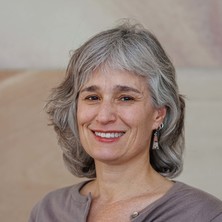
My research group uses genetic markers as tools for understanding dispersal and gene flow, often with conservation implications and most frequently focusing on highly dispersive marine animals such as fishes, mussels, and corals. We also study how gene flow and natural selection affect genomic variation and limit gene exchange across genomes, populations, and species.
RESEARCH INTERESTS Fire Ecology, Plant Invasion, Ecological Genomics, Environmental Management
My research group studies fire ecology and environmental management. Currently, we are working on:
Fire ecology of grassy woodland ecosystems
Interactions between changing fire regimes and invasive plants
Designing fire management strategies that enhance biodiversity
Population biology of native and invasive plant species
We have a special interest in plant and animal populations in fire-prone areas because of the fascinating fact that these ecosystems are never static but continually re-shaped by cycles of fire and regeneration. While being grounded in fundamental biology and ecological theory, our research is always aimed at improving knowledge for biodiversity conservation. Our work has applications in fire management, weed management and threatened species conservation.
TEACHING: I teach ecology, wildlife science and environmental managment at UQ. My teaching and coordination activities have included Elements of Ecology (AGRC1032), Wildlife Technology (ANIM3018) and People Fire & Environment (ENVM3215 / ENMV7530).
EDITORIAL
2026 – current Subject-matter Editor, Ecology
2026 – current Editorial Board Member, Journal of Pyrogeography
2023 – 2025 Associate Editor, Wildlife Letters
2018 – 2022 Associate Editor, Journal of Applied Ecology
CURRICULUM VITAE
2026 – current Senior Lecturer, University of Queensland
2019 – 2025 Lecturer, University of Queensland
2018 – 2019 Marie Skłodowska-Curie Research Fellow, Trinity College Dublin
2016 – 2017 Post-doctoral Research Fellow, Trinity College Dublin
2015 – 2016 Post-doctoral Research Assistant, University of Melbourne