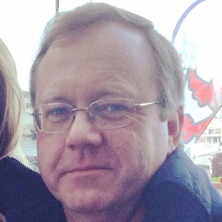
Chair in Well Engineering and Production Technology
UQ Gas & Energy Transition Research Centre
Faculty of Engineering, Architecture and Information Technology
Availability:
Not available for supervision
Media expert
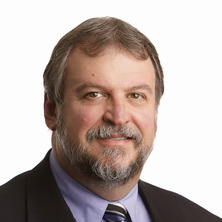
Ray is currently Professor of Well Engineering & Production Technology in the School of Chemical Engineering and Energi Simulation Co-chair in the Centre for Natural Gas. There he is researching projects related to low permeability, unconventional reservoirs (i.e., tight gas, coal seam gas, shale gas reservoir). In addition, he is an instructor and course coordinator in several courses in the ME Petroleum Engineering program at the University of Queensland.
Outside of teaching and research, Prof Johnson is the Principal at Unconventional Reservoir Solutions, a provider of reservoir engineering, stimulation consulting, and training services to the petroleum and mining industry, focusing on unconventional resources such as gas or oil from coal, shale, or naturally fractured reservoirs.
From 2014 to 2020 Ray was an Adjunct Associate Professor at the ASP, University of Adelaide.
Affiliate of Centre for Advanced Materials Processing and Manufacturing (AMPAM)
Centre for Advanced Materials Processing and Manufacturing
Faculty of Engineering, Architecture and Information Technology
Lecturer
School of Mechanical and Mining Engineering
Faculty of Engineering, Architecture and Information Technology
Availability:
Available for supervision
Media expert
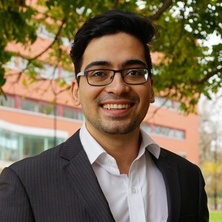
Dr Aditya Khanna is a Lecturer (Applied Mechanics) at The University of Queensland (commenced 2023). Prior to joining UQ, Aditya worked as an engineering consultant (dynamics and vibration) at Vipac Engineers & Scientists Ltd and held an adjunct lecturer appointment at The University of Adelaide. Aditya's research and industry consulting background is in the areas of: stress analysis, fatigue and fracture assessment, structural dynamics, vibration control, and non-destructive testing,
Faculty of Engineering, Architecture and Information Technology
Availability:
Available for supervision
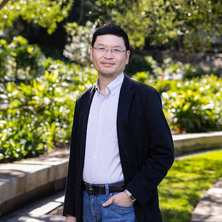
Dr Jimmy Li works at the intersection of geophysics, petrophysics and geomechanics, applied to petroleum, unconventional gas and geoenergy storage.
Before academia, he spent a decade with Halliburton (Sperry Drilling) in measurement- and logging-while-drilling and directional drilling, delivering geosteering and formation evaluation for Shell, ConocoPhillips, CNOOC and PetroChina across onshore and offshore fields.
His PhD at Curtin University (2021) developed the first theory to probe rock wettability with elastic wave propagation, published in Geophysical Research Letters, Geophysics and JASA.
At UQ since 2021, he has run laboratory programs in rock mechanics, petrophysics and formation evaluation, with industry-funded research for Origin Energy, ACARP, QPME, Lihir Gold and others. He established the Quality Management System for the University's rock mechanics testing laboratory and mechanical testing laboratory, which held NATA accreditation for rock mechanics measurement from 2022. Current work spans coal and sandstone geomechanics, fluid invasion and retention in unconventional reservoirs, CO₂ and hydrogen storage, and machine learning for subsurface characterisation.
He welcomes enquiries about industry-funded research and contract laboratory testing.
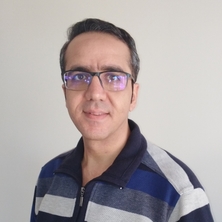
Dr Mojtaba Rajabi has over 15 years of extensive experience in crustal stress analysis, geomechanics, geomechanical-numerical modelling, hydrogeology and petrophysics. He graduated with a Ph.D. in Earth Sciences from the University of Adelaide in 2017. Dr Rajabi has worked on the geomechanical analyses of >30 sedimentary basins from across the world including Australia, New Zealand, Middle East, Mozambique, Iceland and Western Mediterranean. Since 2012, Dr Rajabi has worked on the Australian and World Stress Map projects, and currently is the Deputy-Head of the World Stress Map project. Dr Rajabi has received over 15 prestigious awards and prizes for his research including the ARC-DECRA Award, the Australian SEG Early Achievement Award, EAGE Louis Cagniard Award, EGU TS Division Outstanding Early Career Scientist Award, the Royal Society of South Australia's H.G. Andrewartha Medal, and the International Lithosphere Program’s Flinn-Hart Award.
Faculty of Engineering, Architecture and Information Technology
Availability:
Available for supervision
Media expert
Tony is an expert mining structural geologist who applies his skills to problems of deep earth mass mining, giant open pits, near-mine exploration, and the local and regional lithostructural controls on complex metalliferous mineral deposits. As a Senior Research Fellow in mining and engineering geology at the University of Queensland, Tony’s pioneering research focussed on the geological modelling and data inputs required for planning deep cave mining operations, an area that had received little previous consideration from geologists. He led the Geology and Mass Mining Project (GMM), which examined the geoscientific inputs required for exploring, defining, establishing, and mining block and sub-level caving operations that were being developed on giant porphyry copper-gold systems and IOCG deposits. While much research was being done in Australia to explore the deep earth environment, very little was being done to model the geology of large and deep mineralized systems, and then to use the new data and models to plan and extract any large discoveries made. Tony’s pioneering work was some of the first and most comprehensive to be done in this field.
Fellow and chartered professional (geology) of the Australasian Institute of Mining and Metallurgy
Fellow of the Society of Economic Geologists
Fellow of the Geological Society
Fellow of the Australian Institute of Geoscientists
Member, Geological Society of Australia
Member, Australasian Society for Historical Archaeology
Tony is presently a Principal Structural Geologist with a Brisbane-based geophysical and geological consulting group.