Affiliate of ARC COE for Children and Families Over the Lifecourse
ARC COE for Children and Families Over the Lifecourse
Faculty of Humanities, Arts and Social Sciences
Senior Research Fellow
PA Southside Clinical Unit
Faculty of Health, Medicine and Behavioural Sciences
Availability:
Available for supervision
Media expert
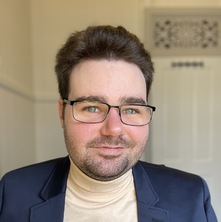
Dr Arnautovska is a psychologist with 20 years' experience spanning clinical practice and research in mental health, with a focus on health behaviour change and neuroscience. Her research translates evidence into real-world care, closing the gap between what mental health treatments can achieve and what is sustainable in individuals' everyday lives and in health services more broadly.
Her work addresses a critical structural divide: clinicians who lack the time or resourcing to address lifestyle factors, health services organised around separate physical and mental health pathways, and people with complex mental illness or those with cognitive challenges who are rarely equipped with the tools to change health behaviours on their own. Dr Arnautovska's research is focused on embedding physical health care into routine mental health treatment, so that monitoring and supporting a person's physical health becomes as standard as supporting their mental state.
She led the development of SMART, a world-first SMS-based lifestyle intervention targeting metabolic health tailored to people living with severe mental illness, delivered without reliance on smartphones or app-based platforms. SMART was developed through a comprehensive co-design process with multidisciplinary experts, clinicians, and people with lived experience, and is now being implemented within routine care at four mental health services in metropolitan Brisbane.
Consumer partnership is central to Dr Arnautovska's approach to research; she facilitates the involvement of people with lived experience across all phases of the research cycle, from priority-setting and study design through to evaluation and implementation, while actively supporting the research capacity of lived experience partners.
Dr Arnautovska has published more than 80 peer-reviewed papers and is a named investigator on projects attracting more than $14.5M in funding since 2021, including a $5M NHMRC Synergy Grant. Her contributions have been recognised through the Mental Health Australia General Clinical Trials Network (MAGNET) Emerging Leader Mid-Career Researcher award (2024), the UQ Rising Star Commendation (2024), and earlier BA and PhD Thesis awards (2017 and 2006).
Central to her research philosophy is the view that motivation and a person's agency are central elements of treatment outcomes and determine whether novel, health behaviour-focused interventions succeed and whether their impact is sustainable.
Dr Arnautovska grew up in Slovenia, where social justice and equality were formative family values that continue to inform her approach to health equity in her research today.
Faculty of Health, Medicine and Behavioural Sciences
Availability:
Available for supervision
I am a health psychologist and researcher with a strong focus on health psychology and mental health, particularly within First Nations and culturally and linguistically diverse (CALD) communities. My research expertise lies in the development and evaluation of health and wellbeing programs, and cultural adaptations to programs and research methods to more effectively measure mental health and wellness. I have extensive clinical and industry experience, including roles in program design, evaluation, and advocacy within First Nations health, chronic disease management and chronic pain.
Currently, my work spans several projects, including evaluating mental health services for First Nations Australians and investigating the needs of First Nations carers for loved ones with mental health concerns. I also have a keen interest in cultural correlates and expressions of mental disorder, in empowering people to make health behaviour changes, and to engage more effectively with healthcare services through individual, group and health promotion interventions.
Faculty of Health, Medicine and Behavioural Sciences
Research Fellow
School of Health and Rehabilitation Sciences
Faculty of Health, Medicine and Behavioural Sciences
Availability:
Available for supervision
Dr Jonathan Davies is a chronic pain researcher working to improve how pain is understood, assessed and treated. His research focuses on pain phenotyping, precision pain care, and the psychological, physiological and contextual factors that shape pain and treatment response.
At UQ’s Centre for Innovation in Pain and Health Research, he contributes to DISCERN, an NHMRC Synergy-funded multidisciplinary research program developing and validating new approaches to pain assessment. A major focus of his work is DECIPHER PAIN, a standardised, multimodal tool designed to characterise the relative contributions of nociceptive, neuropathic and nociplastic pain and support more personalised care.
His research integrates clinical assessment, quantitative sensory testing, experimental pain methods, psychophysiology, digital health and population data. He is particularly interested in how physiological signals, behaviour, language, psychosocial context and real-world health data can be combined to better understand individual differences in pain and treatment outcomes.
His broader expertise includes placebo and nocebo effects, mindfulness, mental health, quality of life, health outcome measurement and population health. His work aims to support more precise, scalable and patient-centred approaches to pain research and care.
Faculty of Health, Medicine and Behavioural Sciences
Availability:
Not available for supervision
Zoe is a Honorary Research Fellow with the School of Human Movement and Nutrition Sciences. She also currently holds an appointment as a Senior Research Officer with the Mental Health Evaluation Research Stream at Queensland Centre for Mental Health Research (QCMHR), where she leads and manages large-scale evaluation projects that seek to enhance mental health services within Queensland. During her time at QCMHR, she has worked on several state-wide evaluations for Queensland Health - including of their Crisis Support Spaces, Adolescent Day Program and Youth and Adult Step-Up-Step-Down Programs.
Zoe's research work largely focuses on the development, implementation and evaluation of interventions that seek to promote positive health behaviours and which improve social and mental health outcomes. Previously, she developed and trialled a behavioural support program (Active Choices) for the Department of Veterans Affairs, with the aim of increasing self-managed physical activity and social connectedness in Australian Defence Force veterans. Zoe has also designed and evaluated a brief motivational intervention for cannabis users (iAx), which is now in routine use at the Princess Alexandra Hospital.
In addition to her work as a researcher, Zoe has held roles in health consulting where she assisted State and Federal Government agencies, PHNs and peak bodies to design, implement and review health services, programs and policies.
Zoe's educational background in psychology, having completed a Bachelor of Psychological Science (2013) and Doctor of Philosophy (2020) in this discipline.
Faculty of Health, Medicine and Behavioural Sciences
Availability:
Available for supervision
Media expert
Ingrid Rowlands’ research is broadly focused on women’s reproductive health, with a particular interest in adverse events and diseases including miscarriage, infertility, endometriosis and gynaecological cancer.
Dr Rowlands' current program of work is conducted in partnership with community and focuses on:
Multidisciplinary care needs of people with endometriosis - QENDOCare
Supportive care interventions in cancer - PROMISE trial
Co-designed, integrated, person-centred models of care for people with innate variations of sex characteristics - Interconnect Health Research
Dr Rowlands is a mixed methods researcher and combines her training in health psychology with her epidemiological skills to understand people's health and wellbeing. Her previous research has focused on:
The causes and consequences of endometriosis in Australia - GELLES
Women’s quality of life following a diagnosis of endometrial (uterine) cancer ANECS. In this role, she also led a qualitative study exploring young women’s fertility concerns following a diagnosis of gynaecological cancer.
Women’s adjustment to miscarriage using data from more than 14,000 young women participating in the Australian Longitudinal Study on Women’s Health - Coping with miscarriage study.
Faculty of Health, Medicine and Behavioural Sciences
Availability:
Not available for supervision
Media expert
Dr Daniel Sullivan is a Clinical Psychologist and Adjunct Lecturer in the Child Health Research Centre, The University of Queensland. In his clinical role, Dr Sullivan leads a program of research to design Australia's first psychology extended scope of practice model of care for limited pharmacotherapy management, with an emphasis on deprescribing hypnotic medicines in the public sector sleep psychology setting (ExPEDiTe Sleep project). As a member of the Let’s Yarn about Sleep group at the University of the Sunshine Coast, Dr Sullivan is working to improve sleep health equity for First Nations Australians through community co-designed, culturally responsive sleep programs which harmonise sleep science with Indigenous Australian perspectives and knowledges about sleep.
Dr Sullivan’s research and clinical expertise is in the behavioural aspects of sleep; he is an Editor of the journal Research Directions: Sleep Psychology (Cambridge University Press) and is board certified by the US-based Board of Behavioral Sleep Medicine. Dr Sullivan completed postgraduate training in sleep at the University of Sydney (MSc), and his PhD in Clinical Psychology at Griffith University, where his doctoral research examined psychological factors involved in sleep-related headaches.