Faculty of Engineering, Architecture and Information Technology
Availability:
Available for supervision
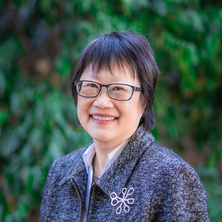
Professor Chen graduated with a Bachelor of Science in Chemical Engineering from the Massachusetts Institute of Technology and a Ph.D. in chemical engineering from the University of Minnesota. She has over twenty five years research experience in the areas of membrane separation, gas separation, biocatalytic systems, nanomaterials, and water treatment. She was professor of chemical engineering at the University of New South Wales from 2008 - 2018, the Director of the UNESCO Centre for Membrane Science and Technology from 2006 - 2014 and head of school of chemical engineering from 2014 - 2018. She is was formerly on the editorial board for the Journal of Membrane Science and Desalination Journal. Professor Chen was the Executive Dean of the Faculty of Engineering, Architecture, and IT at the University of Queensland from 2018 - 2022 and Provost and Senior Vice-President at the University of Technology Sydney from 2022 - 2025. Professor Chen is a Fellow of the Australian Academy of Technological Sciences and Engineering.
She currently holds ARC Discovery grants focussed on application of nanomaterials in membrane separation and had recently held funding from diverse sources such as CO2CRC, Coal Innovation NSW, ARC Linkage program, and CRC-P (Printed Energy). She is on the the advisory boards for the GETCO2 ARC Centre of Excellence and the Carbon Science and Innovation ARC Centre of Excellence.
Affiliate of UQ Poche Centre for Indigenous Health
UQ Poche Centre for Indigenous Health
Faculty of Health, Medicine and Behavioural Sciences
Affiliate of Centre of Architecture, Theory, Culture, and History
Centre of Architecture, Theory, Culture and History
Faculty of Engineering, Architecture and Information Technology
Associate Professor
School of Public Health
Faculty of Health, Medicine and Behavioural Sciences
Availability:
Available for supervision
Media expert
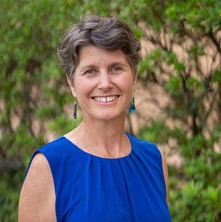
Associate Professor Nina Lansbury (also published as Nina Hall) is an environmental public health research and teaching academic at The University of Queensland’s School of Public Health. Her current research at UQ examines environmental health aspects that support the health and wellbeing of remote Indigenous community residents (as a non-Indigenous Australian) on both mainland Australia and in the Torres Strait in terms of housing, water and sanitation, and women's health. She also investigates the impacts of climate change on human health; at a global level, this involves a role as Coordinating Lead Author on the Intergovernmental Panel on Climate Change (IPCC AR7 WG II Ch 9, and formerly as a Lead Author in AR6) as well as a focus on remote Indigenous communities in Australia. In her teaching of undergraduate and postgraduate health students, she covers wicked health problems, integrative and interdisciplinary thinking in health, environmental health, and climate change impacts on health. Within the research sector, she was a senior research scientist at CSIRO, manager of the Sustainable Water program at The University of Queensland, and senior research consultant at the Institute for Sustainable Futures, UTS. Within the non-government sector, she was the director of the Climate Action Network Australia and research coordinator at the Mineral Policy Institute.
Affiliate of Dow Centre for Sustainable Engineering Innovation
Dow Centre for Sustainable Engineering Innovation
Faculty of Engineering, Architecture and Information Technology
Affiliate of Australian Research Council Centre of Excellence for Green Electrochemical Transformati
ARC COE for Green Electrochemical Transformation of Carbon Dioxide
Faculty of Engineering, Architecture and Information Technology
Associate Professor
School of Chemical Engineering
Faculty of Engineering, Architecture and Information Technology
Availability:
Available for supervision
Overview:
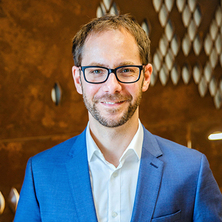
Simon Smart is an Associate Professor in the School of Chemical Engineering at The University of Queensland. He is a steering committee member, decarbonisation technical research lead and founding UQ representative of the Net Zero Australia study and a Chief Investigator in the ARC Centre of Excellence for Green Electrochemical Transformation of CO2 (GETCO2). Simon completed his BE/BSc and PhD degrees in Chemical Engineering at The University of Queensland in 2003 and 2008 respectively. From 2008 until 2012, Simon was a research fellow in the Films and Inorganic Membrane Laboratory Group of Em.Prof. Joe Diniz da Costa in Chemical Engineering at UQ, where he led inorganic membrane research into hydrogen production, carbon dioxide capture, oxygen production, desalination and membrane reactor technologies. He pioneered metal, metal oxide silica and organosilica membranes, and was amongst the first researchers globally to apply Rapid Thermal Processing (RTP) to inorganic membranes.
Simon has been working with the UQ Dow Centre for Sustainable Engineering Innovation since it’s inception in 2014, where he has focussed on the use of molten metals and molten salts as liquid catalysts for the production of turquoise hydrogen from methane using pyrolysis and CO2 utilisation to produce syngas using dry reforming. He also specialises in broader energy system modelling and decarbonisation pathways, exemplified in projects with the Future Fuels CRC, Net Zero Australia study and GETCO2.
Simon has 147 publications including 9 book chapters and 120 international journal articles at an h-index of 47, with two Highly Cited papers in chemistry and geoscience. He was selected as one of the 2018 Class of Influential Researchers by Industrial & Engineering Chemistry Research. Simon was awarded a Queensland Government Early Career Researcher Fellowship in 2012, and a prestigious UQ Foundation Research Excellence Award for work on 'Low CO2 Iron and Petrochemicals Production' in 2016. Simon was the Secretary for the Membrane Society of Australasia from 2011 - 2013, where he served on the board of directors from 2010 - 2014.
Research Interests:
Simon's research is centred around the sustainable production and use of energy and chemicals - including the development of enabling technologies and processes for the production of clean energy, materials and water. This involves: the design and development of inorganic membranes and hybrid nanocomposite materials for gas and water separation (particularly for carbon capture); the use of molten metals and molten salts as liquid catalysts for low CO2 hydrogen production through methane pyrolysis, CO2 utilisation to produce syngas through dry reforming, and low CO2 iron production via molten iron salts. Simon also specialises in broader energy system modelling and decarbonisation pathways.
Teaching and Learning:
Simon is currently the course coordinator for: Energy Systems, and Sustainable Energy Technologies and Supply Systems. He teaches into Process Systems Analysis.
Affiliate of Dow Centre for Sustainable Engineering Innovation
Dow Centre for Sustainable Engineering Innovation
Faculty of Engineering, Architecture and Information Technology
Honorary Fellow
School of Chemical Engineering
Faculty of Engineering, Architecture and Information Technology
Availability:
Not available for supervision
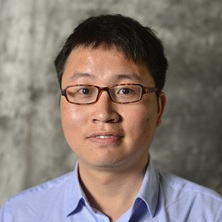
Dr Xiangkang Zeng is currently an Honorary Research Fellow at the UQ Dow Centre, School of Chemical Engineering, The University of Queensland. He received his PhD in Chemical Engineering from Monash University in 2017. He subsequently undertook postdoctoral research at the Hong Kong University of Science and Technology and Monash University before joining UQ as an ARC DECRA Research Fellow (2022-2025) and UQ Amplify Lecturer (2025-2026).
Dr Zeng’s research focuses on functional materials and redox catalysis for energy and environmental applications, particularly electrocatalysis, photocatalysis, peroxide synthesis, CO₂ conversion, and energy storage. He has published more than 60 peer-reviewed papers in leading journals, including Advanced Materials, Advanced Energy Materials, Angewandte Chemie, ACS Catalysis, Applied Catalysis B, Water Research, and Green Chemistry. He also has extensive teaching experience in bioprocess engineering, process principles, thermodynamics, and research thesis supervision.