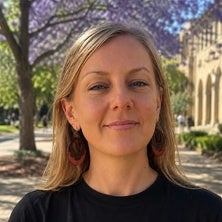
Dr Cath Neelamraju is an aquatic ecologist and catchment scientist whose work focuses on understanding how environmental change, land use, and pollutants influence freshwater ecosystem health. Her research spans aquatic ecology, ecotoxicology, water quality, large-scale environmental monitoring, and data analytics, with a particular interest in the effects of pesticides and pesticide mixtures on aquatic ecosystems. As Principal Research Leader of the Reef Catchments Science Partnership (RCSP), she leads collaborative research programs that bring together researchers, government agencies, industry, natural resource management organisations, and community stakeholders to address complex water quality challenges. Through this work, she generates evidence that supports environmental management, informs policy development, and contributes to improved water quality outcomes for catchments and downstream receiving environments.
Her research interests include:
Catchment and freshwater ecosystem ecology
Aquatic ecotoxicology and ecological risk assessment
Pesticide impacts and the toxicity of mixtures in aquatic environments
Water quality monitoring and assessment
Sediment, nutrient, and pollutant dynamics
Agricultural impacts on waterways
Great Barrier Reef water quality management
Ecological indicators and environmental reporting
Catchment restoration, resilience, and adaptive management
Science-policy integration and collaborative research partnerships
Cath is passionate about translating science into real-world outcomes and developing partnerships that support sustainable land and water management across Queensland and beyond. Her work seeks to provide the evidence needed to improve environmental policy, guide investment and management decisions, and support healthy catchments, waterways, and reef ecosystems for future generations.
Associate Professor - Pollution Science in Aquatic and Marine Environments
School of the Environment
Faculty of Science
Availability:
Available for supervision
Media expert
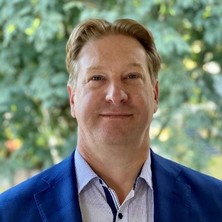
Associate Professor Ryan Turner is the Director of the Reef Catchments Science Partnership at the University of Queensland (a partnership with the Department of the Environment, Tourism, Science and Innovation). Ryan was previously the Department's Principal Scientist for Water Quality and Investigations and held an Adjunct Associate Professor role at Queensland University of Technology in the Managing for Resilient Landscapes, Institute for Future Environments. For 14 years, Ryan managed multimillion-dollar water quality monitoring programs that assessed the impacts of sediments, nutrients, and pesticides in numerous catchments along the Queensland coast, which discharge into the Great Barrier Reef and Moreton Bay. Ryan has served on several steering committees and technical advisory panels, including the Great Barrier Reef Foundation's Technical Advisory Panel. He has published extensively (>80 papers and reports) and led several collaborative research projects between the Queensland Government and academia. Ryan previously supervised analytical chemistry and microbiology laboratories in the private and public sectors. Ryan has developed numerous methodologies and standard operating procedures for analytical and monitoring techniques (water quality, sediments and soils). Ryan’s passion for the future of water security is what keeps him striving forward.
Faculty of Engineering, Architecture and Information Technology
Availability:
Available for supervision
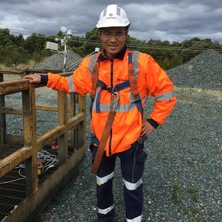
Dr Chenming Zhang is a specialist in monitoring and modelling hydrological processes in coastal and terrestrial groundwater systems, as well as tailings storage facilities and waste rock dumps. His research focuses particularly on evaporation-induced mass and heat transport in soils and tailings, hydrogeochemical processes and dynamics in aquifer systems, and the interaction between hydrological and geochemical processes in mine waste environments. He also develops innovative IoT-based geotechnical and environmental monitoring instruments that enable continuous, real-time monitoring of meteorological conditions, soil properties and water dynamics, supporting improved understanding, assessment and management of complex environmental and geotechnical systems.