
Overview
Background
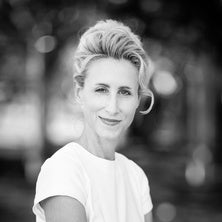
Nicole Boivin is an archaeologist whose interdisciplinary research explores the long-term human past and the biological, cultural and ecological processes that have shaped human societies and environments. Her work spans human migration and dispersal, ancient trade and connectivity, species movements, human–environment interactions, and the Anthropocene.
Trained in both biology and archaeology, she works across the traditional divide between the natural sciences and humanities, combining archaeological fieldwork with biomolecular, environmental and theoretical approaches. Her research has ranged from Late Pleistocene human dispersals to the emergence of long-distance maritime networks in the Indian Ocean and the movement of people, plants and animals that accompanied them.
A major focus of her current research is the long-term transformation of environments by humans and what archaeological evidence can contribute to contemporary challenges. She leads research on human–environment interactions in Australia and works with interdisciplinary teams to investigate how deep-time perspectives can inform understanding of sustainability, biodiversity, climate change and human adaptation.
Boivin also works on gender equity, research governance and institutional accountability in academia, with a particular interest in creating fairer and more transparent research environments.
Availability
- Honorary Professor Nicole Boivin is:
- Available for supervision
Research impacts
Boivin's research uses knowledge of the long-term human past to inform contemporary challenges, particularly biodiversity conservation, ecological restoration, climate adaptation, food security and cultural heritage. Her work demonstrates how archaeological and historical evidence can reveal the long-term consequences of human actions, while also identifying practices that have supported sustainable and resilient societies.
This research has achieved substantial policy reach. Boivin's work has been cited in more than 65 policy documents, including publications by the United Nations, UNESCO, the Intergovernmental Science-Policy Platform on Biodiversity and Ecosystem Services (IPBES), OECD, IUCN, World Bank, UN Environment Programme and national governments. She has also contributed expertise to ICOMOS in the assessment of nominations to the UNESCO World Heritage List.
Her current research continues this focus on connecting knowledge of the past with present and future challenges. The multi-institutional Australia in the Anthropocene: Linking Past, Present and Future initiative brings together researchers and Indigenous partners to explore long-term cultural and ecological change in Australia. Boivin is also involved in the ARC Centre of Excellence for Transforming Human Origins Research, whose programme integrates Indigenous, Global South and Western knowledge and aims to translate new understandings of human history into public education, policy and wider societal benefit.
Boivin also works to improve the culture and governance of research itself. Her research and advocacy address gender inequality, transparency, institutional accountability and the handling of misconduct in academia. She is an advisor to the Academic Parity Movement, an international initiative working to address bullying, discrimination and structural inequities in academic institutions.
Works
Search Professor Nicole Boivin’s works on UQ eSpace
2018
Book Chapter
Early connections
Boivin, Nicole and Crowther, Alison (2018). Early connections. The Swahili world. (pp. 105-120) edited by Stephanie Wynne-Jones and Adria LaViolette. Abingdon, Oxon, United Kingdom: Taylor & Francis / Routledge. doi: 10.4324/9781315691459-7
2018
Conference Publication
INVISIBLE AGENTS OF EASTERN TRADE : FOREGROUNDING ISLAND SOUTHEAST ASIAN AGENCY IN PRE-MODERN GLOBALISATION
Hoogervorst, Tom and Boivin, Nicole (2018). INVISIBLE AGENTS OF EASTERN TRADE : FOREGROUNDING ISLAND SOUTHEAST ASIAN AGENCY IN PRE-MODERN GLOBALISATION. Session on Globalisation and the People Without History at the 78th SAA Annual Meeting, Honolulu Hi, Apr 03-07, 2013. CAMBRIDGE: CAMBRIDGE UNIV PRESS.
2018
Conference Publication
INTRODUCTION : ARCHAEOLOGY AND THE 'PEOPLE WITHOUT HISTORY'
Boivin, Nicole and Frachetti, Michael D. (2018). INTRODUCTION : ARCHAEOLOGY AND THE 'PEOPLE WITHOUT HISTORY'. Session on Globalisation and the People Without History at the 78th SAA Annual Meeting, Honolulu Hi, Apr 03-07, 2013. CAMBRIDGE: CAMBRIDGE UNIV PRESS.
2017
Journal Article
The deep human prehistory of global tropical forests and its relevance for modern conservation
Roberts, Patrick, Hunt, Chris, Arroyo-Kalin, Manuel, Evans, Damian and Boivin, Nicole (2017). The deep human prehistory of global tropical forests and its relevance for modern conservation. Nature Plants, 3 17093. doi: 10.1038/nplants.2017.93
2017
Journal Article
The palaeogenetics of cat dispersal in the ancient world
Ottoni, Claudio, Van Neer, Wim, De Cupere, Bea, Daligault, Julien, Guimaraes, Silvia, Peters, Joris, Spassov, Nikolai, Prendergast, Mary E., Boivin, Nicole, Morales-Muñiz, Arturo, Bălăşescu, Adrian, Becker, Cornelia, Benecke, Norbert, Boroneant, Adina, Buitenhuis, Hijlke, Chahoud, Jwana, Crowther, Alison, Llorente, Laura, Manaseryan, Nina, Monchot, Hervé, Onar, Vedat, Osypińska, Marta, Putelat, Olivier, Quintana Morales, Eréndira M., Studer, Jacqueline, Wierer, Ursula, Decorte, Ronny, Grange, Thierry and Geigl, Eva-Maria (2017). The palaeogenetics of cat dispersal in the ancient world. Nature Ecology and Evolution, 1 (139) 0139, 0139. doi: 10.1038/s41559-017-0139
2017
Journal Article
Dietary diversity on the Swahili coast: the fauna from two Zanzibar trading locales
Prendergast, M. E., Quintana Morales, E. M., Crowther, A., Horton, M. C. and Boivin, N. L. (2017). Dietary diversity on the Swahili coast: the fauna from two Zanzibar trading locales. International Journal of Osteoarchaeology, 27 (4), 621-637. doi: 10.1002/oa.2585
2017
Journal Article
HUMAN AND HUMAN-MEDIATED SPECIES DISPERSALS THROUGH TIME: INTRODUCTION AND OVERVIEW
Boivin, Nicole (2017). HUMAN AND HUMAN-MEDIATED SPECIES DISPERSALS THROUGH TIME: INTRODUCTION AND OVERVIEW. Human Dispersal and Species Movement: From Prehistory to the Present, 3-26.
2017
Journal Article
PROTO-GLOBALISATION AND BIOTIC EXCHANGE IN THE OLD WORLD
Boivin, Nicole (2017). PROTO-GLOBALISATION AND BIOTIC EXCHANGE IN THE OLD WORLD. Human Dispersal and Species Movement: From Prehistory to the Present, 349-408.
2017
Book Chapter
Ships of the desert, camels of the ocean: an Indian Ocean perspective on Trans-Saharan trading systems
Horton, Mark, Crowther, Alison and Boivin, Nicole (2017). Ships of the desert, camels of the ocean: an Indian Ocean perspective on Trans-Saharan trading systems. Trade in the Ancient Sahara and Beyond. (pp. 131-155) Cambridge, United Kingdom: Cambridge University Press.
2017
Journal Article
HUMAN DISPERSAL AND SPECIES MOVEMENT From Prehistory to the Present PREFACE
Boivin, Nicole, Crassard, Remy and Petraglia, Michael (2017). HUMAN DISPERSAL AND SPECIES MOVEMENT From Prehistory to the Present PREFACE. Human Dispersal and Species Movement: From Prehistory to the Present, XXI-XXII.
2017
Conference Publication
East Africa as a source for Fatimid rock crystal. Workshops from Kenya to Madagascar
Horton, Mark, Boivin, Nicole, Crowther, Alison, Gaskell, Ben, Radimilahy, Chantal and Wright, Henry (2017). East Africa as a source for Fatimid rock crystal. Workshops from Kenya to Madagascar. Gemstones in the First Millennium AD: Mines, Trade, Workshops and Symbolism, Mainz, Germany, 20-22 October 2015. Mainz, Germany: Verlag des Römisch-Germanischen Zentralmuseum.
2017
Book Chapter
Ships of the desert, camels of the ocean: an Indian Ocean perspective on Trans-Saharan trading systems
Horton, Mark, Crowther, Alison and Boivin, Nicole (2017). Ships of the desert, camels of the ocean: an Indian Ocean perspective on Trans-Saharan trading systems. Trade in the ancient Sahara and beyond. (pp. 131-155) Cambridge, United Kingdom: Cambridge University Press. doi: 10.1017/9781108161091.006
2016
Journal Article
Involve social scientists in defining the Anthropocene
Ellis, Erle, Maslin, Mark, Boivin, Nicole and Bauer, Andrew (2016). Involve social scientists in defining the Anthropocene. Nature, 540 (7632), 192-193. doi: 10.1038/540192a
2016
Journal Article
Tropical forests and the genus Homo
Roberts, Patrick, Boivin, Nicole, Lee-Thorp, Julia, Petraglia, Michael and Stock, Jay (2016). Tropical forests and the genus Homo. Evolutionary Anthropology, 25 (6), 306-317. doi: 10.1002/evan.21508
2016
Journal Article
Local diversity in settlement, demography and subsistence across the southern Indian Neolithic-Iron Age transition: site growth and abandonment at Sanganakallu-Kupgal
Roberts, Patrick, Boivin, Nicole, Petraglia, Michael, Masser, Paul, Meece, Stephanie, Weisskopf, Alison, Silva, Fabio, Korisettar, Ravi and Fuller, Dorian Q (2016). Local diversity in settlement, demography and subsistence across the southern Indian Neolithic-Iron Age transition: site growth and abandonment at Sanganakallu-Kupgal. Archaeological and Anthropological Sciences, 8 (3), 575-599. doi: 10.1007/s12520-015-0240-9
2016
Journal Article
Reinvestigation of Kuumbi Cave, Zanzibar, reveals Later Stone Age coastal habitation, early Holocene abandonment and Iron Age reoccupation
Shipton, Ceri, Crowther, Alison, Kourampas, Nikos, Prendergast, Mary E., Horton, Mark, Douka, Katerina, Schwenninger, Jean-Luc, Faulkner, Patrick, Morales, Erendira M. Quintana, Langley, Michelle C., Tibesasa, Ruth, Picornell-Gelabert, Llorenc, Wilmsen, Edwin N., Doherty, Chris, Veall, Margaret-Ashley, Ali, Abdallah K., Petraglia, Michael D. and Boivin, Nicole (2016). Reinvestigation of Kuumbi Cave, Zanzibar, reveals Later Stone Age coastal habitation, early Holocene abandonment and Iron Age reoccupation. Azania, 51 (2), 197-233. doi: 10.1080/0067270X.2016.1173308
2016
Journal Article
Coastal subsistence, maritime trade, and the colonization of small offshore islands in eastern African prehistory
Crowther, Alison, Faulkner, Patrick, Prendergast, Mary E., Quintana Morales, Erendira M., Horton, Mark, Wilmsen, Edwin, Kotarba-Morley, Anna M., Christie, Annalisa, Petek, Nik, Tibesasa, Ruth, Doula, Katerina, Picornell-Gelabert, Llorenç, Carah, Xavier and Boivin, Nicole (2016). Coastal subsistence, maritime trade, and the colonization of small offshore islands in eastern African prehistory. Journal of Island and Coastal Archaeology, 11 (2), 211-237. doi: 10.1080/15564894.2016.1188334
2016
Journal Article
Poison arrows and bone utensils in late Pleistocene eastern Africa: evidence from Kuumbi Cave, Zanzibar
Langley, Michelle C., Prendergast, Mary E., Shipton, Ceri, Morales, Erendira M. Quintana, Crowther, Alison and Boivin, Nicole (2016). Poison arrows and bone utensils in late Pleistocene eastern Africa: evidence from Kuumbi Cave, Zanzibar. Azania, 51 (2), 155-177. doi: 10.1080/0067270X.2016.1173302
2015
Journal Article
Rethinking the dispersal of Homo sapiens out of Africa
Groucutt, Huw S., Petraglia, Michael D., Bailey, Geoff, Scerri, Eleanor M. L., Parton, Ash, Clark-Balzan, Laine, Jennings, Richard P., Lewis, Laura, Blinkhorn, James, Drake, Nick A., Breeze, Paul S., Inglis, Robyn H., Devès, Maud H., Meredith-Williams, Matthew, Boivin, Nicole, Thomas, Mark G. and Scally, Aylwyn (2015). Rethinking the dispersal of Homo sapiens out of Africa. Evolutionary Anthropology, 24 (4), 149-164. doi: 10.1002/evan.21455
2015
Journal Article
The Sri Lankan ‘Microlithic’ Tradition c. 38,000 to 3,000 Years Ago: Tropical Technologies and Adaptations of Homo sapiens at the Southern Edge of Asia
Roberts, Patrick, Boivin, Nicole and Petraglia, Michael (2015). The Sri Lankan ‘Microlithic’ Tradition c. 38,000 to 3,000 Years Ago: Tropical Technologies and Adaptations of Homo sapiens at the Southern Edge of Asia. Journal of World Prehistory, 28 (2), 69-112. doi: 10.1007/s10963-015-9085-5
Supervision
Availability
- Honorary Professor Nicole Boivin is:
- Available for supervision
Looking for a supervisor? Read our advice on how to choose a supervisor.
Media
Enquiries
For media enquiries about Honorary Professor Nicole Boivin's areas of expertise, story ideas and help finding experts, contact our Media team: