
Overview
Background
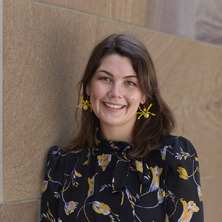
Dr Samantha Nixon is a toxin biologist and Research Fellow at the University of Queensland’s Institute for Molecular Bioscience. Her research investigates how toxins and natural resistance mechanisms evolve and how these discoveries can be harnessed to develop new medicines, antidotes, biosensors and biotechnologies.
Dr Nixon’s work combines toxinology, evolutionary biology, multiomics, protein engineering and drug discovery. Her work explores natural molecules from venoms and other biological sources as leads for new treatments for pain, epilepsy and parasitic diseases, as well as sustainable insecticides. Her recent work demonstrated that naturally occurring toxin-binding proteins can function as antidotes against harmful algal bloom toxins, establishing a new platform for therapeutic and environmental applications. Current projects include synthetic antivenom development, AI-assisted biosensor design, harmful algal bloom toxin resilience and the integrated multiomic characterisation of Australia's venomous species.
Availability
- Dr Samantha Nixon is:
- Available for supervision
- Media expert
Qualifications
- Doctor of Philosophy of Biomedical Science, University of Queensland
Research interests
-
Venoms to Drugs
Venoms are Nature's pharmaceutical libraries, fine-tuned by millions of years of evolution to become complex cocktails of potent, selective and stable molecules. Key research interests include the discovery and characterisation of venom molecules as leads for epilepsy, pain, antiparasitics and eco-friendly insecticides.
-
Toxin Resistance Inspiring Toxin Resilience
Toxins act as chemical weapons in Nature, driving an escalating evolutionary arms race to evolve more potent toxins and resistance countermechanisms. Some animals take this a step further, acquiring their toxins from their environment and so also need to autotoxicity. This research uncovers the molecular mechanisms that enable animals to resist toxins and seeks to translate them into leads for antidotes and biosensors.
-
Evolutionary Biology of Australia's Toxin-Armed Biodiversity
Australia is infamous for having the world's most venomous animals. How did such powerful toxins evolve and how do they function? This research integrates zoology, ecology, genomics, transcriptomics, proteomics, analytical chemistry, protein production and biological assays to understand what venoms are made of and their biological and ecological effects.
Works
Search Professor Samantha Nixon’s works on UQ eSpace
2026
Journal Article
Saxiphilin functions as a toxin sponge protein that counteracts the effects of saxitoxin poisoning
Nixon, Samantha A., Zakrzewska, Sandra, Jang, Seil, Huang, Keli, Bara, Anissa, Chen, Zhou, Goss, Daynen R., Park, Elizabeth R., Du Bois, J. and Minor, Daniel L. (2026). Saxiphilin functions as a toxin sponge protein that counteracts the effects of saxitoxin poisoning. Nature Communications, 17 (1) 5934, 1-15. doi: 10.1038/s41467-026-75136-z
2025
Journal Article
Structural basis for saxitoxin congener binding and neutralization by anuran saxiphilins
Zakrzewska, Sandra, Nixon, Samantha A., Chen, Zhou, Hajare, Holly S., Park, Elizabeth R., Mulcahy, John V., Arlinghaus, Kandis M., Neu, Eduard, Konovalov, Kirill, Provasi, Davide, Leighfield, Tod A., Filizola, Marta, Du Bois, J. and Minor, Daniel L. (2025). Structural basis for saxitoxin congener binding and neutralization by anuran saxiphilins. Nature Communications, 16 (1) 3885, 1-16. doi: 10.1038/s41467-025-58903-2
2025
Journal Article
A review of the venom microbiome and its utility in ecology and evolution including future directions for emerging research
De León, Marina E., Fox, Eduardo G. P., Dunaj, Sara, Jenner, Ronald A., Keiser, Carl N., Macrander, Jason, Nixon, Samantha A., Nobile, Clarissa J., Petras, Daniel, Rodriguez-Roman, Eduardo, Saviola, Anthony J., Trim, Steven A., Varona, Natascha S., Yeager, Justin, Ul-Hasan, Sabah, Herzig, Volker and Colston, Timothy J. (2025). A review of the venom microbiome and its utility in ecology and evolution including future directions for emerging research. Symbiosis, 95 (1), 3-27. doi: 10.1007/s13199-024-01031-0
2024
Conference Publication
Characterisation of novel venom peptides from the underexplored Australian Wishbone Spider
Pinter, Michael, Wirth, Hayden, Goudarzi, Mohaddeseh, Muller, Jessica A. I., Nixon, Samantha, Walker, Andrew A., King, Glenn F. and Cardoso, Fernanda C. (2024). Characterisation of novel venom peptides from the underexplored Australian Wishbone Spider. East Coast Protein Meeting by the Australian Society for Biochemistry and Molecular Biology (ASBMB), Coffs Coast, NSW Australia, 17-19 July 2024.
2024
Conference Publication
Characterisation of novel venom peptides from the underexplored Australian Wishbone Spider
Pinter, Michael, Wirth, Hayden, Goudarzi, Mohaddeseh, Muller, Jessica A.I., Nixon, Samantha, Walker, Andrew A., King, Glenn F. and Cardoso, Fernanda C. (2024). Characterisation of novel venom peptides from the underexplored Australian Wishbone Spider. Institute for Molecular Bioscience Student Symposium, Brisbane, QLD Australia, 12 July 2024.
2023
Journal Article
Two novel mosquitocidal peptides isolated from the venom of the Bahia scarlet tarantula (Lasiodora klugi)
Ahmed, Jamila, Walker, Andrew A., Perdomo, Hugo D., Guo, Shaodong, Nixon, Samantha A., Vetter, Irina, Okoh, Hilary I., Shehu, Dalhatu M., Shuaibu, Mohammed N., Ndams, Iliya S., King, Glenn F. and Herzig, Volker (2023). Two novel mosquitocidal peptides isolated from the venom of the Bahia scarlet tarantula (Lasiodora klugi). Toxins, 15 (7) 418, 1-14. doi: 10.3390/toxins15070418
2021
Journal Article
Multipurpose peptides: the venoms of Amazonian stinging ants contain anthelmintic ponericins with diverse predatory and defensive activities
Nixon, Samantha A., Robinson, Samuel D., Agwa, Akello J., Walker, Andrew A., Choudhary, Shivani, Touchard, Axel, Undheim, Eivind A.B., Robertson, Alan, Vetter, Irina, Schroeder, Christina I., Kotze, Andrew C., Herzig, Volker and King, Glenn F. (2021). Multipurpose peptides: the venoms of Amazonian stinging ants contain anthelmintic ponericins with diverse predatory and defensive activities. Biochemical Pharmacology, 192 114693, 114693. doi: 10.1016/j.bcp.2021.114693
2021
Other Outputs
Arthropod venoms in antiparasitic drug discovery: isolation and biological characterisation of venom-derived anthelmintic compounds
Nixon, Samantha (2021). Arthropod venoms in antiparasitic drug discovery: isolation and biological characterisation of venom-derived anthelmintic compounds. PhD Thesis, Institute for Molecular Bioscience, The University of Queensland. doi: 10.14264/dfb7f01
2021
Journal Article
Production, composition, and mode of action of the painful defensive venom produced by a limacodid caterpillar, Doratifera vulnerans
Walker, Andrew A., Robinson, Samuel D., Paluzzi, Jean-Paul V., Merritt, David J., Nixon, Samantha A., Schroeder, Christina I., Jin, Jiayi, Goudarzi, Mohaddeseh Hedayati, Kotze, Andrew C., Dekan, Zoltan, Sombke, Andy, Alewood, Paul F., Fry, Bryan G., Epstein, Marc E., Vetter, Irina and King, Glenn F. (2021). Production, composition, and mode of action of the painful defensive venom produced by a limacodid caterpillar, Doratifera vulnerans. Proceedings of the National Academy of Sciences of the United States of America, 118 (18) 2023815118, e2023815118. doi: 10.1073/pnas.2023815118
2020
Journal Article
Where are all the anthelmintics? Challenges and opportunities on the path to new anthelmintics
Nixon, Samantha A., Welz, Claudia, Woods, Debra J., Costa-Junior, Livio, Zamanian, Mostafa and Martin, Richard J. (2020). Where are all the anthelmintics? Challenges and opportunities on the path to new anthelmintics. International Journal for Parasitology: Drugs and Drug Resistance, 14, 8-16. doi: 10.1016/j.ijpddr.2020.07.001
2020
Journal Article
It takes two: dimerization is essential for the broad-spectrum predatory and defensive activities of the venom peptide Mp1a from the jack jumper ant Myrmecia pilosula
Nixon, Samantha A., Dekan, Zoltan, Robinson, Samuel D., Guo, Shaodong, Vetter, Irina, Kotze, Andrew C., Alewood, Paul F., King, Glenn F. and Herzig, Volker (2020). It takes two: dimerization is essential for the broad-spectrum predatory and defensive activities of the venom peptide Mp1a from the jack jumper ant Myrmecia pilosula. Biomedicines, 8 (7) 185, 1-13. doi: 10.3390/biomedicines8070185
2020
Journal Article
Animal toxins — Nature's evolutionary-refined toolkit for basic research and drug discovery
Herzig, Volker, Cristofori-Armstrong, Ben, Israel, Mathilde R., Nixon, Samantha A., Vetter, Irina and King, Glenn F. (2020). Animal toxins — Nature's evolutionary-refined toolkit for basic research and drug discovery. Biochemical Pharmacology, 181 114096, 114096. doi: 10.1016/j.bcp.2020.114096
2020
Conference Publication
Discovery and characterisation of novel peptides from Amazonian stinging ant venoms with antiparasitic activity
Nixon, Samantha, Agwa, Akello, Robinson, Sam, Walker, Andrew, Touchard, Axel, Schroeder, Christina, Vetter, Irina, Kotze, Andrew C., Herzig, Volker and King, Glenn F. (2020). Discovery and characterisation of novel peptides from Amazonian stinging ant venoms with antiparasitic activity. 20th World Congress of the International-Society-on-Toxinology, Buenos Aires, Argentina, 8-13 September 2019. Oxford, United Kingdom: Elsevier.
2019
Journal Article
The antitrypanosomal diarylamidines, diminazene and pentamidine, show anthelmintic activity against Haemonchus contortus in vitro
Nixon, Samantha A., Saez, Natalie J., Herzig, Volker, King, Glenn F. and Kotze, Andrew C. (2019). The antitrypanosomal diarylamidines, diminazene and pentamidine, show anthelmintic activity against Haemonchus contortus in vitro. Veterinary Parasitology, 270, 40-46. doi: 10.1016/j.vetpar.2019.05.008
2019
Conference Publication
Arthropod venoms as novel treatments for parasitic worms
Nixon, Samantha, Herzig, Volker, Kotze, Andrew C. and King, Glenn F. (2019). Arthropod venoms as novel treatments for parasitic worms. 19th World Congress of the International-Society-on-Toxinology (IST) / 11th Asia Pacific Congress of the International-Society-on-Toxinology (IST) / 13th Chinese Conference on Toxins and Medical Applications, Haikou, China, 24-31 October 2017. Oxford, United Kingdom: Elsevier. doi: 10.1016/j.toxicon.2018.10.181
Supervision
Availability
- Dr Samantha Nixon is:
- Available for supervision
Looking for a supervisor? Read our advice on how to choose a supervisor.
Media
Enquiries
Contact Dr Samantha Nixon directly for media enquiries about:
- spiders
- toxins
- venoms
Need help?
For help with finding experts, story ideas and media enquiries, contact our Media team: