Faculty of Health, Medicine and Behavioural Sciences
Availability:
Available for supervision
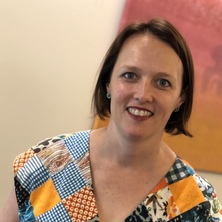
Leanne is an academic specialising in Indigenous public health. She has a strong background as a health practitioner, executive manager in both the Australian Government and Aboriginal Community Controlled Health Services, and as an international public health consultant. She has extensive experience teaching using a strengths-based approach as opposed to the deficit model, and supports other staff to utilise culturally-safe teaching practices across health professional education programs at both the undergraduate and postgraduate level. She was a co-lead on the Game Changing Education - Embedding Indigenous knowledges in the training and development of the health workforce in a culturally safe transformative learning environment project, funded through both teaching fellowship and teaching innovation grants, which have been implemented in both the HaBS and Medicine faculties. Leanne and the Indigenous Health Education and Workforce Development team from UQ and the Institute for Urban Indigenous Health were awarded two prestigious and highly competitive awards: the Business & Higher Education Roundtable Award for Outstanding Collaboration in Higher Education and Training, and the Australian Awards for University Teaching Award for Programs that Enhance Learning. Leanne brings this knowledge and experience to her role as Co-Chair of the World Federation of Public Health Associations' Public Health Professionals' Education and Training Working Group, which has published the results of a curriculum mapping project benchmarked against the Global Charter for the Public’s Health. She is also a member of the Steering Committee and Technical Advisory Group for the World Health Organization project on national workforce capacity to implement the essential public health functions.
Faculty of Health, Medicine and Behavioural Sciences
Availability:
Available for supervision
Media expert
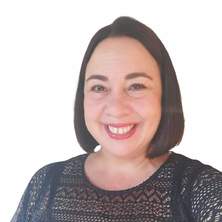
Katherine Cullerton is an Associate Professor in the School of Public Health. She joined the School in 2018 following postdoctoral research at the MRC Epidemiology Unit, University of Cambridge, UK, where her work explored the question of whether, and under what circumstances, it is appropriate for nutrition researchers to engage with the food industry. Katherine’s current research focuses on understanding why evidence does not consistently inform public policy. In particular, she examines the strategies employed by the corporate sector to influence policy and investigates how public health advocates can more effectively shape policy outcomes in Australia, with a special emphasis on the roles of framing and public opinion.
A/Prof Cullerton is also the Co-Program Director for the Master of Public Health.
Faculty of Engineering, Architecture and Information Technology
Affiliate of Centre for Policy Futures
Centre for Policy Futures
Faculty of Humanities, Arts and Social Sciences
Lecturer
School of Business
Faculty of Business, Economics and Law
Affiliate of Queensland Digital Health Centre
Queensland Digital Health Centre
Faculty of Health, Medicine and Behavioural Sciences
Affiliate of Centre for Digital Cultures & Societies
Centre for Digital Cultures & Societies
Faculty of Humanities, Arts and Social Sciences
Affiliate Research Fellow of School of Public Health
School of Public Health
Faculty of Health, Medicine and Behavioural Sciences
Availability:
Available for supervision
Media expert
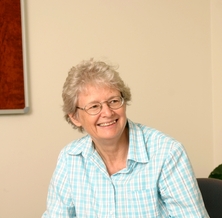
Dr Caitlin Curtis is a researcher specialising in responsible AI, applied ethics, and emerging technologies. She leads national collaborations on AI governance and digital rights, shapes public policy and discourse, and created one of Australia’s first Responsible AI university courses.
Dr Curtis is a recipient of the 'ABC Top 5 Scientist Media Residency Award', and the Australian Institute of Science & Policy Tall Poppy Science Award', recognizing excellence in both research and science communication.
Teaching
Caitlin currently teaches the UQ Master of Business Analytics course: Responsible Artificial Intelligence - which looks at the ethical, legal, and social issues relating to AI and automated systems.
She also lectures into Responsible Management for the Global Economy in the BBusMan Program and Resonant Leadership in the MBA Program, particularly around the ethical and responsible management of artificial intelligence and similar technologies.
She also coordinates and moderates the UQ AI Collaboratory's 'Ask Me Anything about AI' series, which is a unique forum that brings together panellists with technical expertise in artificial intelligence, along with experts from across social science, communication, policy, or law to answer audience questions and spark multidisciplinary discussion around important topics relating to AI systems, including: AI social media predictions, facial recognition systems, misinformation and AI, and deep learning.
Affiliate of Australian Women's and Girls' Health Research Centre
Australian Women and Girls' Health Research Centre
Faculty of Health, Medicine and Behavioural Sciences
Senior Lecturer - Biostatistics
School of Public Health
Faculty of Health, Medicine and Behavioural Sciences
Availability:
Available for supervision
In biostatistics, the real measure of good work is not the journal’s impact factor or the size of the grant, but whether the analysis is honest, the methods are fit for purpose, and the findings can be trusted to guide decisions. Dr Darssan aims to do this kind of work: careful, transparent, and selective within focused teams of like-minded colleagues where statistical thinking is shared rather than outsourced. The goal remains constant: better evidence that ultimately advances modelling of geographical patterns and environmental impacts.
His research centres on applying and extending statistical methods, particularly spatial and environmental approaches, to address practical problems in complex observational and environmental data. He remains committed to transparent, reproducible practice and to mentoring the next generation of applied spatial and environmental modellers.
Dr Darssan values teaching that builds genuine statistical confidence rather than surface-level competence. His approach centres on active learning, real-world data, and creating an environment that encourages students to ask questions, challenge ideas, and think critically. He uses R-based workshops, practical case studies, and structured discussion to develop computational skill, logical reasoning, and critical judgement. As a Fellow of the Higher Education Academy (FHEA), he remains committed to reflective, student-centred practice that prepares learners to use statistics thoughtfully in their future work. He has taught approximately 1,300 postgraduate and 1,000 undergraduate students in foundational and applied statistics, and has supervised 9 Master’s dissertations and 8 PhD students to completion.
He values service as service, not as a means of promotion or personal return, but as a genuine commitment to helping others. Externally, he contributed as Statistics Editor for Clinical Toxicology, Associate Editor for Archives of Environmental and Occupational Health, President of the Statistical Society of Australia – Queensland Branch, Webinar Coordinator for the Teaching of Statistics in the Health Sciences section of the American Statistical Association, and Social Media Editor for the Australian and New Zealand Journal of Statistics. He also regularly reviews manuscripts and examines research theses.
Within the University, he has served as Program Director of the Bachelor of Health Sciences, co-founder of the Environmental Epidemiology Research Group, Engagement Coordinator for current students, PhD progress review chair and thesis examiner. He also developed the School’s LinkedIn presence. He particularly values conversations with like-minded people who undertake service for its own sake, rather than for personal benefit.
As a service statistician, Dr Darssan has spent years supporting investigator-initiated clinical trials, contributing to study design, randomisation, protocol development, statistical analysis plans, final reports, and data safety monitoring. He has provided statistical expertise to clinicians and researchers across ophthalmology, nephrology, rheumatology, endocrinology, and health services research.
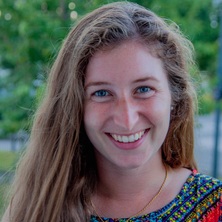
Dr Darsy Darssan is a Senior Lecturer in Biostatistics at The University of Queensland’s School of Public Health. He holds three degrees in Statistics from mathematical sciences schools: a BSc (Hons) from the University of Jaffna (2005), an MAppSc from RMIT University (2008), and a PhD from Queensland University of Technology (2014). His early career included roles at the Australian Council for Educational Research, the University of New South Wales, and the University of Wollongong, followed by postdoctoral research in biostatistics at the University of Liverpool, UK. He returned to Australia in late 2015 and has been at UQ ever since.
Faculty of Health, Medicine and Behavioural Sciences
Availability:
Not available for supervision
Media expert
Associate Professor Susan de Jersey is an Assistant Director within the Prevention Strategy Branch, Population Health Division at Queensland Health, where she leads and advises on the design, implementation, and evaluation of large-scale prevention initiatives focused on chronic disease prevention across the life course.
Trained as an Advanced Accredited Practising Dietitian and Credentialled Diabetes Educator, her career has evolved from specialist clinical care into driving system-level change that embeds evidence-based prevention, early intervention and management of chronic disease into routine health services.
Her work has focused on women and children, with a particular interest in nutrition, physical activity, healthy weight gain, and gestational diabetes, recognising the early years as a critical window for long-term and intergenerational health impact.
Susan is nationally recognised for translating research into policy and practice using implementation science, co-design, and health-system partnerships, with an emphasis on scalability, workforce capability, and value-based care.
Susan maintains strong links to frontline services, ensuring policy and system reform remain grounded in real-world clinical contexts. She is a Board Director of the Australasian Diabetes in Pregnancy Society and is committed to strengthening prevention-focused health systems that improve equity, outcomes, and sustainability for women, families, and future generations.
Faculty of Health, Medicine and Behavioural Sciences
Availability:
Available for supervision
Dr Tracey DiSipio is a teaching and research academic and cancer epidemiologist in the School of Public Health. Her program of research is focused on women’s cancers and health equity by conducting epidemiological research and behavioural interventions that address survivorship issues. Her research has a strong emphasis on under-researched groups including women diagnosed with rare gynaecological cancers and advanced disease.
Faculty of Health, Medicine and Behavioural Sciences
Availability:
Available for supervision
Dr Abbey Diaz is a Faculty of Medicine Research Fellow and epidemiologist in the FNCWR team. Her program of work is broadly concerned with the quality and equity of cancer care pathways, particularly for Aboriginal and Torres Strait Islander people and for people with, or at risk of, other chronic disease.
Recently, Abbey was part of an investigator team (CID; 2021-2024) awarded a $1 million National Heart Foundation Strategic Grant in Cardio-oncology. Through its work, the team aims to:
Better understand the risk of adverse cardiovascular events in Australians diagnosed with cancer
Identify potential high-risk groups and health service gaps
Understand how cancer treatment decision-making by patients and their health professionals are influenced by their cardiovascular risk.
Co-design and assess educational resources for patients and health professionals to improve care and outcomes for cancer patients at risk of adverse cardiovascular outcomes.
Abbey is also an investigator on an ARC-funded grant to develop a measure supportive care needs of carers of Aboriginal and Torres Strait Islander people with cancer (CIJ), a World Cancer Research Fund (WCRF) funded grant to pilot an intervention to support cancer patients to reduce exposure to behavioural risk factors (CID), and an MRFF grant to co-design and feasibility test a phase III exercise trial for women with metastatic breast cancer (AI). She led the Queensland Aboriginal and Torres Strait Islander Better Cardiac Care Linkage Study, commissioned by the Queensland Health department, and was an investigator on a Cancer Australia and Department of Health tender to better understand how information on Indigenous status is collected, recorded, reported at all stages of the National Cervical Screening Program.
Abbey's PhD thesis investigated whether the higher comorbidity among Aboriginal and Torres Strait Islander people with cancer was associated with lower cancer survival and supportive care needs. Her thesis was undertaken and completed while she was part of the National Indigenous Cervical Screening Project, with her PhD (Charles Darwin University/Menzies School of Health research) awarded in 2018.
Faculty of Health, Medicine and Behavioural Sciences
Availability:
Available for supervision
Sandra Diminic is a Principal Research Fellow at Queensland Centre for Mental Health Research (QCMHR) and leads the Mental Health Services Research stream. She has qualifications in psychology and public health and her PhD focused on understanding the service needs of carers and families of people with mental illness. Before joining QCMHR Sandra worked on the Australian Schizophrenia Research Bank and interned in Mental Health Policy and Service Development at the World Health Organization; she has also been a visiting scholar at the Centre for Addiction and Mental Health, Toronto.
Sandra's research aims to reduce the population burden of mental illness through understanding demand for and utilisation of mental health services, identifying and evaluating evidence-based mental health service models, and applying these findings to improve mental health systems and services. This research program involves close collaboration with health system partners such as national and state governments, Primary Health Networks, and community organisations to provide evidence and advice to support integrated regional and national mental health service planning. Current major projects include development and application of the National Mental Health Service Planning Framework (NMHSPF) and Australian Suicide Prevention Planning Model (AuSPPM), needs-based planning tools which model population needs and required care to produce resource targets for optimal mental health and suicide prevention service delivery in Australia. Sandra also leads projects drawing on population surveys and health service administrative data to understand current mental health service delivery and identify service gaps for specific regions and populations.
Affiliate of Australian Women's and Girls' Health Research Centre
Australian Women and Girls' Health Research Centre
Faculty of Health, Medicine and Behavioural Sciences
Professor of Biostatistics
School of Public Health
Faculty of Health, Medicine and Behavioural Sciences
Availability:
Not available for supervision
Media expert
Professor Annette Dobson's research interests are in: Biostatistics (generalised linear modelling, clinical biostatistics, statistical methods relevant to longitudinal studies), and Epidemiology (tobacco control, cardiovascular disease, women's health).
Faculty of Health, Medicine and Behavioural Sciences
Availability:
Available for supervision
Media expert
Dr Stephanie Duncombe is a Lecturer at the School of Public Health, The University of Queensland. Her research intersects understanding inequalities in physical activity through epidemiological methods and tailored interventions to reduce these inequalities using health promotion frameworks. Stephanie has specific interests in gender inequalities and paediatrics. Stephanie completed her PhD on high-intensity interval training within schools and led an intervention study titled Making a HIIT. She has a multidisciplinary background, including epidemiology, exercise physiology, and health promotion.
Faculty of Health, Medicine and Behavioural Sciences
Senior Lecturer
School of Public Health
Faculty of Health, Medicine and Behavioural Sciences
Availability:
Available for supervision
Media expert
Dr Amalie Dyda is an infectious disease epidemiologist working as a teaching and research academic in the School of Public Health. In 2009 she completed a Master of Applied Epidemiology at the Australian National University, followed by a PhD investigating vaccine preventable diseases in adults at the University of New South Wales in 2017. She has experience working as a field epidemiologist in numerous health departments throughout Australia and has research experience in infectious diseases, data linkage and public health informatics. She is currently working on projects investigating the use of technology and machine learning methods to assist the public health response to infectious diseases, and links between social media use and health. Additionally, Amalie does a lot of work to improve gender equity in health and medical research, including working as part of the peer advisory committee for Franklin Women.
Associate Professor and Senior Principal Research Fellow
School of Public Health
Faculty of Health, Medicine and Behavioural Sciences
Availability:
Available for supervision
Associate Professor Holly Erskine leads the Child and Adolescent Psychiatric Epidemiology and Services (CAPES) research stream at the Queensland Centre for Mental Health Research. She is an Adjunct Associate Professor with the School of Public Health at the University of Queensland and is an affiliate Assistant Professor with the Institute for Health Metrics and Evaluation (IHME) at the University of Washington.
Holly completed her PhD in 2016, examining the global epidemiology of ADHD and conduct disorder as well as the long-term outcomes associated with these disorders, and was awarded the Dean’s Award for Outstanding Higher Degree Theses. For several years, she was responsible for the epidemiological modelling and burden estimation of child and adolescent mental disorders in the Global Burden of Disease Study (GBD) and co-led a programme of work which directly led to the inclusion of bullying victimisation as a risk factor for major depressive disorder and anxiety disorders in GBD. She was awarded an NHMRC Early Career Fellowship in 2018 and was recognised as a Highly Cited Researcher in 2022.
Currently, Holly is the Principal Investigator of the National Adolescent Mental Health Surveys (NAMHS), which involves nationally-representative surveys of the prevalence of adolescent mental disorders in Kenya, Indonesia, and Vietnam. She is also a chief investigator on the Australian Child Maltreatment Study and the Centre for Research Excellence in Adolescent Health Metrics.
Faculty of Health, Medicine and Behavioural Sciences
Availability:
Available for supervision
I am a postdoctoral research fellow in the School of Public Health at the University of Queensland. My work sits at the intersection of infectious disease epidemiology, antimicrobial resistance and applied research methods, with a particular focus on generating evidence that can be acted on by clinicians, policymakers and communities.
I completed my PhD at UQ in 2025, centred on causal inference methods for estimating the real-world effects of interventions using observational infectious disease data. I continue to apply these methods to routinely collected health data, and increasingly to environmental and wastewater surveillance data.
My current research spans four areas:
Antimicrobial resistance and One Health, including co-design of digital AMR surveillance tools for regional and remote settings
Design thinking and co-design as approaches to complex public health problems, delivered through international multi-stakeholder workshops
Australia’s national infection prevention and control workforce, including digital maturity and preparedness for artificial intelligence
Epidemiology education, assessment design and gamified learning resources
I teach and co-coordinate postgraduate courses in epidemiology and communicable disease control, and I am an active member of the Australasian Epidemiological Association and CANDLE. I work in English and Japanese, and I welcome collaboration across disciplines and borders.