Affiliate of Centre for Innovation in Pain and Health Research (CIPHeR)
Centre for Innovation in Pain and Health Research
Faculty of Health, Medicine and Behavioural Sciences
NHMRC Leadership Fellow
School of Health and Rehabilitation Sciences
Faculty of Health, Medicine and Behavioural Sciences
Director, UQ Clinical Trials Centre
Faculty of Health, Medicine and Behavioural Sciences
Availability:
Available for supervision
Media expert
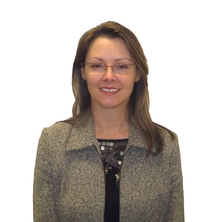
Nadine is a physiotherapist, NHMRC Leadership Fellow (leadership level 2) focused on musculoskeletal pain and orthopaedic research, particularly clinical trials, and Academic Director of the University of Queensland's Clinical Trials Centre. Nadine is also the program lead for the Health Research Accelerator (HERA 2) program focused on innovation in clinical trials (ULTRA - UQ's Clinical Trial Capability) and a theme lead for clinical trials in the Centre of Innovation in Pain and Health Research (CIPHeR) at UQ. She is passionate about supporting multidisciplinary groups to work together, with critical mass, to design, conduct, analyse and translate the results of high quality clinical trials, in ways that improve patient and service outcomes.
Nadine is a lifetime Fellow of the Chartered Society of Physiotherapy in the UK, and has held previous National Institute for Health Research (NIHR) Senior Investigator awards and is the only physiotherapist to have held an NIHR Research Professorship in the UK. Having moved to Australia in January 2021, she was the inaugural Director of the STARS Research and Education Alliance between the University of Queensland and Metro North Health in Queensland (STARS is the Surgical, Treatment and Rehabilitation Service, the newest public hospital in Brisbane). Nadine is part of the STARS Alliance multidisciplinary team including conjoint appointments between the University and hospital, across the disciplines of physiotherapy, nursing, occupational therapy, psychology, consumer involvement in research, interdisciplinary collaborative practice in education and practice, and research management.
Nadine's research focuses on musculoskeletal pain, including low back pain, osteoarthritis and shoulder problems, and she has a particular interest in developing, testing and implementing treatments and health services. She has led or collaborated on more than 31 randomised trials, attracting over $145 million in research funding from, for example, the National Institute for Health Research (NIHR), Versus Arthritis, and the Medical Research Council in the UK, PCORI in the USA and the NHMRC and MRFF in Australia. Current examples include international collaborative RCTs funded through the NIHR-NHMRC collaborative trial scheme focused on comparative effectiveness of surgery and conservative care for persistent, severe low back pain and comparative effectiveness of different approaches to shoulder joint replacement for patients with shoulder osteoarthritis. She has supervised 15 PhD students to completion, and 19 Masters research project students (nearly all were healthcare professionals), with 5 PhDs currently in progress in the UK, Europe and Australia. Nadine has led or contributed to over 311 peer reviewed publications, including the Lancet Series on Low Back Pain in 2018.
Examples of recognition as a national and international leader in the field include:
2024 - Elected to the Board of Directors, Australian Clinical Trials Alliance (ACTA)
2024-2029 - NHMRC Investigator Grant, Leadership level 2, supporting a program of research focused on new musculoskeletal RCTs and sharing existing RCT data to answer further research questions
2023 - Stanley Paris Visiting Fellowship award, University of Otago, New Zealand, supporting visiting fellowship in March 2024
2022 - Chief Executive's Award for Research, Metro North Health and Hospital Service Research Excellence Award
2020 - Senior Investigator award from the National Institute for Health Research (NIHR) in the UK, awarded to the top 200 clinical researchers in the country
2019 - PEDro recognition for the UK FASHIoN trial - chosen by a panel of international trialists as one of the five most important physiotherapy trials published in 2014-2019.
2019 - Invited member of the International Research Strategy Advisory Committee for the Health Research Board’s (Ireland) new five year research strategy development
2018 - Miegunyah Distinguished Visiting Fellowship 2019, University of Melbourne, Australia. February-March 2019
Faculty of Engineering, Architecture and Information Technology
Affiliate of Centre for Research in Social Psychology (CRiSP)
Centre for Research in Social Psychology
Faculty of Health, Medicine and Behavioural Sciences
Affiliate of Social Identity and Groups Network (SIGN) Research Centre
Social Identity and Groups Network
Faculty of Health, Medicine and Behavioural Sciences
Affiliate of Centre for Business and Organisational Psychology
Centre for Business and Organisational Psychology
Faculty of Health, Medicine and Behavioural Sciences
Professor
School of Psychology
Faculty of Health, Medicine and Behavioural Sciences
Availability:
Available for supervision
Media expert
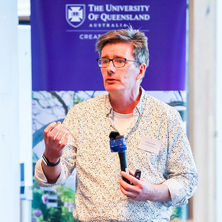
Alex is Professor of Social and Organizational Psychology and Laureate Fellow at the University of Queensland. His research focuses on the study of group and identity processes in organizational, social, and clinical contexts.
Together with colleagues, Alex has written and edited 15 books and published over 300 peer-reviewed articles on these topics. His most recent books are:The New Psychology of Leadership: Identity, Influence and Power (2nd Ed. with Stephen Reicher & Michael Platow, Psychology Press, 2020), The New Psychology of Sport: The Social Identity Approach (with Katrien Fransen & Filip Boen, Sage, 2020),The New Psychology of Health: Unlocking the Social Cure (with Catherine Haslam, Jolanda Jetten, Tegan Cruwys and Genvieve Dingle, Routledge, 2018), andSocial Psychology: Revisiting the Classic Studies (2nd Ed. with Joanne Smith, Sage, 2017).
Alex is a former Chief Editor of the European Journal of Social Psychology and currently Associate Editor of The Leadership Quarterly. He has won a range of major awards from scientific organisations in Australia, Europe, the UK, and the US, including recognition for distinguished contributions to psychological science from both the Australian Psychological Society and British Psychological Society. In 2022 he was appointed a Member of the Order of Australia "for significant service to higher education, particuarly psychology, through research and mentoring".
Faculty of Health, Medicine and Behavioural Sciences
Principal Research Fellow
Child Health Research Centre
Faculty of Health, Medicine and Behavioural Sciences
Availability:
Available for supervision
Media expert
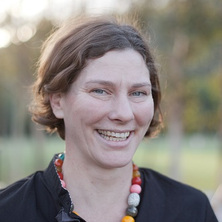
Dr Koa Whittingham is a clinical and educational/developmental psychologist with research interests across parenting, neurodevelopmental disabilities and acceptance and commitment therapy (ACT). Koa began her career building key empirical support for the flagship UQ program Stepping Stones Triple P for specific neurodevelopmental disabilities including autism, acquired brain injury and cerebral palsy. She has since developed an international reputation as a leader in developing and testing novel acceptance and commitment therapy (ACT) interventions to support parents, including using online/telehealth formats. Her contributions to the field of ACT-based parenting intervention were recognised by her election as a Fellow to the Assocaition for Contextual Beahvioural Science in 2023. Koa has a strong track record with over 100 papers and 6 book chapters and currently leads an MRFF testing her online intervention Parenting Acceptance and Commitment Therapy (PACT) with 300 families of children with neurodevelopmental disabilities or developmental delay. She has written a self-help book for the transition to motherhood, Becoming Mum, as well as the first clinical manual on applying ACT to parenting support, Acceptance and Commitment Therapy the Clinician's Guide for Supporting Parents.
Affiliate of Centre for Neurorehabilitation, Ageing and Balance Research
Centre for Neurorehabilitation, Ageing and Balance Research
Faculty of Health, Medicine and Behavioural Sciences
Professor in Occupational Therapy
School of Health and Rehabilitation Sciences
Faculty of Health, Medicine and Behavioural Sciences
Availability:
Not available for supervision
Media expert
Dr Fleming is an occupational therapist and researcher in the field of brain injury rehabilitation. Her PhD completed in 1996 was on the topic of the development of self-awareness following traumatic brain injury. She has continued to pursue collaborative research on role of metacognitive factors in brain injury rehabilitation. Other research interests include prospective memory assessment and rehabilitation, community integration and the transition from hospital to the community, and psychosocial adjustment and outcomes following acquired brain injury, as well as lifetime care and support for people with complex neurological disability. She is Professor of Occupational Therapy at The University of Queensland, and is a Fellow of the Occupational Therapy Australia Research Academy, member of the American Occupational Therapy Research Academy, a Fellow of the Australasian Society for the Study of Brain Impairment, and Co-Editor of Brain Impairment.
Associate Member of Centre for Community Health and Wellbeing
Centre for Community Health and Wellbeing
Faculty of Health, Medicine and Behavioural Sciences
Professor
School of Human Movement and Nutrition Sciences
Faculty of Health, Medicine and Behavioural Sciences
Affiliate of Health and Wellbeing Centre for Research Innovation
Health and Wellbeing Centre for Research Innovation
Faculty of Health, Medicine and Behavioural Sciences
Affiliate of Queensland Digital Health Centre
Queensland Digital Health Centre
Faculty of Health, Medicine and Behavioural Sciences
Availability:
Available for supervision
Genevieve is a Professor of Physical Activity and Health at the University of Queensland. Her research examines sedentary behaviour and physical activity across the 24-hour day, their effects on health, wellbeing and performance, and how these behaviours can be changed sustainably. Her work focuses particularly on desk-based workers and people with or at risk of type 2 diabetes.
Co-design with stakeholders and end users is central to her research. She works with government, clinical, public health, industry, community and workplace partners to translate evidence into policy and practice. She leads BeUpstanding, an online workplace health and wellbeing initiative that supports teams of desk-based workers to reduce sedentary time, and Small Steps for Big Changes Australia, which evaluates a diabetes prevention program in the Australian context. Through Project TARA, she is also helping develop and evaluate digital health and learning experiences that can be tailored and adapted to support the translation of evidence into practice.
Faculty of Health, Medicine and Behavioural Sciences
Affiliate of Centre for the Business and Economics of Health
Centre for the Business and Economics of Health
Faculty of Business, Economics and Law
Affiliate of Centre for Innovation in Pain and Health Research (CIPHeR)
Centre for Innovation in Pain and Health Research
Faculty of Health, Medicine and Behavioural Sciences
Affiliate of Centre for Neurorehabilitation, Ageing and Balance Research
Centre for Neurorehabilitation, Ageing and Balance Research
Faculty of Health, Medicine and Behavioural Sciences
Affiliate of RECOVER Injury Research Centre
RECOVER Injury Research Centre
Faculty of Health, Medicine and Behavioural Sciences
Affiliate of Queensland Digital Health Centre
Queensland Digital Health Centre
Faculty of Health, Medicine and Behavioural Sciences
Centre Director
School of Health and Rehabilitation Sciences
Faculty of Health, Medicine and Behavioural Sciences
Availability:
Available for supervision
Media expert
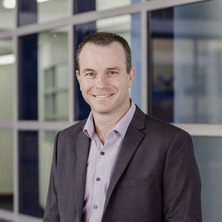
Trevor Russell is a Professor of Physiotherapy and the Director of the RECOVER Injury Research Centre where he leads a stream of research on Technology Enabled Rehabilitation. He is also co-director of both the Centre for Research in Telerehabilitation and the Telerehabilitation Clinic at the University of Queensland. His research focusses on the use of digital technologies for the remote delivery of health services with a particular focus on telerehabilitation technologies. Specifically his research aims to develop innovative computer based hardware and software solutions to enable the provision of rehabilitation services remotely via the Internet; to further the evidence base of technology enabled rehabilitation through controlled clinical trials; to evaluate the treatment efficacy of specific technology enabled interventions; investigate cost-benefit factors related to technology enabled services; and develop best practice guidelines for the implementation of technology enabled services in the rehabilitation sciences. His work is amongst the earliest and most extensive in this field.
Faculty of Engineering, Architecture and Information Technology
Affiliate of Research Centre in Creative Arts and Human Flourishing
Research Centre in Creative Arts and Human Flourishing
Faculty of Humanities, Arts and Social Sciences
Professor
School of Electrical Engineering and Computer Science
Faculty of Engineering, Architecture and Information Technology
Availability:
Available for supervision
Media expert
Janet Wiles is a Professor in Human Centred Computing at the University of Queensland.
Her multidisciplinary team co-designs language technologies to support people living with dementia and their carers and social robots for applications in health, education, and neuroscience. She is currently developing a citizen science project which uses insights from neuroscience, AI and language technologies to explore the electrical characteristics of mycelial networks of symbiotic fungi in local ecosystems. She received her PhD in computer science from the University of Sydney and completed a postdoctoral fellowship in psychology. She has 30 years’ experience in research and teaching in machine learning, artificial intelligence, bio-inspired computation, complex systems, visualisation, language technologies and social robotics, leading teams that span engineering, humanities, social sciences and neuroscience. She currently teaches research methods for thesis and masters students, and a new course in human-centred artificial intelligence. Previous special interest courses include a cross disciplinary course ”Voyages in Language Technologies” that introduced computing students to the diversity of Indigenous and non-Indigenous languages, and state-of-the-art tools for deep learning and other analysis techniques for working with language data.
Featured projects
Human-centred AI
The Underground Brain Project
Florence communication technology
For more on Human Centred Computing see the HCC projects page
Faculty of Health, Medicine and Behavioural Sciences
Affiliate of Centre for Living Experience Research
Centre for Living Experience Research
Faculty of Health, Medicine and Behavioural Sciences
Centre Director of Queensland Aphasia Research Centre (QARC)
Queensland Aphasia Research Centre
Faculty of Health, Medicine and Behavioural Sciences
Professor
School of Health and Rehabilitation Sciences
Faculty of Health, Medicine and Behavioural Sciences
Availability:
Available for supervision
Media expert
Professor David Copland is a Speech Pathologist conducting research in the areas of aphasia, language neuroscience, psycholinguistics, and neuroimaging of normal and disordered language. He is Director of the Queensland Aphasia Research Centre (https://shrs.uq.edu.au/qarc), Co-Director of the STARS Education Research Alliance (https://metronorth.health.qld.gov.au/stars/education-research-alliance), Co-Director of the NHMRC Centre of Research Excellence in Aphasia Rehabilitation and Recovery (https://www.latrobe.edu.au/research/centres/health/aphasia) and Deputy Chair of the Research and Postgraduate Studies Committee of the UQ School of Health and Rehabilitation Sciences.
Affiliate of Centre for Extracellular Vesicle Nanomedicine
Centre for Extracellular Vesicle Nanomedicine
Faculty of Health, Medicine and Behavioural Sciences
NHMRC Leadership Fellow
Child Health Research Centre
Faculty of Health, Medicine and Behavioural Sciences
Availability:
Available for supervision
Professor Roslyn Boyd is Scientific Director of the Queensland Cerebral Palsy and Rehabilitation Research Centre (QCPRRC) an internationally recognised research group at the University of Queensland in the School of Medicine. The centre includes a multidisciplinary team of 38 researchers and in addition provides clinical research leadership to 60 clinicians from multiple disciplines in the state-wide Queensland Paediatric Rehabilitation Service based at the Queensland Children's Hospital. After primary training and experience in Australia and London as a physiotherapist she completed her PhD in neuroscience at La Trobe University, the Brain Research Institute and the Murdoch Children’s Research Institute in Melbourne for which she was awarded the Premier’s Commendation by the Victorian Government. Prof. Boyd arrived at the University of Queensland in 2007 as a recipient of a Smart State Fellowship and more recently has led an EBrain program grant funded by the Qld Government Department of innovation. Her research team focuses on research on the early natural history of motor and brain development for preschool aged children with CP, the efficacy of novel rehabilitation for children with Hemiplegia and very early detection and early intervention for infants at high risk of CP (all funded by the National Health and Medical Research Council of Australia). This research program is underpinned by advanced brain imaging including functional imaging of the motor and sensory motor cortex, Diffusion Imaging and Functional Connectivity to assess the impact of training on neuroplasticity (NHMRC, ARC). Prof. Boyd has been awarded the prestigious international Gayle Arnold Award on 3 occasions at the American Academy of Cerebral Palsy and Developmental Medicine. Prof Boyd has published over 340 manuscripts in peer-reviewed international journals and has achieved over $40M in research funding.