Centre Director of ARC Research Hub for Advanced Manufacture of Targeted Radiopharmaceuticals (AMTAR
ARC Research Hub for Advanced Manufacture of Targeted Radiopharmaceuticals
Australian Institute for Bioengineering and Nanotechnology
Availability:
Available for supervision
Media expert
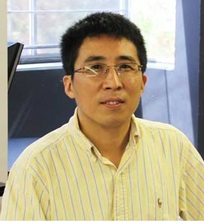
Professor Kris Thurecht is the Institute Director of the Australian Institute for Bioengineering and Nanotechnology (AIBN) at The University of Queensland, where he leads more than 500 researchers and professional staff.
His research is multidisciplinary, working across the boundaries of chemistry and materials, biology, engineering and imaging science, where his team investigates the intricate interplay between structure and function of nanomaterials and how this affects their subsequent interaction with biological entities.
He has a particular focus on utilising advanced molecular imaging as a real time measure of how nanomaterials behave and influence biological systems, using complex multicellular in vitro systems and also in living animals. Recently, this has expanded into developing and understanding targeted radiopharmaceuticals for both imaging and therapy, and in this area Professor Thurecht also acts as the Director of the ARC Research Hub for Advanced Manufacture of Targeted Radiopharmaceuticals. By bringing together partners across industry and academia, he has led the development of a targeted alpha therapy research facility at The University of Queensland to explore this emerging class of highly potent radiotherapeutic.
As AIBN’s Institute Director, Professor Thurecht plays a central role in shaping the Institute’s strategic direction, nurturing a culture of innovation, building lasting career frameworks for early and mid-career researchers and supporting researchers to translate science into real-world impacts.
AIBN has a foundation built upon strong industry and government partnerships. Professor Thurecht has helped forge this strategy, with a focus on building collaborations that shape international science agendas, contribute to innovation in science and technology policies and drive industry investment in research and innovation. He has supported international initiatives that bring higher degree research students to UQ as part of multi-institutional programs, building upon the strategic focus of AIBN in national priority areas of health, energy and the bioeconomy.
Using AIBN as a key institutional vehicle for delivering The University of Queensland’s research and innovation objectives, Professor Thurecht has championed the establishment and expansion of strong platform technologies that underpin the innovation landscape at AIBN; accelerating translation, enabling interdisciplinary collaboration and scaling impact for the public good.
In addition to his role at AIBN, Professor Thurecht is an Associate Editor for the American Chemical Society journal, Molecular Pharmaceutics, and is a member of the ARC College of Experts.
Affiliate of Centre for Extracellular Vesicle Nanomedicine
Centre for Extracellular Vesicle Nanomedicine
Faculty of Health, Medicine and Behavioural Sciences
ARC Laureate Fellow and Senior Group Leader
Australian Institute for Bioengineering and Nanotechnology
Professor and ARC Laureate Fellow
School of Chemistry and Molecular Biosciences
Faculty of Science
Availability:
Available for supervision
Media expert
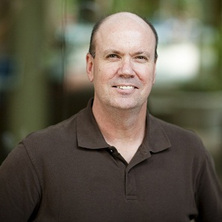
Professor Matt Trau is currently a Professor of Chemistry at The University of Queensland (UQ); and is also Senior Group Leader and co-founder of the Australian Institute for Bioengineering and Nanotechnology. Since graduating from the University of Sydney (BSc Hons I, University Medal) and the University of Melbourne (PhD in Physical Chemistry, 1993), he has held positions in industry and academia across the globe. These include a Fulbright Research Fellowship at Princeton University, USA; and a research scientist at Dow Chemical and ICI Pty Ltd. Professor Trau has been a Visiting Professor at two of the largest Cancer Research Centres in the world: The Dana Farber Cancer Research Institute, Harvard Medical School, Boston (2000); and the Fred Hutchinson Cancer Research Centre, Seattle (2008). Professor Trau is internationally recognised for his innovative and cross-disciplinary research at the interface between chemistry, nanotechnology, biology and medicine. He has co-authored more than 290 refereed publications, many of which appear in the highest impact journals in his field, e.g., fifteen Science and Nature family publications. His major awards and honours include an ARC Laureate Fellowship, an ARC Federation Fellowship (amoungst the most prestigious scientific fellowships in Australia), a Fulbright Research Fellowship to the USA; a Queensland Young Tall Poppy Award; a UQ Foundation/Vice Chancellor’s Research Excellence Award; a Paul Harris Fellowship; and a Pink Circle Award for breast cancer research excellence.
Dr Verdi's research is in the field of computational materials physics. Her work employs first-principles or ab initio methods, complemented by machine learning techniques, to predict and understand physical properties of materials without relying on empirical models. For more information, visit the research group website.
She received her doctorate from the University of Oxford in 2017. After working at the University of Oxford and the University of Vienna, Dr Verdi moved to the University of Sydney in 2023 as an ARC DECRA Fellow. In the same year, she then joined UQ as a Lecturer in Condensed Matter Physics. She is an associate investigator of the ARC Centre of Excellence for Quantum Biotechnology (QUBIC).
Her current research focuses on understanding the structural, optical and thermodynamic properties of atomic defects for applications in quantum technologies. She is also interested in studying the influence of atomic vibrations, defects, temperature and disorder on the intrinsic properties of various functional materials that can be exploited for novel technologies. Feel free to reach out to Dr Verdi if you are interested in simulating materials properties from first principles using supercomputers and exploring how this can help develop better materials.
Affiliate of Dow Centre for Sustainable Engineering Innovation
Dow Centre for Sustainable Engineering Innovation
Faculty of Engineering, Architecture and Information Technology
Honorary Professor
School of Chemical Engineering
Faculty of Engineering, Architecture and Information Technology
Honorary Professor
Australian Institute for Bioengineering and Nanotechnology
Availability:
Available for supervision
Media expert
Biography:
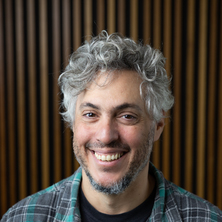
Professor Lianzhou Wang FAA FTSE is an Honorary Professor and former Australian Research Council (ARC) Australian Laureate Fellow at the School of Chemical Engineering, Australian Institute for Bioengineering and Nanotechnology (AIBN), The University of Queensland (UQ). He received his PhD degree from Shanghai Institute of Ceramics, Chinese Academy of Sciences in 1999. Before joining UQ in 2004, he has worked at two leading national research institutions (NIMS and AIST) of Japan as a research fellow for five years. Since joining UQ, he has worked as ARC Queen Elizabeth II Fellow (2006), Senior Lecturer (2007), Associate Professor (2010), Professor (2012-now) and ARC Future Fellow (2012-16), and ARC Australian Laureate Fellow (2020-25) at the Chemical Engineering School and AIBN. He was also the Director of Nanomaterials Centre (Nanomac), and Senior Group Leader of AIBN until 2025, before moving to the Hong Kong Polytechnic University.
Research:
Professor Wang's research focuses on the synthesis, characterisation and application of semiconductor nanomaterials for use in renewable energy conversion/storage systems including photocatalytsts for solar hydrogen and valuable chemical production, rechargeable batteries and low cost solar cells. In the past 20 years at UQ, as a Chief Investigator, he has attracted a large number of competitive research funds from ARC, CRC, CSIRO and industry. Prof. Wang has contributed 3 edited books, 14 edited book chapters, more than 600 journal publications (including top ranking journals such as Science, Nature Energy, Natue Nanotech, Nature Rev. Mater., Chem. Rev., Chem Soc. Rev., Nature Commmun, Angew. Chem., Adv. Mater., J. Am Chem. Soc., etc.), filed 20 patents and delivered over 150 plenary/keynote/invited presentations. His publications have received >68,000 citations with a H-index of 138 (Google Scholar). Prof. Wang is serving as Editor/Associate Editor/Editorial Board member of more than 10 international journals including Advanced Materials (Wiley Publishing group, Impact factor 32.09). He has been named on the list of the Clarivate’ Highly Cited Researchers (Top 0.1% researcher in the world) numerous times.
Prof. Wang has won a number of prestigious Fellowships/awards including STA Fellowship of Japan, ARC QEII Fellowship of 2006, UQ Research Excellence Award of 2008, Scopus Young Researcher Award of 2011, ARC Future Fellowship of 2012, UQ Research Supervision Award of 2018, ARC Australian Laureate Fellowship of 2019, Research Excellence Award in Chemcial Engieering of 2019, and ARC Industry Laureate Fellowship of 2024.
Prof. Wang is the elected fellow of the Australian Academy of Science (FAA), the Australian Academy of Technological Sciences & Engineering (FTSE), Academia Europaea (MAE) and Royal Society of Chemistry (FRSC). On professional services, he has served as the chair of National Committee for Materials Science and Engineering, Australian Academy of Sciences, and the President of Australian Materials Research Society between 2022-25.
Affiliate Professor of School of Chemistry and Molecular Biosciences
School of Chemistry and Molecular Biosciences
Faculty of Science
Affiliate of Australian Research Council Centre of Excellence for Green Electrochemical Transformati
ARC COE for Green Electrochemical Transformation of Carbon Dioxide
Faculty of Engineering, Architecture and Information Technology
Professorial Research Fellow and Senior Group Leader
Australian Institute for Bioengineering and Nanotechnology
Availability:
Available for supervision
Media expert
Professor Andrew Whittaker is Senior Group Leader and founder member of the Australian Institute for Bioengineering and Nanotechnology (AIBN). He directs research funded through more than $61.3 million in competitive grants since 2000 and $39.7M since 2010. Professor Whittaker’s work in synthesis and characterisation of polymeric materials has underpinned major development programs in several key areas.
His work in the field of materials for photolithography has been supported by funding from leading semiconductor companies Intel, Sematech, Dow Chemical Company and DuPont. Outcomes include novel high-index resists for 193 nm immersion lithography, new concepts for design of non-chemically amplified resists for EUV lithography, novel approaches to healing roughness in IC features and block copolymer self-assembly.
In the field of biomaterials science and nanomedicine, Professor Whittaker has established a network of international scientists under the theme “Bringing Materials to Life”. He is active in developing novel imaging agents for MRI, and has introduced a new class of 19F polymeric agents. He leads research into responsive polymers for nanomedicine and for device manufacture. His work on polymeric hydrogels including transport properties is highly cited.
Finally, Professor Whittaker is an expert in the fundamentals of diffusion process in complex solids and has an international reputation in the field of NMR and MRI of polymeric systems.
International links
Professor Whittaker is a member of numerous international committees of governing bodies in polymer science and technology, and is involved in organising major international conferences. He is currently president of the Pacific Polymer Federation. He actively collaborates with scientists at the University of California Santa Barbara, USA; Institute of Nano Science and Technology, Mohali, India; Gebze Technical University, Turkey; Nagoya Institute of Technology, Japan; Jilin University, Hubei University, the National Center for Nanoscience and Technology (NCNST, CAS), SUSTech and Shanghai University, China; the University of Nottingham, UK; IMEC, DuPont Electronics and Imaging, USA. He has held visiting professor positions at NCNST, INSA Lyon and NIT, was DICE Chair at the University of Nottingham, and is currently visiting professor at Hubei University.
Faculty of Engineering, Architecture and Information Technology
Affiliate of ARC Research Hub to Advance Timber for Australia's Future Built Environment (ARC Advanc
ARC Research Hub to Advance Timber for Australia's Future Built Environment
Faculty of Engineering, Architecture and Information Technology
Availability:
Available for supervision
Media expert
I have a multidisciplinary background in chemical and civil engineering, chemistry and materials science. Currently, I am the UQ leader of the National Centre for Timber Durability and Design Life, based at USC. I apply my expertise to understand the effects of fungal decay and moisture intrusion in timber connections, as well as the improvement of the fire performance of timber. I supervise 6 PhD students.
Australian Institute for Bioengineering and Nanotechnology
Availability:
Available for supervision
Media expert
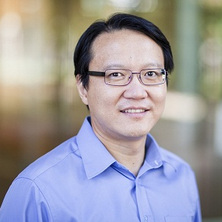
Professor Chengzhong (Michael) Yu is an internationally recognised expert in nanotechnology, chemistry and materials science. He is the author of over 400 scientific publications with over 36,000 citations. He has received National Health and Medical Research Council (NHMRC) Leadership (L3) and Australian Research Council (ARC) Future Fellowship.
His research interest includes functional nanomaterials and their applications in healthcare, agriculture, and energy storage. He is working with industrial partners to provide innovative solutions for challenging problems in our society.